Start with a noticing walk
A neighborhood is full of messages. Some use words, while others rely on arrows, colors, shapes, or pictures. A family walk can become a chance to ask how those messages help people find their way, share space, and understand a place. You do not need to identify every sign correctly. The goal is to look closely and explain what you notice.
Choose a familiar route with a sidewalk or other comfortable walking space. Before leaving, invite each person to pick one thing to watch for: arrows, animal pictures, numbers, or symbols without words. Bring a small notebook if you like. Stop only where your group can do so safely, and read signs from public spaces rather than stepping into roads, driveways, or private property for a closer look.
Look at what a sign is trying to do
When you spot a sign, begin with description instead of interpretation. What shape is it? Which colors stand out? Does it contain a picture, a number, or a short phrase? Then ask who might need its message. A street-name sign may help someone locate a turn; a posted map may help a visitor choose a route; a symbol on a bin may suggest where a particular item belongs.
Try sorting your finds by purpose. Some signs guide, some warn, some identify a place, and some explain a rule or invitation. A single sign may do more than one job. If children disagree about its meaning, ask what details support each idea. Looking for evidence makes the walk more interesting than guessing quickly and moving on.
Notice how pictures communicate
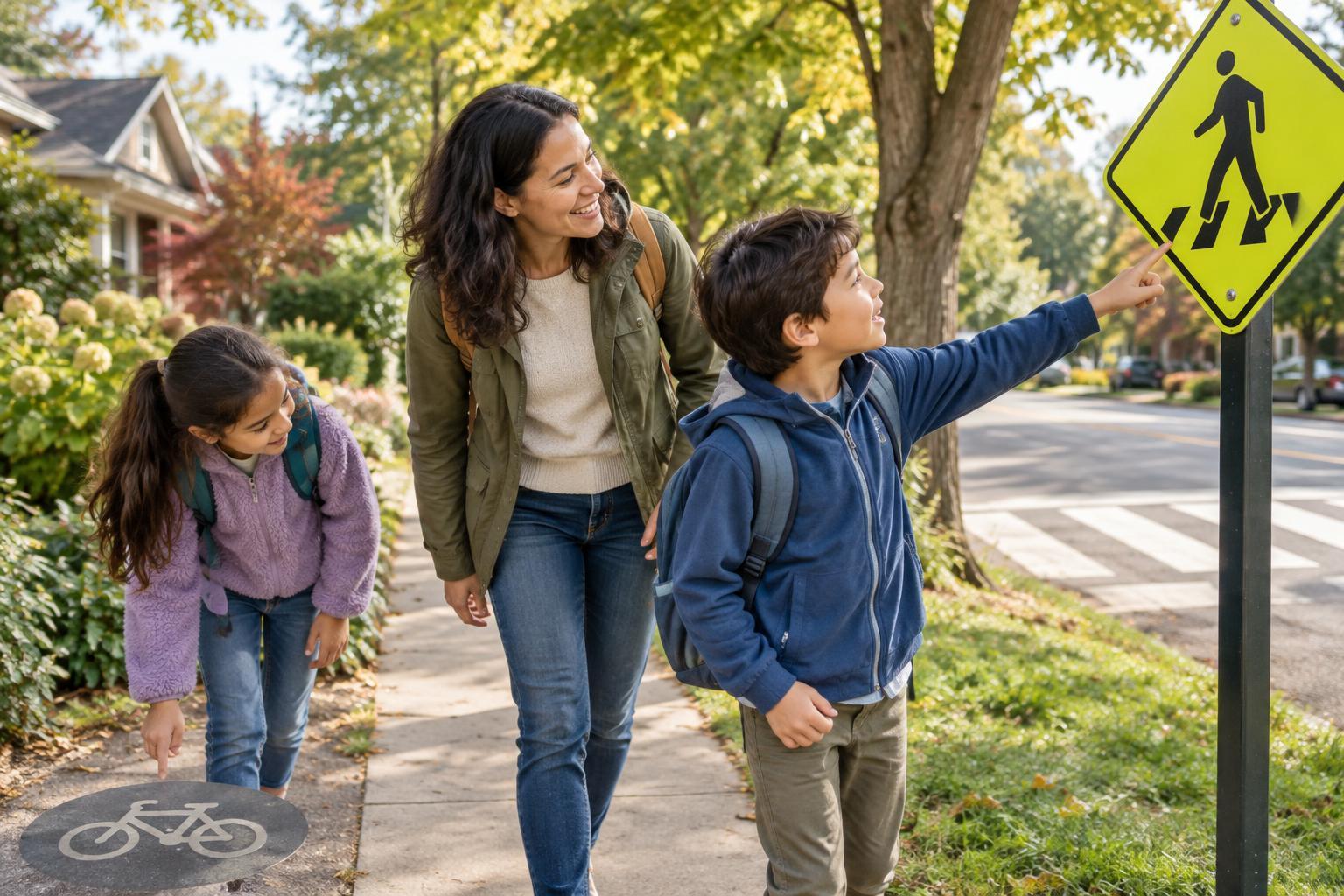
Symbols can communicate across different reading levels and languages, but they are not always as obvious as they first seem. A picture of a bicycle might mark a route, point toward parking, or announce a rule. Its meaning depends on nearby words, arrows, pavement markings, and where the sign is placed. Ask, “What would you think this meant if you saw only the picture? What changes when you look around it?”
Invite kids to compare two examples that seem related, such as arrows on a walking path and arrows at a street crossing. Are they shaped or positioned differently? Which one is easiest to understand from a distance? You can also look for signs designed to be noticed quickly and signs meant to be read while standing still. This opens a conversation about how size, contrast, and location affect a message.
Read the clues around the sign
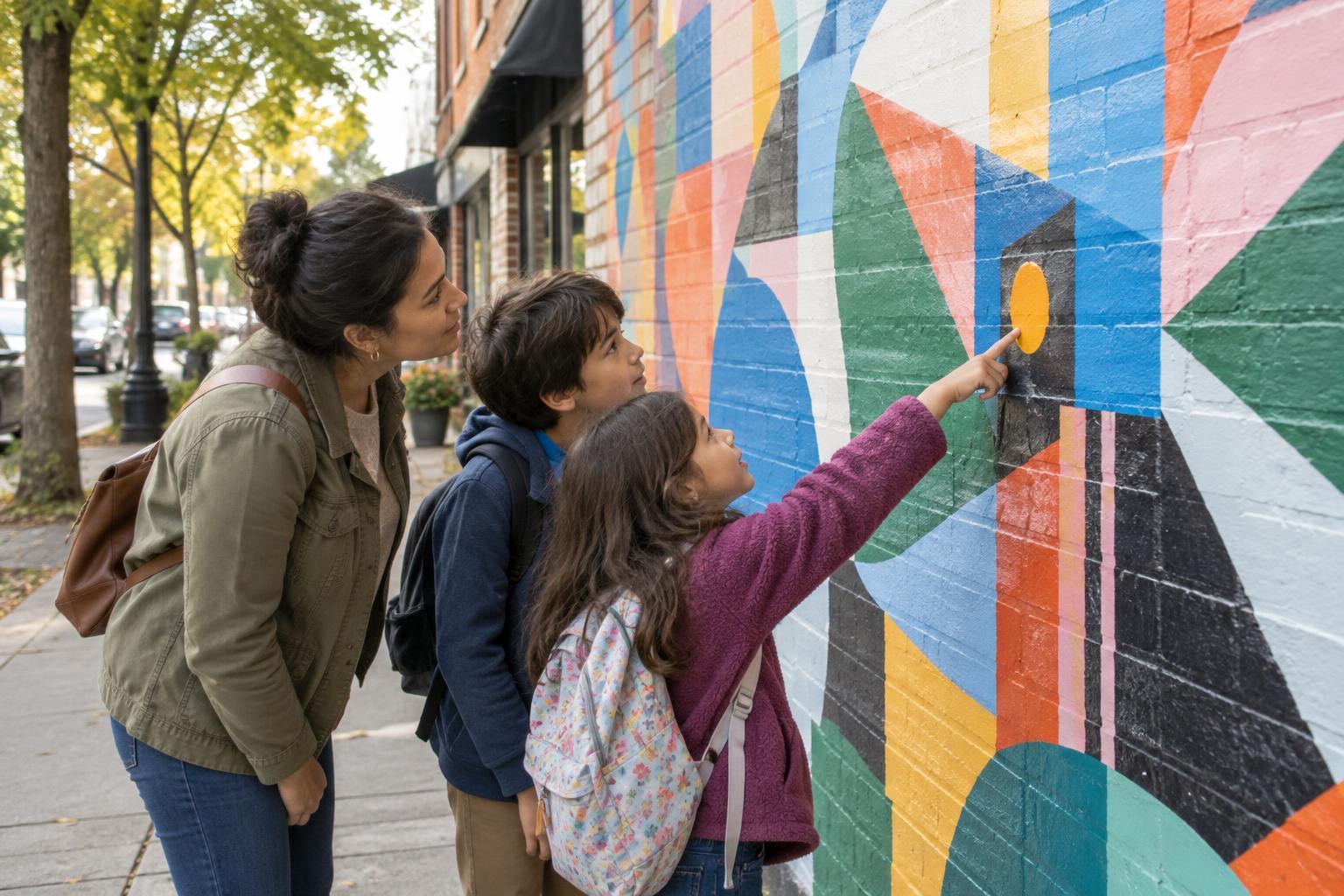
Signs are part of a larger scene. A building name, a mural label, or a marker beside an older-looking structure may offer a clue about how a place is used or remembered. Notice nearby features without assuming that appearance alone tells the whole story. An old-fashioned design does not necessarily mean a sign is old, and a familiar symbol may be used differently in different settings.
Try a “before and after” question: What did you think this place was before you read the sign, and what do you think now? If the message is unclear, record the question rather than inventing an answer. Back at home, your family can compare notes or look for information from a relevant local organization. The walk itself is for observing, not for solving every mystery.
Make a sign map of your route
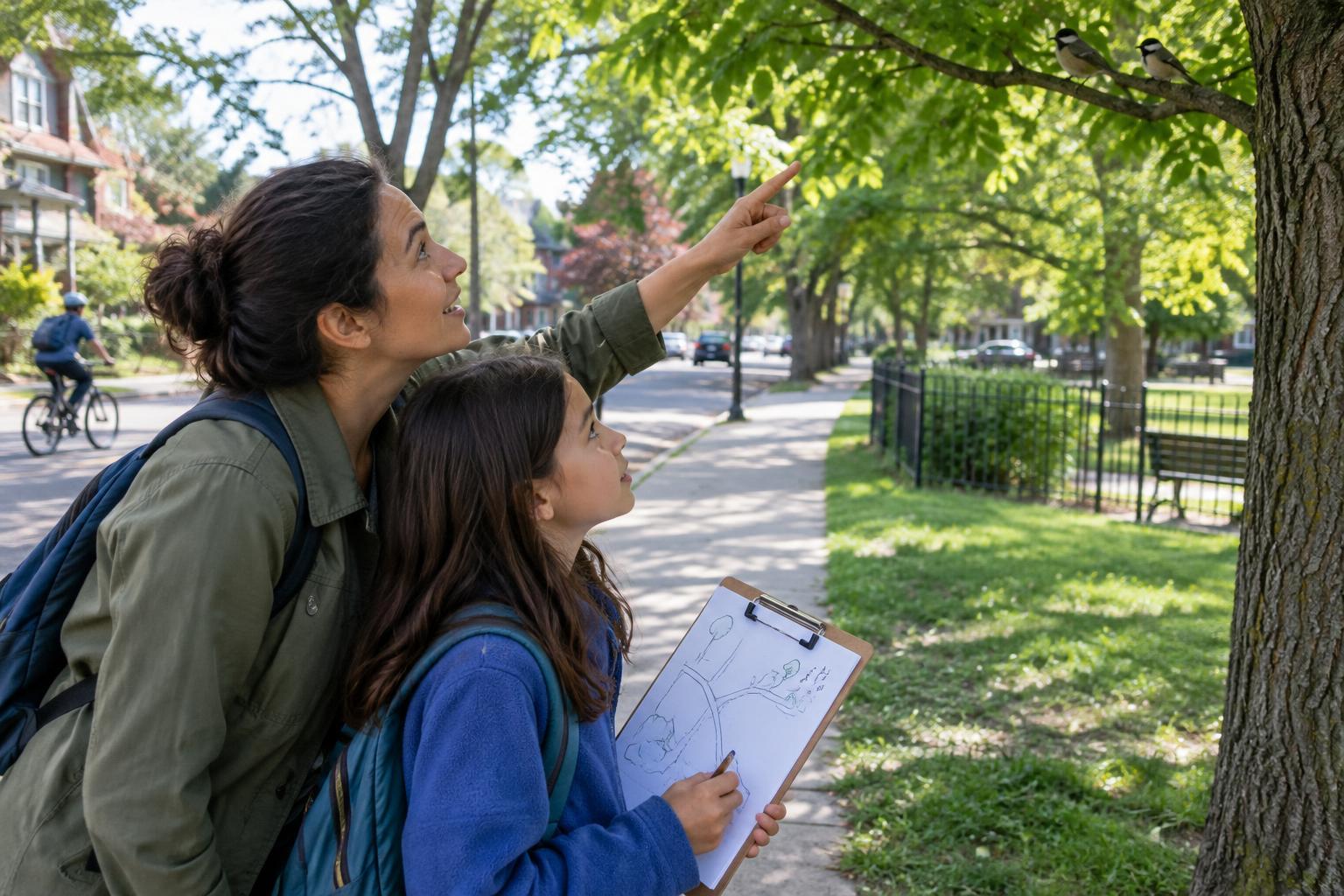
After the walk, draw a simple map from memory. Mark a few places where signs helped you make a decision, notice a feature, or understand a shared space. Children can sketch a symbol beside each location and give it a label such as “helps us find our way” or “asks us to slow down.” There is no need for a perfectly accurate map; it is a record of what caught your attention.
For a creative follow-up, design a sign for an imaginary neighborhood feature: a quiet listening spot, a place to look for interesting shadows, or a meeting point for a pretend parade. Ask what a newcomer would understand without an explanation. On your next walk, see whether you notice signs you missed the first time. Familiar streets often offer fresh questions when you look for the messages hidden in plain sight.