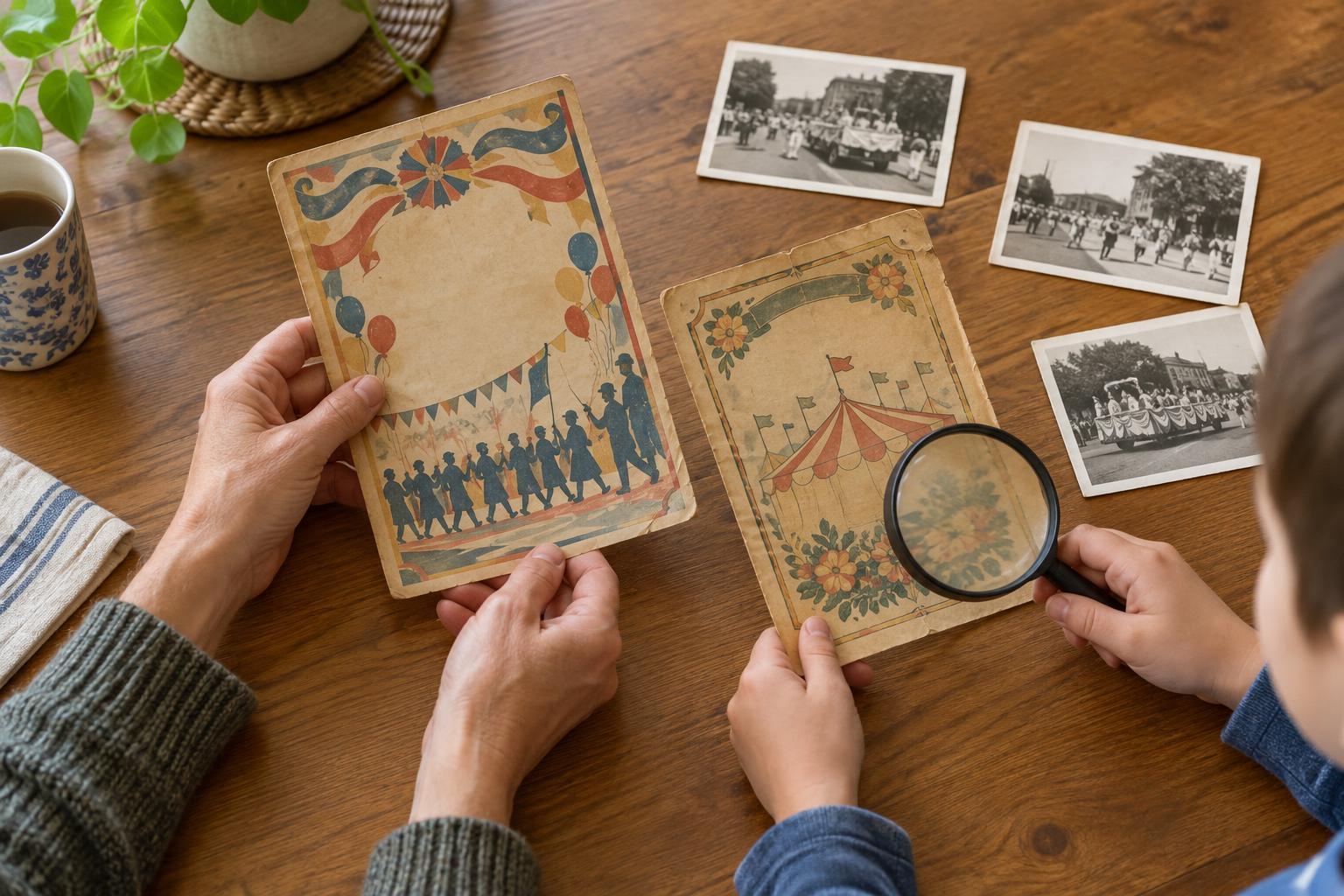
Local HistoryA parade program, festival flyer, or neighborhood invitation can open a small window onto local history. Learn how to examine these everyday sources with children, compare celebrations across time, and notice whose experiences may be missing.
Read article · 4 min↗
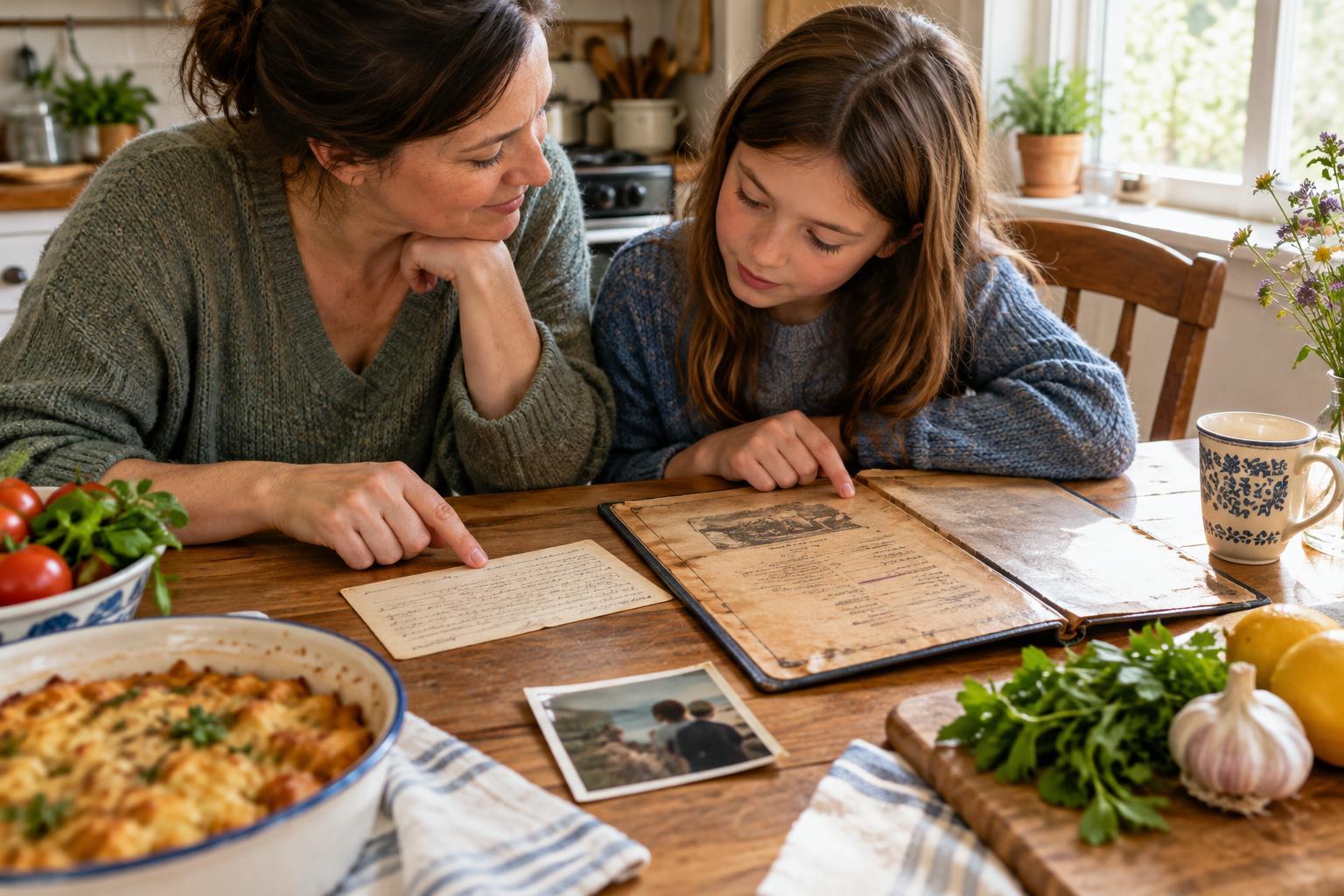
Local HistoryA meal can open a conversation about local history, but it cannot tell the whole story on its own. Help children explore food traditions with recipes, old menus, careful questions, and a clear distinction between memory and evidence.
Read article · 4 min↗
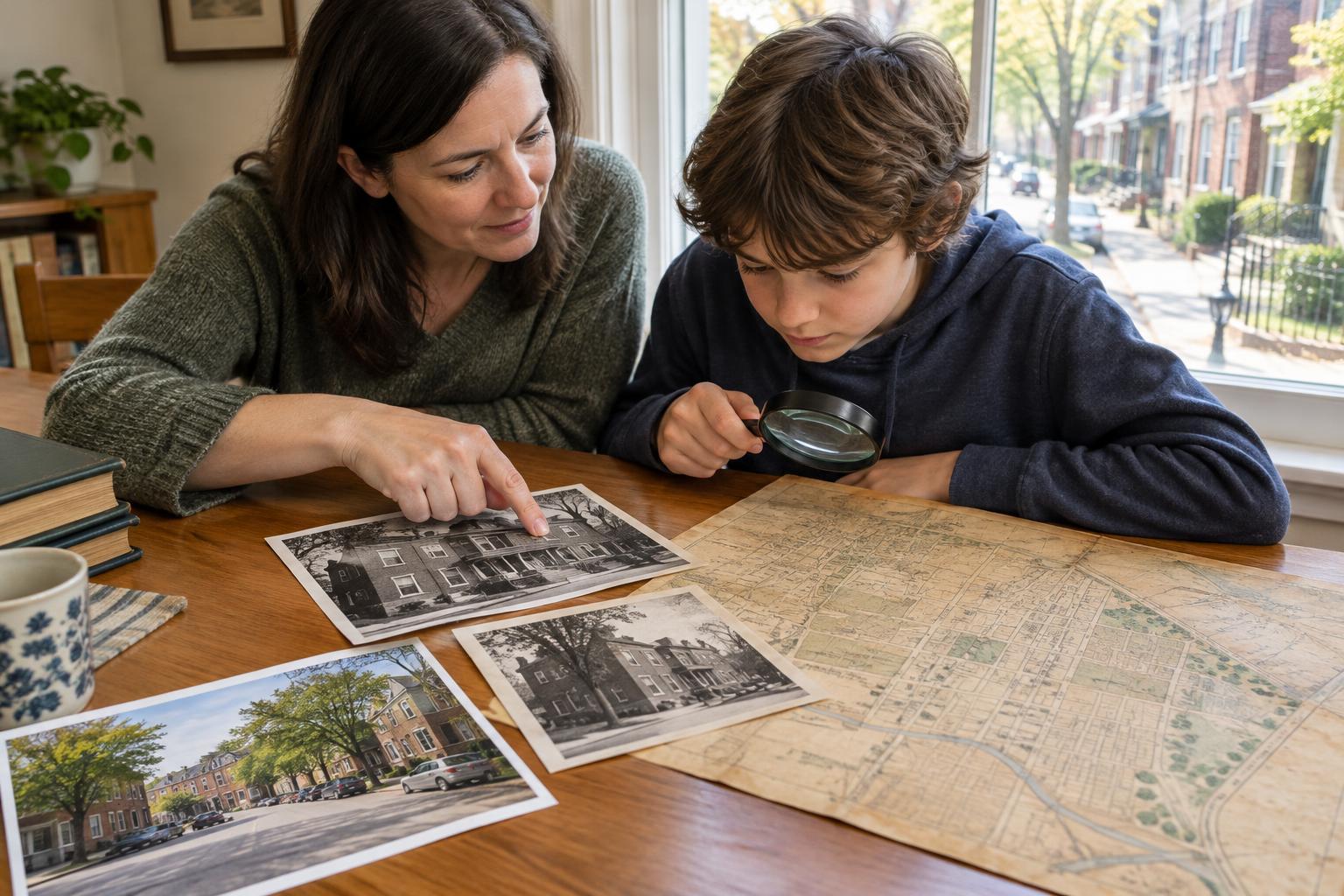
Local HistoryA name on an old map or a date on a building can start a great family investigation, but it rarely tells the whole story. Learn how to spot common local history research mistakes and test your conclusions using records, photographs, maps and careful observation.
Read article · 4 min↗
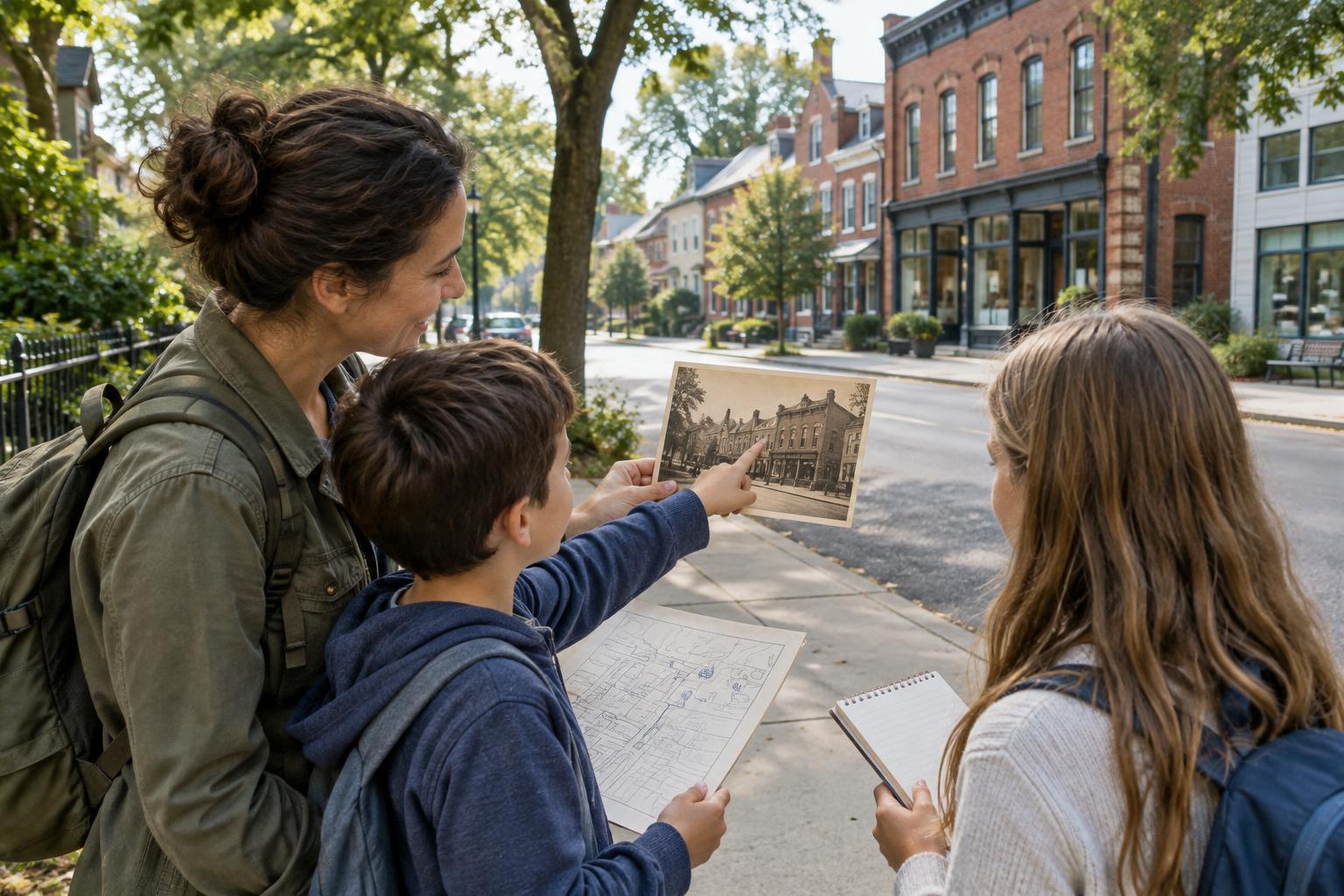
Local HistoryA family history walk starts with a small question, a few clues and a route that leaves room to notice the neighborhood as it is today. Learn how to choose a theme, check what you know and make the outing engaging for different ages.
Read article · 4 min↗
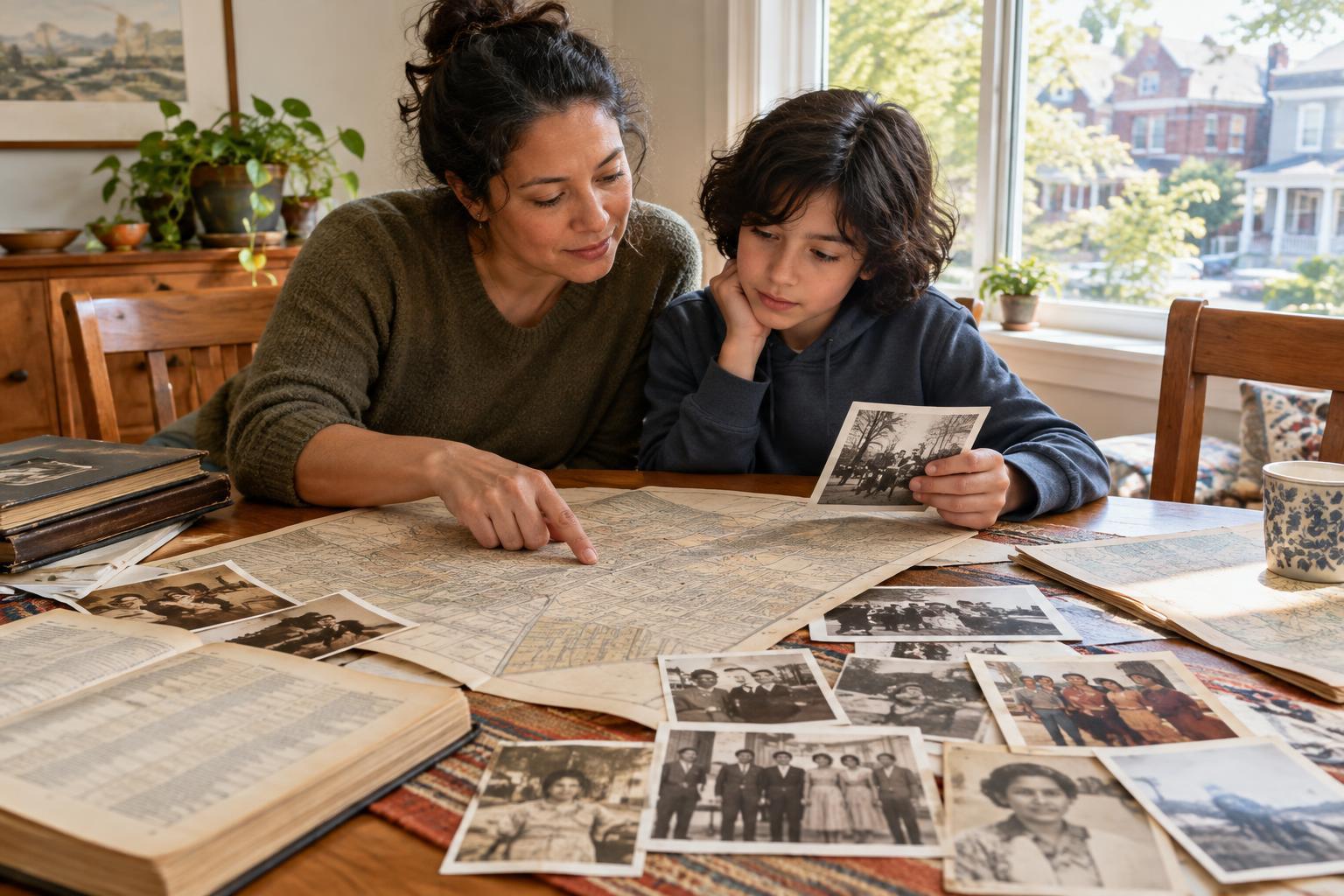
Local HistoryA family-friendly guide to exploring immigration in local history through maps, photographs, directories and other records. Learn how to ask careful questions, notice what records leave out and respect the people whose stories you encounter.
Read article · 4 min↗
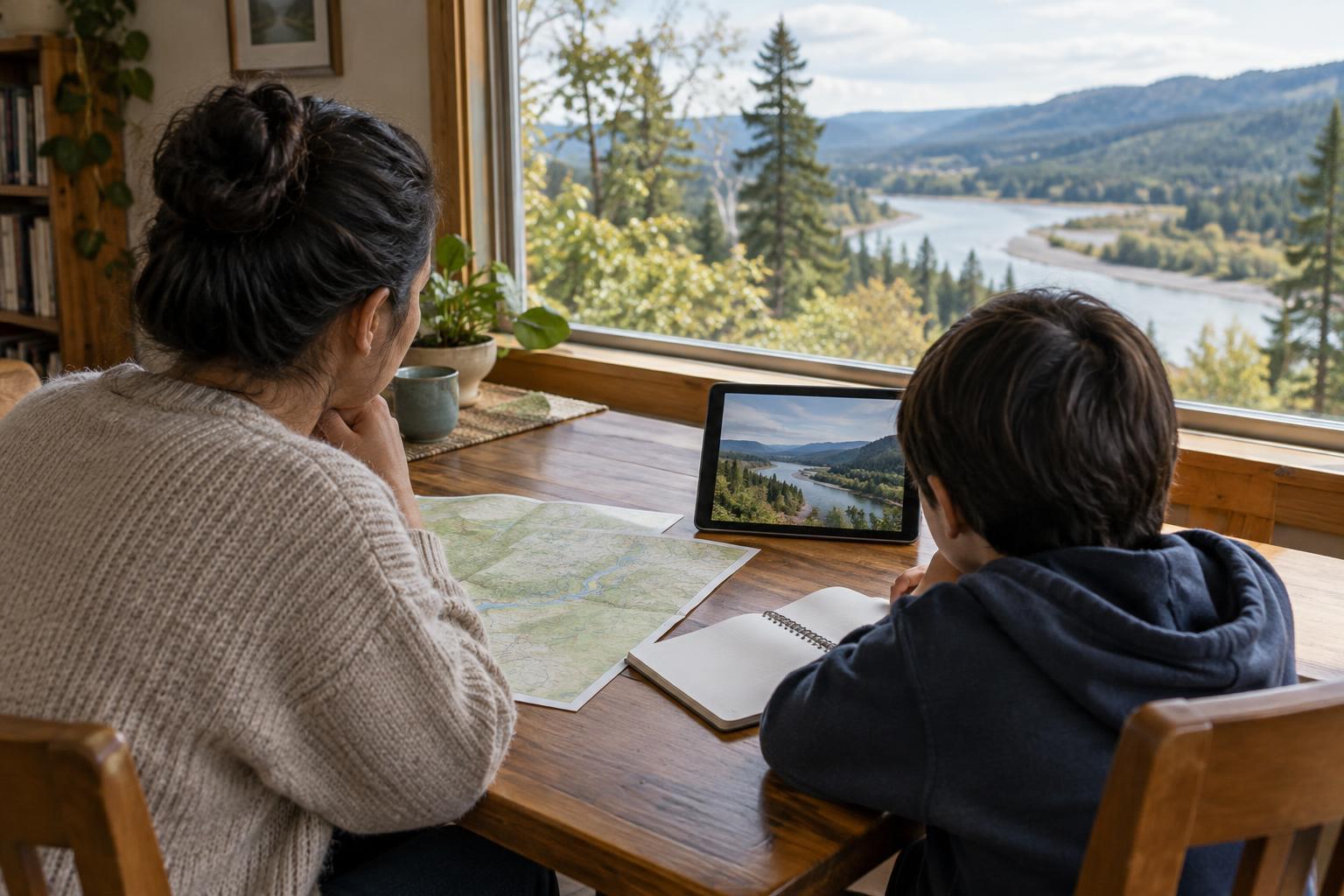
Local HistoryA family-friendly guide to learning whose homelands you live on, finding publicly shared information from Tribal Nations, and exploring local history with care and curiosity.
Read article · 4 min↗
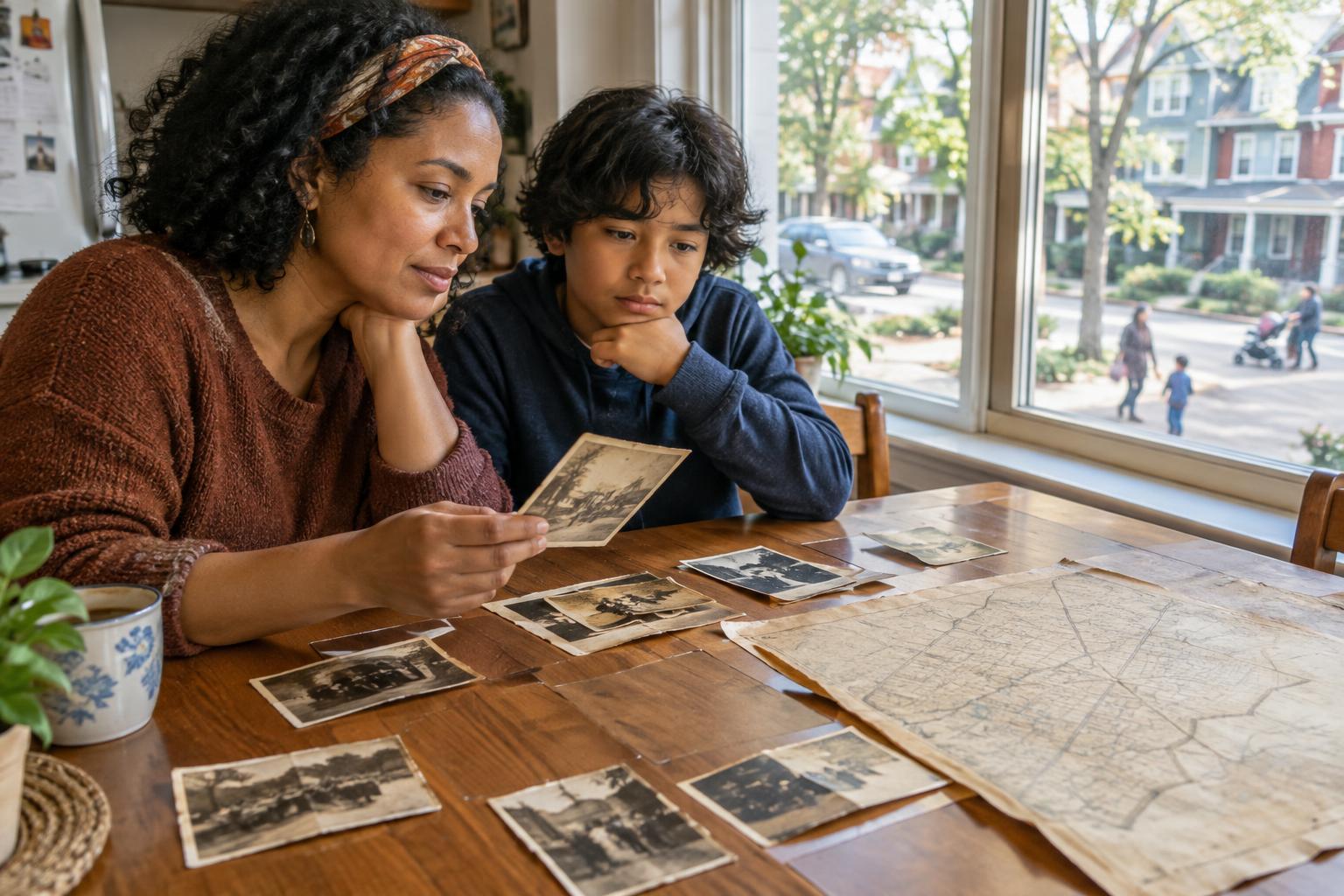
Local HistoryA family-friendly way to notice whose stories appear in local records, whose may be harder to find, and how to explore those gaps with curiosity and care.
Read article · 4 min↗
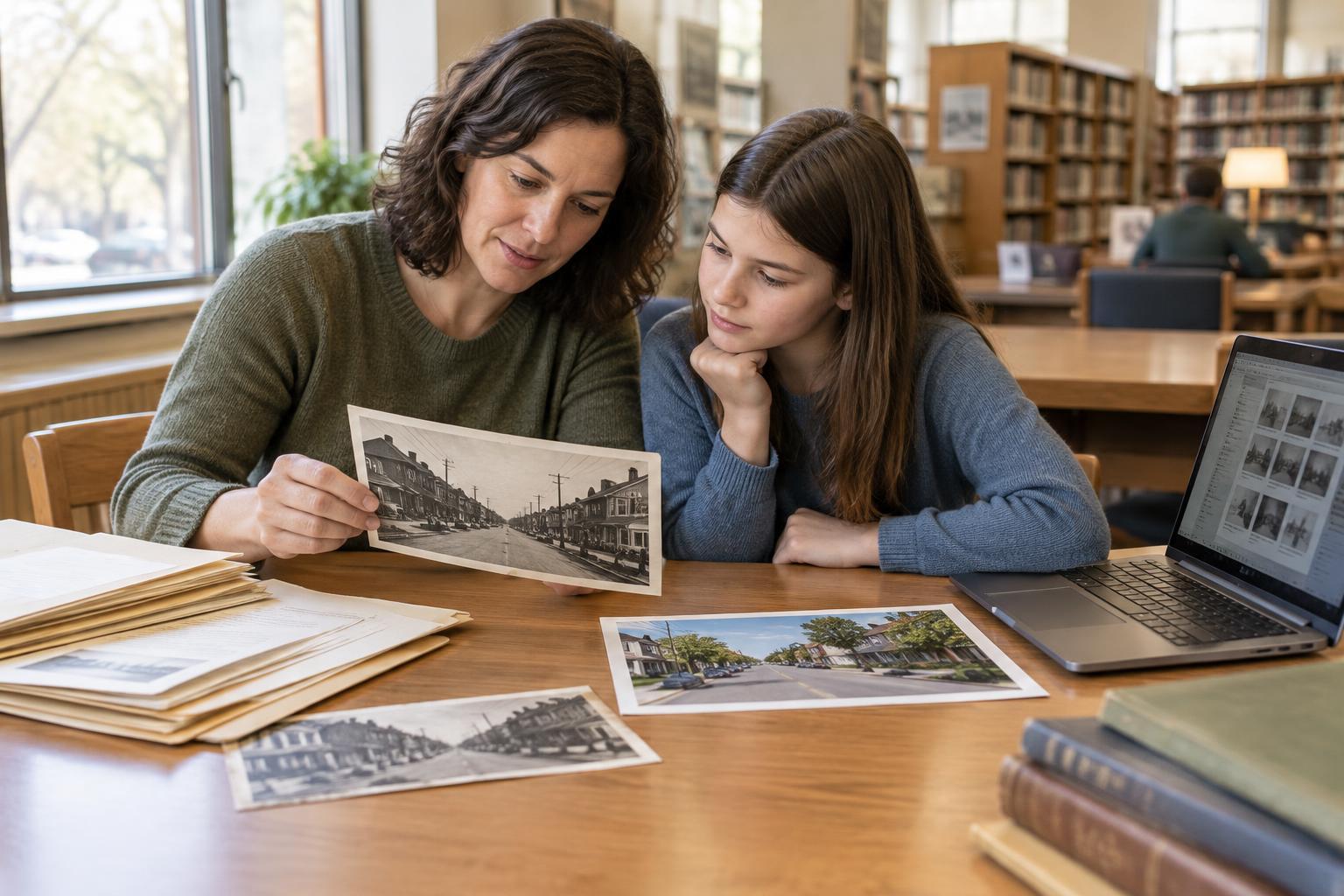
Local HistoryA street name, an old photograph or a family question can be the start of a local history project. Learn how to turn that curiosity into useful searches, recognize different kinds of sources and keep track of what you find at a library or digital archive.
Read article · 4 min↗
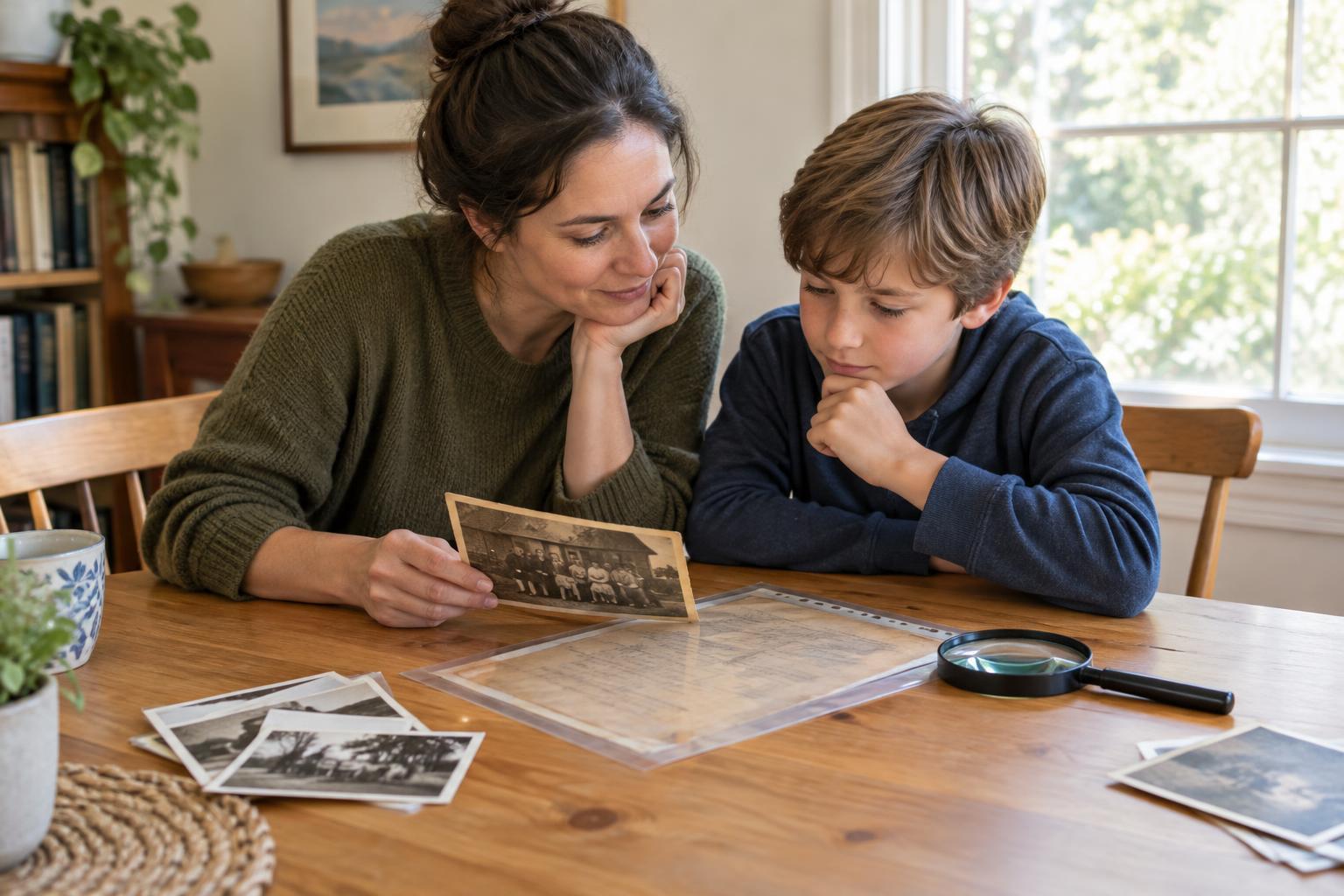
Local HistoryA family story and a public record may describe the same event differently. Learn how to help children explore those differences with curiosity, care and respect for people’s privacy.
Read article · 4 min↗
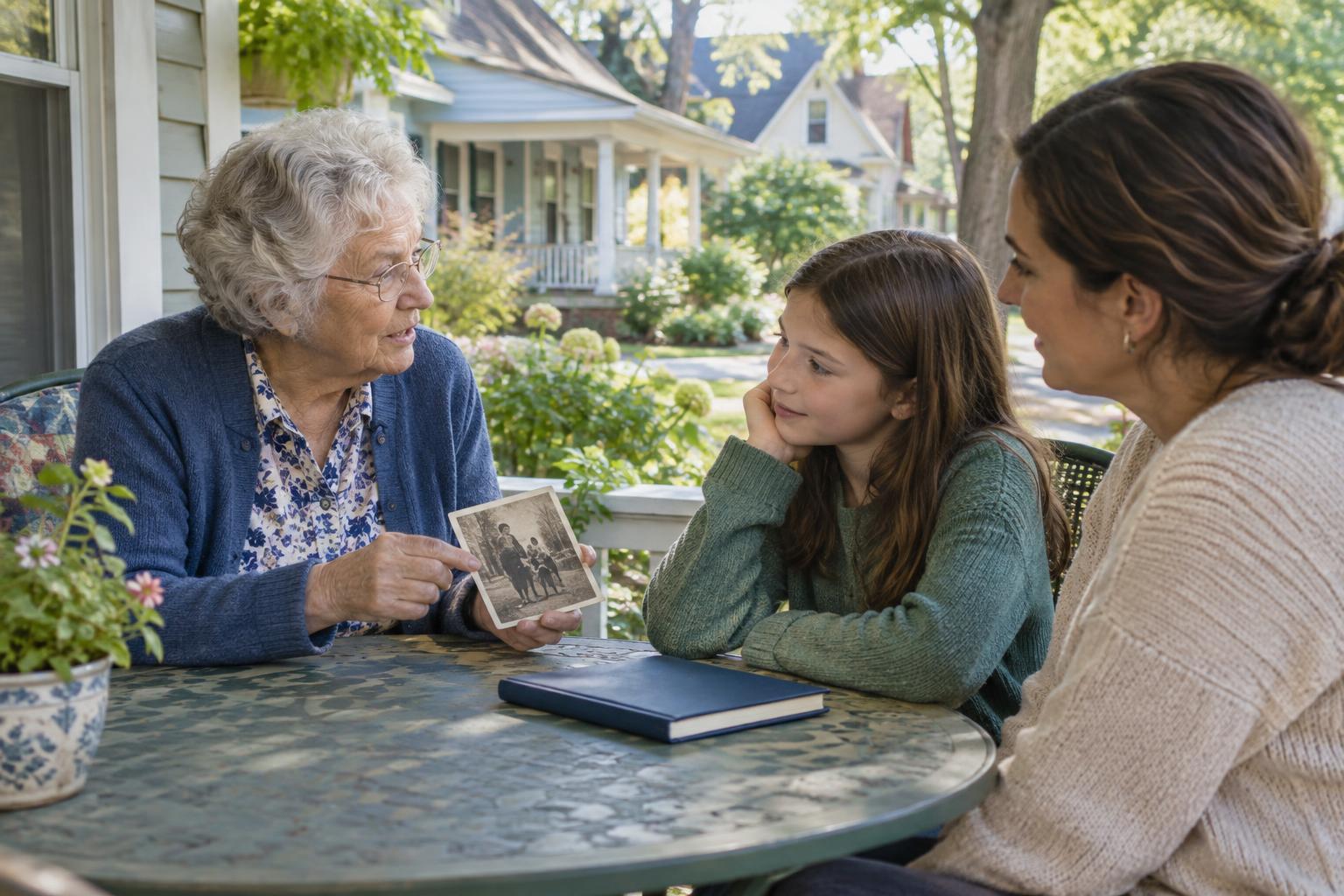
Local HistoryA conversation with a longtime neighbor can help children notice how a place has changed. Here’s how to invite someone without pressure, ask thoughtful questions, and treat their memories with care.
Read article · 4 min↗
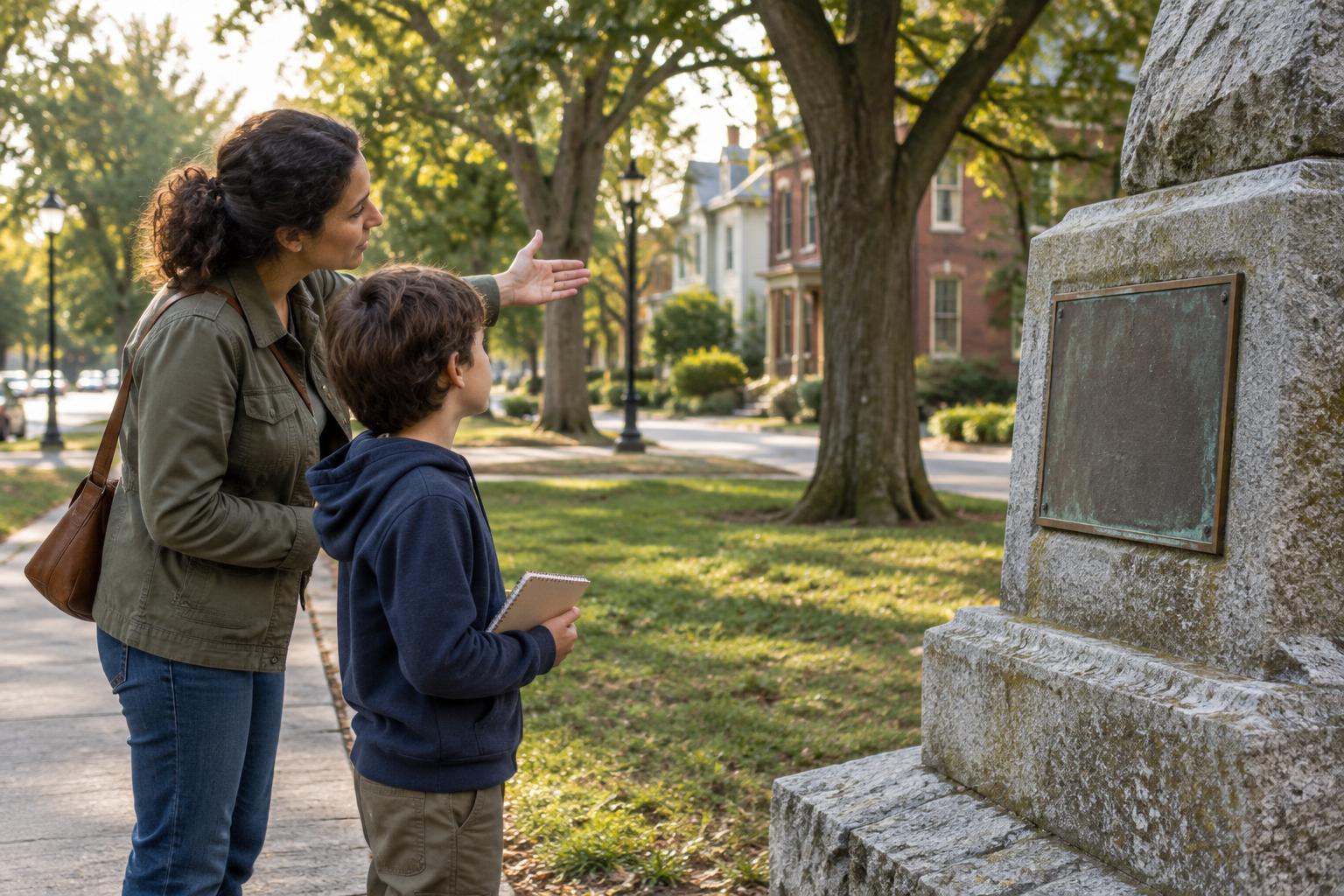
Local HistoryA monument can tell families what someone chose to remember, but it cannot tell the whole history of a place. Use these observation questions and simple activities to explore plaques and memorials with curiosity and care.
Read article · 4 min↗
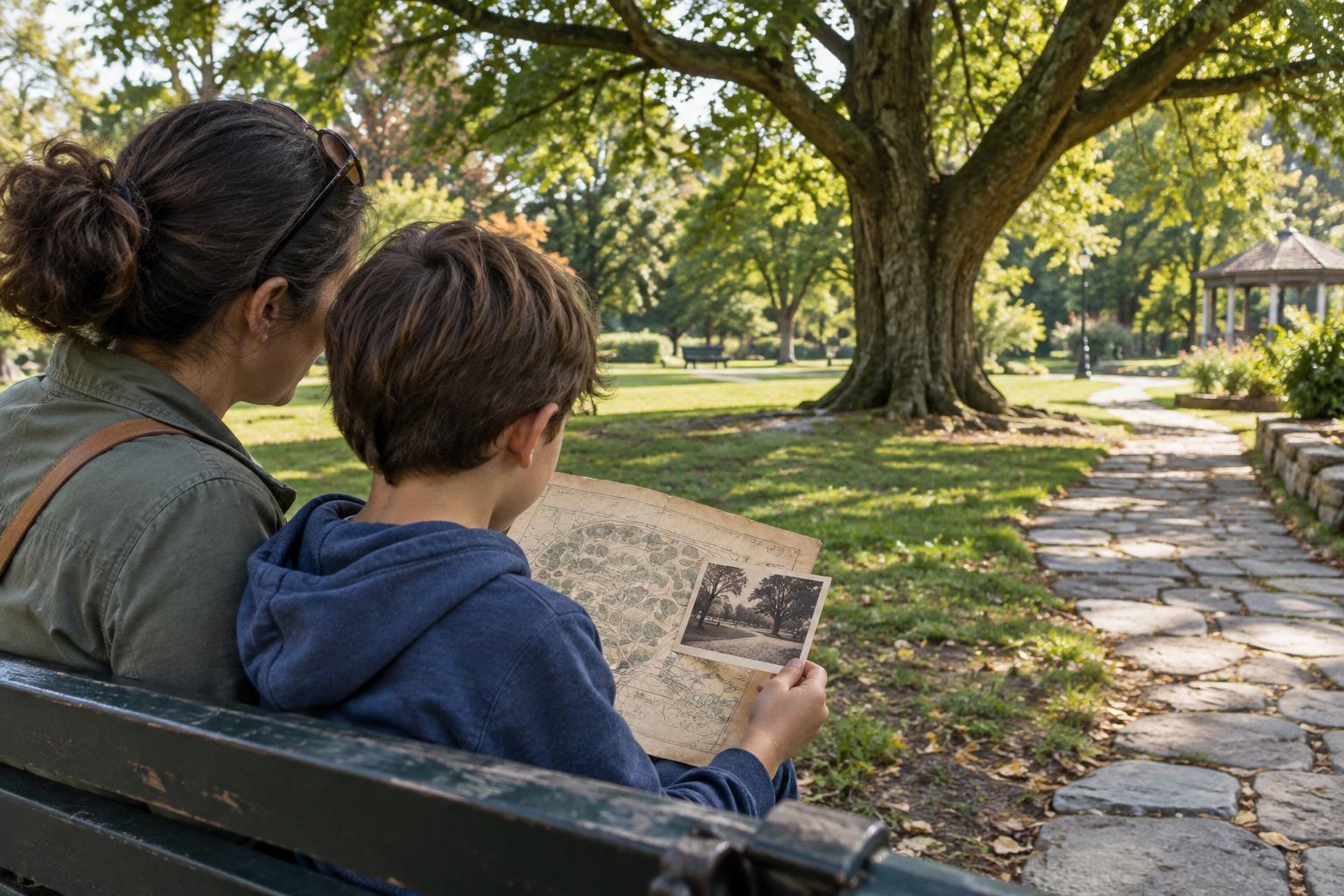
Local HistoryA familiar park can hold clues to a neighborhood’s past. Learn how to turn a walk, an old map, a photograph and a few careful questions into a family-friendly local history project.
Read article · 4 min↗
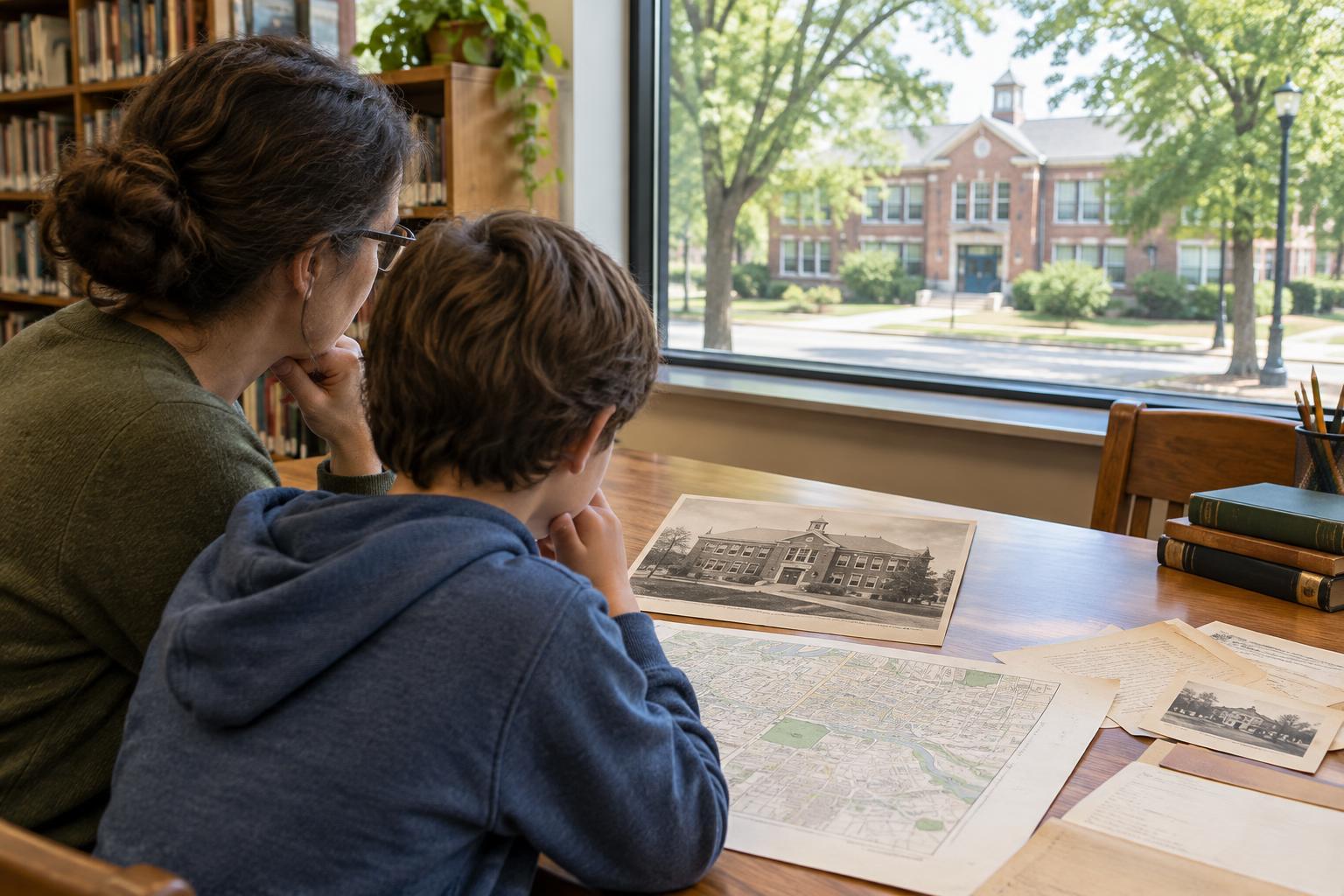
Local HistoryA school’s history can reveal how a neighborhood has changed. This family-friendly guide shows how to investigate a local school using public maps, photographs, newspapers and records while respecting the privacy of students and staff.
Read article · 4 min↗
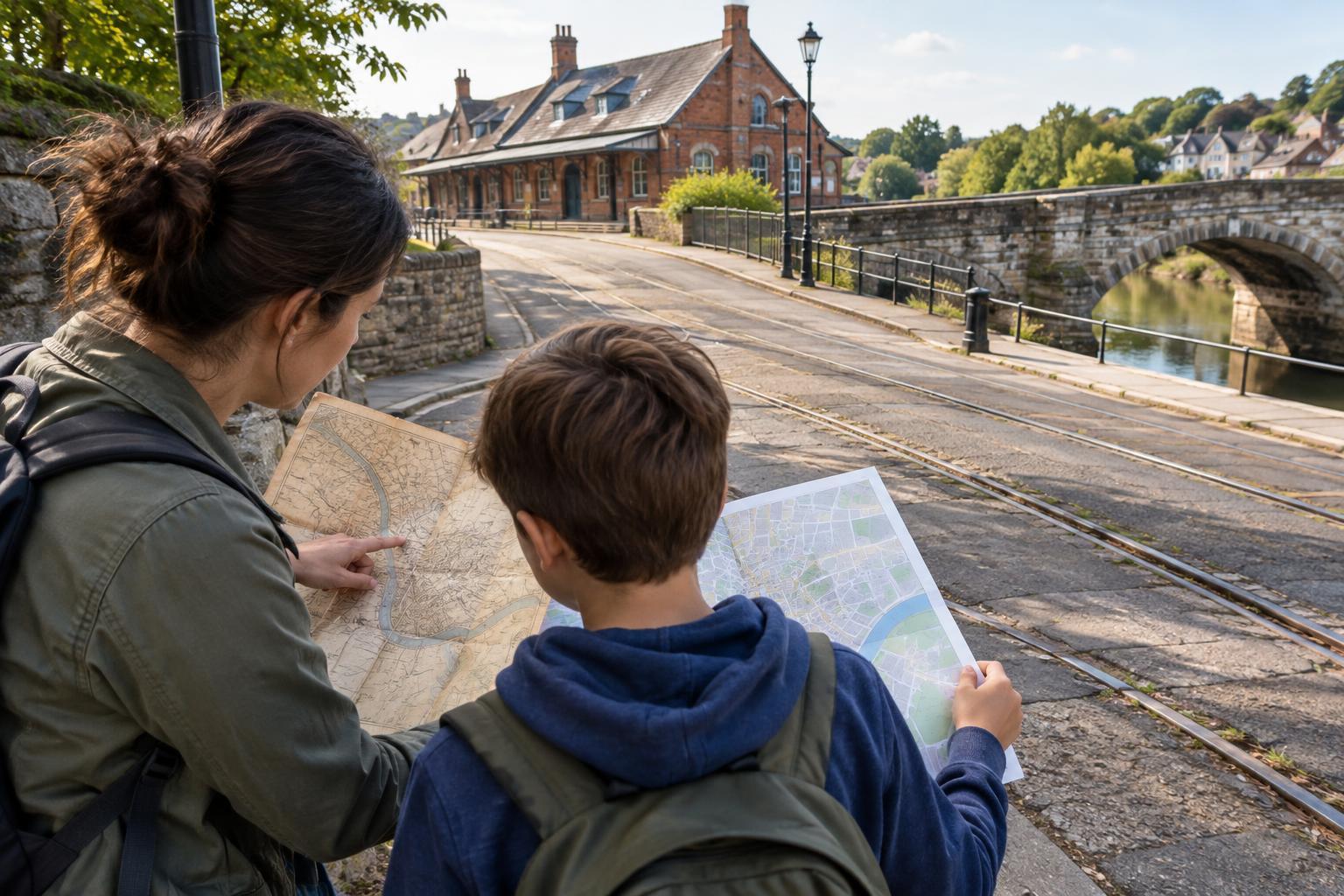
Local HistoryA street corner, bridge or former station can open a family investigation into how people once moved around a neighborhood. Learn how to compare maps, check records, observe surviving clues and build a transportation timeline.
Read article · 4 min↗
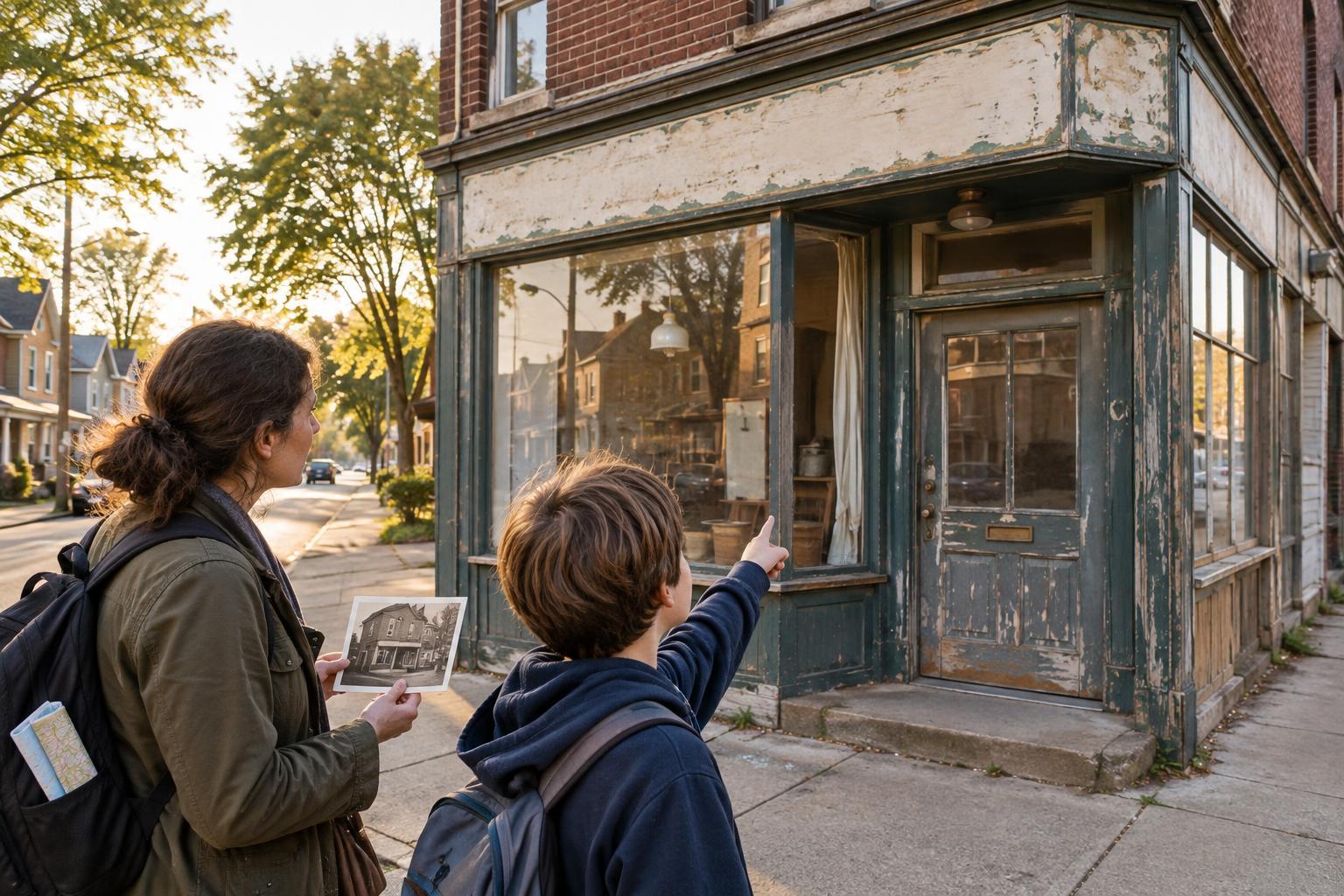
Local HistoryAn old sign, an unusual doorway or a family photograph can open a conversation about the shops and services that once shaped a neighborhood. Learn how to investigate former businesses with children through observation, maps, archives and respectful conversations.
Read article · 4 min↗
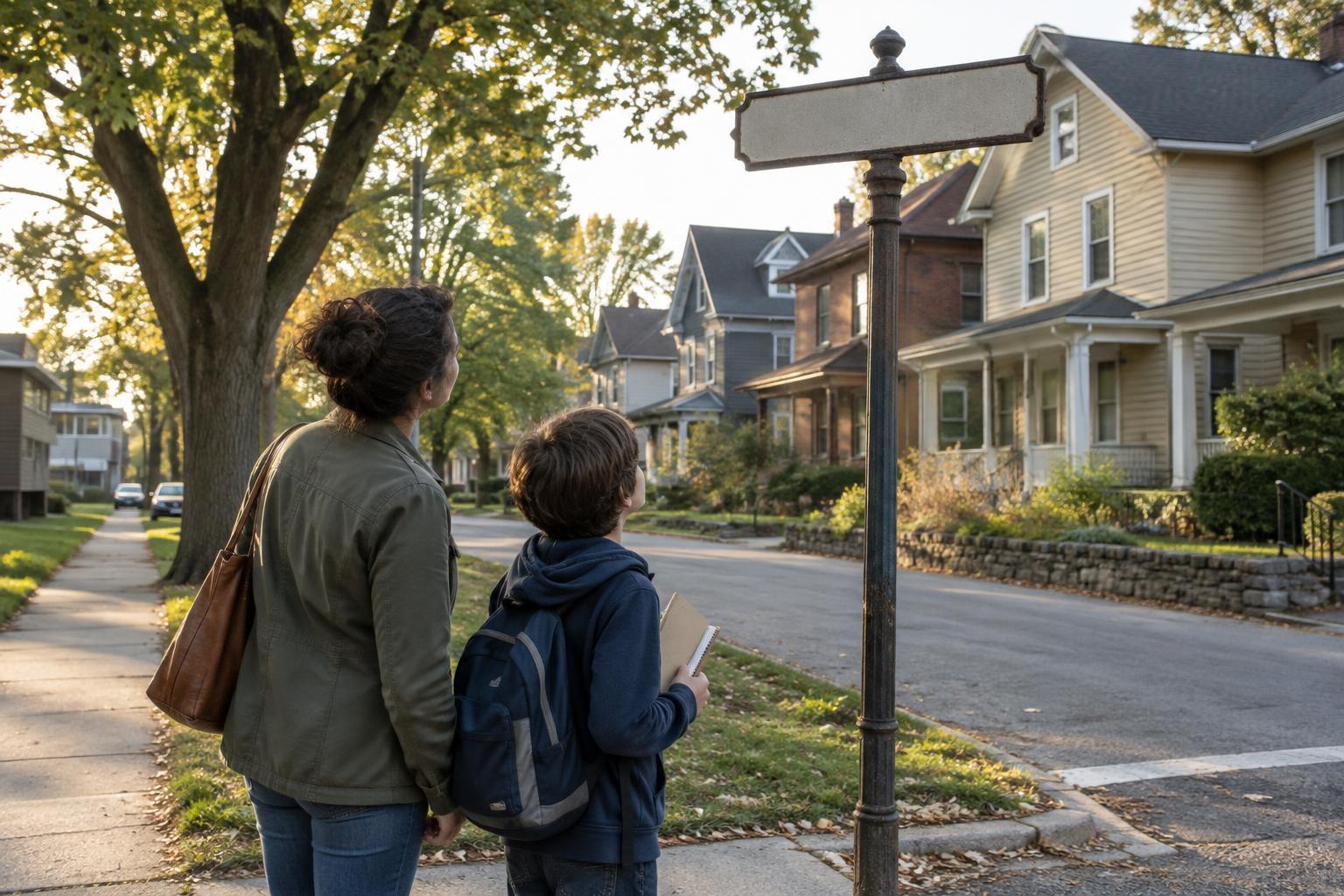
Local HistoryA street name can turn an ordinary walk into a history question. Learn how families can notice naming patterns, investigate possible stories and recognize what a sign leaves out.
Read article · 4 min↗
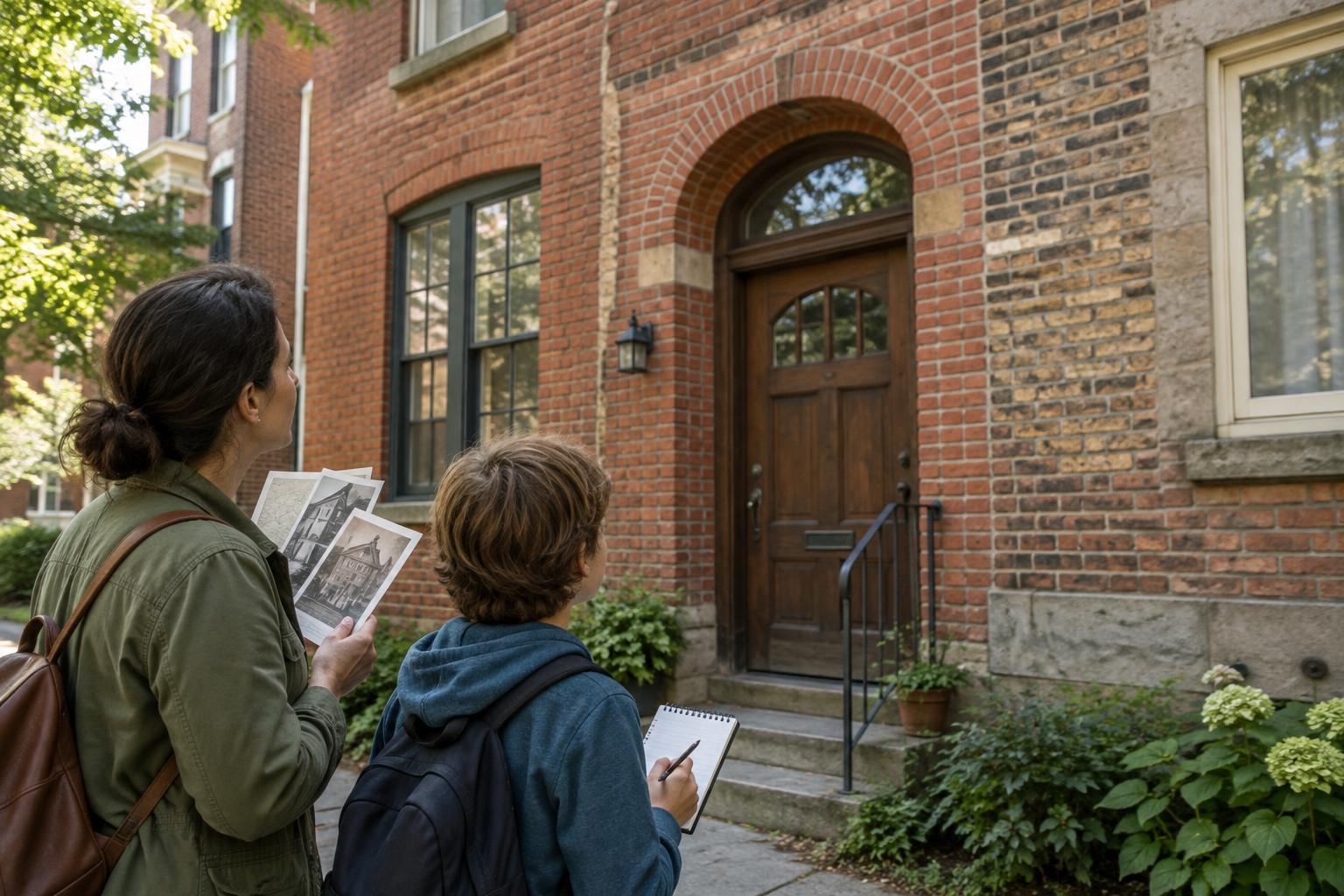
Local HistoryAn old-looking doorway is a clue, not a date. This family-friendly guide shows how to investigate a building using observations, maps, photographs and public records—and how to describe what you find when the evidence is incomplete.
Read article · 3 min↗
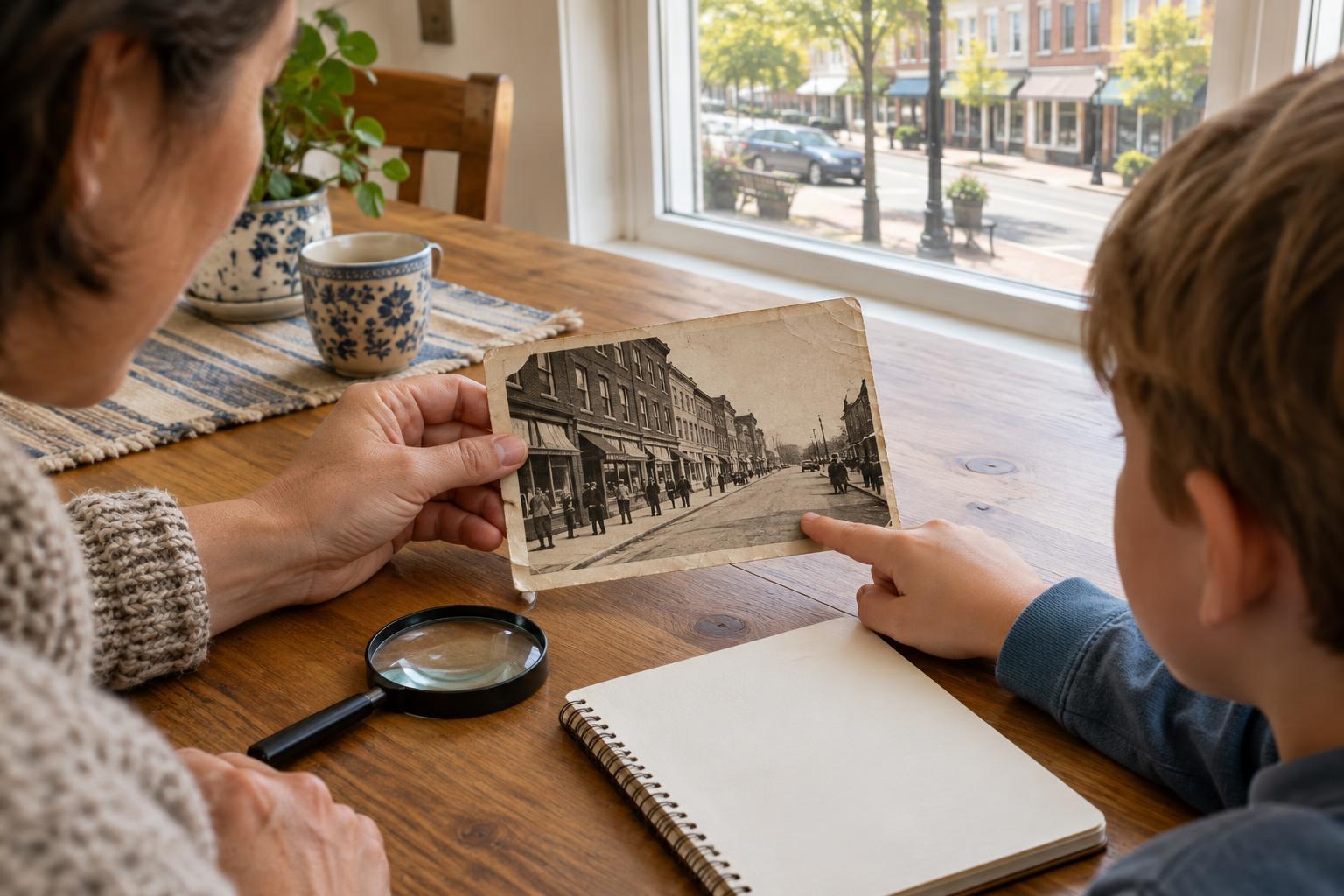
Local HistoryAn old photograph can make a familiar street look unfamiliar. Learn how to examine visible details, check what a caption can and cannot tell you, and turn unanswered questions into a family local-history project.
Read article · 4 min↗
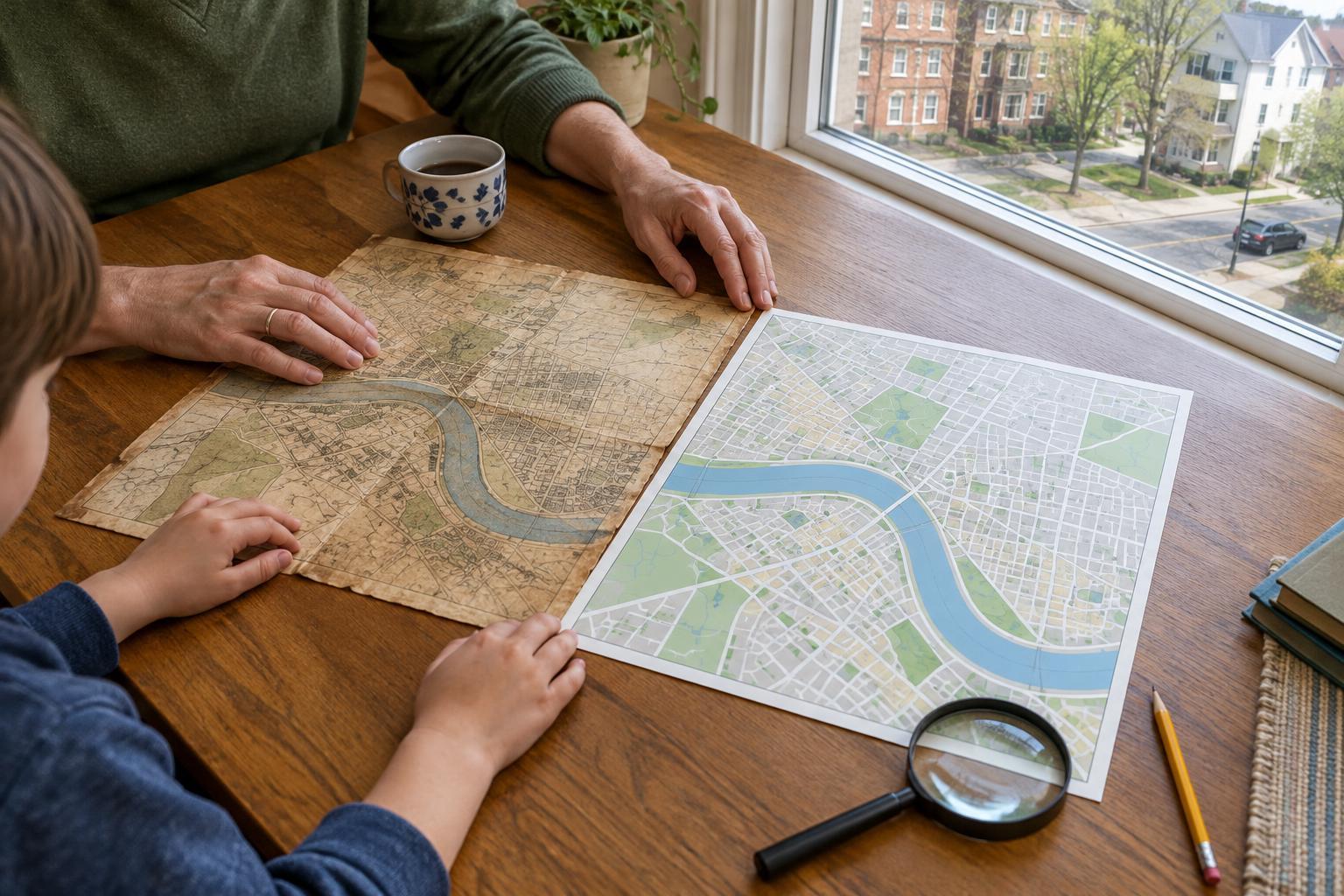
Local HistoryAn old map can turn a familiar street into a question: What was here before? Learn how to compare maps with children, spot meaningful changes, and follow up with a safe neighborhood walk.
Read article · 4 min↗
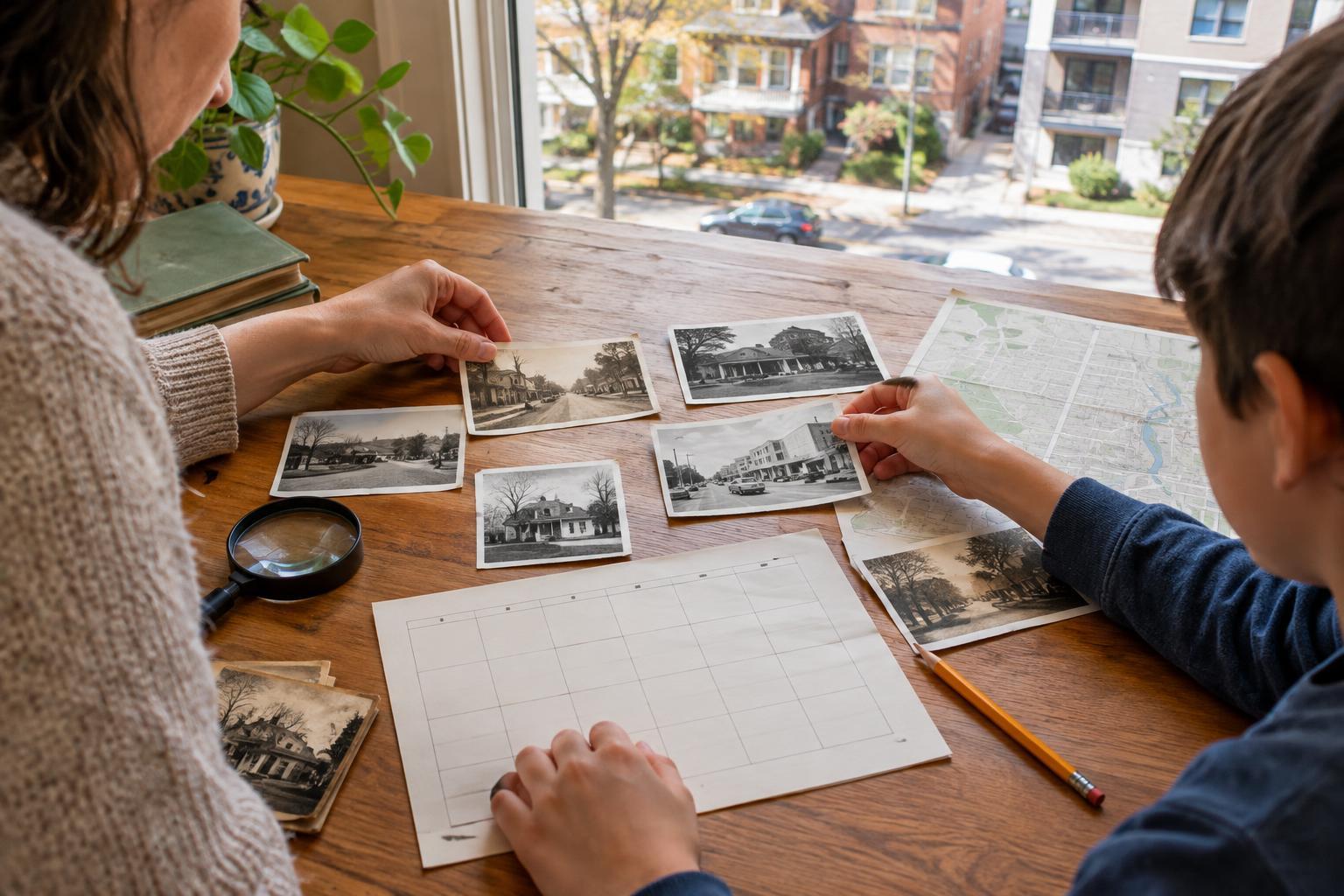
Local HistoryA neighborhood timeline can turn an ordinary walk into a local-history project. Learn how to gather dated clues, check what each date actually means, and arrange your findings into a timeline that leaves room for questions.
Read article · 4 min↗
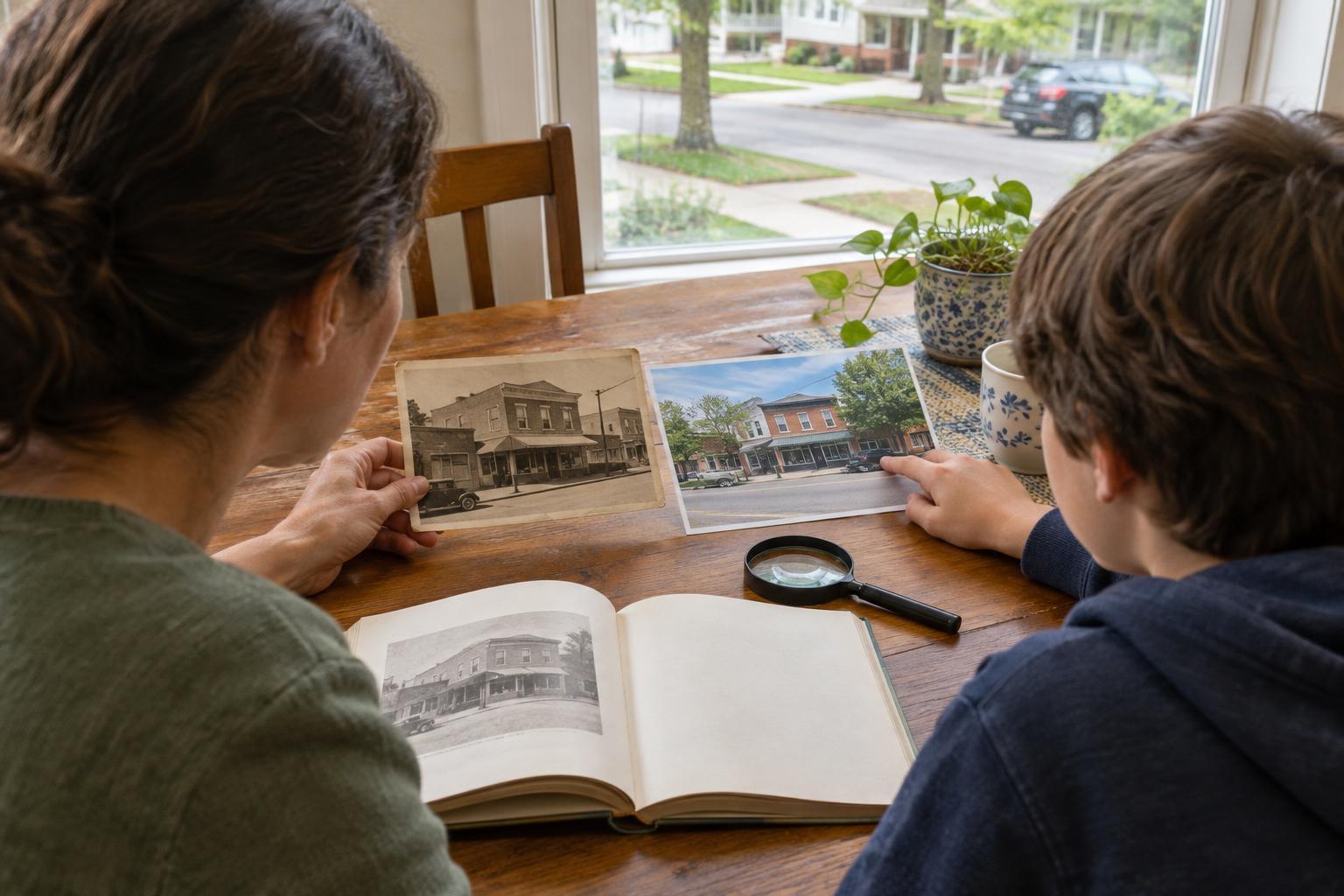
Local HistoryA street name, an old photograph or a changing storefront can spark a local history question. Learn how families can use primary and secondary sources together, check what each one can tell them and make room for unanswered questions.
Read article · 4 min↗
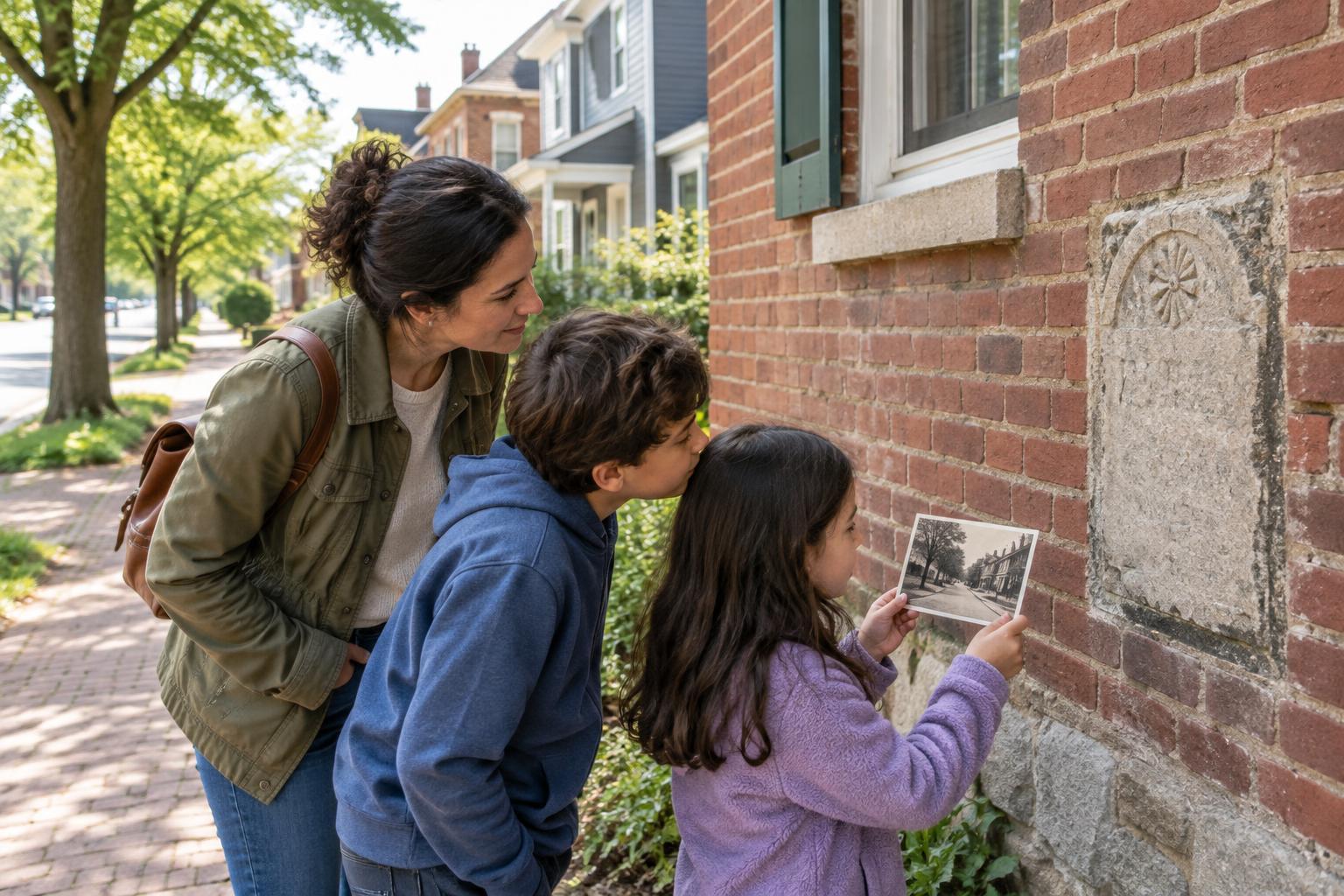
Local HistoryLocal history is the story of a place and the people who have lived there. Families can explore it through everyday walks, old photographs, public records and conversations. This guide offers simple ways to begin, along with questions that help children notice change and think carefully about what they find.
Read article · 4 min↗