Start with one event and one question
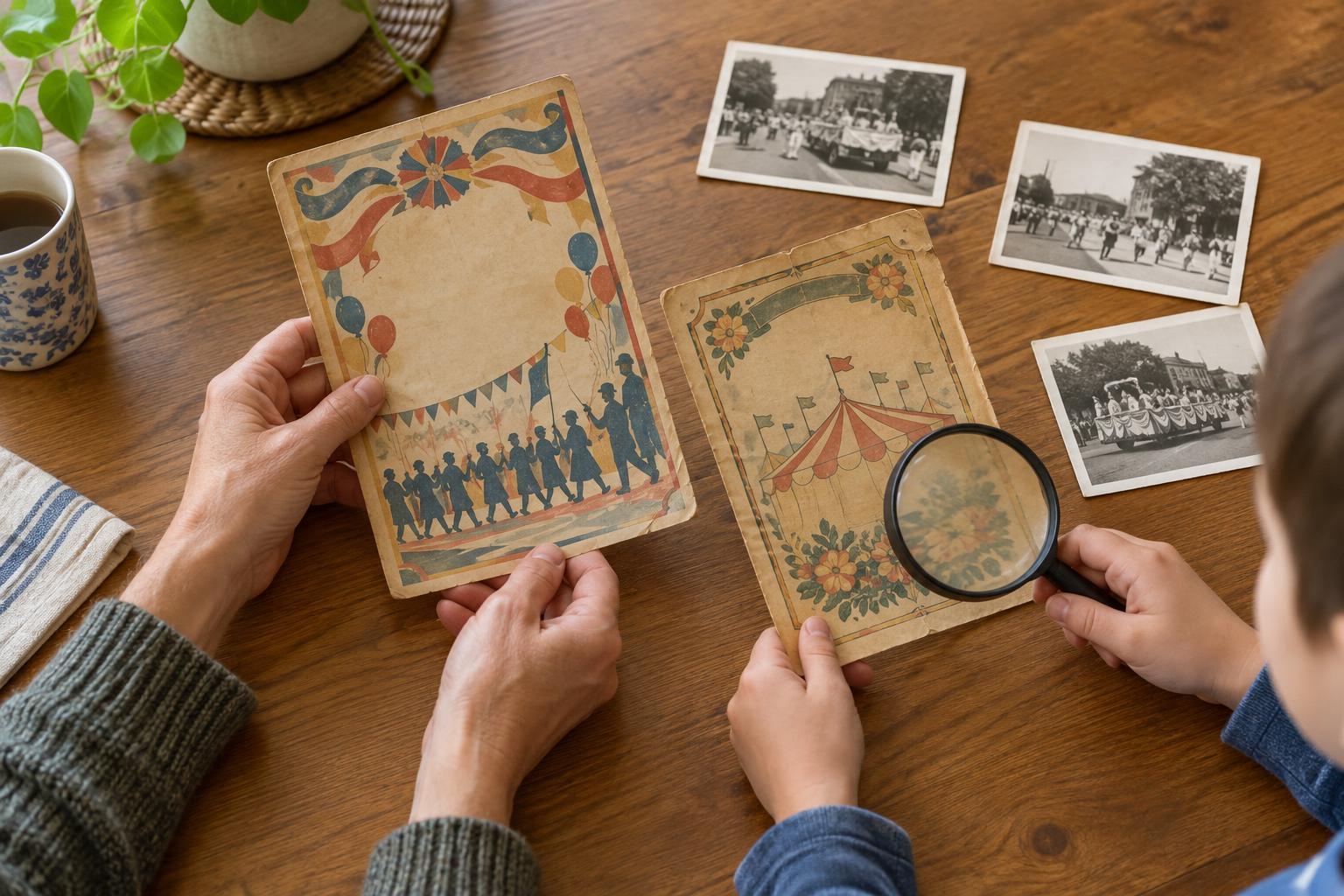
An old flyer can make a community celebration feel close enough to imagine: it may name a gathering place, list activities, or show how organizers invited people to take part. Yet a flyer records a plan, not everything that happened. That distinction makes it a useful starting point for family history exploration. Choose one recurring celebration, such as a neighborhood fair, holiday gathering, or cultural festival, and ask a manageable question: Where did people gather? How was the event described? Who helped organize it?
Begin with materials you already have permission to examine. A family keepsake box might contain a program or invitation; a library or local archive may have publicly accessible collections. Record where each item came from, any date printed on it, and whether it is an original, a scan, or a later reproduction. If you cannot establish a date, mark it as unknown rather than estimating from the design. Children can help create a simple source card for each item so that observations do not get separated from their origins.
Read the details before telling a story
Look closely at the words and images together. What is the event called? Is an organizer named? Does the program list performers, food, games, sponsors, or a route? Notice whether admission or registration is mentioned and whether the invitation describes a particular audience. Make two columns labeled “What the item says” and “What we wonder.” A printed start time belongs in the first column; a guess about how many people attended belongs in the second.
Place names offer another line of inquiry. If a flyer names a hall, schoolyard, or street, find its location using an appropriate map or local reference. Discuss what the place may have made possible: space for a procession, access by foot, or room for a shared meal. These are questions to investigate, not conclusions to draw from the flyer alone. A venue listed on a program also does not prove that every part of the planned event took place there.
Compare two moments without assuming progress
If you find materials from more than one year, lay them side by side. Compare event names, locations, organizers, schedules, languages used, and activities offered. Let children circle one detail that stayed the same and one that changed. A different meeting place could reflect many circumstances, including available space or a new organizer; the documents may not explain why. Write a question about the change rather than choosing the most exciting explanation.
Try building a small comparison chart with three headings: “Earlier item,” “Later item,” and “What we still need to know.” If a program lists a new performance, for example, the chart can show when it appears in the materials you found. It cannot establish that the performance had never been part of the celebration before. The earliest surviving item is not necessarily the first event. This careful wording helps families see history as an investigation rather than a puzzle with every piece already in the box.
Notice who the paper leaves out
Programs usually reflect the choices of the people who made them. A list of speakers may tell you little about volunteers, nearby residents, or people who felt unwelcome. A flyer addressed to the whole town does not prove that everyone participated. Ask whose names appear, whose work is acknowledged, and whose experience would require another kind of source. Photographs, newspaper accounts, or memories might add perspectives, but each has its own limits.
If someone offers a personal memory, ask permission before recording or sharing it. Let them decide what they want to discuss, and keep their account alongside—not underneath—the printed evidence. When accounts differ, record the difference respectfully. People can remember separate parts of the same day, and a printed schedule may describe what was intended rather than what a participant experienced.
Finish with a one-page family exhibit: a drawing or permitted copy of an item, a few verified details, and two open questions. Label guesses clearly and credit the source of any materials you share. The result need not be a complete history of the celebration. It can show how one small piece of paper helps a family ask better questions about a place and the people who gathered there.