Start with a route and a few clear rules
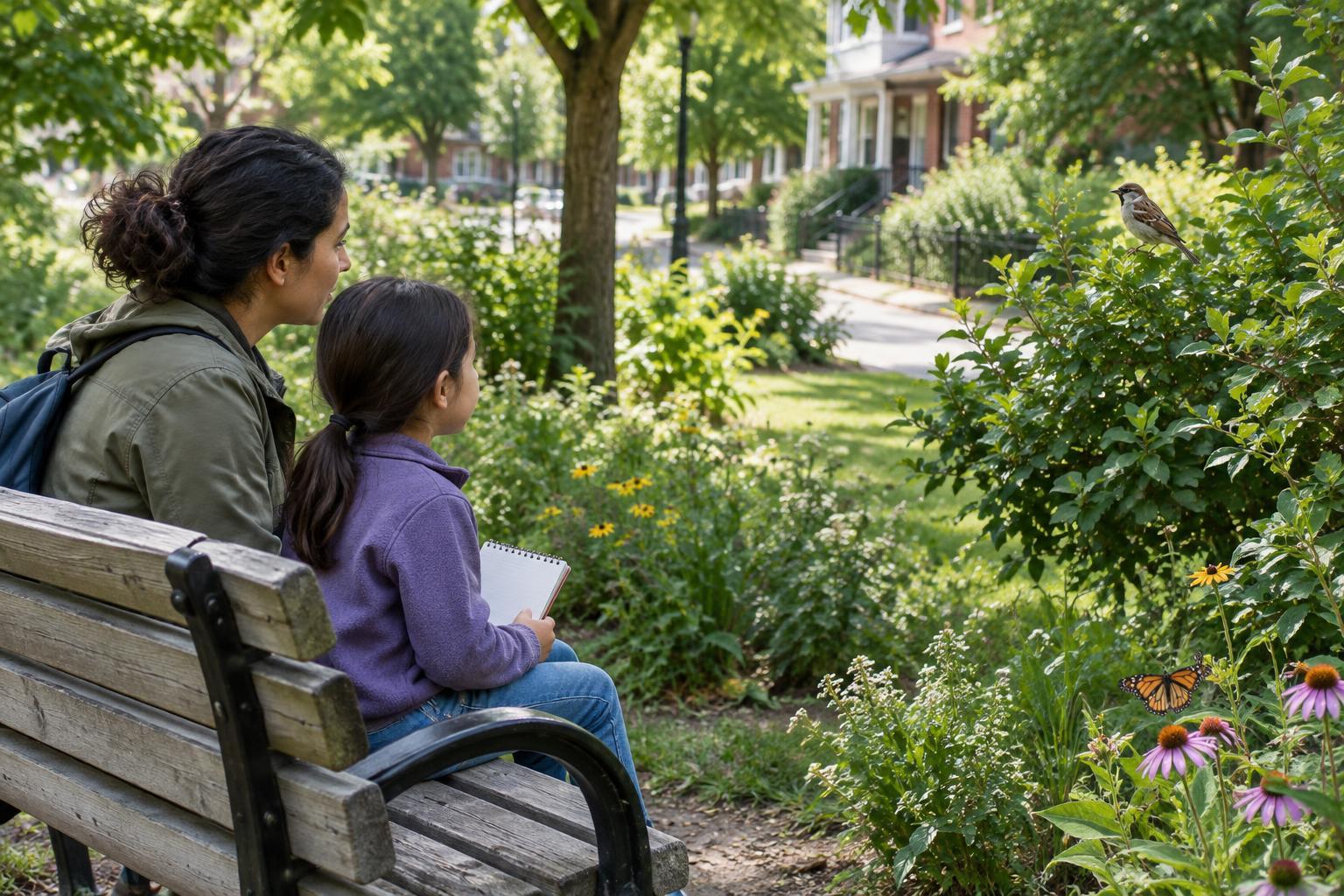
A neighborhood scavenger hunt can make a familiar walk feel new. The goal is not to find hidden objects or reach a stranger’s front door. It is to notice what can be seen while moving through shared spaces: a pattern in a sidewalk, the shape of a roof, or the different sounds along one block.
Choose a short route your family can comfortably follow using public sidewalks, paths or other places open to visitors. Check where crossings are, decide on a turnaround point and leave time to stop without blocking the way. Before setting out, agree that no one will enter a yard, driveway, porch, garden or building to complete a prompt. If an item cannot be seen from the route, skip it. The hunt works just as well without it.
Make a list that rewards looking, not collecting
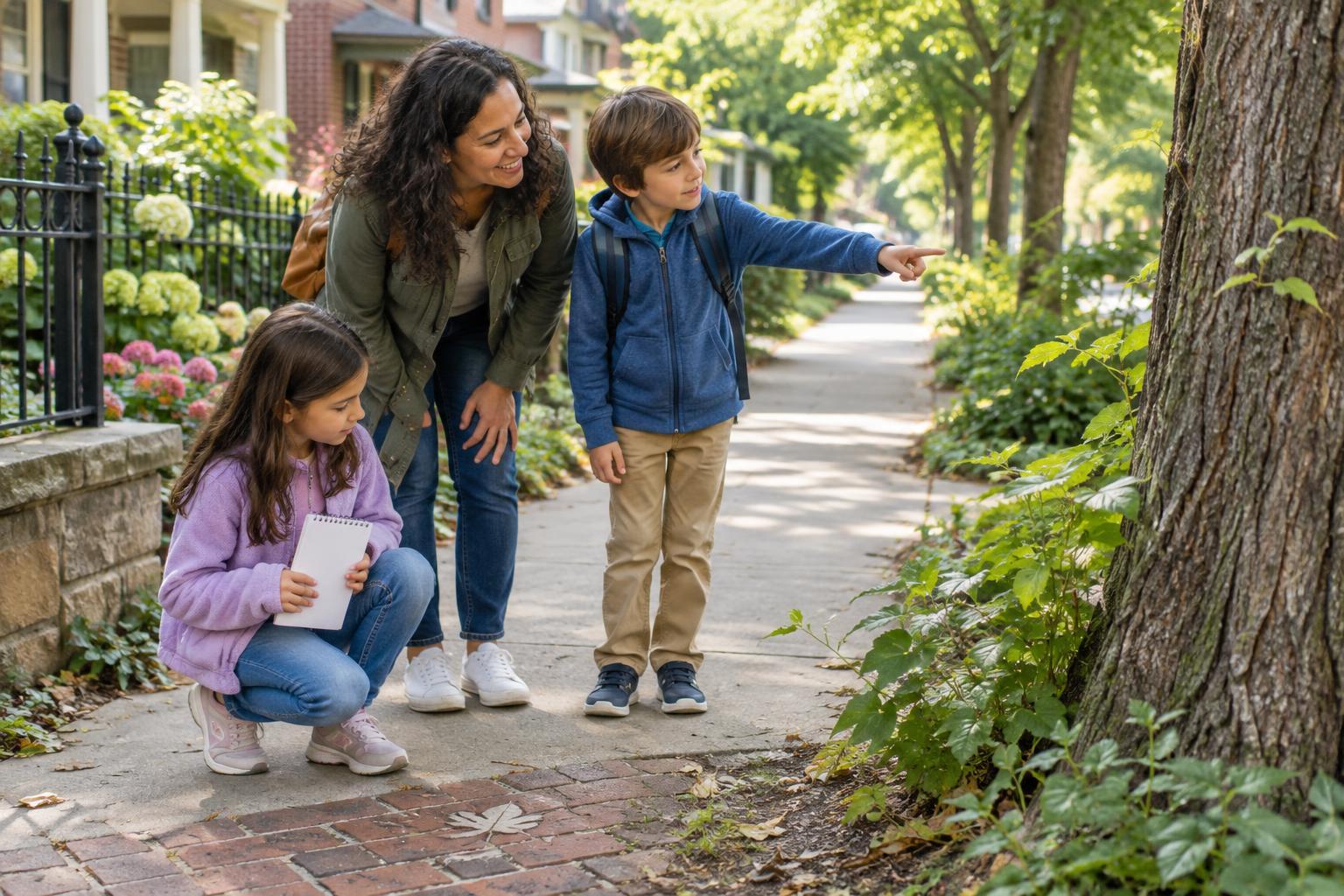
Write six to ten prompts on a small card, or let an older child help invent them. Mix easy finds with questions that invite a closer look: Find three different leaf shapes. Spot a repeating pattern on a fence or building. Notice a place where water might flow after rain. Find two ways people help others navigate, such as a street sign or a marked crossing. Look for evidence that someone repaired or cared for a shared space.
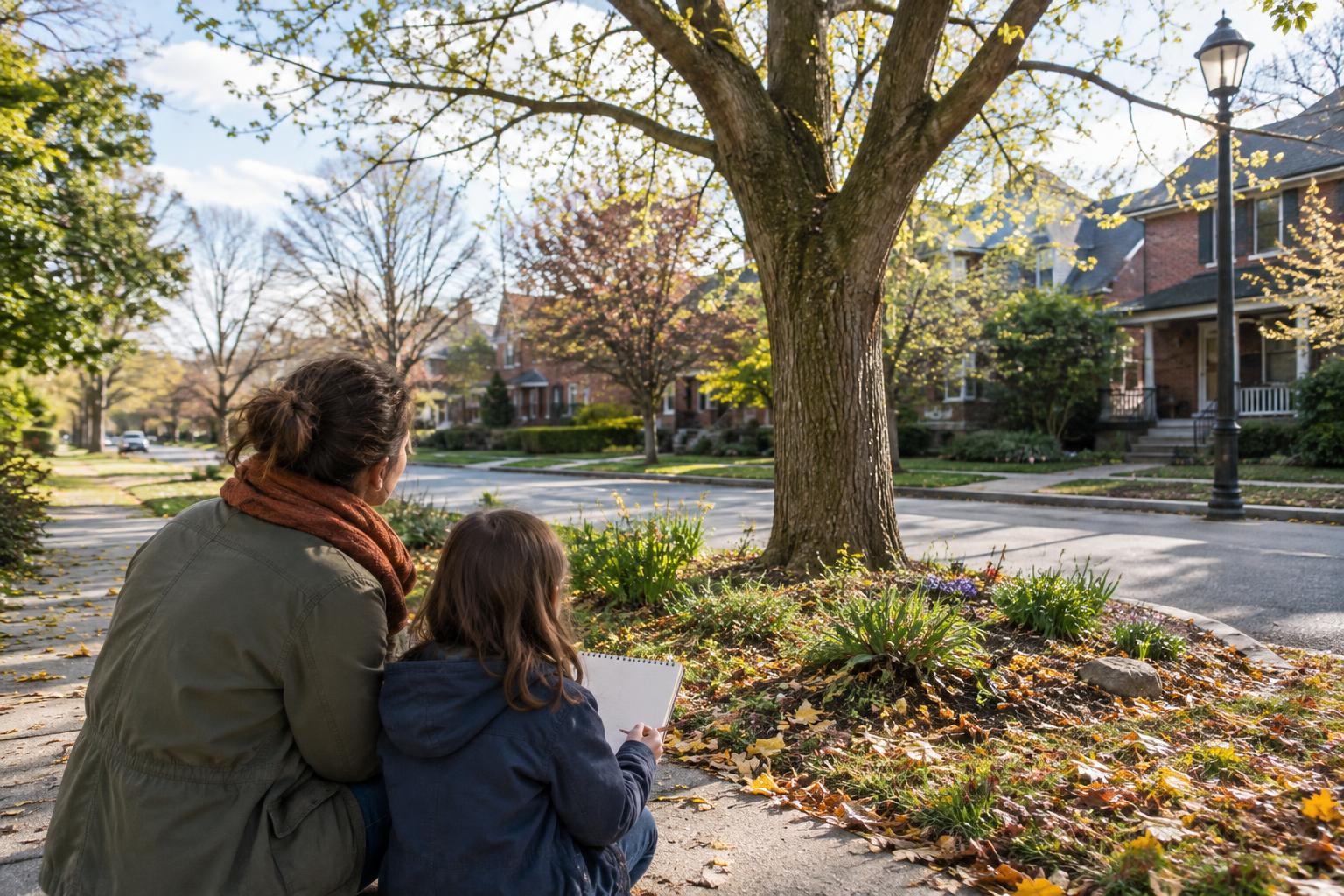
Give each prompt a generous definition so the game stays playful. A child might count a drawing of a tree on a public sign instead of a living tree if that sparks conversation. Rather than picking flowers, moving stones or taking objects home, record discoveries with a word, sketch or tally mark. If your route passes a public notice or historical marker, read it together; do not assume a building’s age or past use from its appearance alone.
Practice being a good neighbor while you search
Keep the focus on visible features, not on the people living nearby. Avoid prompts that ask children to peer through windows, read private mail, photograph residents or identify who owns a home. A colorful doorway may catch your eye, but observing it from a public path is different from approaching it for a better picture. When in doubt, choose another thing to investigate.
Stay together at crossings, and pause where others can pass easily. Use ordinary walking voices near homes and businesses. If a path is closed or a sign asks visitors to keep out, change the route rather than treating the sign as a challenge. These small decisions show children that curiosity and respect can go together: we can learn about a place without treating every part of it as ours to explore.
Give every child a way to participate
Children who are not yet reading can search for colors, shapes and sounds. Older children might compare two blocks: Where is there more shade? Which surfaces seem smooth or rough? What clues suggest how people travel through each area? Encourage guesses, but separate them from observations. “I see a narrow path” is something you can check together; “everyone uses this path” would need more evidence.
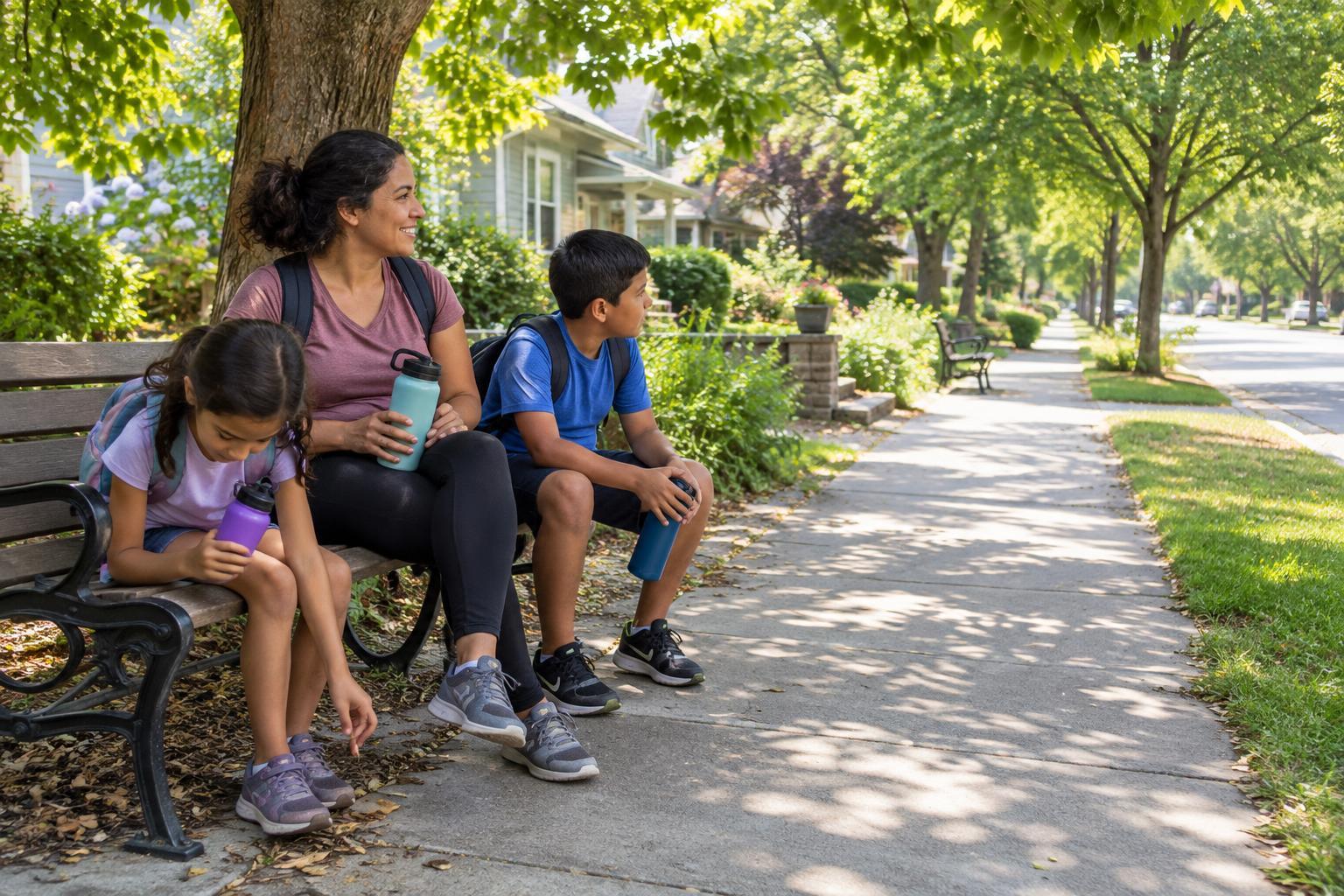
A hunt does not have to cover much distance. You can choose a short, accessible route, take breaks or explore a single public square from one comfortable spot. Offer choices besides taking photos: a child can describe a discovery aloud, draw it later or mark it on a simple route map. If a prompt is out of sight or difficult to reach, replace it. Everyone should be able to help shape the game.
Bring the discoveries home
At the end, invite each person to share one surprise and one question. Perhaps you noticed that some trees grow beside a paved path while others stand in planting beds. You might wonder who maintains them, or why one street has a different name. Write down questions without rushing to invent answers; they can guide a future walk or a visit to a public library.
Save the prompt card and try it again on a different route or in another season. Familiar places often reveal new details when you change what you look for. The best result is not a completed checklist. It is the habit of paying attention to a neighborhood while honoring the boundaries and people that make it a shared place.