Make noticing the goal
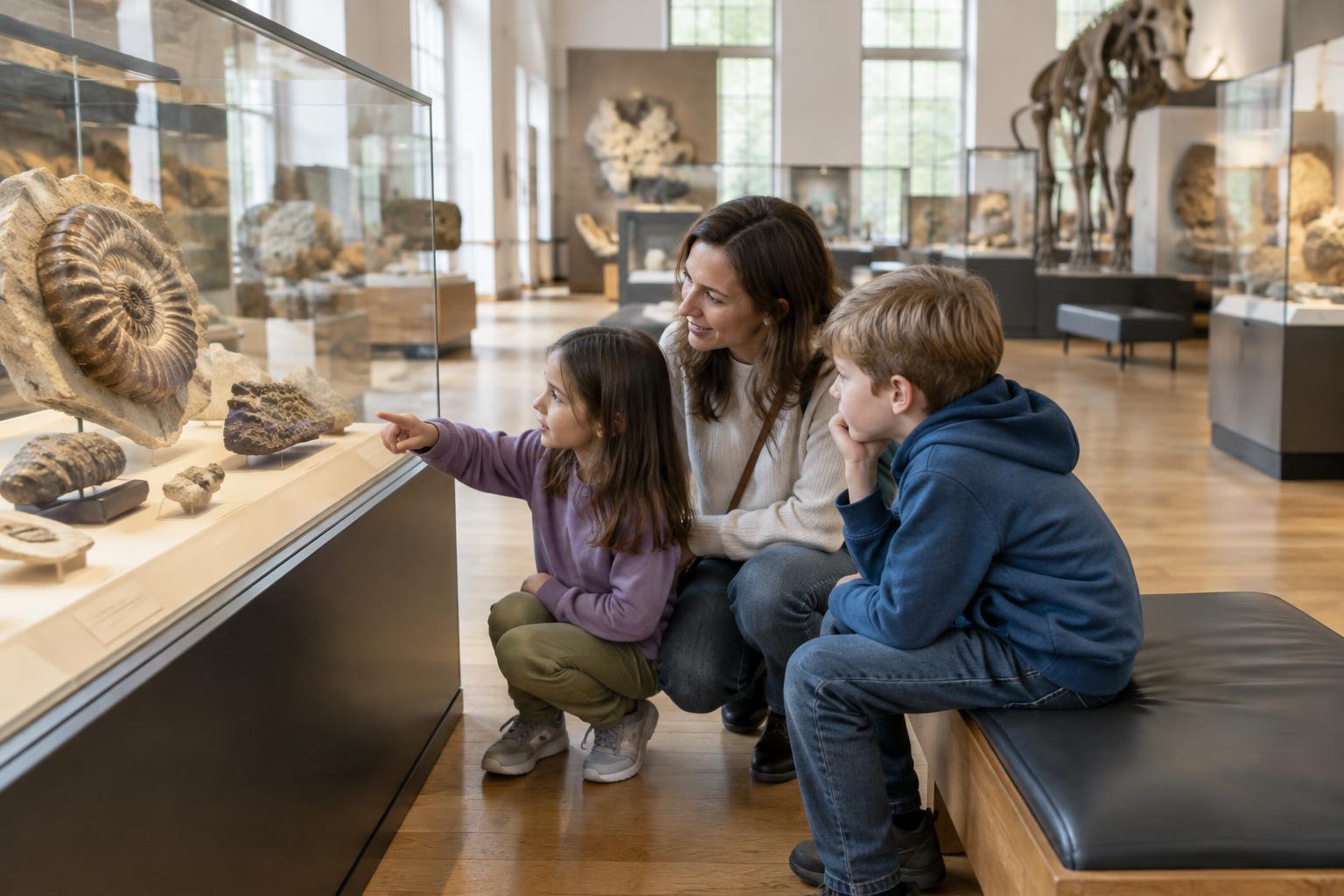
A museum scavenger hunt does not need a checklist of specific objects. In fact, a list that asks children to find a particular painting or artifact can turn a visit into a race from room to room. A no-rush hunt works differently: everyone looks for qualities that might appear in many places, such as a circle, a bright blue patch, or a detail small enough to miss at first glance. There is no need to see every gallery or finish every prompt.
Before you enter, tell your child that the hunt is about looking closely, not being first. Pick three to five prompts that suit the collection you plan to see, and let your child help choose them. You might ask, “Should we look for something striped or something shiny?” A child who has helped set the hunt is more likely to treat it as their own discovery.
Choose prompts that can travel anywhere
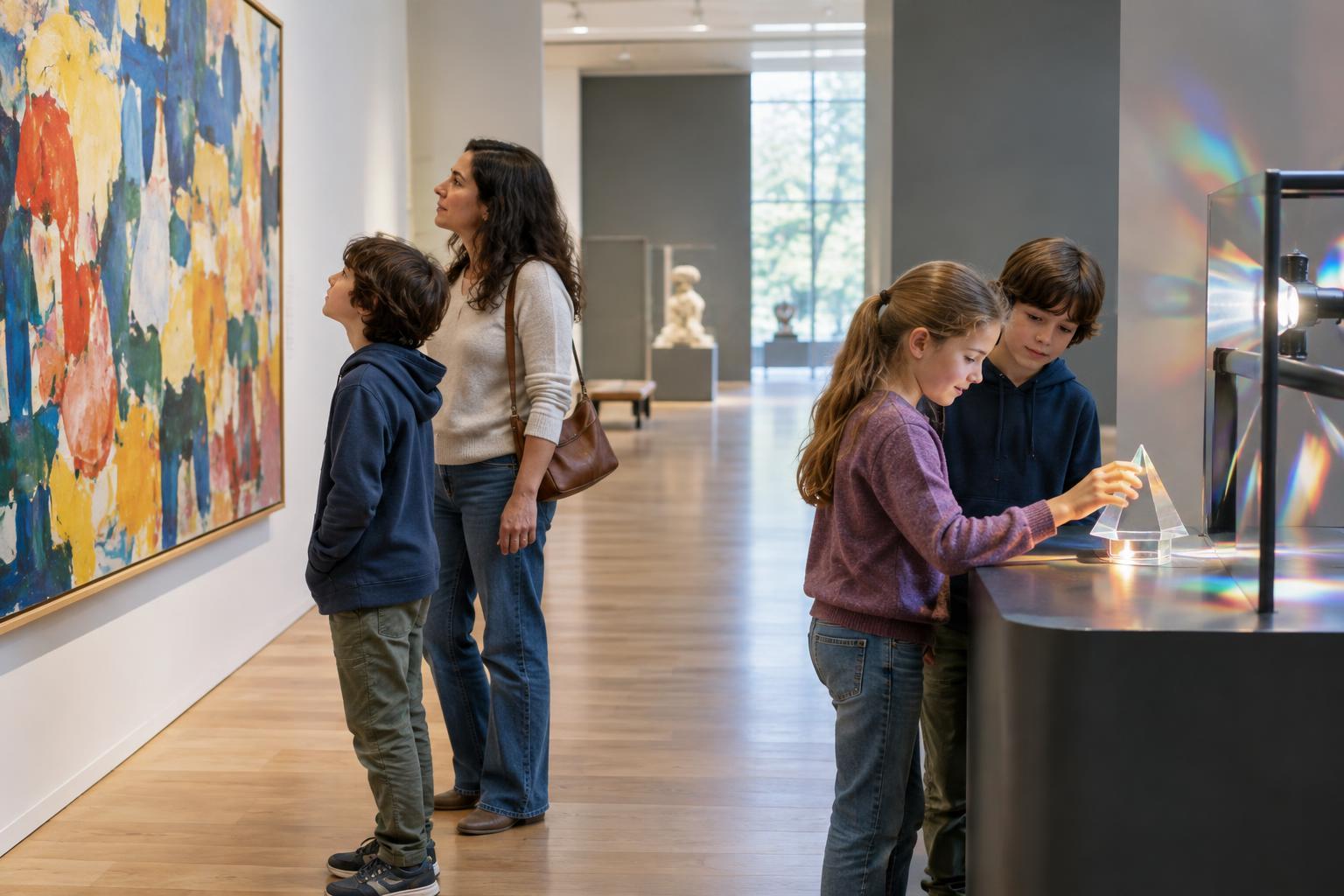
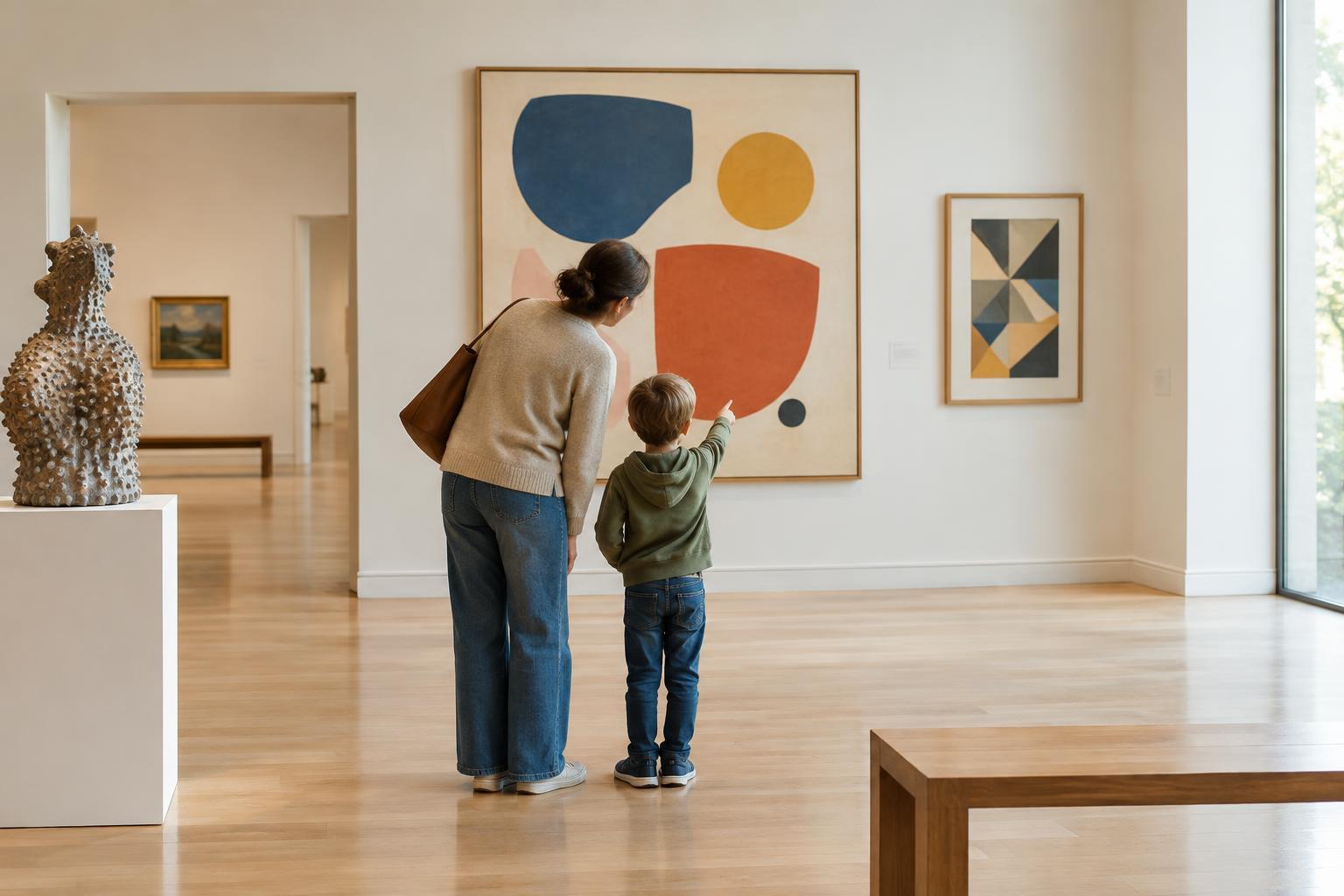
Start with shapes: find a circle, a triangle, a spiral, or a shape that repeats. Then try colors: spot two different shades of the same color, a color used in an unexpected place, or an object with both light and dark areas. These prompts can work across paintings, sculptures, tools, clothing, photographs, and building features. If one room offers no obvious match, that is fine; carry the question into the next.
Details make especially good pause points. Invite your child to find a tiny pattern, a visible join, an unusual edge, or a part of an object that seems designed for a hand to hold. Ask what they noticed before offering your own idea. If the museum allows sketching, a small notebook can hold quick drawings of finds. Otherwise, you can remember them together with simple descriptions such as “the wavy line near the door.”
Let one find lead to a conversation
When your child points something out, resist the urge to move straight to the next item. Give the find a moment. Where else can you see that shape or color? Does it look the same up close as it did from across the room? What might have been tricky to make? Questions with more than one possible answer leave room for imagination and observation.
Object labels can add context, but you do not have to read every word aloud. Try looking first, then using a label to answer a question you actually have. You can also compare two nearby objects: perhaps both have circles, but one uses them as decoration while the other has round parts that serve a purpose. A single thoughtful comparison can be more memorable than a long list of completed prompts.
Keep the hunt comfortable for everyone
Museum spaces have different rules, so check signs or ask staff about touching, photography, sketching, food, and where bags may go. Build those boundaries into the game: looking from a comfortable distance counts, and nobody needs to touch an object to notice its texture. Use quiet voices where appropriate and leave clear paths for other visitors.
The hunt can also adapt to different ages, energy levels, and ways of exploring. A younger child might choose between “round” and “pointy,” while an older child might search for a pattern that changes across an object. Someone who would rather not write or draw can describe a find, point to it, or choose a favorite color. If a gallery feels crowded or tiring, take a break or end the hunt. Stopping while everyone is still curious is a successful visit.
Bring the discoveries home
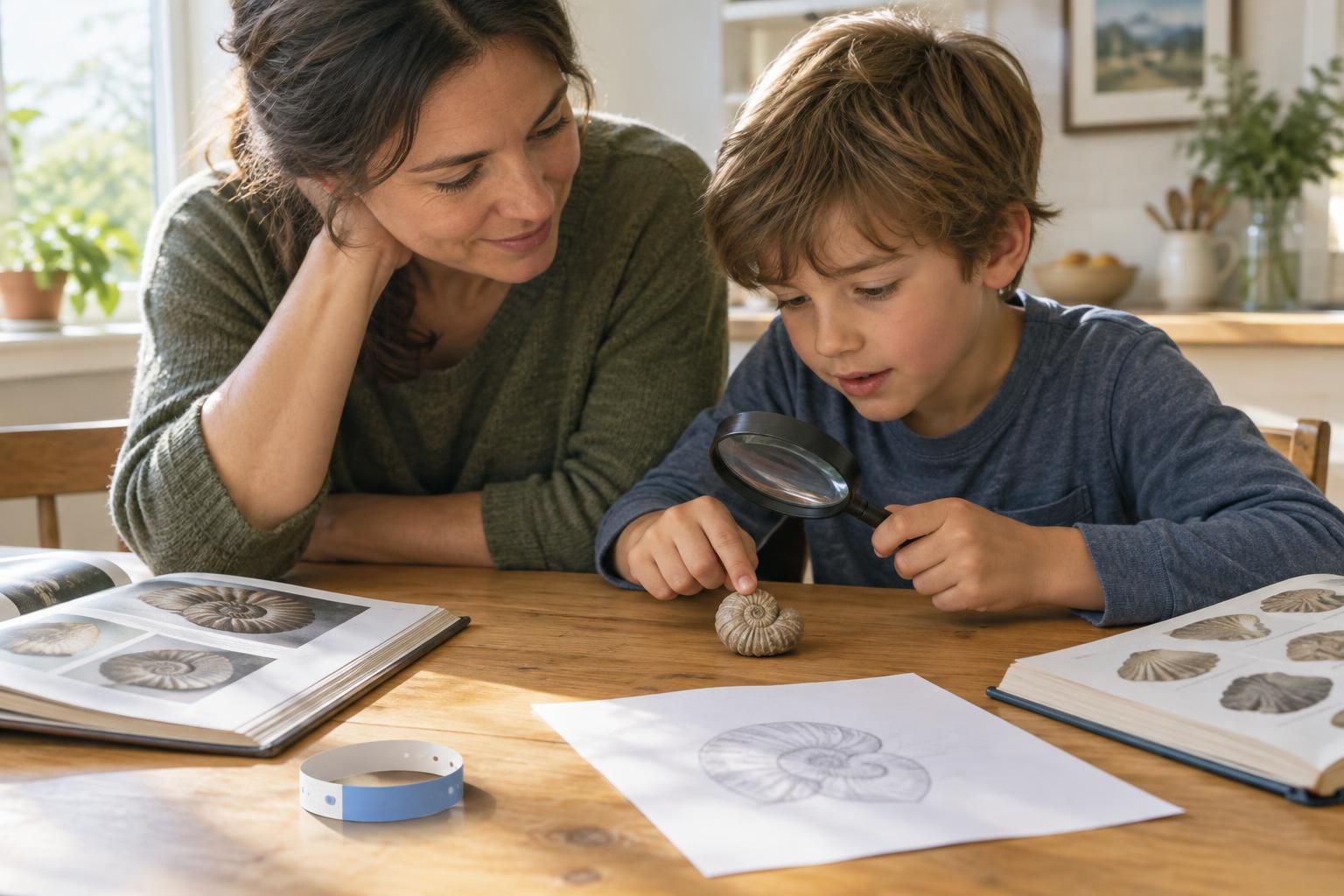
On the way out, ask each person to name one detail they want to remember. There is no need to agree on the best find. At home, you could draw your favorites from memory, arrange colored paper into a pattern you spotted, or look for a familiar museum shape in a window, sidewalk, or kitchen tool. The follow-up need not become a formal project; even a short conversation can help children connect what they saw with everyday life.
Save your prompts for another visit, or invent new ones together. Because this hunt has no fixed route and no final prize, it can change with each museum and each child. Its reward is the habit of slowing down long enough to notice something you might otherwise have walked past.