Start with a familiar stretch
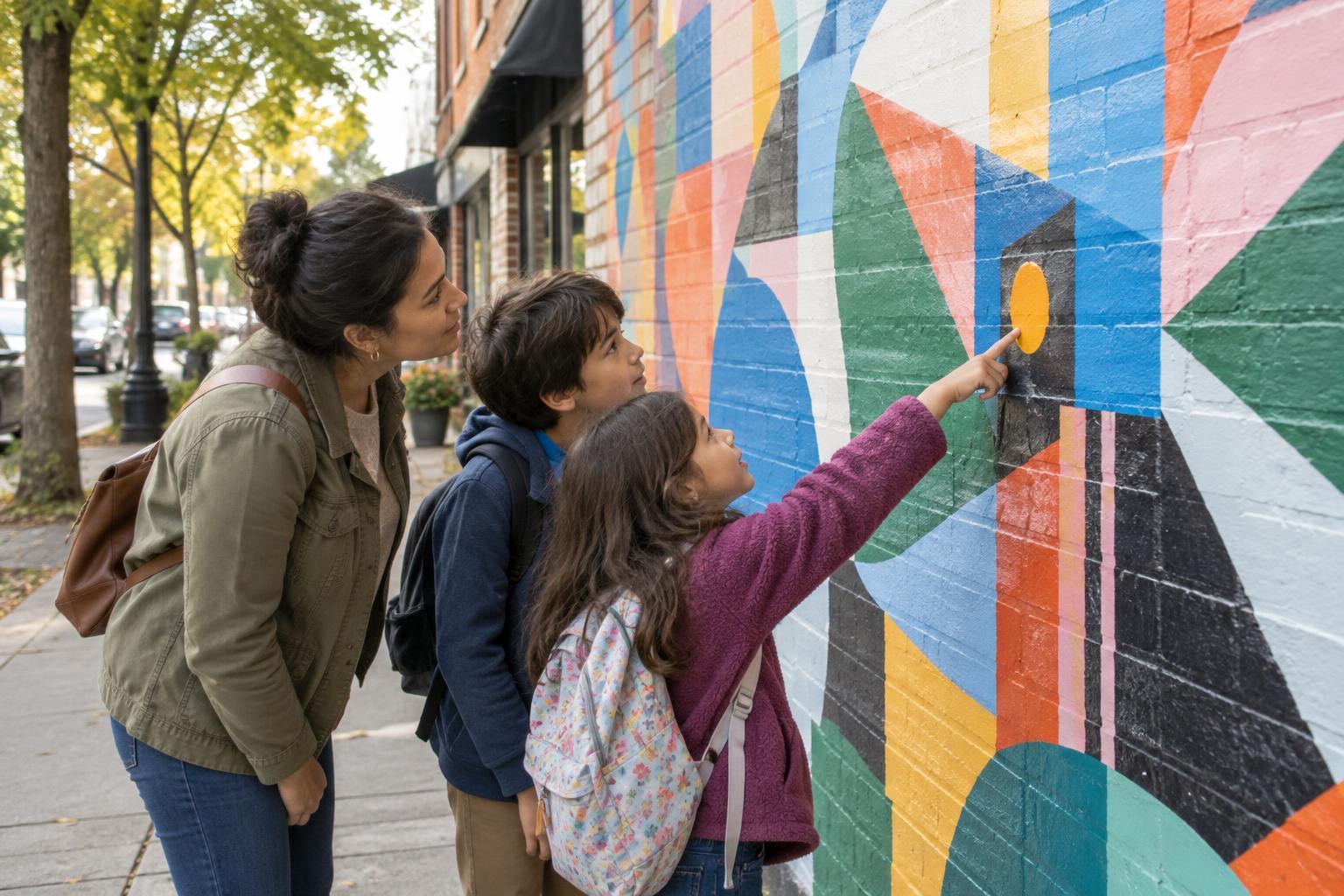
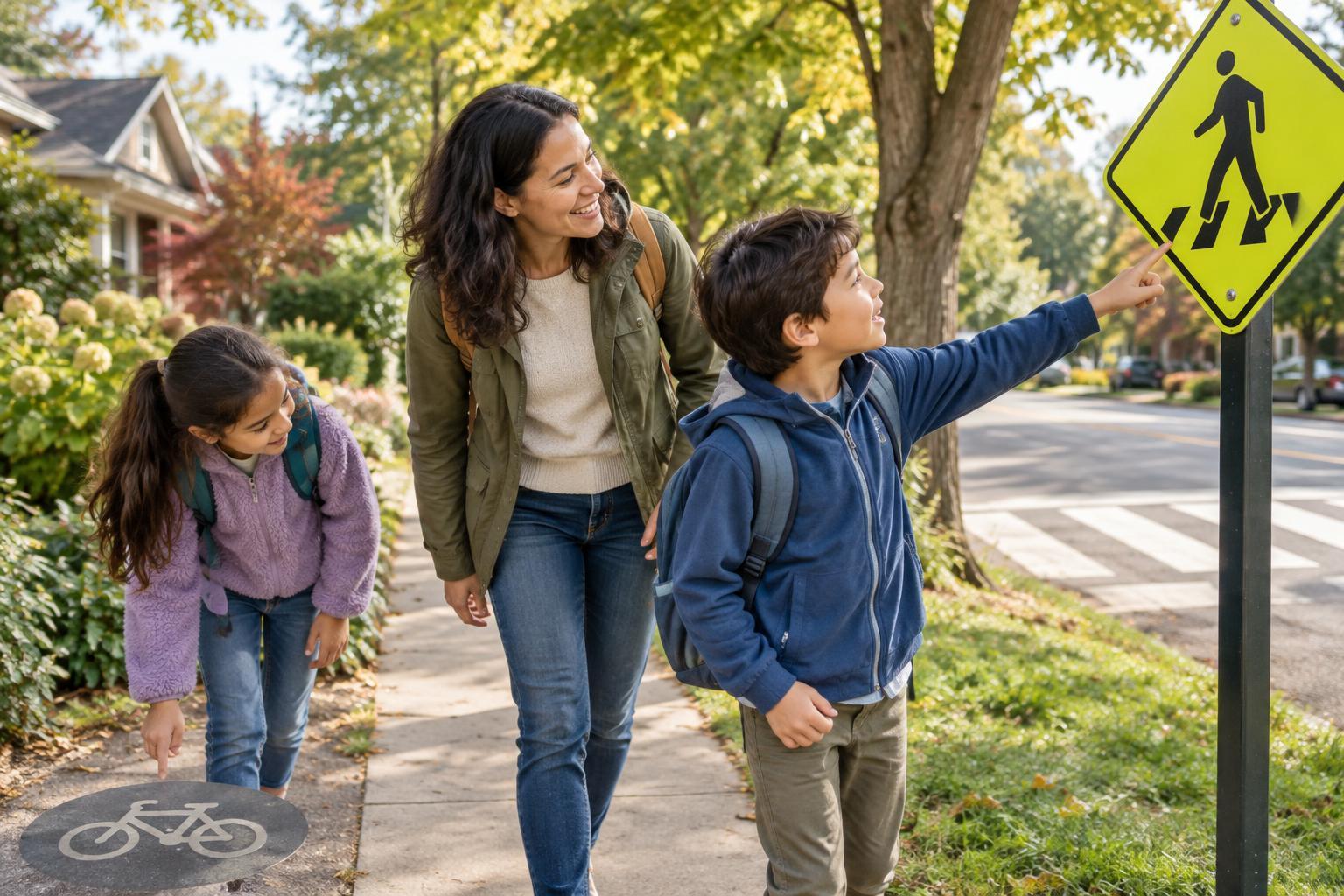
You do not need a new destination to make a neighborhood walk feel like an exploration. Choose a short, familiar route with a sidewalk or other pedestrian path, and invite children to look for shapes, lines, and designs that repeat. A few minutes of close observation can reveal details that are easy to pass by: rectangular paving slabs, parallel fence rails, circles on a utility cover, or the alternating colors of a brick wall.
Before leaving, agree on a simple plan: where you will walk, where you might pause, and how you will stay together. Stop in places that leave room for others to pass, and look carefully before approaching driveways or crossings. If a route is crowded, uneven, or difficult for someone in your group to use, choose another path. The goal is to notice what is around you, not to complete a particular distance.
Give the hunt a few playful rules
Start with three prompts: find a shape, find a line, and find something that repeats. Children can point, describe, or sketch instead of collecting objects. Ask, “What makes you call that a circle?” or “Where does that line go?” There may be several reasonable answers. A row of windows can be a set of rectangles, a repeating arrangement, and a clue about how a building is put together.
Adjust the challenge to your group. Younger children might search for one shape at a time, while older children could look for two patterns that overlap. Try a quiet minute in which everyone searches without speaking, then compare discoveries. Or let each person choose a pattern for someone else to find. These small changes keep the activity open-ended without turning it into a race.
Look closely at lines and repetition
Sidewalks offer a useful starting point because their joints often make a visible grid. Follow a line with your eyes and notice where it stops, bends, or meets another line. Nearby, you might spot diagonal marks on a ramp, curved edges around a planting bed, or branching cracks. Ask which lines seem intentionally placed and which may have appeared over time. You do not need to settle every question to make a good observation.
Next, look for a unit that appears again and again. A fence may repeat the same gap between posts; a wall may repeat a sequence of bricks. Try saying a pattern aloud: “wide, narrow, wide, narrow.” Then look for a place where it changes. A gate, doorway, repair, or corner can interrupt the sequence. Noticing the interruption can be just as interesting as finding the pattern itself.
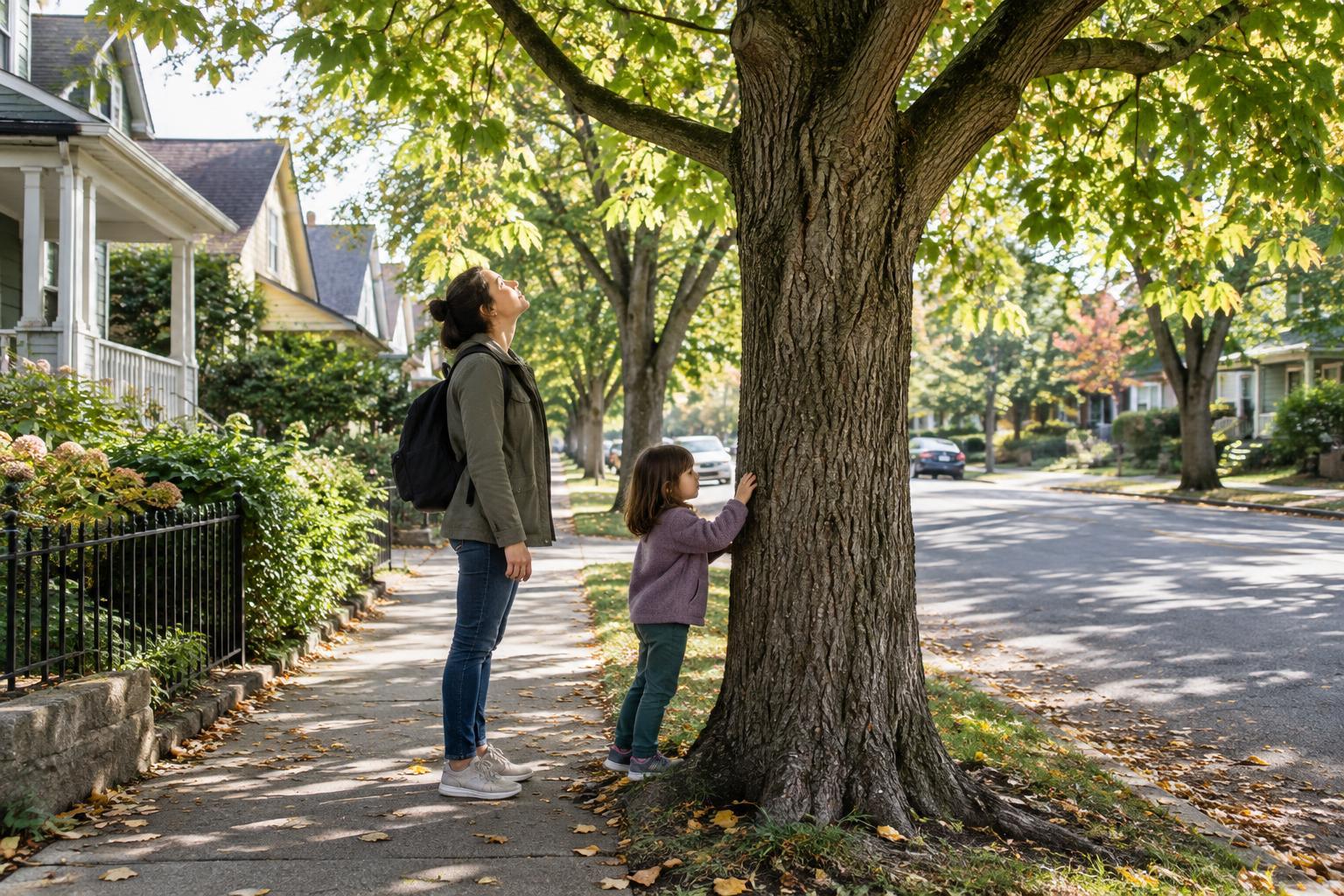
Patterns also depend on where you stand. From close up, a surface may look like separate stones. From farther away, those stones may form stripes or a larger shape. Compare two safe viewing spots and ask what becomes easier to see from each one. This gives children a reason to slow down and reconsider their first impression.
Make room for questions, not just answers
A pattern hunt can lead naturally to questions about a place. Why might a walkway have grooves? Why are some paving pieces different colors? Why does a fence pattern stop at one property and start again at the next? Encourage guesses, but distinguish them from what you can see. “The tiles are different here” is an observation; “someone replaced them” is a possible explanation.
Invite children to choose one question to remember for later. They might draw the feature, describe its location in their own words, or ask an adult to write down their question. There is no need to identify every material or explain how every feature was made. Practicing the difference between noticing and wondering is valuable on its own.
Bring the patterns home
After the walk, ask each person to recreate one discovery using paper, crayons, blocks, or household objects. A child might draw a grid of sidewalk slabs, arrange buttons in an alternating sequence, or invent a fence with an unexpected gap. Compare the new design with the remembered one: What stayed the same? What changed?
For another day, make a small pattern map of the route. Mark a few places with simple symbols, such as a circle for a utility cover or stripes for a wall. You can return on a later walk to see whether you notice the same details or find something new. The sidewalk pattern hunt works best as an invitation to pay attention: even a well-known block can offer a fresh way to look.