Start small and leave room for invention
A useful creative play kit is not a set of instructions for making one perfect object. It is a collection of materials that can become many things: a box might be a house today, a vehicle tomorrow and a stage next week. Starting with a few versatile items makes it easier for children to see possibilities instead of searching through an overwhelming pile.
Choose one container you can comfortably store and bring to a table or floor space. Add materials gradually, noticing what gets used and what merely takes up room. Before saving packaging, check that it is clean, dry and free of sharp edges or leftover contents. Set aside anything unsuitable for the children who will use the kit, and supervise activities according to their ages and abilities.
Gather materials that can change roles
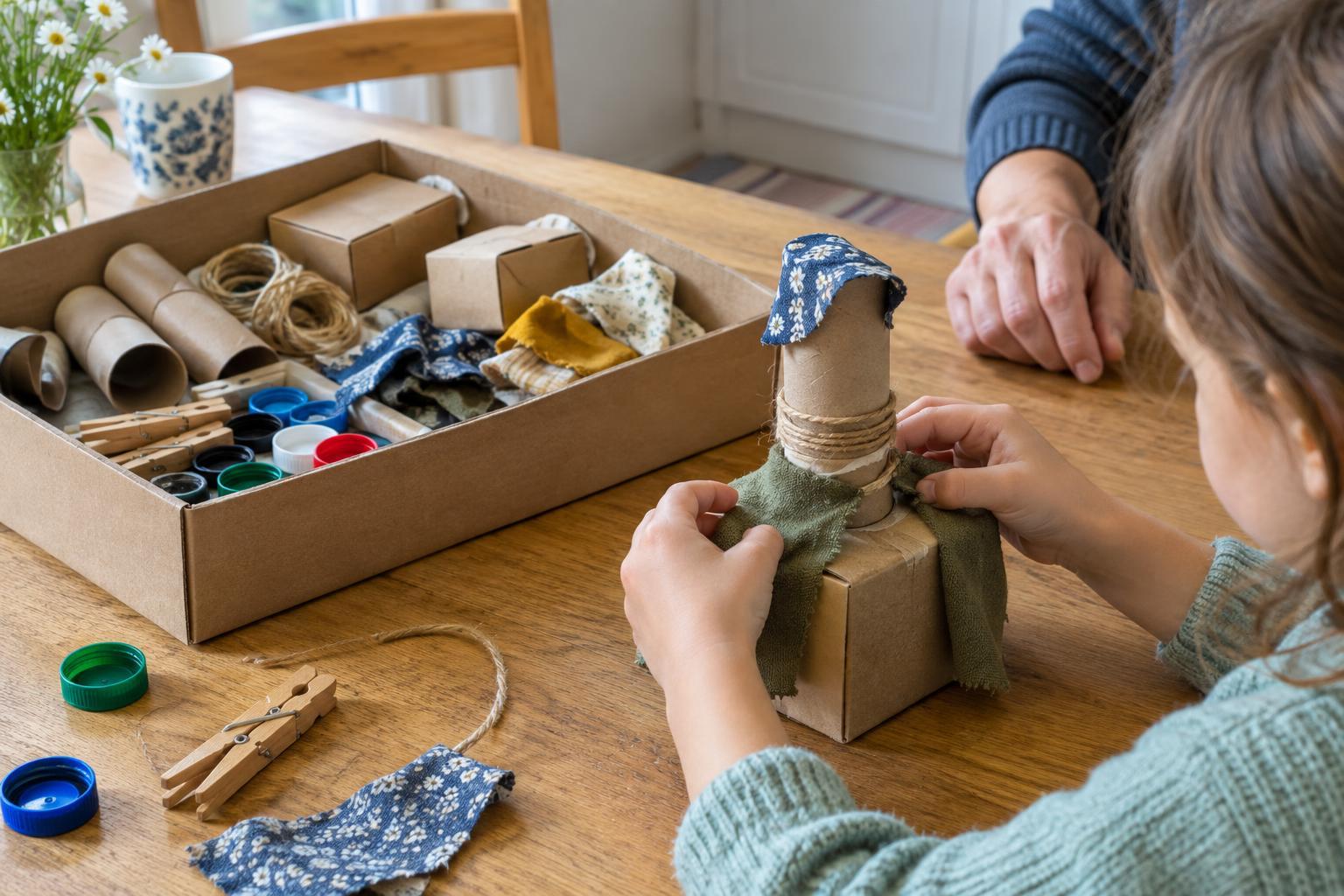
For building, try small cardboard boxes, paper tubes, sturdy scraps of cardboard and clean egg cartons. They can be stacked, joined, painted or turned into settings for small figures. A few sheets of plain paper are just as adaptable: children can draw on them, fold them, make signs or use them to plan a structure before building it.
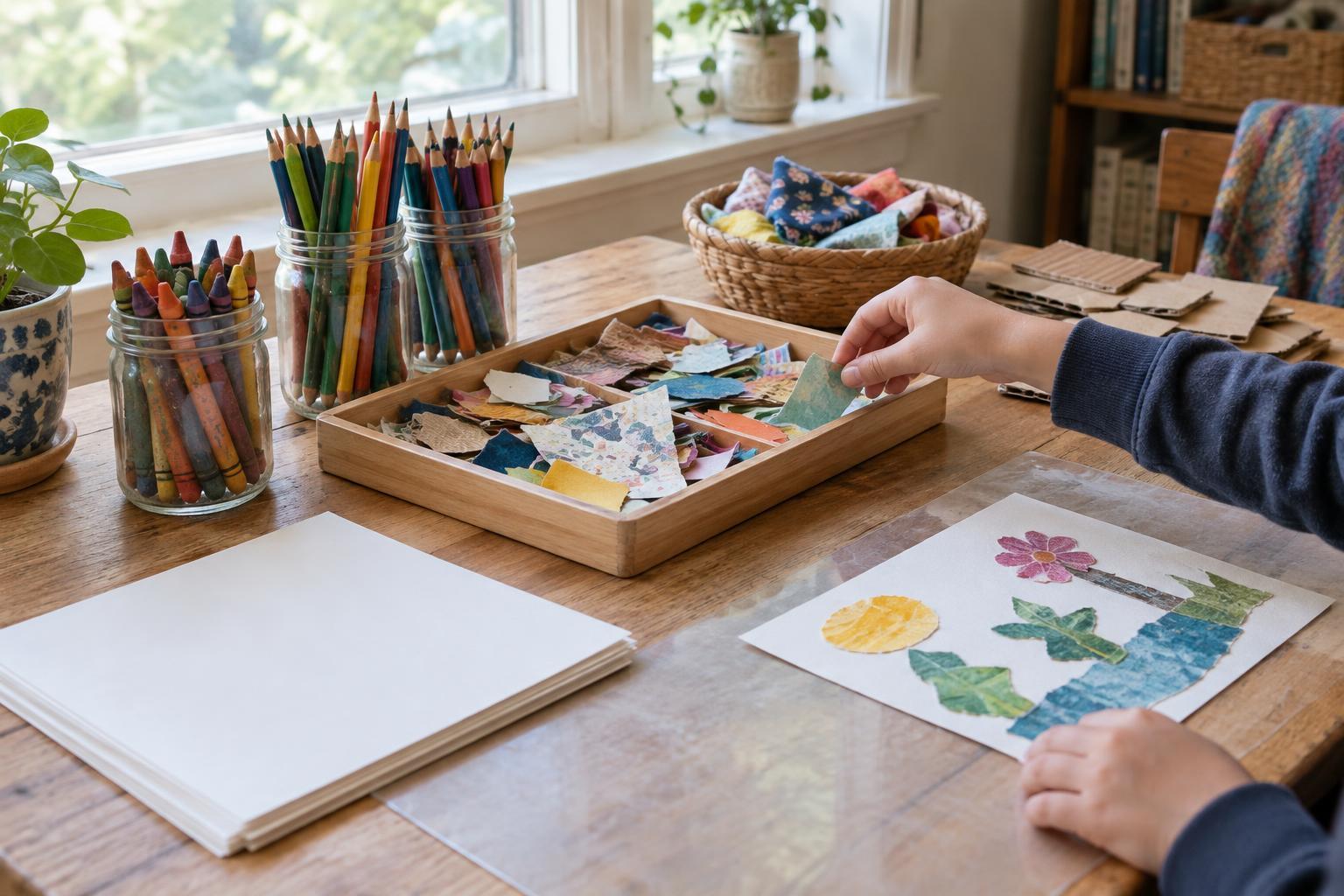
For connecting and decorating, consider masking tape, washable crayons, pencils, fabric scraps and large reusable ribbons. Child-appropriate scissors and glue can be useful when an adult can help as needed. Avoid assuming that every interesting household object belongs in a child’s kit. Items with small detachable parts, long cords, staples, sharp edges or fragile surfaces may be better left out, especially when younger children are involved.
You do not need every category at once. A box, paper, crayons and tape offer plenty of choices. Keeping some materials back also gives you an easy way to refresh the kit later without buying anything new.
Offer an invitation, not an assignment
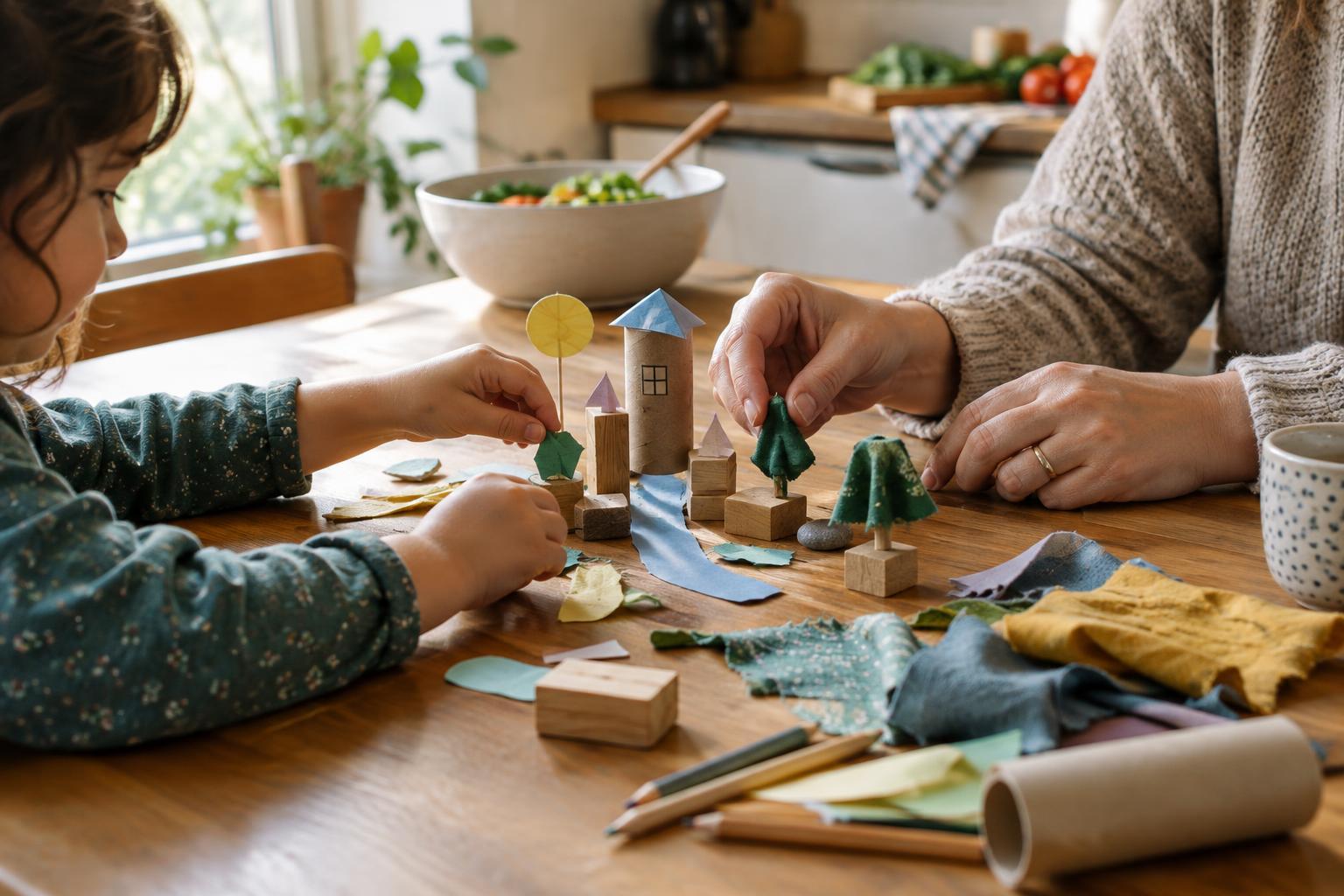
An open-ended prompt gives play a starting point without deciding the result. You might ask, “What could we build that has a door?” or “Can you make a place for an imaginary visitor?” A child might create a cardboard shop, a tiny creature or something with no name yet. Each response is a way to explore materials and ideas.
Try placing just a few items on a clear surface and letting children choose what to do first. If they seem unsure, demonstrate one simple action, such as folding paper to make a wall or balancing a tube on a box. Then step back. Questions like “What would help it stand?” or “What happens if you turn it over?” encourage experimentation without taking charge.
Stories can grow from the making. Once a structure exists, ask who might use it, what happens there or what sound it makes. This gives children a reason to revise their creation, and it makes room for drawing, building and pretend play to overlap.
Make space for testing and changing plans
Creative play often looks untidy in the middle. A tower falls, a taped joint loosens or a drawing becomes something different from the original idea. Those moments are useful opportunities to try another approach. Keep spare paper and a few extra pieces of cardboard nearby so a first attempt does not feel final.
If children want a challenge, suggest a limit rather than a model to copy: build something tall using only three boxes, make a bridge for a toy, or invent a costume detail from paper and fabric. Limits can focus attention while leaving the solution open. For children who prefer storytelling, the challenge might be to make two objects that belong in the same imaginary place.
There is no need to save every finished creation. Taking time to look at it, hear its story or try it out can be satisfying on its own. Ask before taking something apart; some children will want to return to it, while others will be ready to reuse the materials right away.
Keep the kit easy to reuse
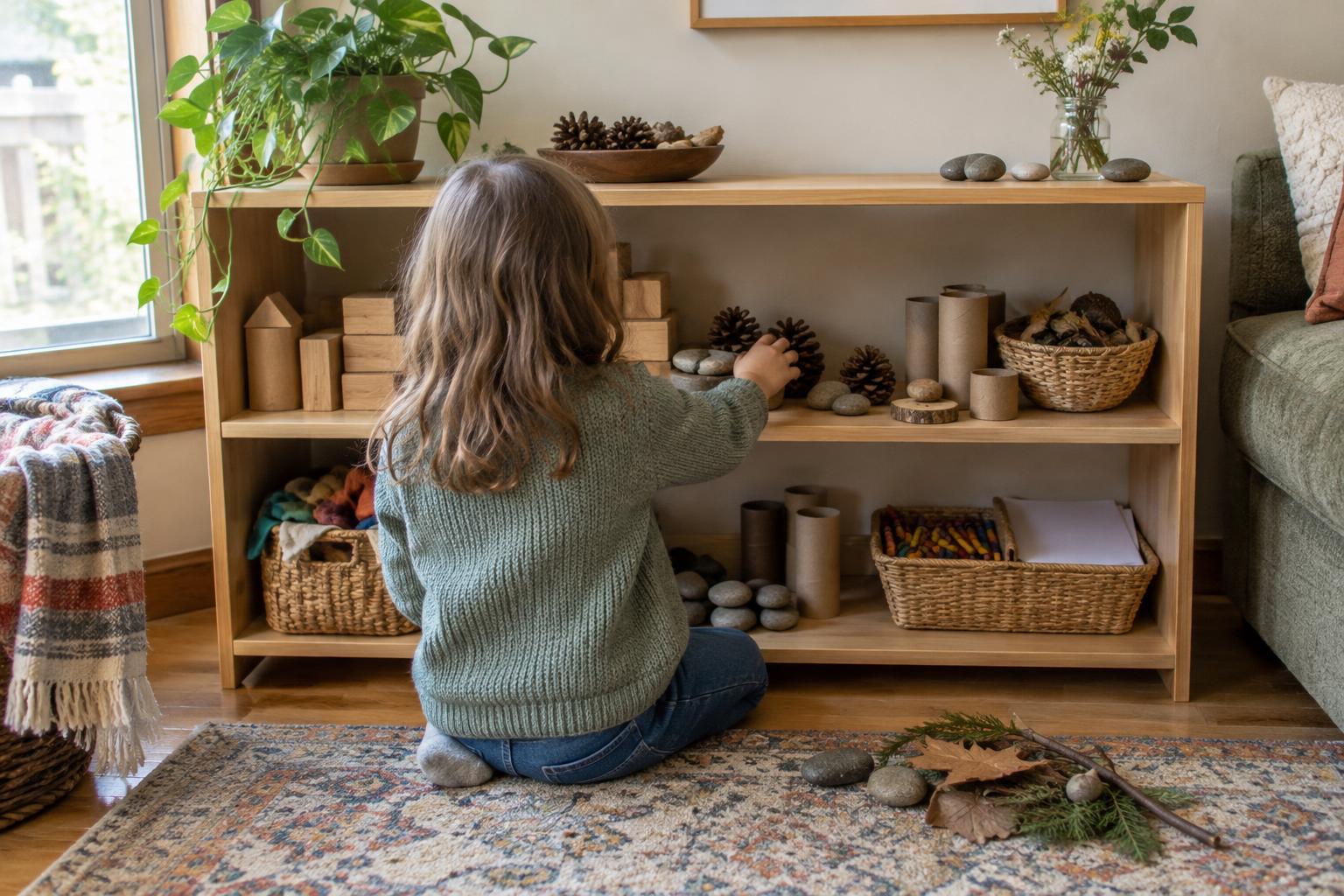
At cleanup time, sort materials into broad groups such as building pieces, paper and drawing tools. Small bags or containers inside the main box can prevent tape and crayons from disappearing under cardboard. Recycle pieces that are worn out, and remove anything that has become dirty or damaged.
A kit works best when it can evolve. If children repeatedly reach for fabric, save a few more scraps. If tubes sit untouched, let them go. Rotating a handful of materials can make familiar supplies feel fresh without turning the kit into a large collection.
The goal is not to produce polished crafts every time. With an accessible set of everyday materials and permission to change course, children can practice imagining, making, testing and telling stories in their own way.