Start with a bridge-building question
A sheet of paper feels flexible in your hand, but can it span a gap and hold an object? Building a miniature bridge gives children a way to explore that question by making, testing and revising a design. The aim is not to find one perfect bridge. It is to notice how changing the paper’s shape changes what happens when weight is placed on it.
Gather two sheets of the same kind of paper, two sturdy books of equal height, a ruler and several identical objects to use as weights. Large erasers or small blocks work well if they sit steadily on the bridge. Avoid objects that could roll off or pose a choking hazard for younger children. Work on a table or floor where a falling object will not cause damage.
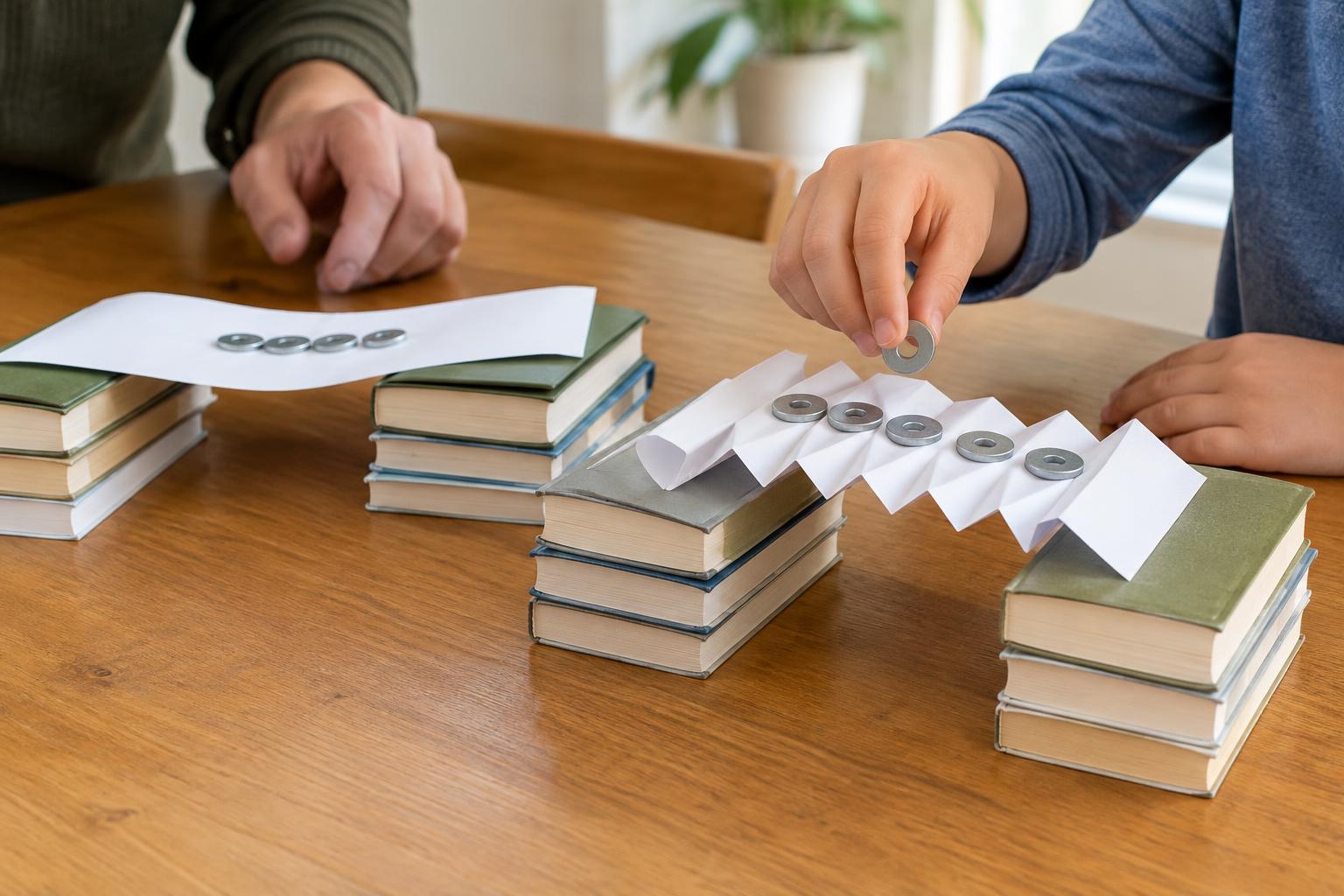
Set the books parallel to each other with a gap of about 10 centimeters between them. Rest one sheet of paper across the gap, leaving enough paper on each book to support its ends. Before adding any weight, ask: What do you predict will happen in the middle? What might make the bridge hold more? Write down a prediction or draw the bridge’s expected shape.
Test a flat bridge, then a folded bridge
Test the flat sheet first. Place one weight gently at the center and watch the paper from the side. If it stays in place, add another identical weight beside the first. Continue one at a time, stopping when the paper bends enough for the objects to slide or the bridge falls into the gap. Count how many weights it held just before that happened. There is no need to press down on the bridge; let the objects provide the load.
Now use the second sheet to make a folded bridge. Fold it back and forth along its length like an accordion, so the long ridges will run from one book to the other. Try to make the folds even, then place the folded sheet across the same gap. Check that its ends rest on the books as the flat sheet’s ends did. Add the same weights in the same position and order, counting again until the bridge can no longer hold them.
Compare the results and the shapes you observed. Did one bridge sag gradually while the other kept its shape longer? Did a weight slip off before the paper itself bent? That distinction matters: a slippery or uneven surface can end a test without showing how much load the paper might otherwise hold.
Look for an explanation in the shape
A flat sheet has little depth between its top and bottom surfaces, so it can bend readily across the gap. Lengthwise folds give the paper ridges and valleys. Those changes in shape can make it harder for the bridge to bend in the same way, even though no extra paper has been added. The folds may also create a less even surface for the weights, which is one reason careful placement matters.
This activity is a design comparison rather than a precise measurement of strength. Folding changes several details at once, including the bridge’s width and where the weight touches it. Keep the paper type, book spacing, weights and placement method as consistent as you can, then describe the result you actually saw. If the folded bridge holds fewer objects than expected, that is still useful evidence. Perhaps its ends slipped, its folds spread apart or the weights tipped.
Redesign and test again
Invite children to choose one change for a second attempt. They might make narrower accordion folds, adjust how evenly the folds are spaced or move the books slightly closer together. If they change the gap, measure and record it; a shorter gap makes this a different test. Sketch each design before testing so it is easier to remember which bridge did what.
For a more direct comparison, make two new bridges with the same folding pattern but different numbers of folds. Use fresh paper of the same size for each, and keep the gap and weights unchanged. Ask children to predict which design will hold more, then check. When the results surprise you, examine the bridge before rebuilding it: the way it bent or slipped may suggest the next question.
Finish by looking for folded or shaped materials in everyday packaging, furniture or structures you pass on a walk. What shapes help a thin material keep its form? A paper bridge cannot tell you everything about a full-sized bridge, but it offers a memorable starting point for noticing how design affects what materials can do.