Start with a small collection of clues
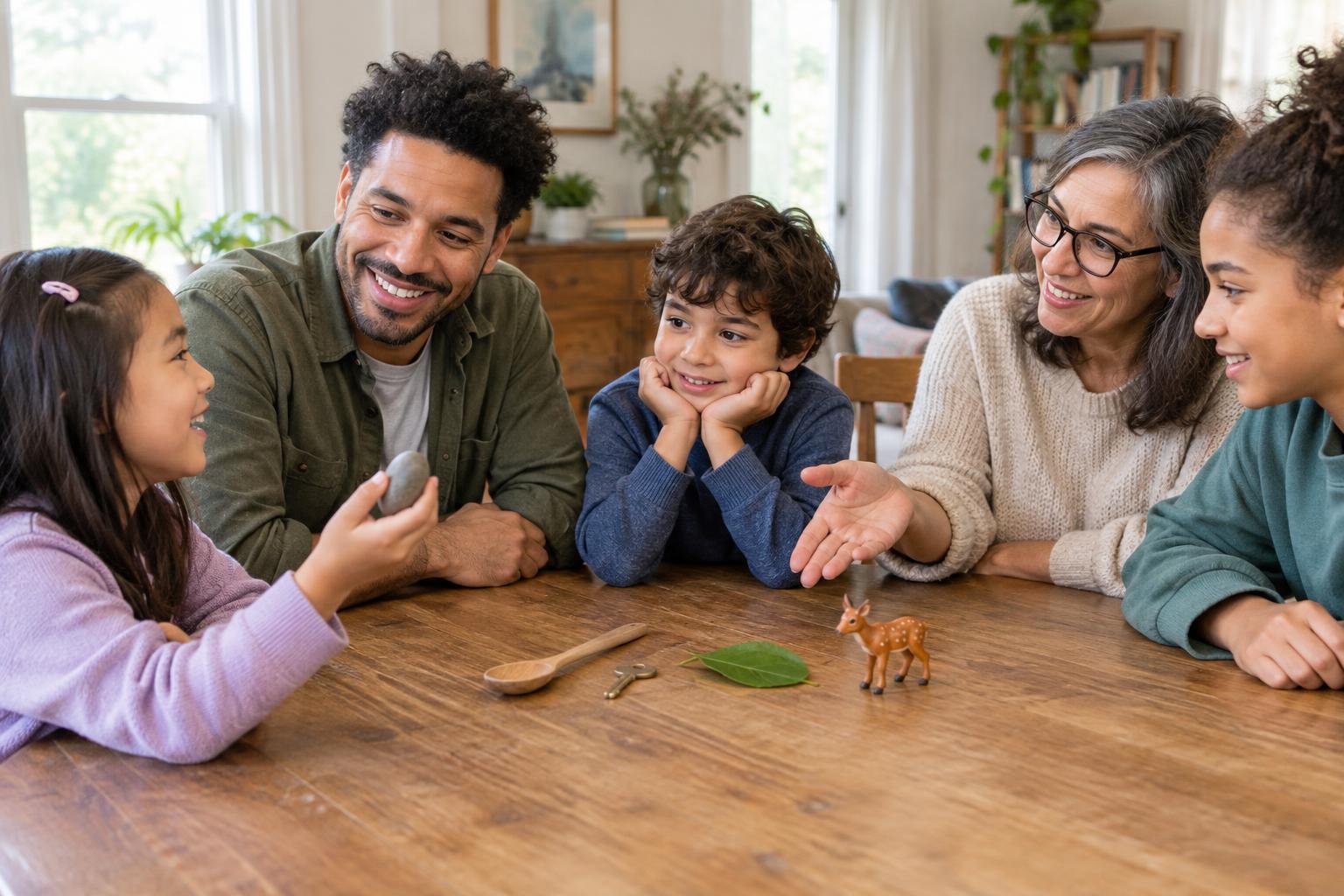
A family story does not need a perfect plot or a special set of cards. Gather three to five safe, ordinary objects from around the house: perhaps a spoon, a mitten, a postcard or a smooth stone. Place them where everyone can see them. These objects are story clues, not props that must be used in a particular way. A spoon could be a tiny boat, a treasure or the key to a mysterious door.
Choose one person to begin with a simple sentence: “One morning, a mitten appeared on the doorstep.” Then move around the group, inviting each person to add one or two sentences. On a turn, a storyteller can introduce an object, describe what a character notices or decide what happens next. Short turns leave room for surprises and help everyone take part.
If someone would rather listen at first, let them pass. They can join later by choosing an object, making a sound effect or naming a character. The goal is to build something together, not to test anyone’s speaking ability.
Keep the story moving with three friendly questions
When the story slows down, ask: “Who wants something?”, “What gets in their way?” or “What might they try next?” These questions offer direction without deciding the answer. A character might want to return a lost key, find a quiet place for a dragon to nap or learn why the neighborhood pigeons are wearing tiny hats.
Try responding to each new idea by accepting it and adding a detail. If one person says the spoon is a spaceship and another says it belongs to a baker, perhaps the baker uses it to steer through a sky full of floating cakes. Ideas do not have to match immediately. Finding a playful connection can become part of the fun.
You can also agree on one gentle rule before you start: nobody has to make their character do something upsetting or embarrassing. If a twist does not feel fun to the group, rewind a sentence and try another path. A shared story works best when its makers feel free to contribute.
Give every storyteller a way in
Different ages can take part in different ways. A younger child might point to the next object or choose between two possibilities: “Is the sound coming from a cave or a cupboard?” An older child might describe a setting or bring back a clue introduced earlier. Adults can model brief turns instead of filling every pause, leaving space for unexpected ideas.
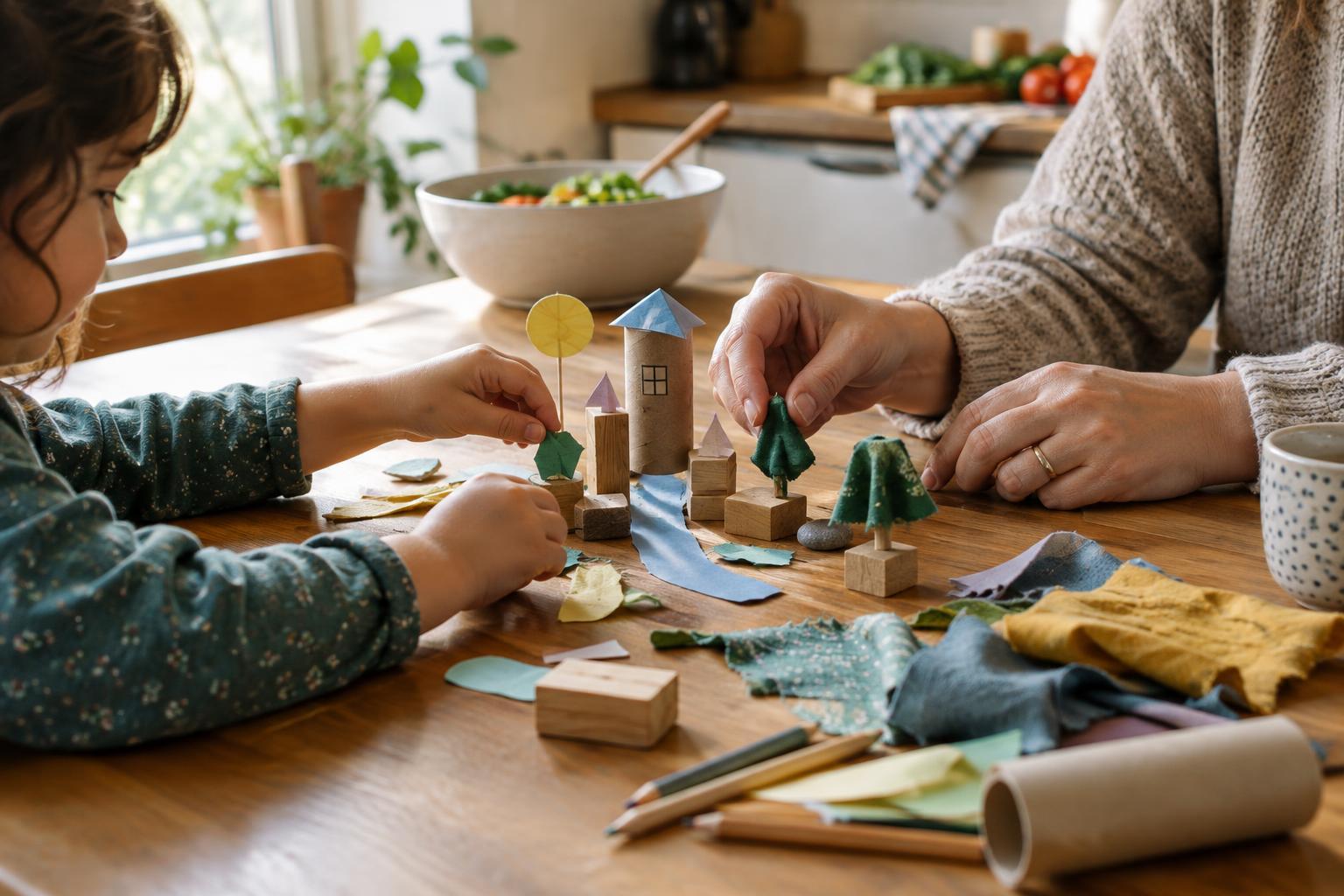
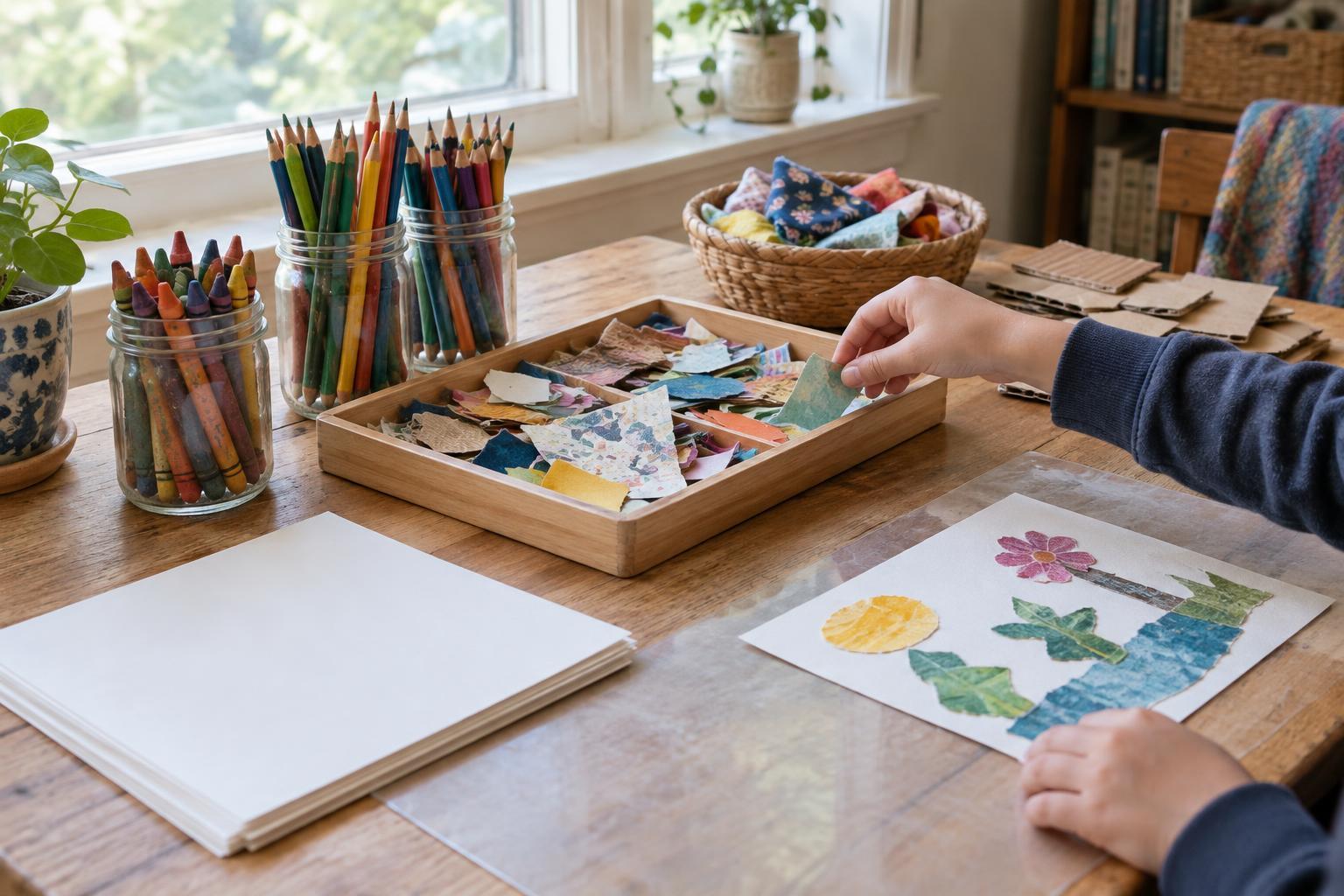
For a group that enjoys drawing, let each person sketch a character or place before the story begins. For a group that likes movement, pause occasionally to act out a moment: tiptoe past a sleeping giant, stretch like a growing tree or mime opening a very heavy box. These additions can make the game inviting for someone who finds it easier to show an idea than to explain it.
There is no need to correct every inconsistency. If the story began in a kitchen and suddenly seems to be on the moon, ask how everyone got there. A surprising change can become a new chapter rather than a mistake.
Try a new shape for the next round
Once everyone knows the basic game, change one rule at a time. In a mystery round, begin with an unexplained object and let each person offer a clue. In a journey round, choose a destination and decide what the travelers meet along the way. In a tiny-story round, give each person just one sentence before the group makes an ending.
Your surroundings can supply fresh starting points. A view from the window might suggest where a character lives, while an interesting building noticed on a walk might inspire an imaginary workshop. Keep the difference between observation and invention clear: “We saw a green door; what if a story character found a secret message behind a door like it?” That way, the game encourages attention to everyday places without presenting invented details as local history.
Find an ending, then leave room for more
When it is time to stop, announce a final round so each person can help bring the story home. Ask what changed for the main character or what happened to an object from the beginning. An ending can be simple: the mitten finds its owner, the baker lands the spaceship or the mystery remains partly unsolved for another day.
If the group wants to remember the story, someone can jot down a title and a few favorite details. You might draw a scene together or retell the adventure at bedtime, allowing it to change as you go. The lasting value of the game is not a polished tale. It is the experience of listening, making space for one another and discovering what your ideas can become together.