Start with possibilities, not a finished example
A template can be useful when the goal is to practice a particular skill. But if the goal is to invent, a finished example can quietly become the answer everyone tries to copy. For an open-ended cardboard session, begin with a question instead: What could this box become? What might you build for a tiny visitor, a favorite toy, or an imaginary place? Kids can choose whether to make something practical, playful, or hard to name.
Give children a few minutes to handle the materials before asking them to settle on a plan. A long tube might suggest a telescope to one child and a bridge support to another. If a child has no idea yet, invite them to pick two pieces and see how they could fit together. Starting with a small connection often feels easier than imagining a whole project at once.
Make a materials station that invites experimenting
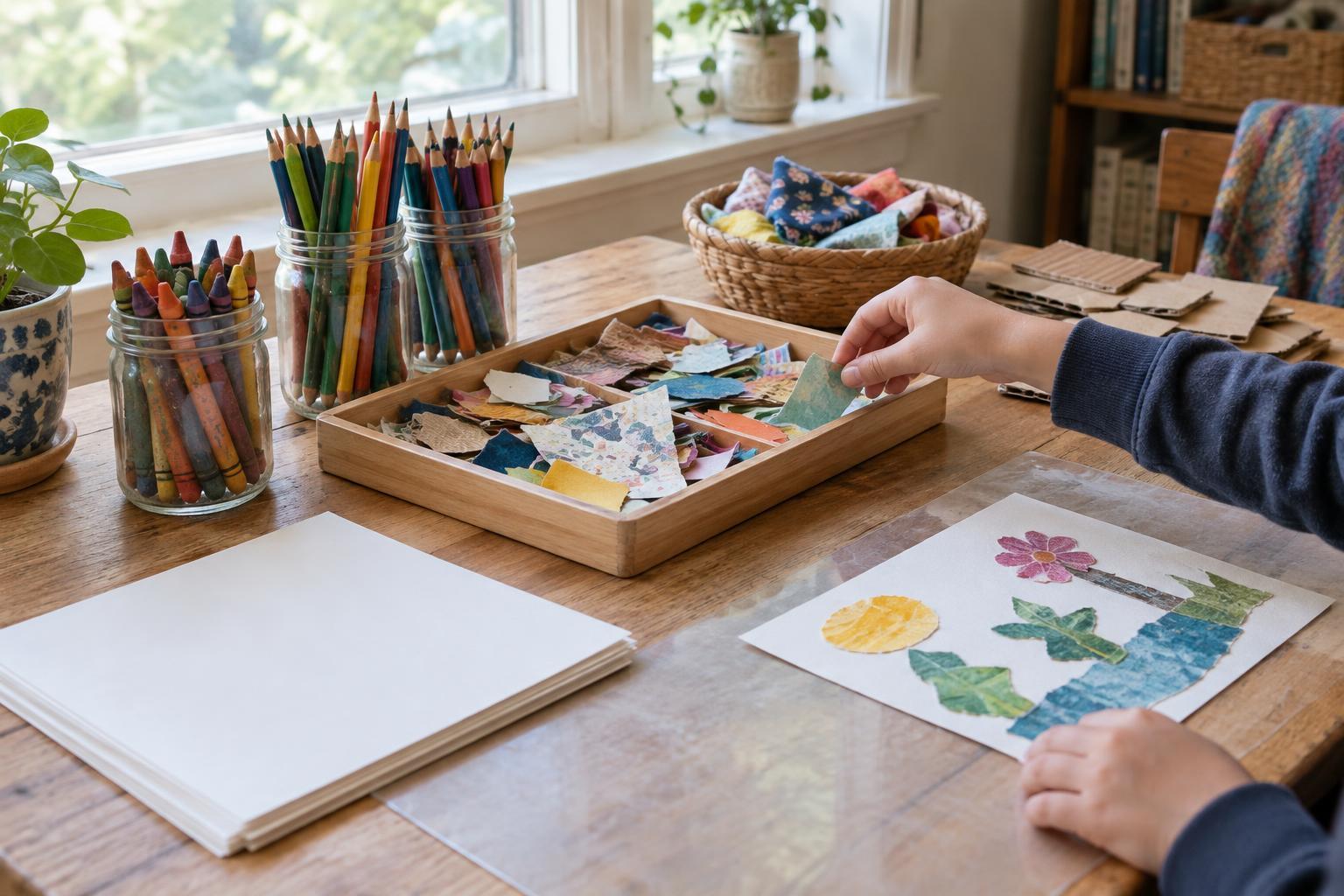
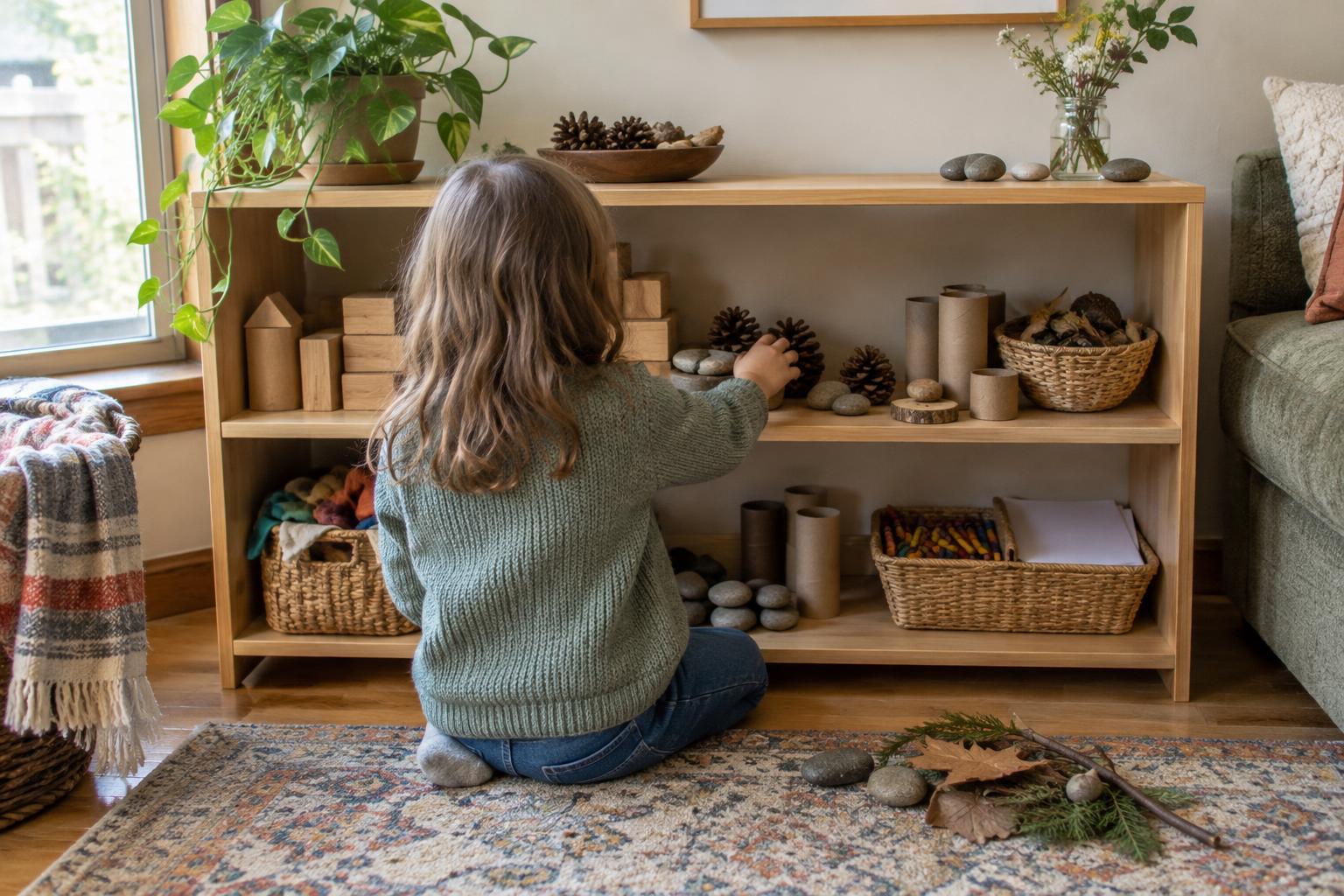
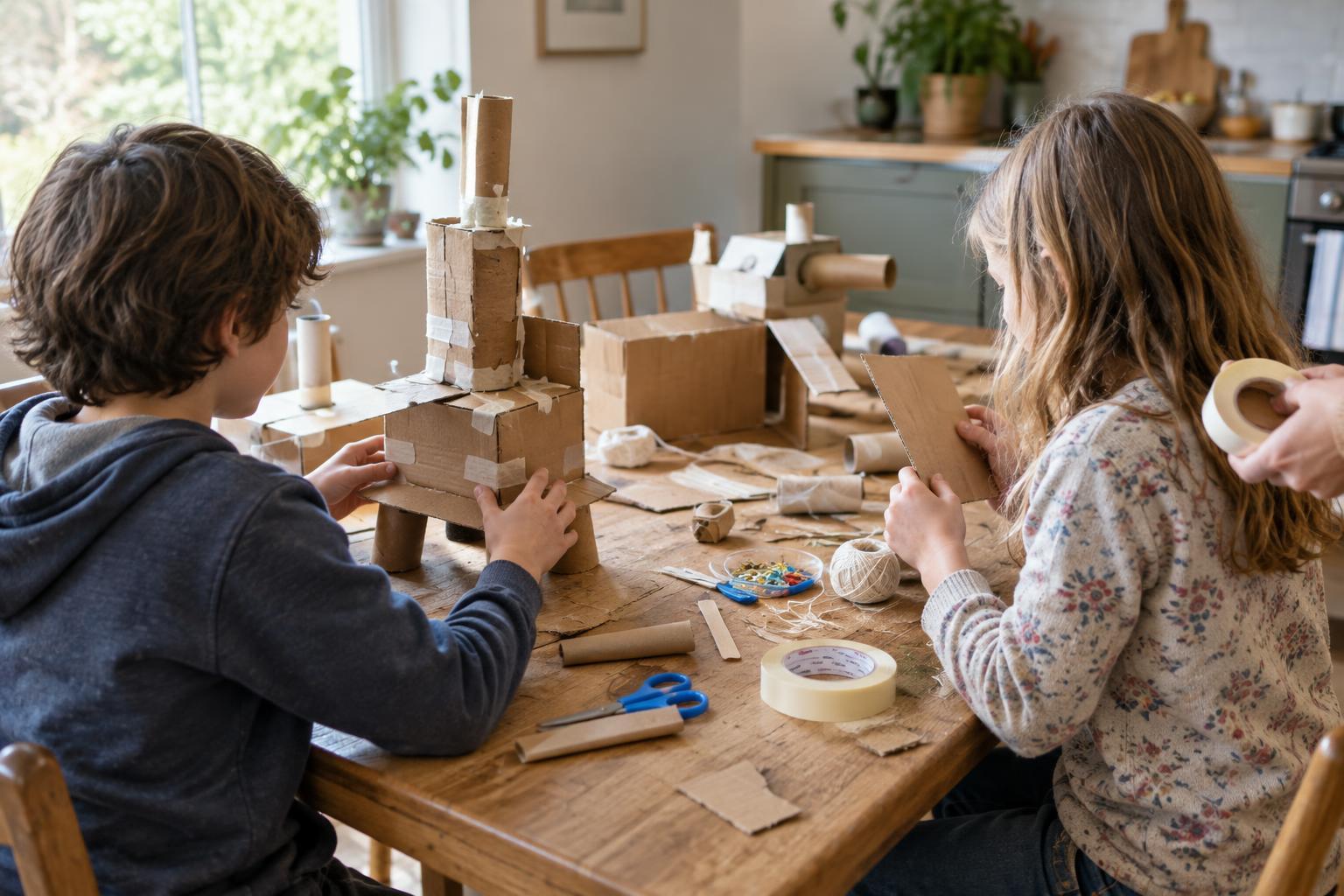
Collect clean, dry boxes, cereal cartons, paper tubes, and sturdy cardboard scraps. Add paper, washable markers, masking tape, glue sticks, and a few reusable items such as string or fabric offcuts. Set out a manageable selection rather than every supply at once; children can ask for more as their ideas develop. Keeping scraps in one container makes it easy to search for a small piece without cutting into a new box.
Plan for the tools children can use safely and the steps that need adult help. An adult can handle a craft knife or make difficult cuts on a protected surface, away from children’s hands. Child-safe scissors may work for thin cardboard, but thick pieces can be frustrating to cut. Offer pre-cut shapes or help make a starter opening when needed. Check boxes for staples, sharp edges, or packaging residue before play begins.
Ask questions that leave the design in their hands
Helpful questions focus on what a child wants the creation to do. “Who uses this?” “Does anything need to open or move?” and “How will it stand up?” can prompt decisions without supplying a design. If children want to draw first, offer paper for a quick sketch. If they would rather build first and figure it out as they go, that is a valid approach too.
When a structure falls or a flap will not close, resist repairing it immediately. Ask what they notice and what they would like to try next. They might widen the base, add a folded support, move a heavy piece, or change the idea entirely. Younger children may need help holding parts while they tape; older children may want time to compare several solutions. The aim is not to withhold help, but to let the child make meaningful choices.
Introduce building tricks only when they are useful
A few simple techniques can help an idea take shape. Folding a strip of cardboard into a triangle can make a support. Cutting a slit in each of two pieces can let them slide together. Tape can act as a hinge when it joins two pieces along one edge. Rather than demonstrating every technique at the start, introduce one when a child encounters a problem it could solve.
Testing can be part of the play. Can a cardboard ramp guide a small ball toward a target? Does a pretend doorway fit the toy that needs to pass through it? Will a tower stay upright when another room is added? A test gives children something to observe and adjust. If the answer is no, the project has not failed; it has offered a clue about what to try next.
Leave room for stories, revisions, and stopping points
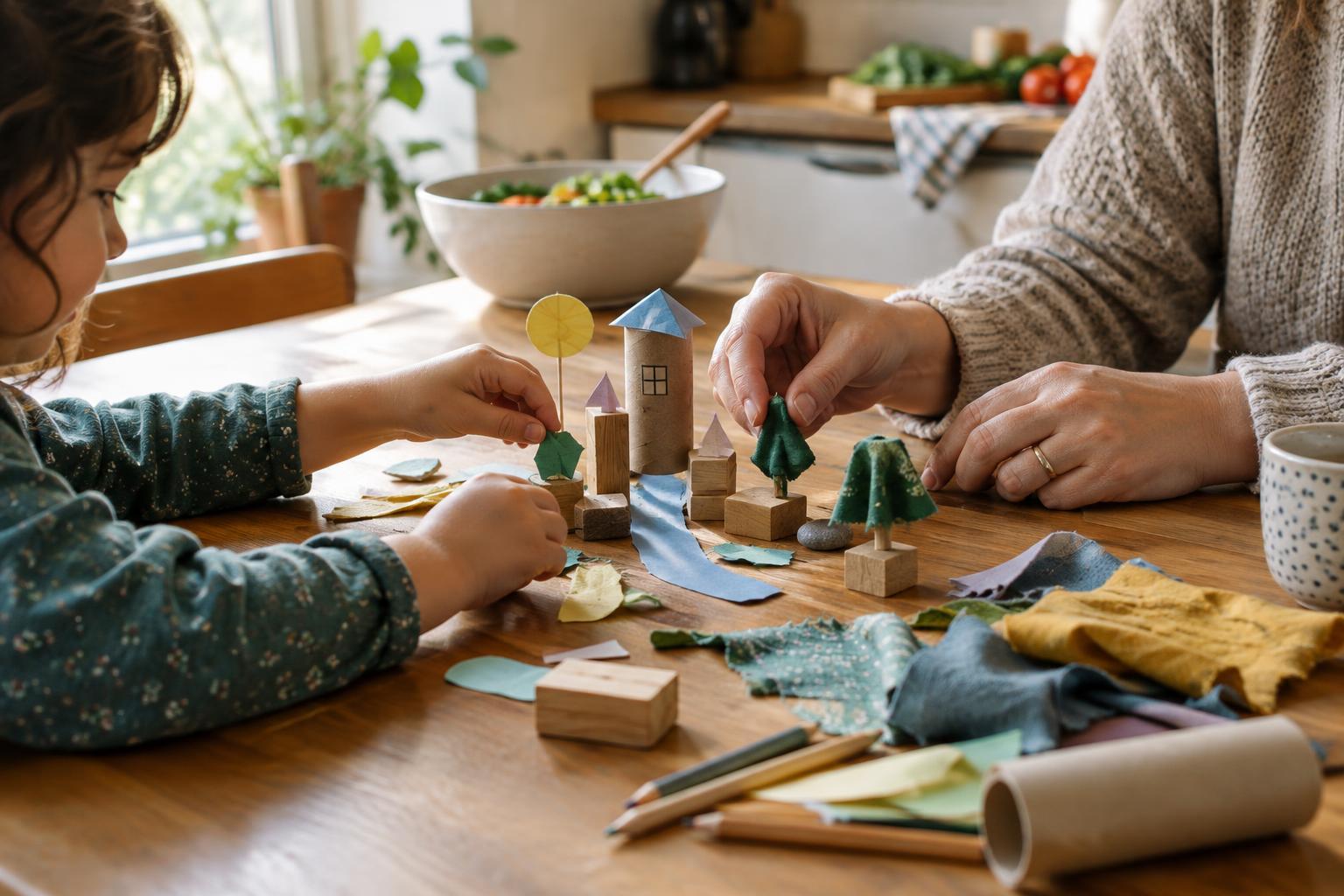
Once a structure exists, its purpose may change. A vehicle can become a traveling library, or a model house can turn into a stage. Invite children to name their creations, describe who lives in them, or add signs and small details. These stories can reveal what matters most to the maker and suggest the next building step. They also give children a way to share their work without having to explain every construction choice.
Not every cardboard project needs to be saved. Before tidying, ask whether the child wants to keep building later, photograph the creation, reuse its parts, or recycle it. If it will stay for another day, choose a place where it can rest without being crushed. Treating a temporary experiment as worthwhile helps keep the focus on imagining, trying, and making changes—not on producing a perfect object.