Mistake 1: Treating one clue as the whole story
A plaque, a captioned photograph or a story passed down by a neighbor can be a useful starting point. It is not necessarily a complete account. A plaque may describe when a building opened rather than when construction began. A photograph caption may have been added years after the picture was taken. Even a vivid firsthand memory can leave out details or blend events together.
Turn an interesting clue into a question before turning it into a conclusion. Instead of writing, “This shop has always been a bakery,” try, “When did this building become a bakery?” Then look for a different kind of evidence, such as an older map, a city directory, a newspaper advertisement or another photograph. If the records disagree, note the difference rather than choosing the version that makes the neatest story.
Mistake 2: Assuming familiar names mean familiar places
Street names, house numbers and neighborhood boundaries can change. A business might move while keeping its name, and two people with the same name might appear in records from the same town. These details make it easy to attach the right-looking fact to the wrong person or place.
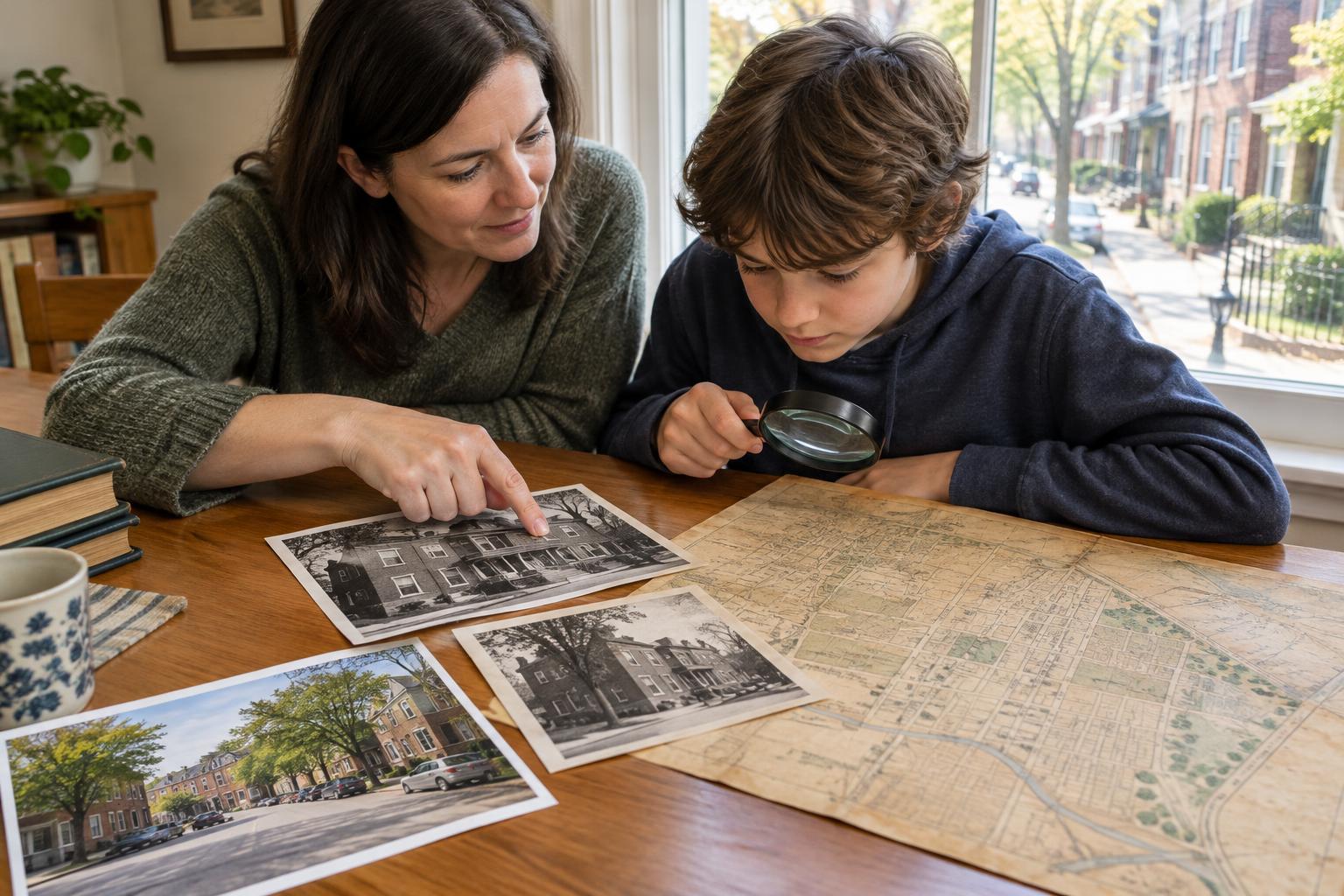
Check identities using several clues together. For a person, compare an address, occupation, family members or approximate age where those details are available. For a building, compare nearby streets, neighboring properties and the shape of the block. When using an old map, look at its date and legend before matching it to a present-day walk. You may find that the safest conclusion is simply that a place stood near today’s location, not on the exact spot you first expected.
Mistake 3: Reading the past through today’s appearance
An old-looking storefront might have a newer facade, while an ordinary-looking house might contain much older parts. Trees, sidewalks and open lots also change the way a street feels. It is tempting to look around and imagine that earlier residents saw the same scene, but present-day observation alone cannot establish what was there before.
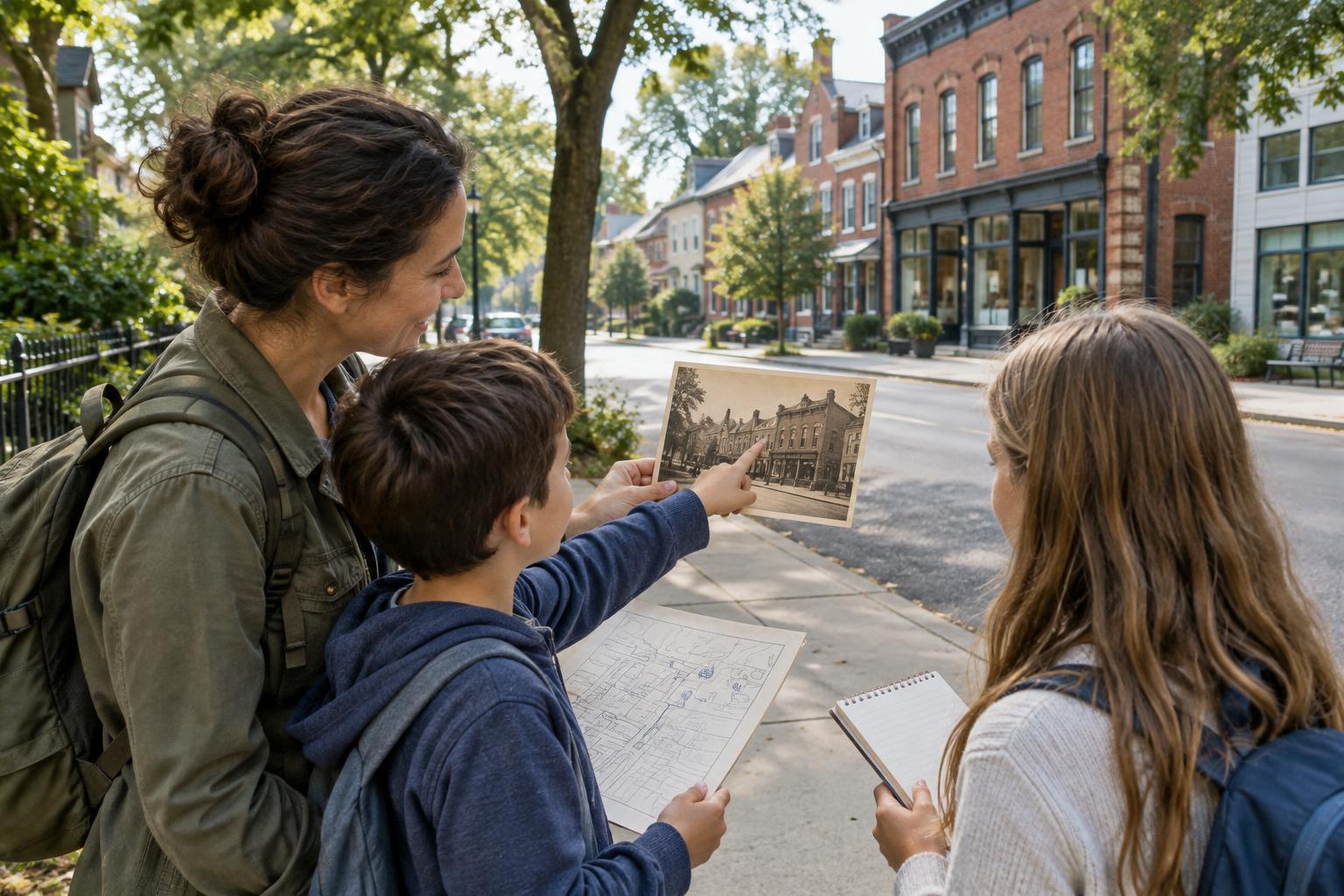
Observation works best when paired with dated evidence. On a family walk, invite children to sketch a building and list what they can actually see: materials, windows, signs and nearby landmarks. Later, compare those notes with an older image or map, if one is available. Mark what changed, what seems to have stayed and what cannot be determined. A faded sign might suggest a former use, for example, but it may not reveal when that use began or ended.
Mistake 4: Confusing a source’s date with an event’s date
A record tells you something about the moment it was created; it may not tell you exactly when the thing it describes happened. A directory listing can show that a business was associated with an address when the directory’s information was gathered. It does not, by itself, give the business’s opening date. Likewise, the year a photograph was printed may differ from the year it was taken.
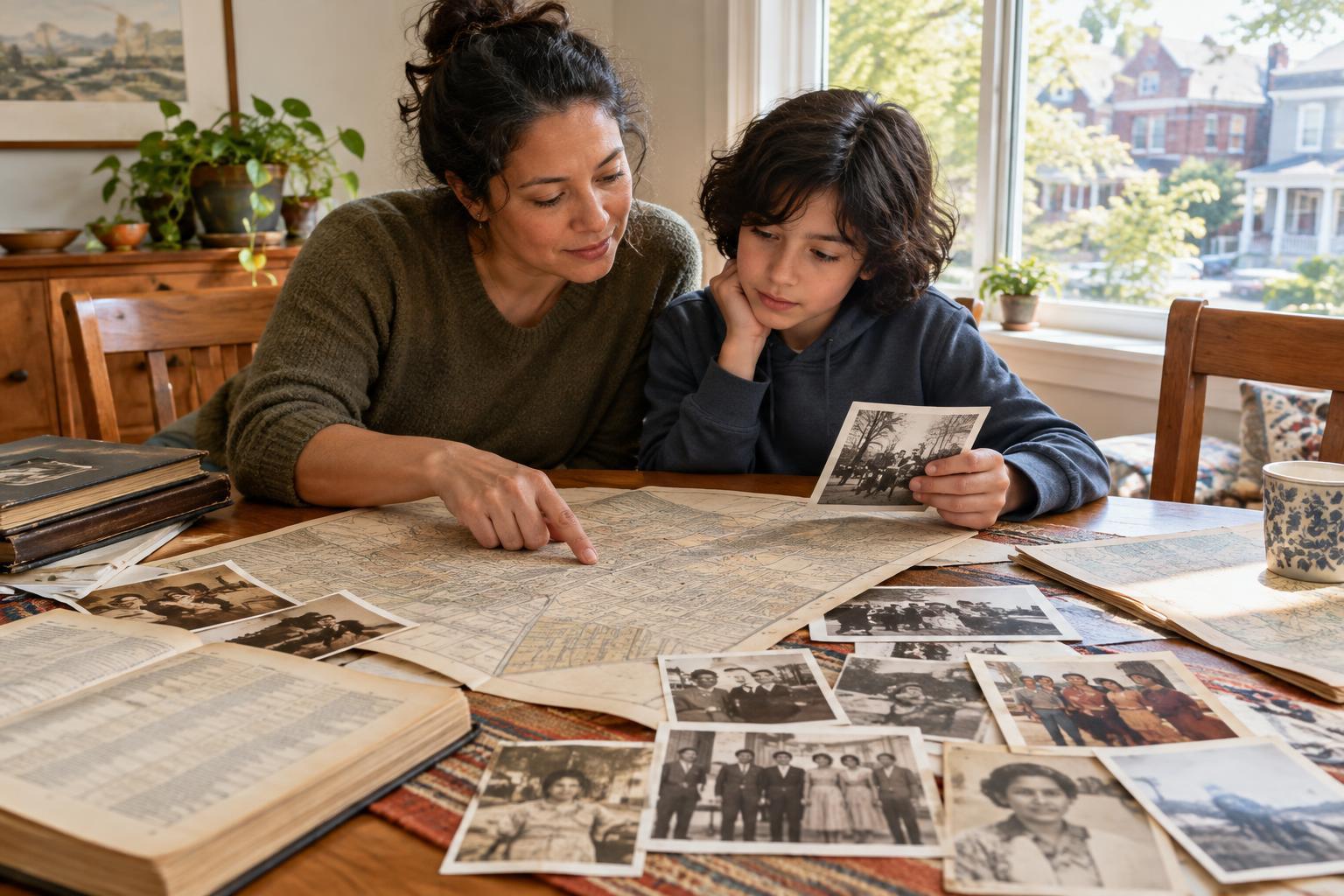
Make a small timeline with three columns: what the source says, when the source was made and what you think it suggests. Use cautious phrases such as “by this date,” “possibly” or “not yet confirmed.” If a shop appears in one dated record but not in an earlier one, you have narrowed a possible period of change. You have not necessarily found the exact day it opened.
A simple way to test a family discovery
Choose one manageable question, such as “What used to be on this corner?” Write down an initial idea, then gather at least two kinds of evidence if possible. Ask: Do the sources refer to the same place? Were they created close to the time in question? Could they have copied information from each other? Whose perspective might be missing? Keep track of where you found each clue so you can revisit it.
Finish by sorting your findings into three groups: what the evidence supports, what remains possible and what you still do not know. This makes a stronger story than pretending every gap has been filled. Children can help label a map, arrange images in order or invent the next question to investigate. If your search turns up details about living people, share thoughtfully and avoid publishing private information. The goal is not to produce a perfect answer in one afternoon; it is to learn how a careful question can make a familiar place more interesting.