Mistake 1: Planning a route with too much to cover
It is tempting to design a walk that takes in every mural, garden, interesting building and side street nearby. For children, though, a long list of stops can make the outing feel like an errand. A shorter route leaves room to pause when someone notices a crack in the pavement, a bird on a fence or an unusual doorway.
Choose a simple loop or an easy out-and-back route, and identify a place where you can turn around early. Think about crossings, rest opportunities, weather and the needs of everyone coming along. The goal is not to finish a route. It is to give the group enough time and energy to pay attention.
Mistake 2: Turning observation into a quiz
Questions can invite curiosity, but too many questions with expected answers can make children feel tested. Instead of asking them to name every tree or guess the age of a building, start with prompts that have many possible answers: “What changed since we last came this way?” or “What do you notice above eye level?” Then listen to what catches their attention.
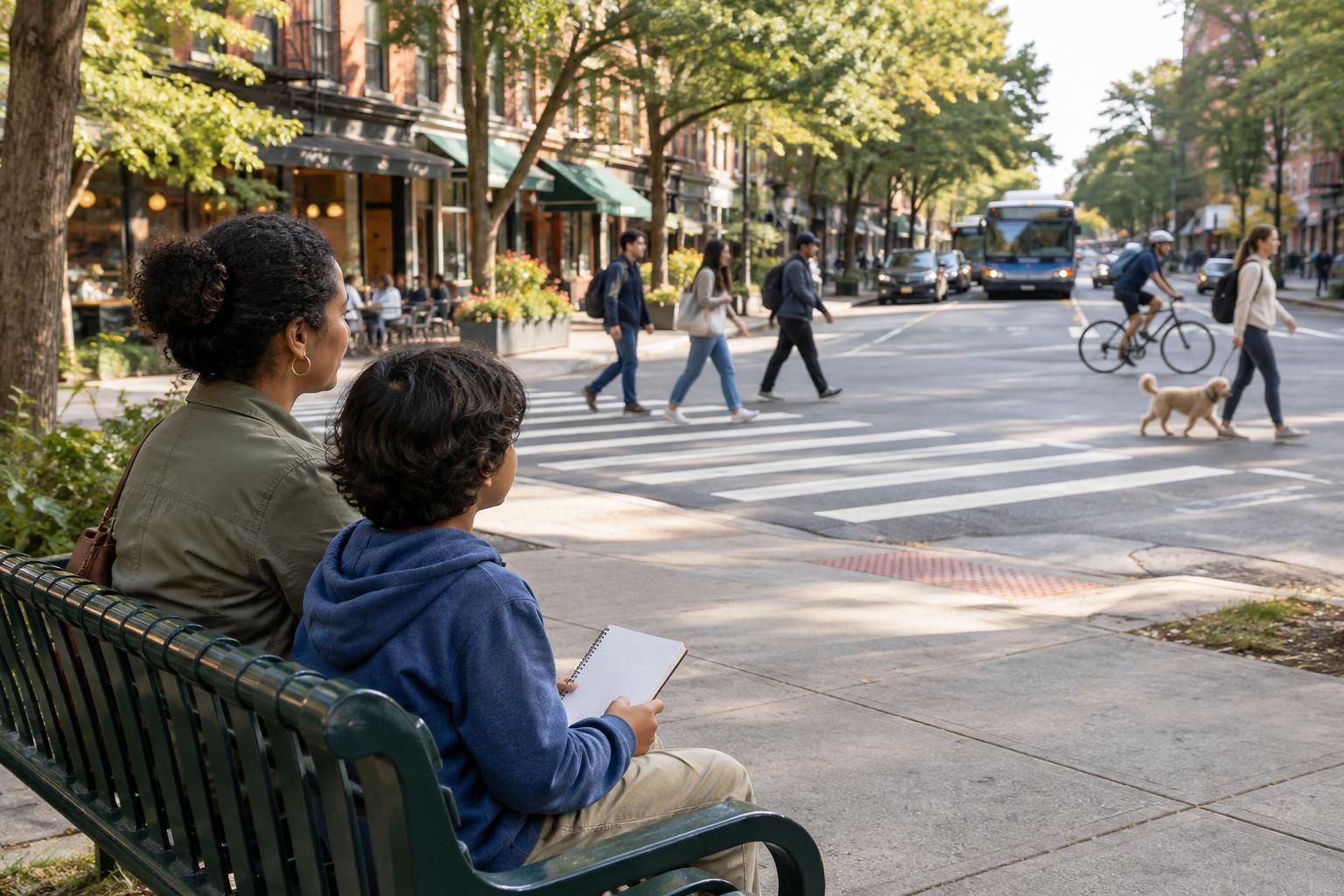
Try a small noticing game. Look for three different shapes, compare the sounds of two streets, or find signs of how people share space. Children can draw, describe or simply point. If they offer a theory about something they see, you do not have to confirm it on the spot. “How could we find out?” keeps the conversation open without turning a guess into a fact.
Mistake 3: Looking only for the spectacular
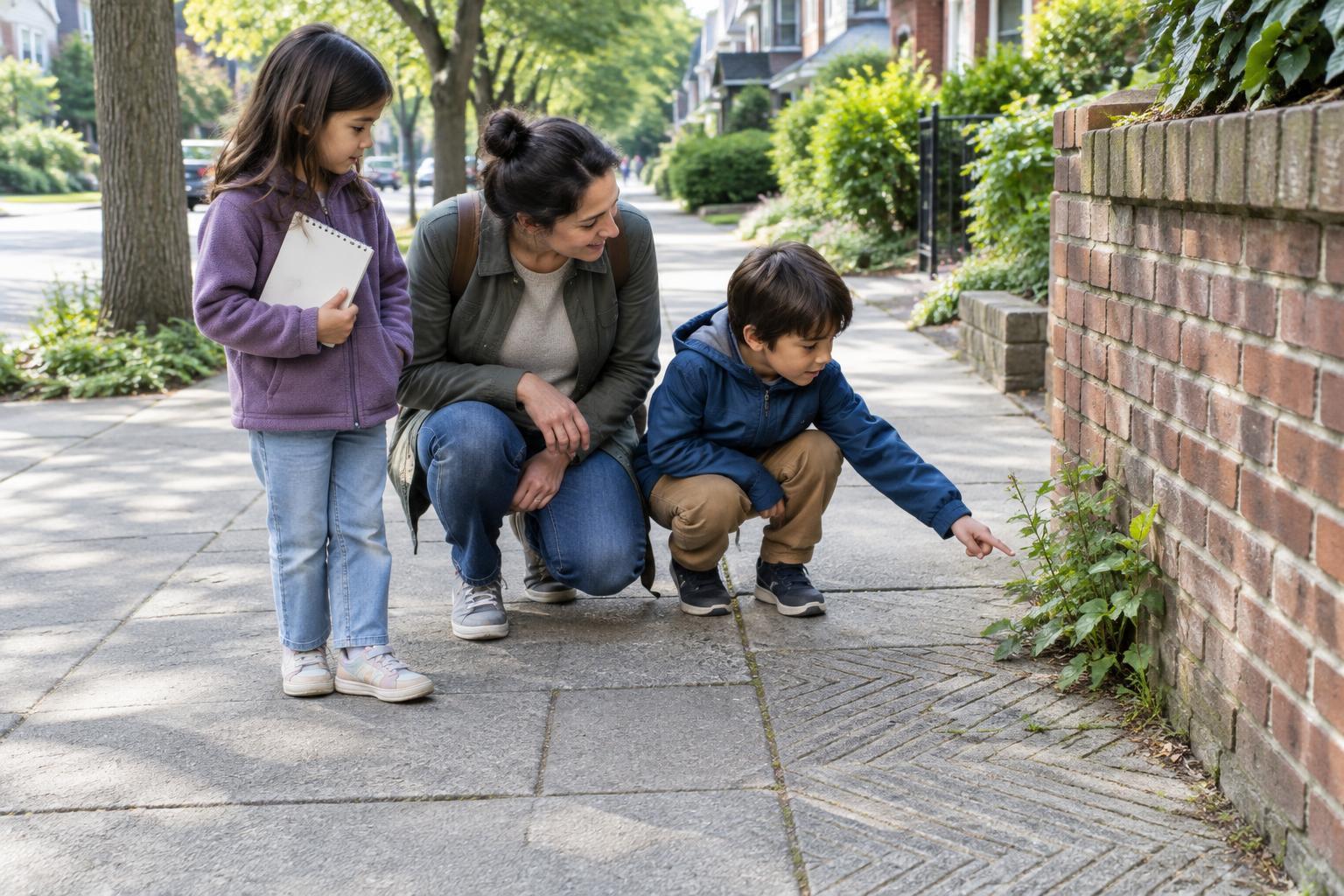
A famous landmark is not required for a discovery walk. Ordinary details often lead to better questions because they are easy to revisit. A repaired sidewalk may prompt a conversation about maintenance. Shade on one side of a street can raise questions about trees and buildings. A shop window may show how a place changes its display for different seasons.
Give one familiar block a fresh focus each time you walk it. On one visit, notice materials such as brick, wood and metal. On another, look for ways people make places welcoming or practical, such as benches, ramps and signs. Avoid treating every detail as evidence of a historical story you already know. Observe first; if you want to investigate the past, separate what you saw from what you later learn.
Mistake 4: Forgetting that the neighborhood is shared space
Discovery should not come at the expense of safety or other people’s comfort. Excited walkers may drift into a cycle lane, gather at a busy corner or peer too closely into someone’s yard. Before setting out, agree on a few simple habits: stop at crossings, stay together where visibility is poor, and move aside when others need the pavement.
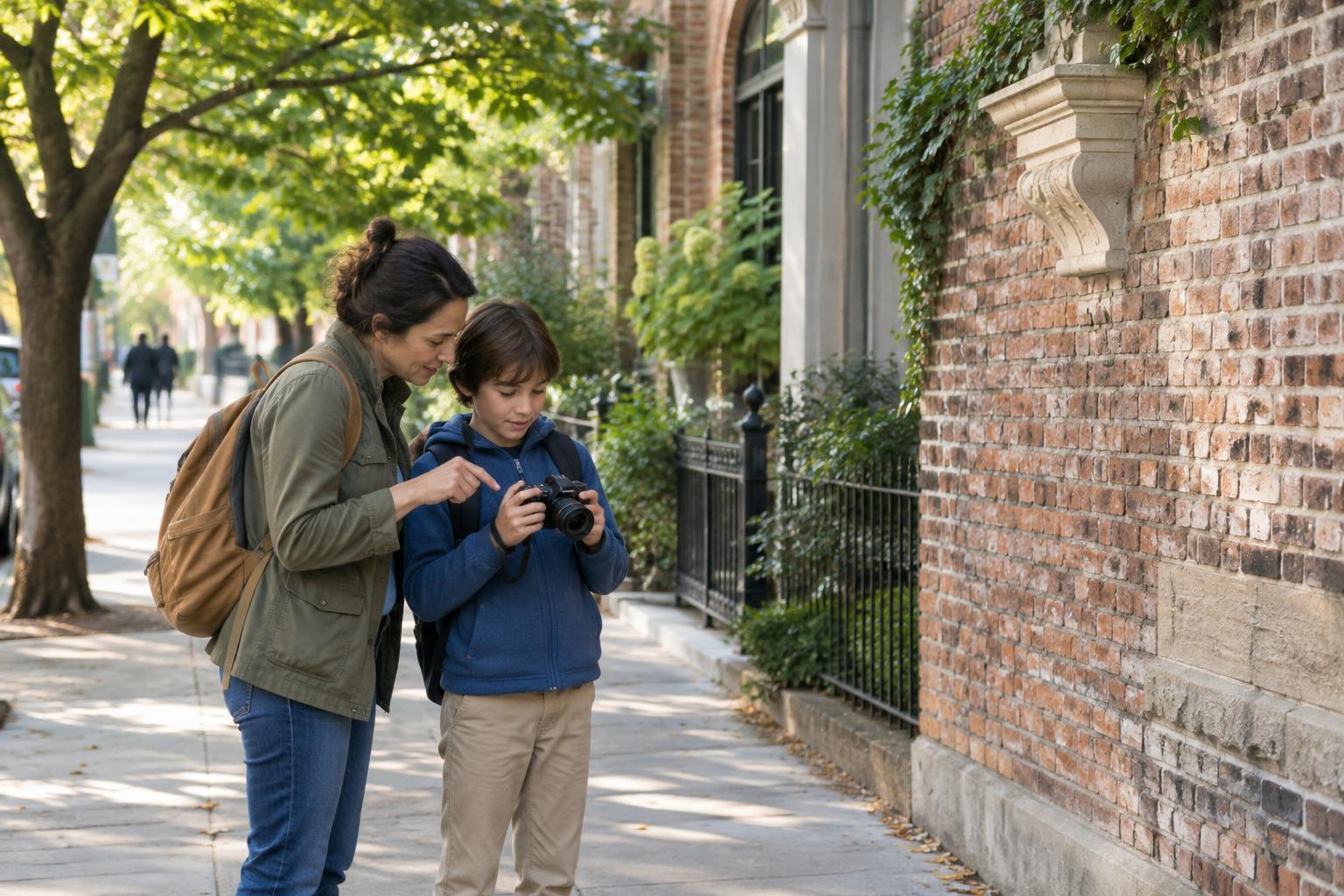
Model respectful observation. Look at homes and gardens from public paths without entering private property or photographing residents. If a child wants a picture, suggest a close-up of a leaf, a sketch of an architectural shape or a photo that does not include identifiable people. These boundaries do not limit curiosity; they help children practice noticing while respecting the people who live and work nearby.
Mistake 5: Letting the discoveries disappear at the doorstep
A walk does not need a worksheet to be worthwhile. Still, a brief conversation afterward can help children remember what interested them. Ask each person to share one thing they noticed and one thing they wonder about. Different answers are welcome: someone may remember a color, someone else a sound, and another person a question about who takes care of a shared space.
If there is energy for a follow-up, keep it small. Draw a map from memory, sort a few sketches by shape or material, or choose one question to explore on the next walk. You can also return to the same spot at a different time of day and compare what you notice. The most useful discovery walk is not the one that covers the most ground. It is the one that makes familiar surroundings worth looking at again.