Start with a place children know
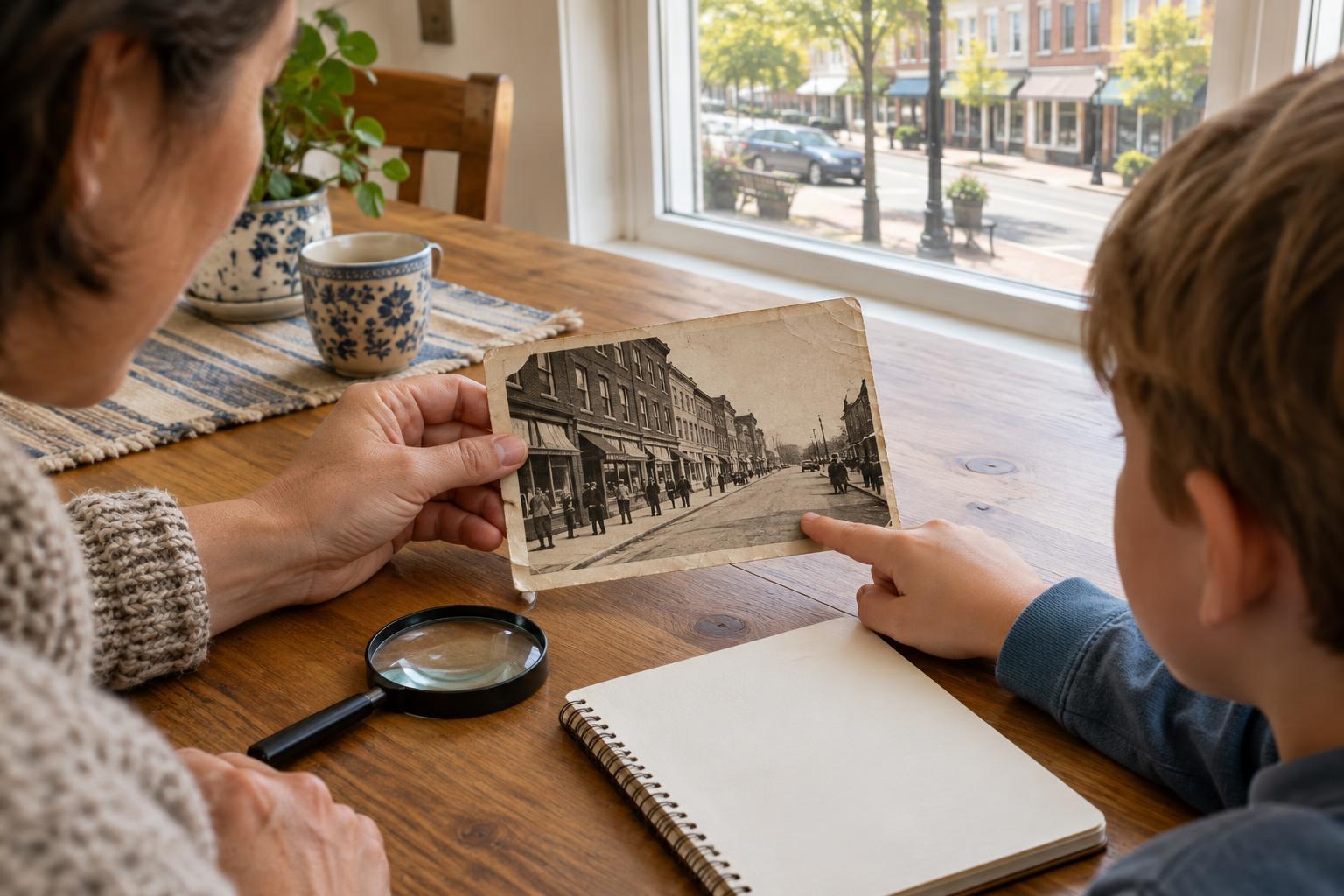
A route to the library, a nearby park, or the blocks around home makes a good starting point for a map comparison. Children already have memories of these places, so they can connect lines and symbols on a page with things they have seen. Choose a small area rather than an entire city. The goal is not to identify every change, but to find a few details worth investigating.
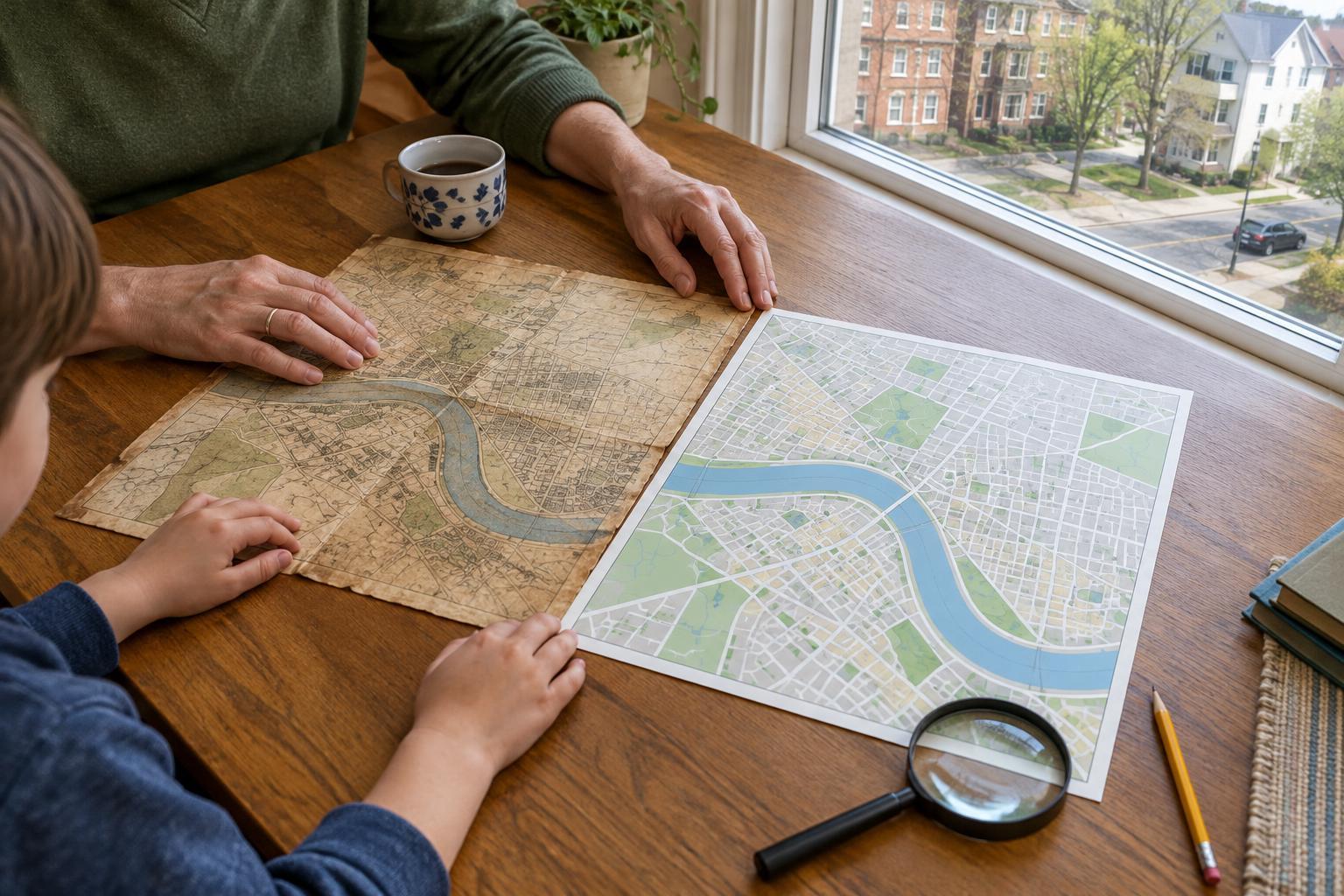
Gather an older map and a more recent one that show roughly the same area. A local library, historical society, or public map collection may have maps that can be viewed or copied. If the maps have dates, note them before looking closely. If a date is missing, describe the map as “older” rather than guessing its age. Bring paper, pencils, and, if useful, a transparent sheet for tracing a few features.
Find your bearings before looking for changes
Begin by finding something that appears on both maps: a river bend, a road junction, a bridge, or a large public space. Mark two or three shared landmarks. They will help you match one map to the other, especially if street names or boundaries have changed. Ask children what they recognize and what they cannot yet place.
Check each map’s scale, compass direction, and legend. One map may show individual buildings while another shows only main roads. A feature that seems to have disappeared might simply be omitted at the newer map’s level of detail. Maps can also differ in how they draw a winding road or label a neighborhood. Rather than stacking them and expecting a perfect match, compare one landmark at a time.
Look for patterns, not just surprises
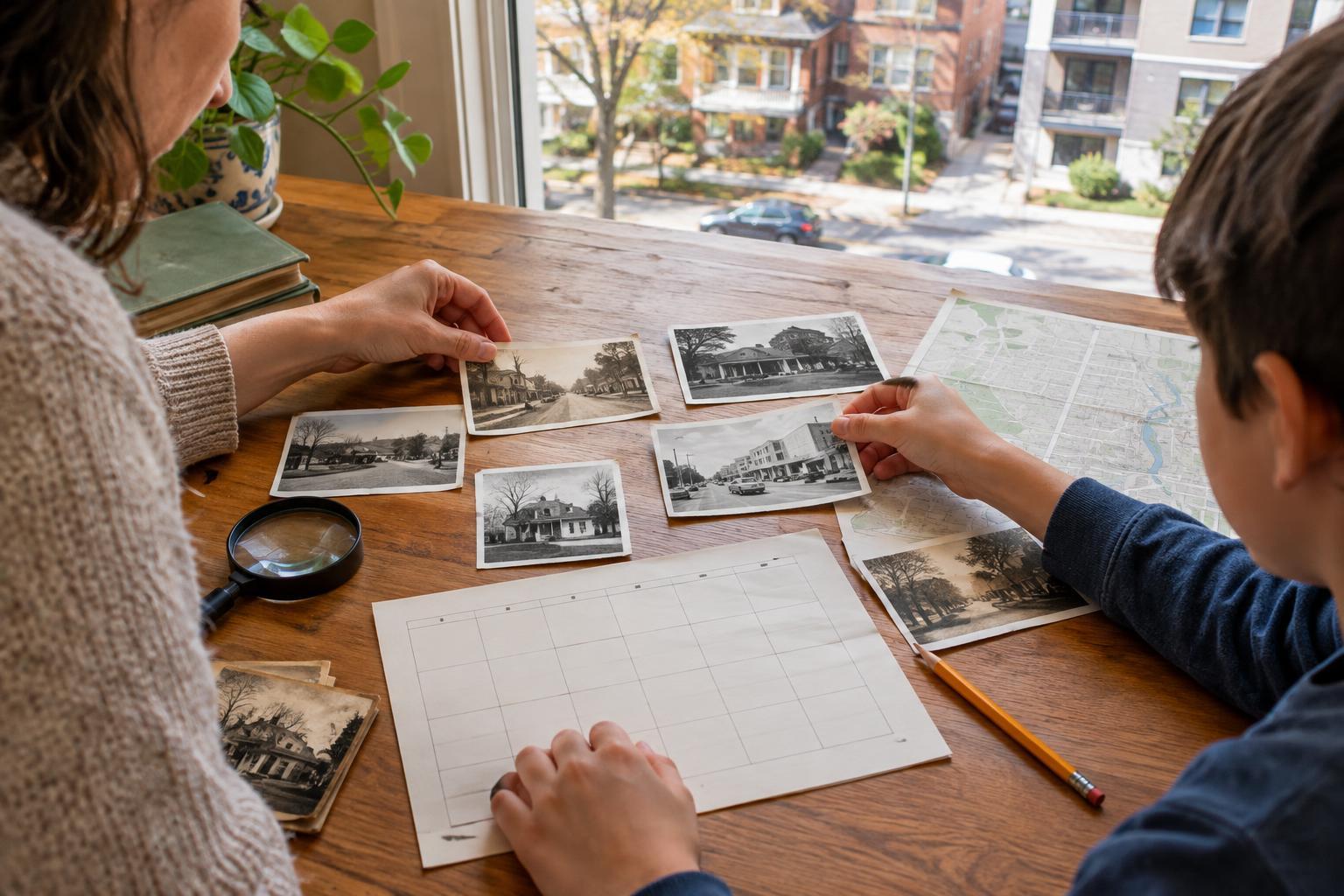
Invite children to choose a few things to follow across both maps. Where do roads connect? Are there open areas that now contain streets? Has a creek been drawn differently, or has a school moved to a new site? Circle possible changes in one color and features that appear to have stayed in place in another. A simple list with the headings “same,” “different,” and “not sure” keeps uncertainty part of the activity.
Try asking what each change might have meant for daily life. A new bridge could have offered another way across a river. A former field shown as several blocks might prompt questions about where people played or traveled. These are starting points, not conclusions: a map rarely tells the full story of who used a place or why it changed. Encourage children to turn their ideas into questions they could explore with other records or observations.
Notice what maps leave out
Maps are made for particular purposes. A road map may leave out footpaths, while a property map may emphasize lot lines. Older maps can contain unfamiliar names, uneven detail, or errors. Even an accurately drawn map cannot show every memory attached to a place. When a building is absent, ask whether it was not yet there, was too small to include, or simply was not important to that mapmaker.
This is also a chance to talk about whose experiences are easy to see. A labeled factory might stand out, while the nearby homes of its workers may not be described. Children can add a margin of questions: Who lived here? How did they get around? What might this map miss? Keeping those questions open helps them treat a map as evidence to examine, rather than a complete account of the past.
Take the comparison into the neighborhood
Choose one or two map questions that can be explored on a short walk. Perhaps an old road curves toward a present-day path, or a public square appears in both maps. Plan a route along public sidewalks and paths, follow ordinary crossing precautions, and observe buildings and private property from public spaces. The aim is to look carefully, not to enter a site or prove every guess.
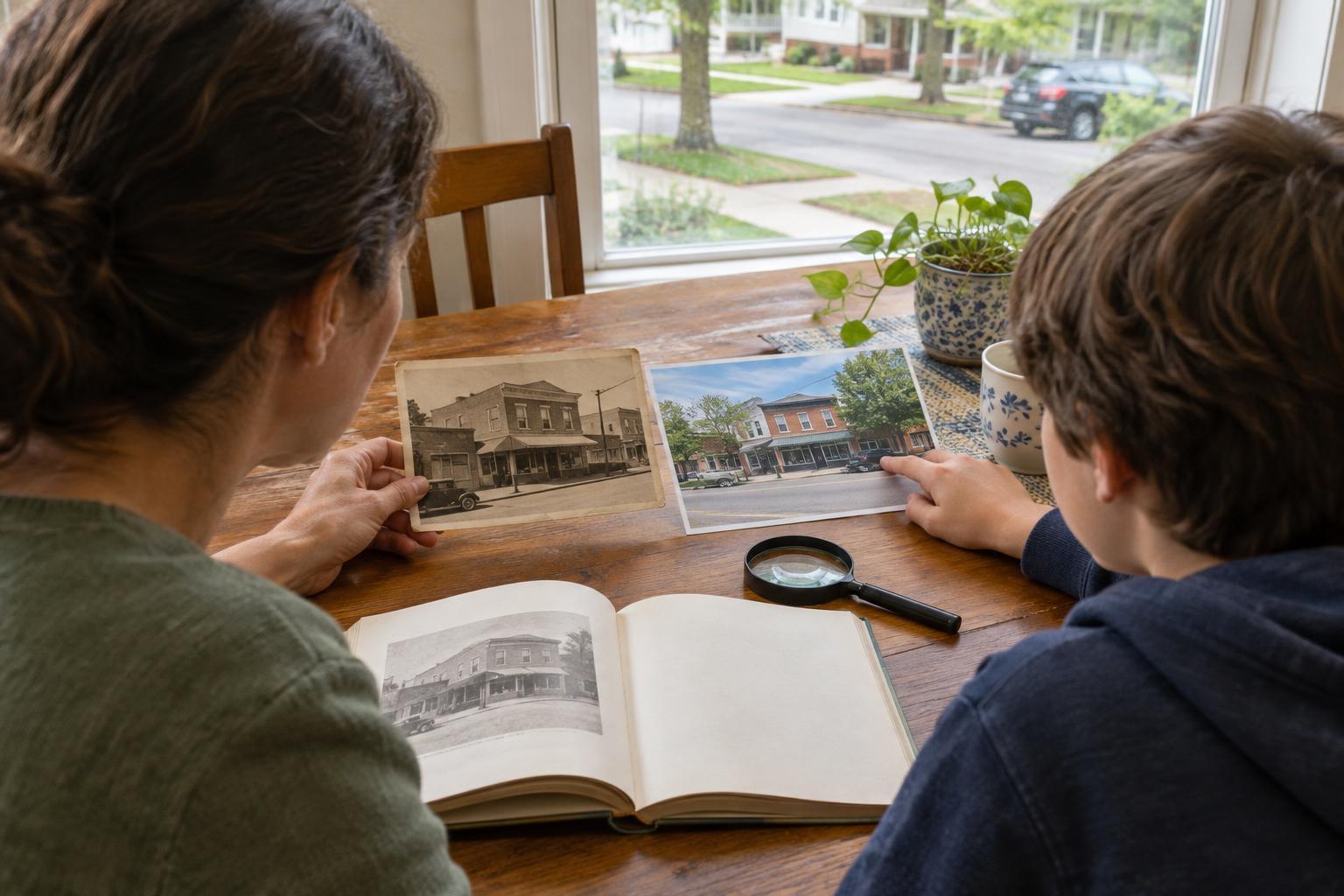
Back at home, make a small “then and now” page. Children can sketch a shared landmark, note a change they think they found, and write one question that remains. Label observations separately from guesses: “We saw a stone wall” says something different from “The wall may be old.” That distinction is a useful local-history habit. Maps help us notice how a place has changed, and the unanswered questions give us a reason to keep looking.