Start with a small, reachable space
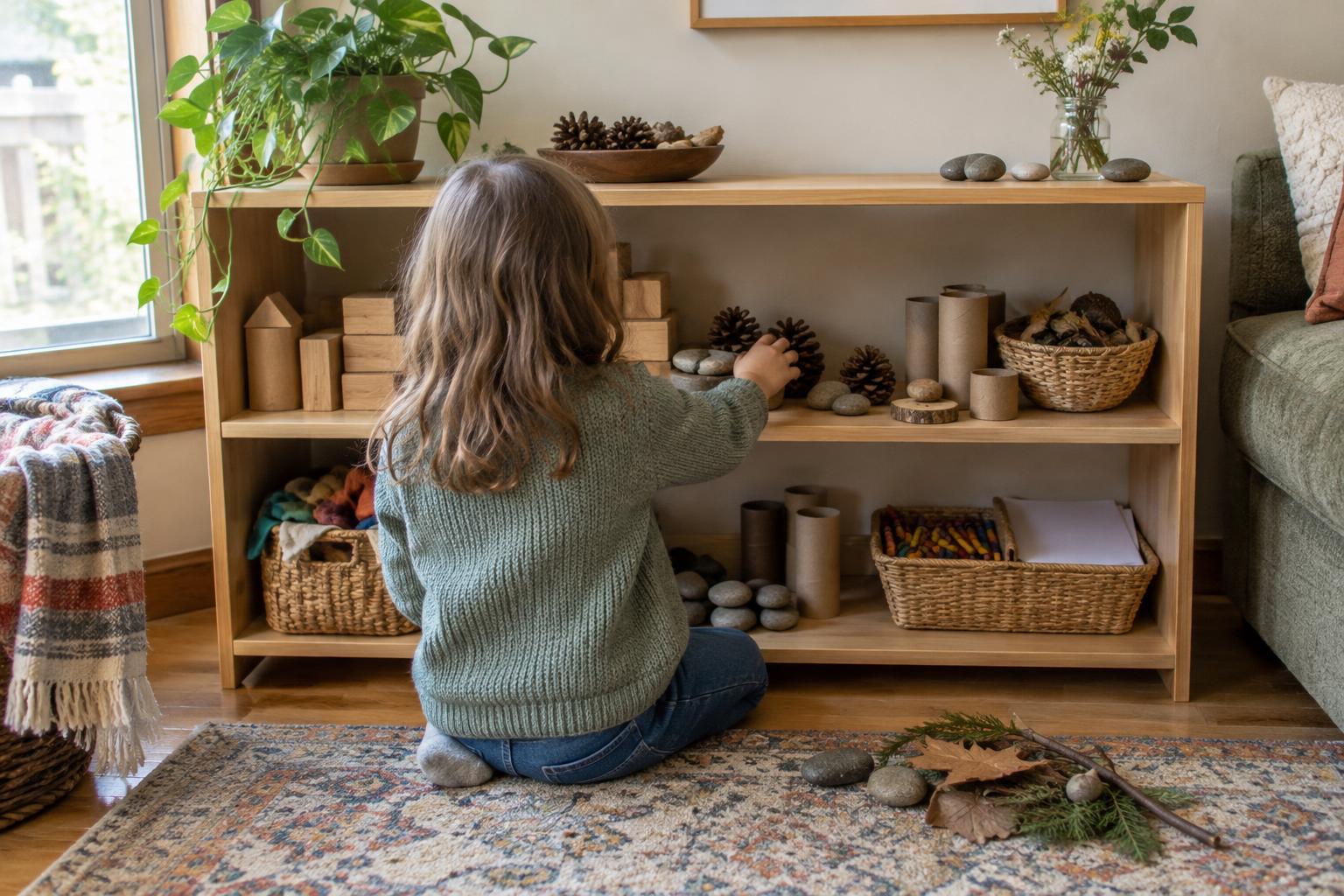
An invitation-to-play shelf is a place where a few materials are arranged to suggest possibilities without prescribing an outcome. It might be one low shelf, a tray on a table, or a sturdy box that can be put away after play. The goal is not to create a perfect display. It is to make it easy for a child to notice what is available, choose where to begin, and return materials when finished.
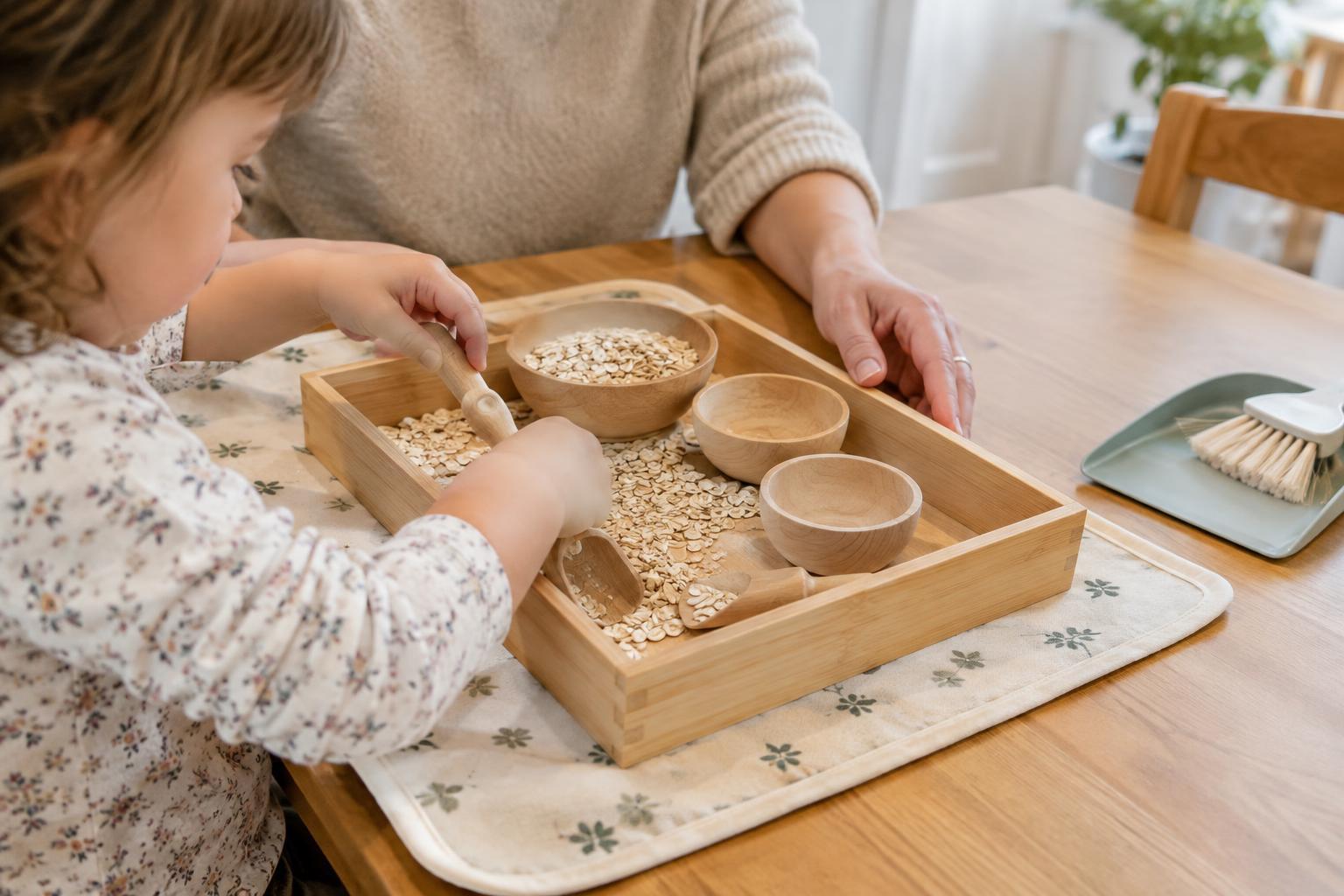
Start with less than you think you need. Leave room around each group of objects so a child can see and pick them up easily. A shallow basket can hold loose pieces; a tray can define a workspace for arranging them. Keep heavier items low, check materials for sharp edges or breakage, and choose pieces suited to the child’s age and habits. Small objects need particular care around children who may put things in their mouths.
Choose materials with more than one use
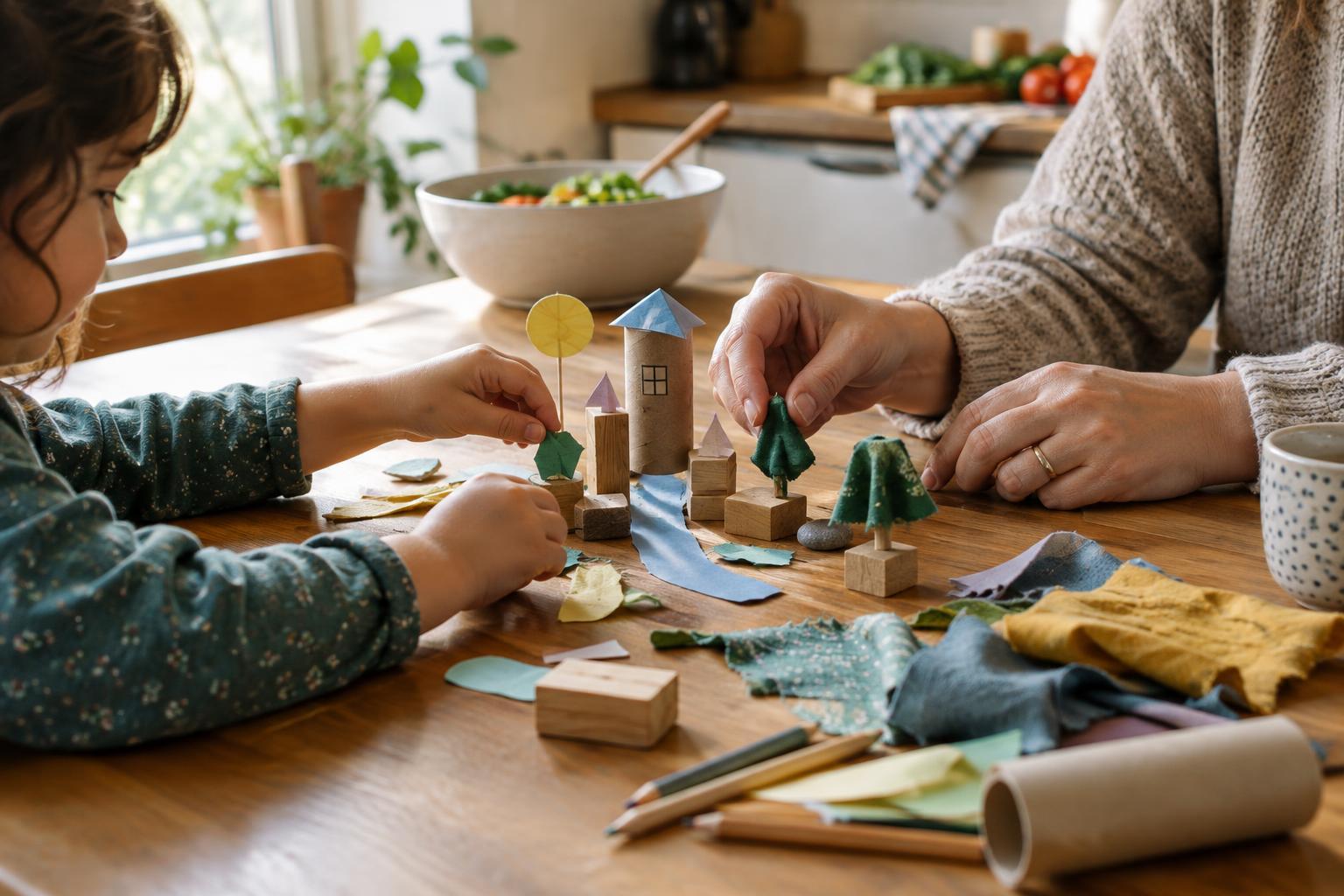
Open-ended materials give a shelf staying power. Fabric scraps can become capes, picnic blankets, rivers, or backdrops. Cardboard tubes can be tunnels, telescope props, or parts of a sculpture. Blocks, paper, washable drawing tools, and clean reusable containers can support different ideas from one day to the next. You do not need every type of material at once; two or three that work well together are enough.
Try grouping objects around an action rather than a finished product. For building, offer blocks, a few pieces of cardboard, and toy figures. For storytelling, pair fabric with puppets or familiar objects that could stand in as characters. For pattern-making, set out large, easy-to-handle shapes and a clear surface. The same supplies can be rearranged later to make a fresh invitation without a purchase.
Offer a prompt, then step back
An invitation can be as simple as a question placed nearby or spoken when a child approaches: “What could you build for these characters?” or “How many ways can you arrange these shapes?” A prompt gives a starting point, not a test. If a child turns a planned bridge-building activity into a pretend bakery, the shelf is doing its job: the materials have sparked an idea.
Adults can join by describing what they notice or asking a genuine question. “You put the tallest piece in the middle” leaves more room for exploration than “That’s the right way to do it.” Some children will want company; others will focus longer with space to work independently. Follow their lead, and treat unfinished constructions or repeated play as part of the process rather than something to correct.
Rotate with a light touch
A rotation does not have to follow a calendar. Watch for signs that the shelf needs a change: materials are consistently ignored, pieces no longer fit in their containers, or the setup makes cleanup difficult. Before replacing everything, try moving one basket, adding a new surface, or pairing familiar objects differently. Small changes can make old materials easier to see.
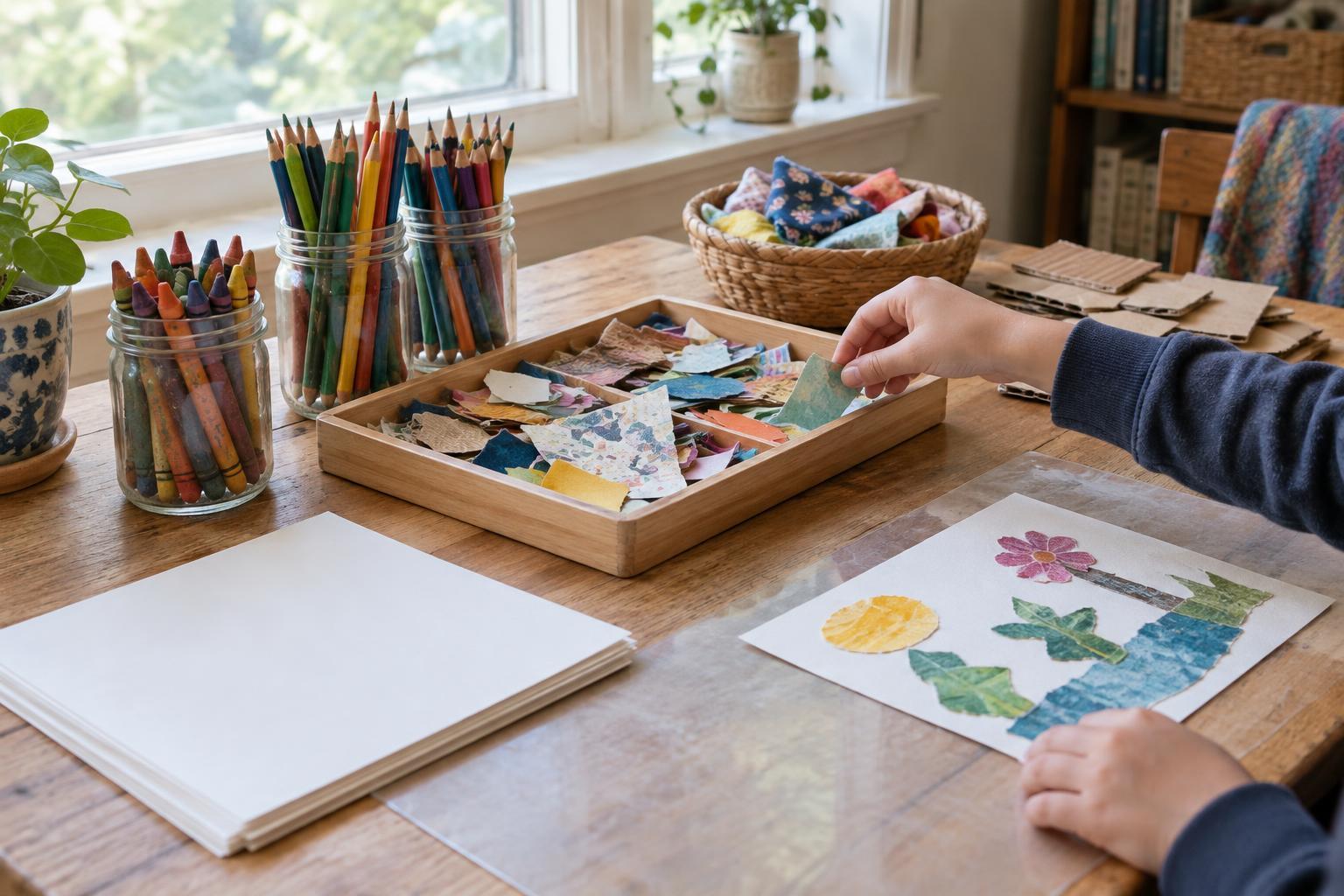
Keep a modest reserve of supplies out of sight if storage allows, and return favorites regularly. You might alternate a building setup with a drawing-and-collage setup, then bring back the blocks with fabric for pretend landscapes. Let children help choose what stays. If they are deeply involved with a project, leave it available or photograph it before clearing the space, if they would like that. Rotation should support their play, not interrupt it.
Connect the shelf to everyday discoveries
The most engaging ideas may come from ordinary experiences. After noticing interesting doors on a neighborhood walk, offer paper and blocks for designing imaginary entrances. After a library visit, place drawing supplies beside a few character props so children can invent another chapter. A museum visit might inspire a shelf of safe materials for sorting, sketching, or making models of something they remember.
Keep these connections loose. A child does not have to recreate what they saw to benefit from the experience. Ask what caught their attention, offer a few materials, and see what happens. Over time, the shelf can become a familiar place where observations turn into experiments, stories, and new questions—all without needing a brand-new activity every day.