Set up a tiny paper-moving experiment
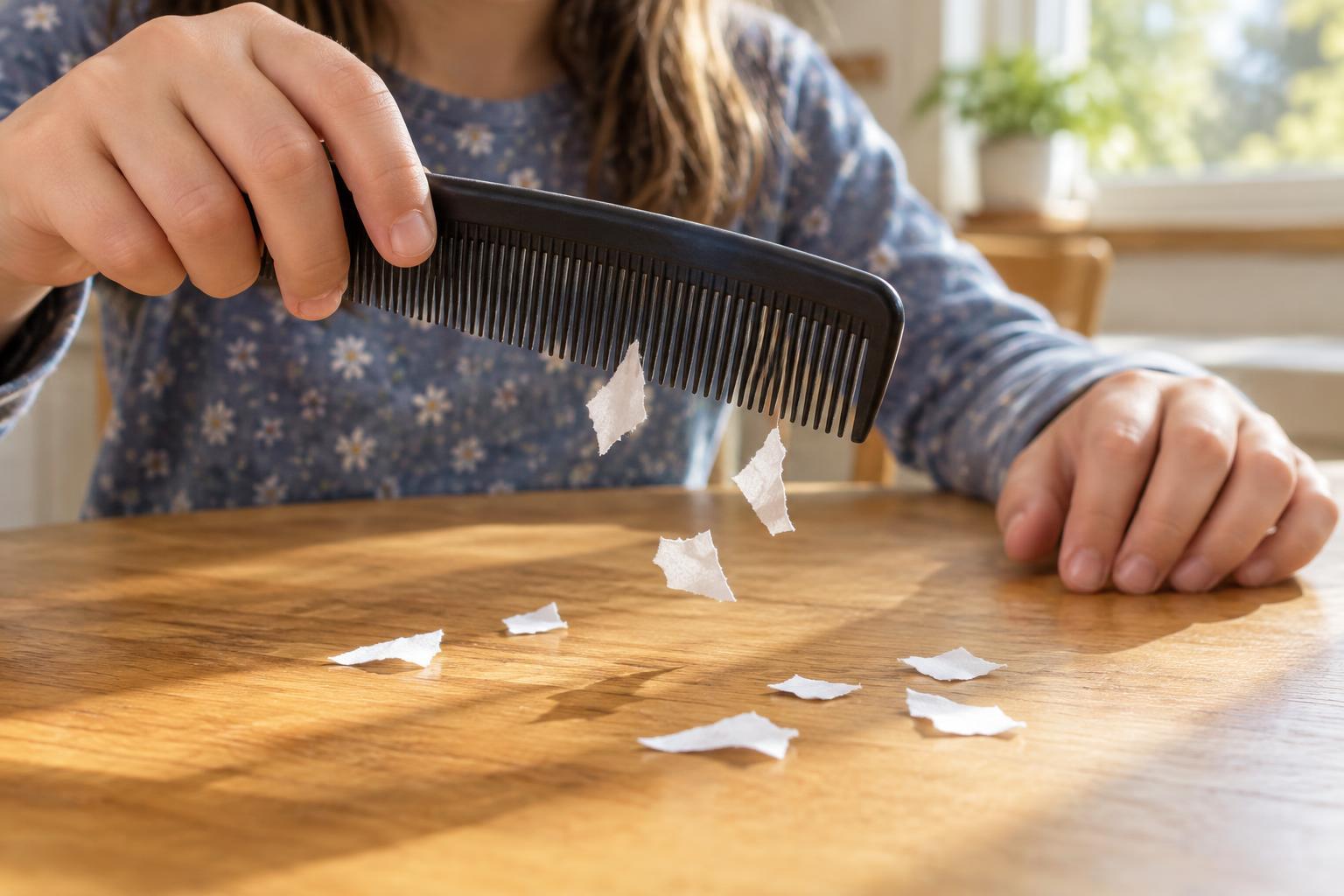
A plastic comb, a sheet of paper, and a dry tabletop are enough to begin. Tear or cut the paper into scraps about the size of small confetti. Place a few scraps on the table with room between them, so each one is easy to watch. You can use a larger piece of paper as a tray if you want to gather the scraps quickly afterward.
Before charging the comb, hold it just above the scraps without touching them. Ask: Do any pieces move? This first look gives children something to compare with what happens next. Then run the comb through dry hair several times. Bring it slowly toward the paper, again without touching it. A scrap may slide, jump toward the comb, or cling to it briefly. Try moving the comb away and bringing it back. Which scraps respond, and how close does the comb need to be?
What makes the paper move?
Rubbing a plastic comb through hair can transfer electric charge between the materials. The comb is then statically charged: the charge tends to remain in place for a while rather than flowing steadily as it does in a circuit. The comb can influence nearby objects before it touches them.
The paper scraps may have no overall charge, yet charge within each scrap can shift slightly in response to the comb. This can make the side nearer the comb more strongly attracted, pulling a light scrap toward it. If a piece touches the comb, it may behave differently afterward. That is part of the experiment, not a mistake.
Keep the explanation tied to what children can see. You might say, “Rubbing changed something about the comb. Now it can pull on these light pieces of paper.” Older children can use the words electric charge and attraction while still testing their explanation against the moving scraps. The comb is not acting like a magnet for paper; this is a different effect.
Change one thing and compare
Once the first attempt is complete, invite children to choose a question. Does rubbing the comb more times change what they notice? Will it pick up a narrow strip of paper as easily as a tiny scrap? What happens when they hold the comb farther away? Choose just one change at a time and keep the other steps as similar as possible. That makes the comparison easier to discuss.
For a simple distance test, start with the comb several inches above a fresh scrap and lower it slowly. Notice the point where the paper first moves. Repeat with another scrap rather than assuming every piece will act alike. Children can draw a picture of each attempt or record observations such as “did not move,” “slid,” and “jumped.” They do not need a perfect measurement to practice noticing differences.
If the paper does not move, try a lighter or smaller scrap, rub the comb through dry hair again, and check that the comb is plastic rather than metal. Conditions can affect how long a static charge lasts; on a damp day, the effect may be harder to see. A quiet result is still useful: it gives the family a reason to adjust the setup and try again.
Make room for predictions and surprises
Before each attempt, ask children what they think will happen and why. A prediction is not a promise to be right. If a larger scrap stays still while a smaller one leaps up, ask what might account for the difference. If a piece falls off the comb, watch where it lands and whether it responds again. These small surprises encourage children to look closely instead of rushing to a single answer.
Try taking turns as the comb operator and the observer. The operator moves the comb slowly; the observer describes the paper’s movement without touching it. Then swap roles. This gives younger children a clear way to participate and helps everyone distinguish what they saw from what they think caused it. When you finish, collect the scraps so they do not become scattered litter.
Keep the activity simple and safe
Use the comb only with paper and hair for this activity. There is no need to bring it near outlets, electronics, or anything plugged in. An adult can help prepare the scraps and supervise young children, especially if the pieces are small enough to be a choking concern. If combing hair is uncomfortable, keep the session short or let another family member charge the comb.
The best ending is a question for another day: Which kind of paper should we test next, or would the comb work as well in a different room? With one familiar object and a little patience, children can practice a lasting science habit: change something, watch carefully, and let the result guide the next try.