Plan for pauses, not just distance
A route that looks short on a map can feel long when someone wants to inspect every window display, watch a bird, or take a break. Before setting out, choose a simple destination and identify two or three possible places to pause along the way. A library entrance, a public square, or a wide sidewalk beside a planted area may offer a natural stopping point. Treat these as possibilities rather than promises: a bench may be occupied, a gate may be closed, or a spot may feel too busy once you arrive.
Think about the walk as a loop or an out-and-back trip with an easy turning point. That gives the group a choice to shorten the outing without making it feel unfinished. If you are walking with a stroller or someone who needs a step-free route, consider the full path between stops, not only the destinations. Crossings, curb cuts, surface changes, and narrow stretches can matter as much as the total distance.
Look for shade that fits the time of day
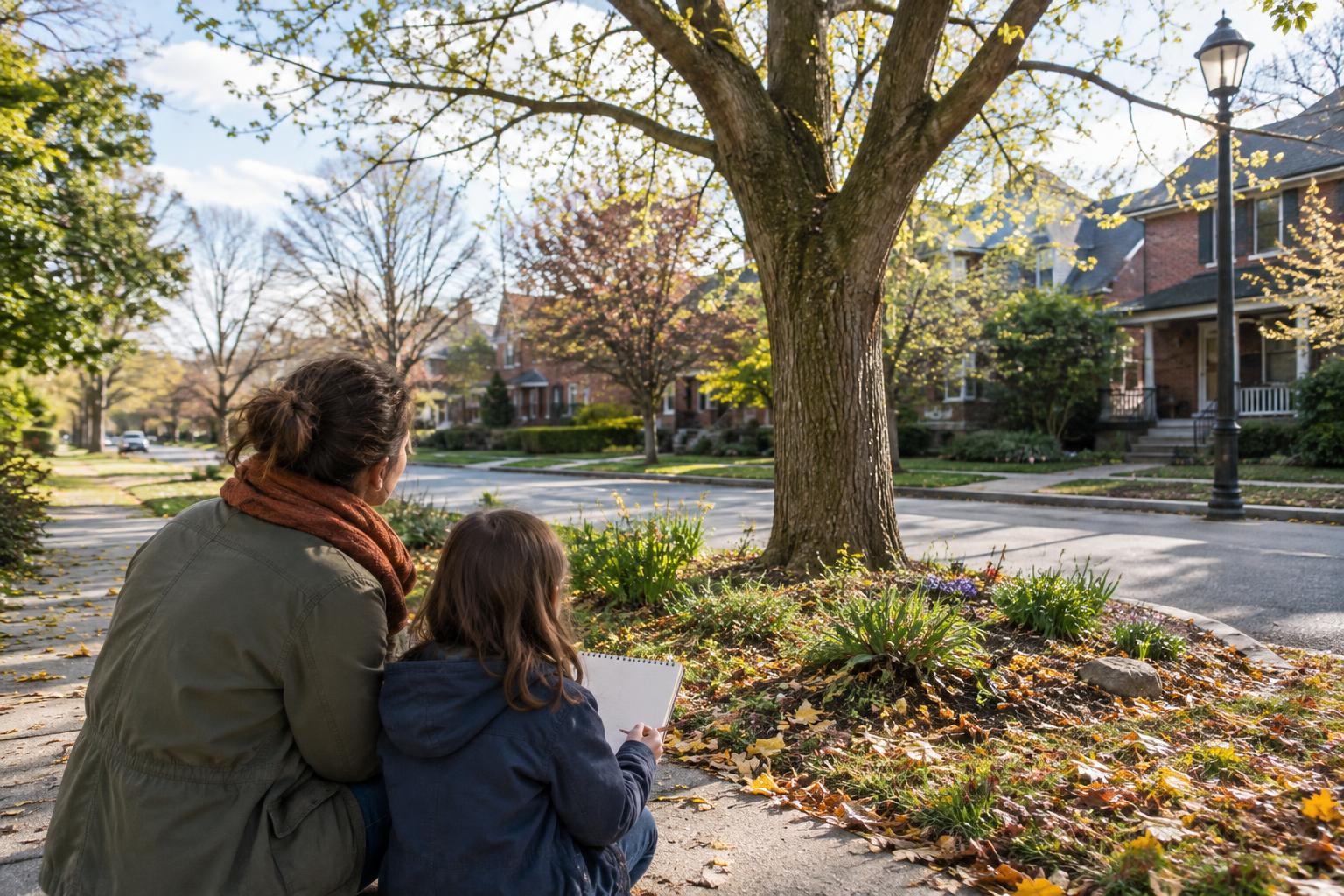
Trees, building awnings, and taller walls can all create welcome shade, but their shadows move. A street that feels sheltered on the outward walk may be sunny on the return. When possible, notice which side of the street has more cover at the time you expect to walk. A shaded route with a few extra turns may feel more pleasant than the most direct route, especially when the group is moving slowly.
Shade also makes a good subject for neighborhood observation. Invite children to compare a leafy patch, the shadow of a building, and an open stretch of pavement. Which places feel cooler or quieter? Where do people choose to stop? Keep the questions playful, and let what you see shape the conversation. There is no need to turn every pause into a lesson.
Choose stops the whole group can use
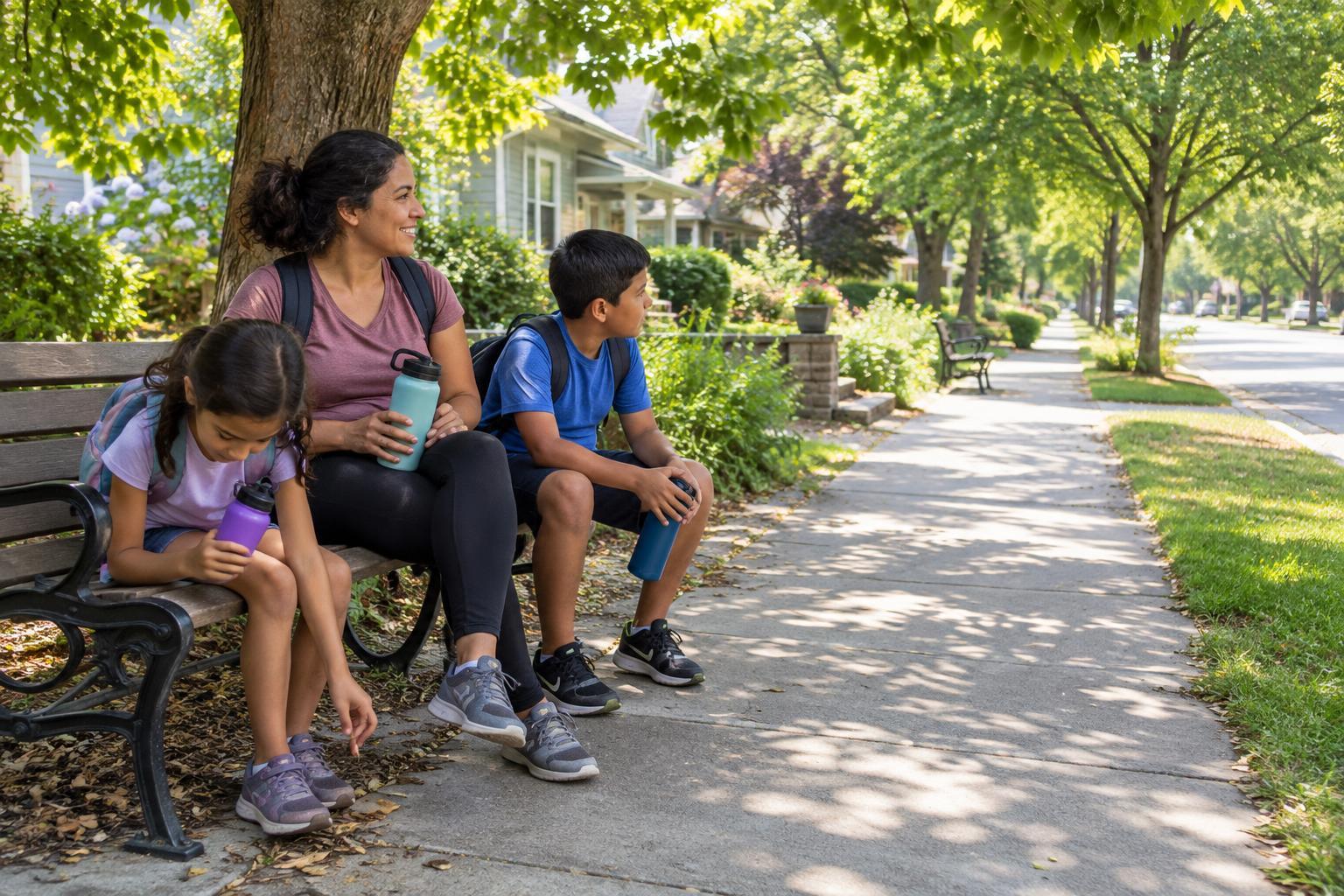
A useful rest stop has more than a place to sit. Look for enough room to gather without blocking a doorway or the sidewalk, a safe place to park a stroller if needed, and a clear view of where children can stand. Low walls and steps may look inviting, but they are not always comfortable or accessible. If a seated break is important, plan a backup rather than relying on a single bench.
Restrooms and drinking water deserve a separate check. Public access and opening hours can vary, and a business may reserve its facilities for customers. If those amenities are essential to your outing, confirm what is available before you leave and carry water for the walk. It can help to name the next likely stopping point to children: “We can pause by the garden, then decide whether to keep going.” That makes a change of plan feel ordinary.
Make the route a shared discovery project
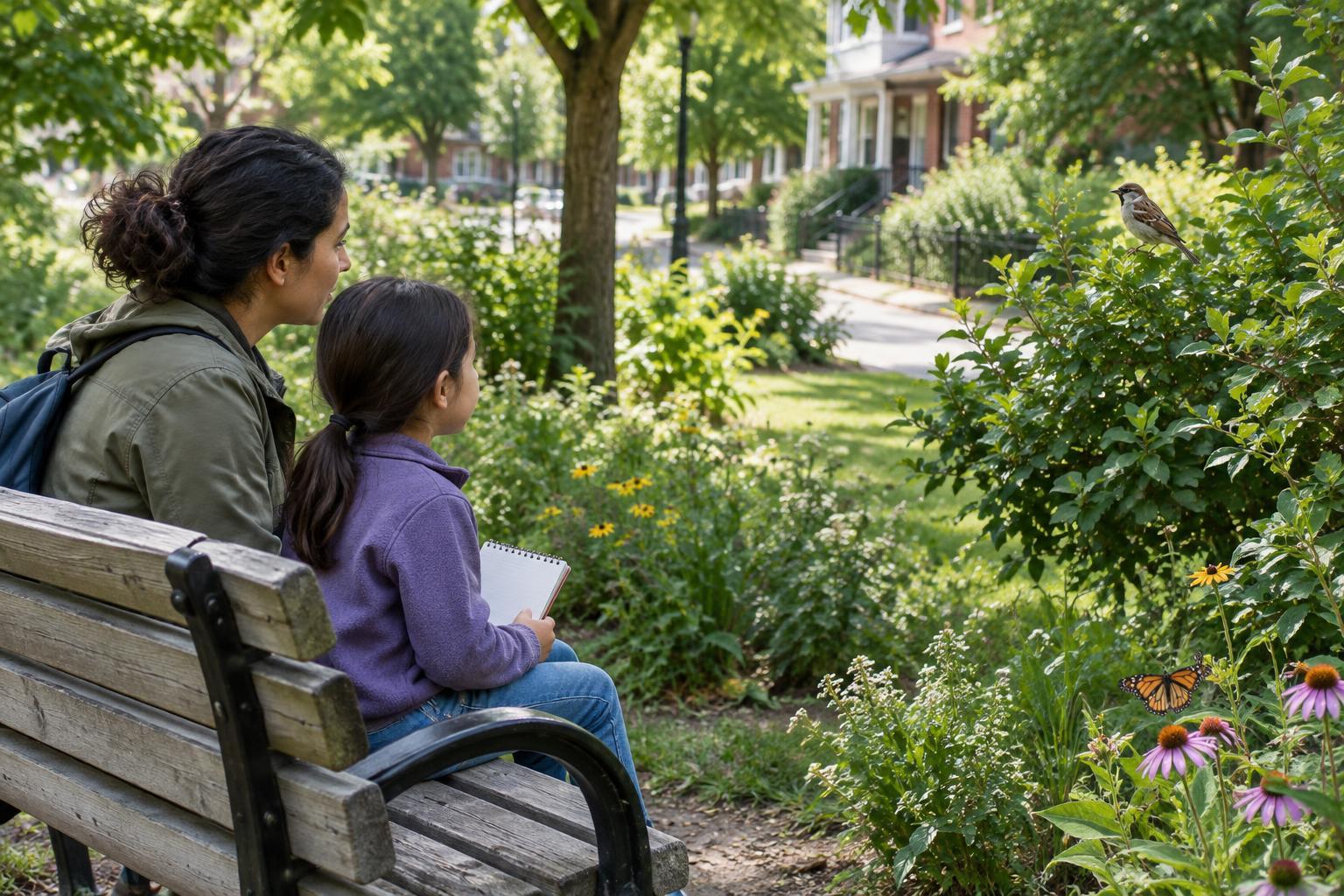
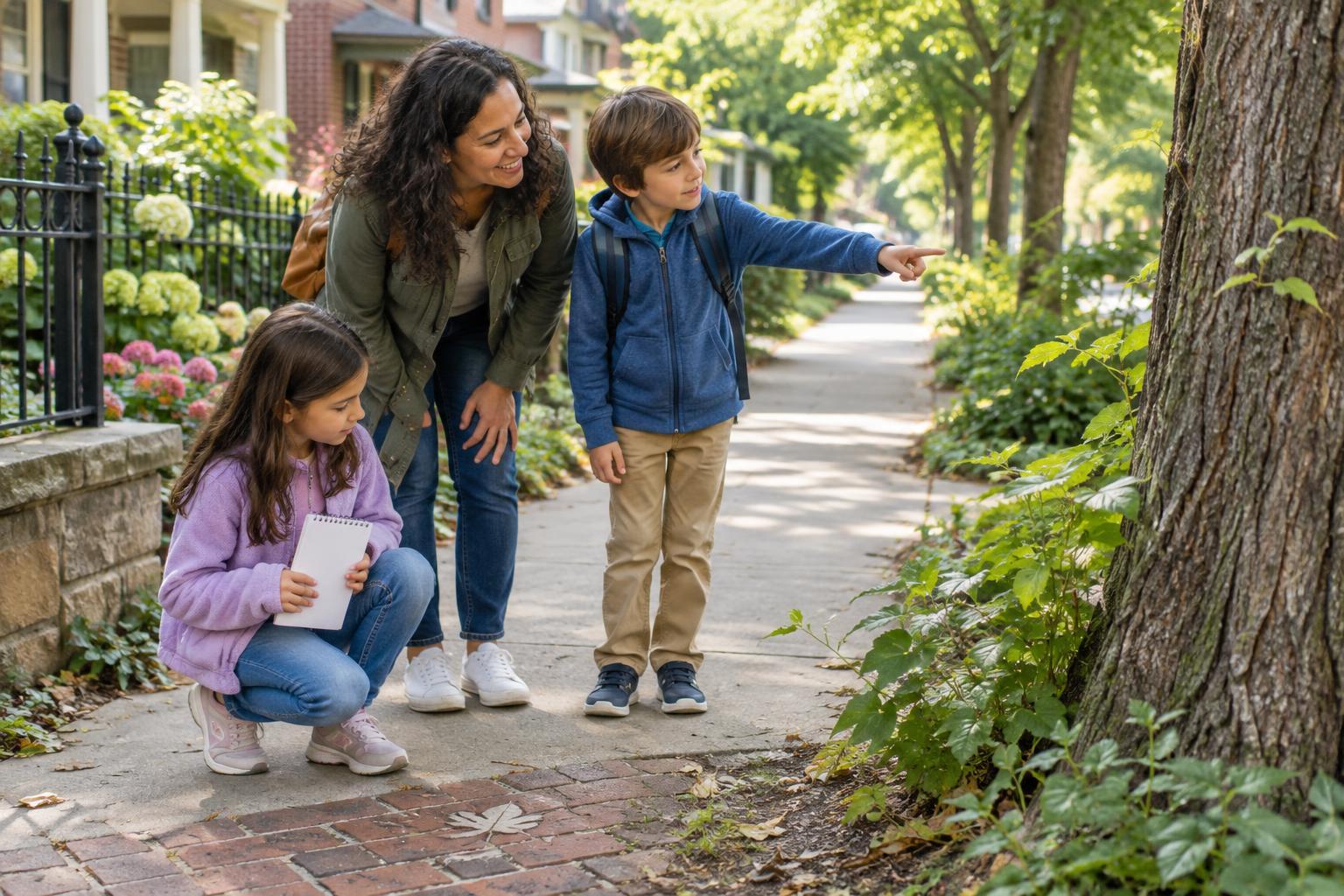
Give each walker a small job that suits their interests. One person can spot trees that cast broad shadows; another can look for places where people might sit; someone else can notice interesting doorways or street details. An adult can keep track of crossings and the group’s pace. On a familiar route, children may enjoy predicting where the next comfortable pause will be and then checking their guess.
You can make a simple route sketch afterward, using symbols for shade, seats, water, and places worth another look. It does not need to be a precise map. Add notes such as “bench near noisy corner” or “good place to watch birds” so the sketch captures how the walk felt, not just where it went. Comparing sketches after two walks can reveal how weather, time, and the needs of the group change a favorite route.
Leave room to turn back
The best family route is one you can adjust. Check in at a planned stop: Is everyone comfortable? Is the next stretch manageable? If the answer is no, heading home is a sensible choice, not a failed adventure. A shorter walk with time to notice a few things can be more satisfying than a longer one spent rushing toward the finish.
Over time, your family can build a small collection of dependable routes for different moods and conditions: a shady loop, a walk with reliable seating, or a quick trip with an easy way home. The goal is not to find one perfect path. It is to learn what helps your group feel comfortable enough to stay curious along the way.