Start with clues you can see
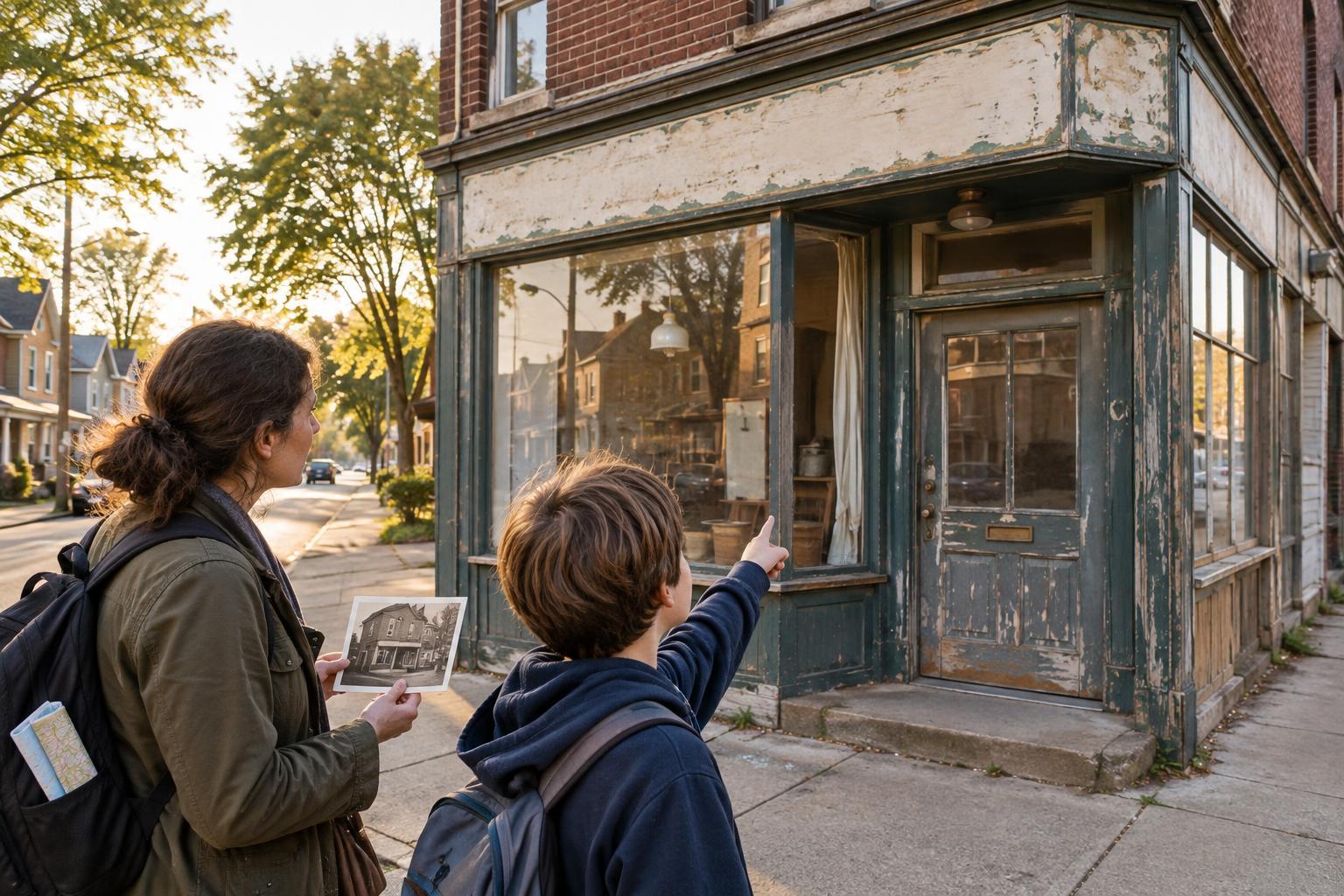
A neighborhood walk can become a local history investigation when you look for evidence of how buildings were used before. A painted sign may show through a newer coat of paint. A wide doorway, display window or covered-over service hatch might suggest a past purpose. These clues are starting points, not proof: a building can change many times, and a feature may have been added long after it was built.
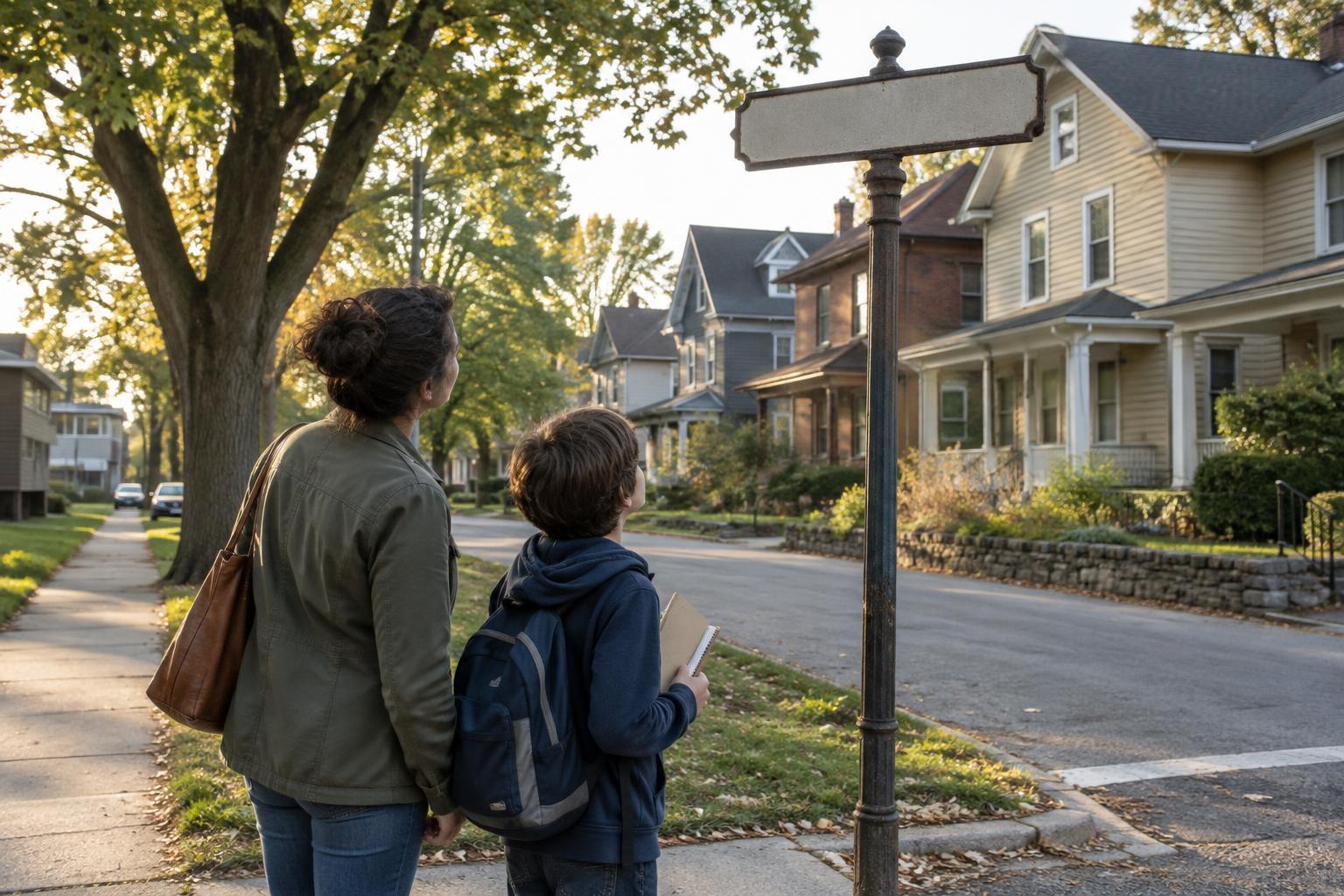
Invite children to choose one building or block to study. From a public sidewalk, sketch its shape and write down details such as signs, window sizes and entrances. Ask, “What do we notice?” before asking, “What might have been here?” This helps separate observation from a guess. Keep the walk comfortable for everyone by staying in public areas and not photographing people or private interiors without permission.
Build a timeline from different kinds of evidence
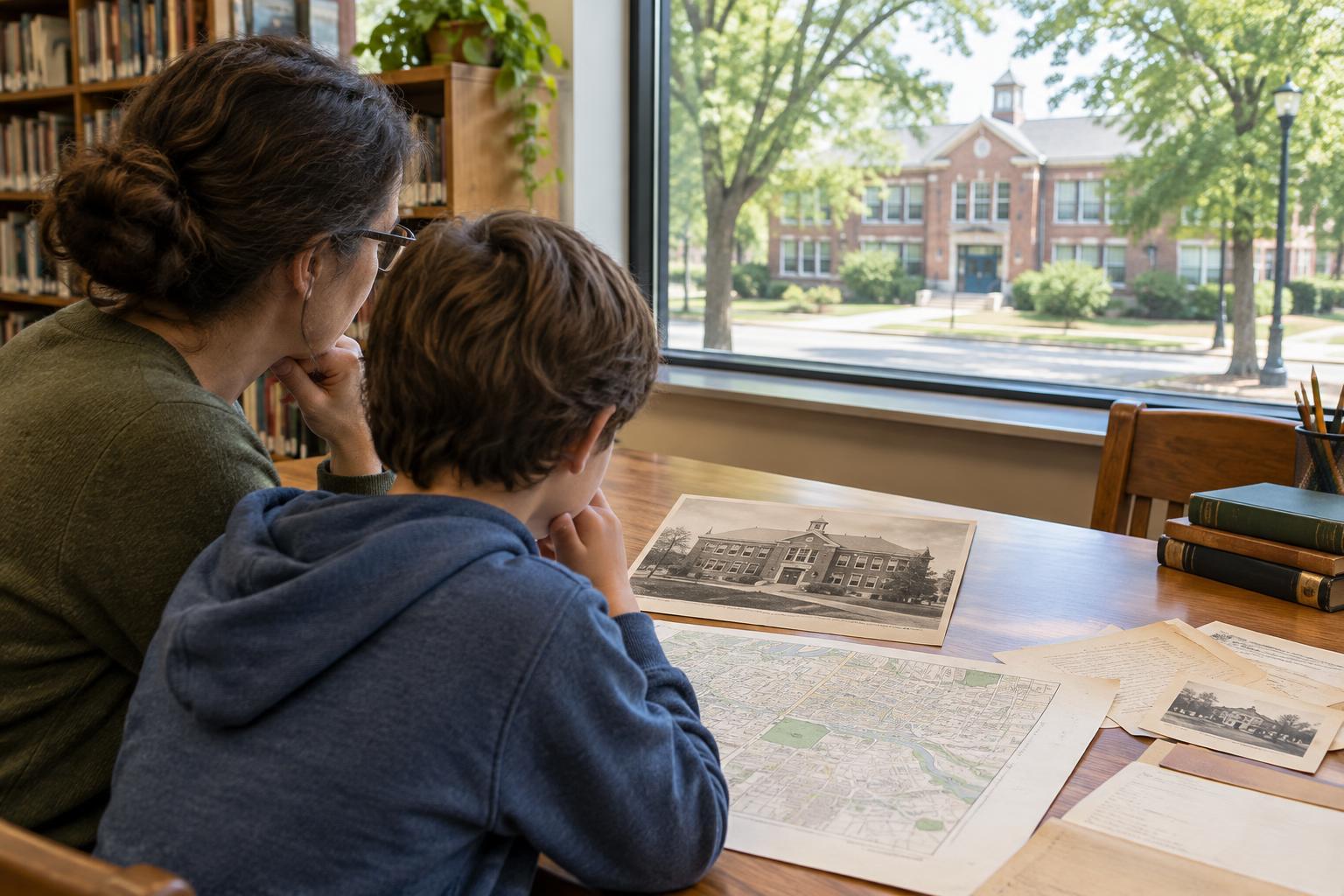
To learn what a building once held, look for materials that connect a place to a name and a period of time. Local library collections, historical societies, city directories, old maps, newspaper advertisements and photographs may offer useful leads. An address is helpful, but street numbers and building layouts can change, so compare several details before deciding that two records describe the same place.
Make a simple timeline with three columns: what the source says, when it appears to be from and what you still want to check. A directory might list a bakery at an address, while a photograph shows a storefront bearing that name. Together, those pieces tell a clearer story than either one alone. If the evidence conflicts, leave the question open. Figuring out why sources disagree is part of the investigation.
Ask what the business did for its neighbors
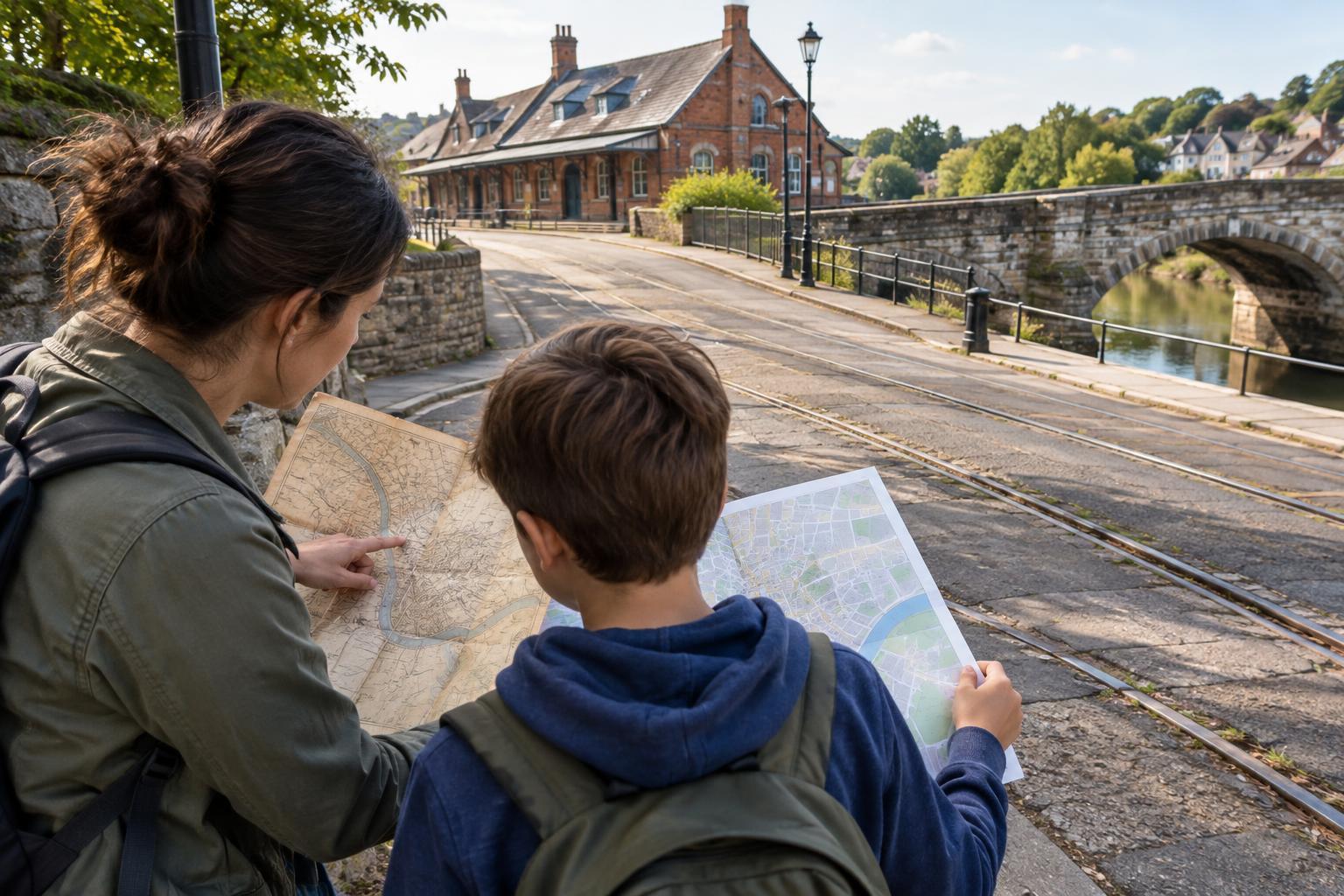
A former business is more than a name on a sign. Think about why people might have visited it, what work happened there and how it fit into daily routines. A grocery store, repair shop or café could have served different needs, depending on its time and location. Children can draw a map showing how someone might have traveled between the business and nearby homes, schools or transit stops, while remembering that the route is an imagined possibility unless a source confirms it.
Questions often reveal more than quick conclusions. Who could shop or work there? What goods or skills did it provide? How might deliveries have arrived? What nearby places served a similar purpose? Looking at the surrounding block can help children see a business as part of a changing neighborhood rather than an isolated building.
Listen carefully to people’s memories
Neighbors, relatives and former customers may remember details that are hard to find in a map or directory: a favorite window display, the sound of a workshop or the way people gathered outside. If someone is willing to talk, ask open-ended questions and let them decide what they want to share. Before recording a voice, taking a photograph or publishing a name, ask permission.
Memories are valuable, but they are personal accounts, not complete records. Two people may recall the same place differently, and a business may have meant different things to workers, customers and nearby residents. Note who shared a memory only if they consent, and distinguish their recollection from details confirmed elsewhere. Be especially considerate when a closure may be connected to someone’s livelihood or a difficult change in the community.
Turn your findings into a small neighborhood story
Bring your notes together in a one-page display or handmade booklet. Include a drawing of the building, a short timeline and labels such as “observed,” “found in a record” and “remembered by a neighbor.” Children can add a question they would investigate next. If you use an archival image, check whether you have permission to reproduce it; a child’s own sketch is another way to show what caught their attention.
Finish by visiting the site again and noticing what it does for the neighborhood now. Perhaps it houses another business, serves a new purpose or stands empty. Avoid treating the older use as automatically better or the newer one as less important. The goal is to understand how a familiar place has changed—and to recognize that the people using it today are part of its continuing story.