Choose a question, not a winner
Two nearby blocks can feel surprisingly different. One might have broad sidewalks and young trees; another might have narrow paths and older buildings. Comparing them can sharpen a child’s observation skills, but the goal is not to decide which block is “better” or what its residents are like. The goal is to ask how public spaces are arranged and how those arrangements affect a walk.
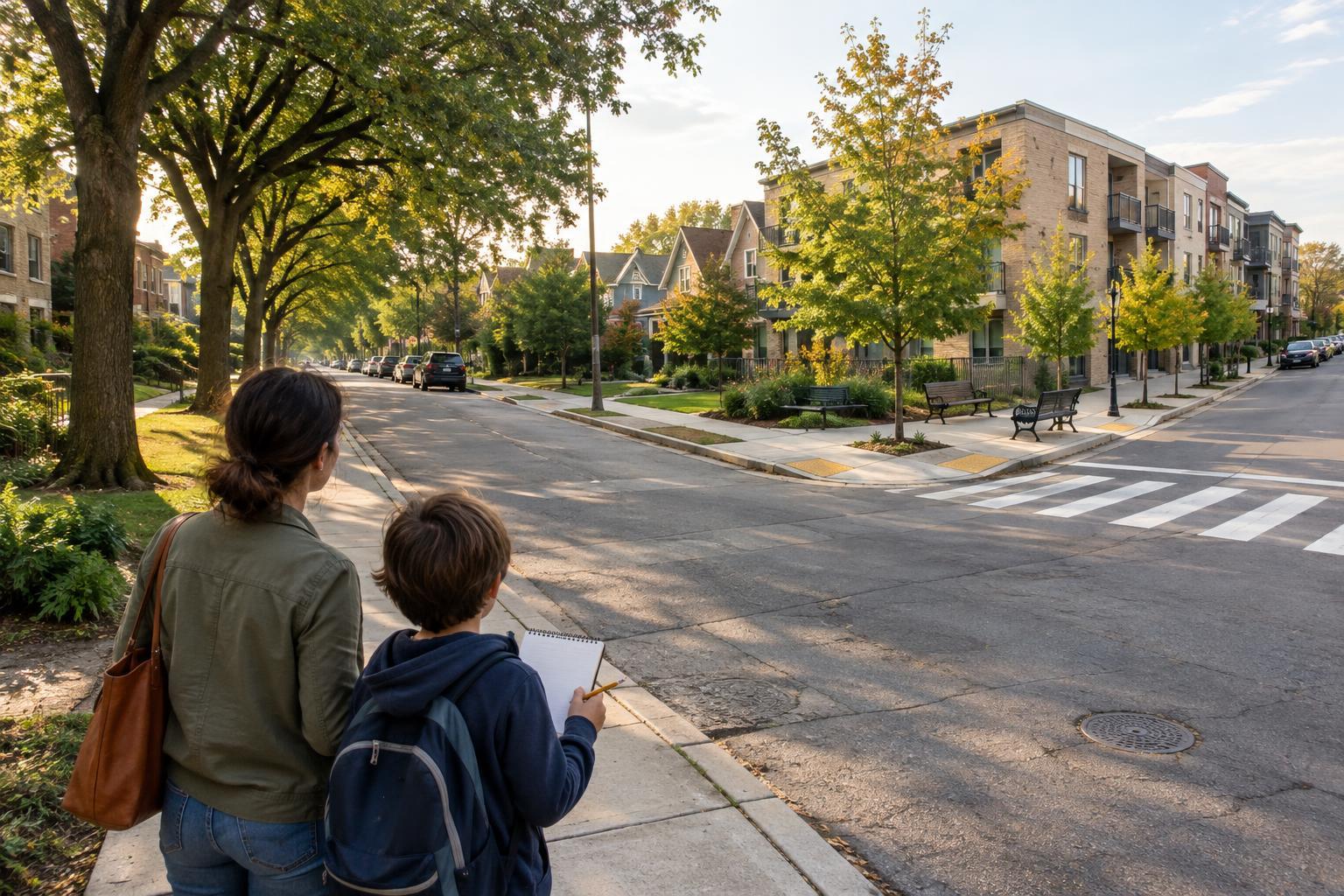
Before leaving, choose one question the family can investigate, such as “Where could someone pause in the shade?” or “What helps us cross the street?” A focused question gives children something specific to look for. Pick two blocks close enough to visit on the same outing, and plan a route that works for everyone in your group. If a sidewalk or crossing feels unsafe, choose a different route rather than treating the obstacle as a challenge to overcome.
Make a simple observation kit
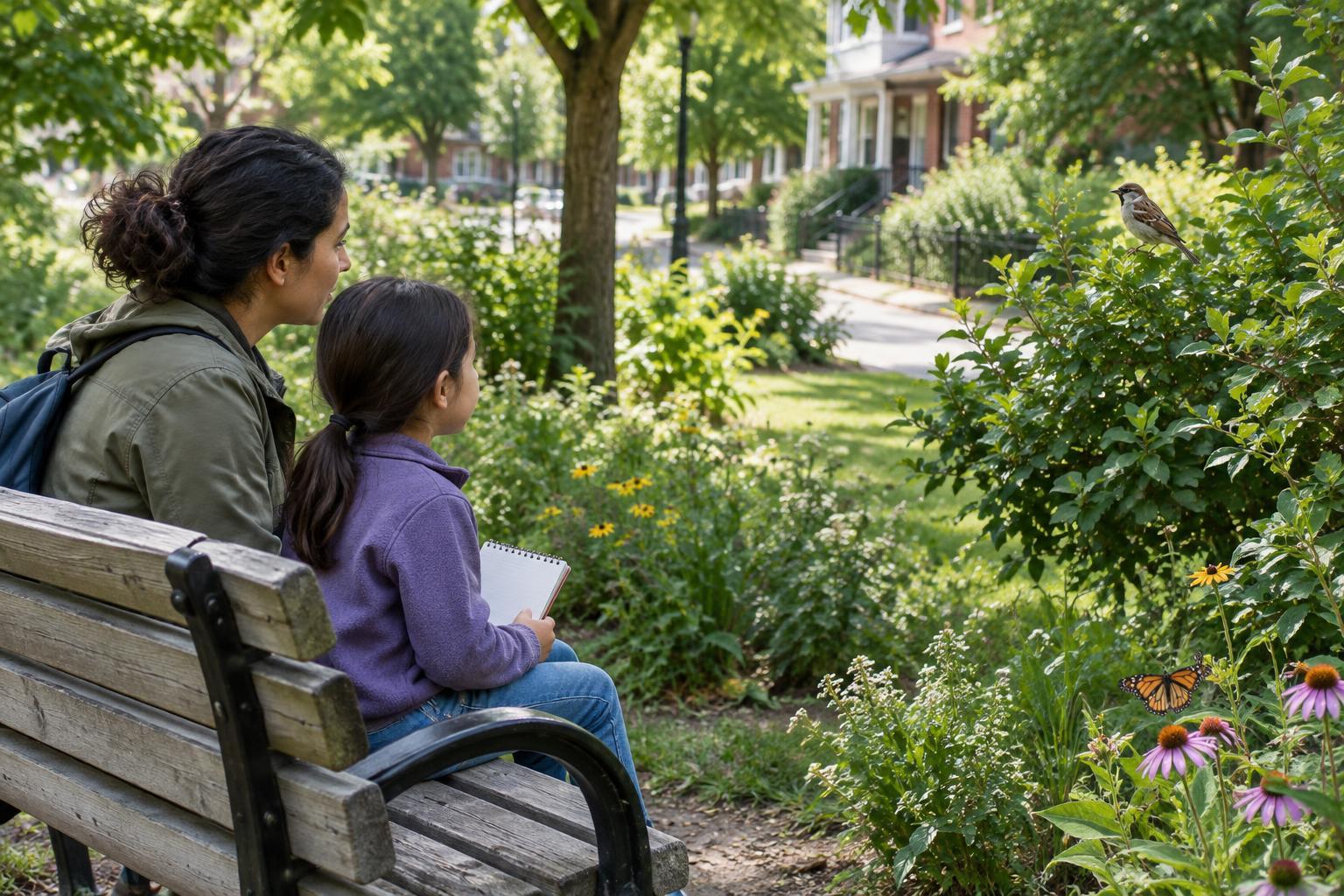
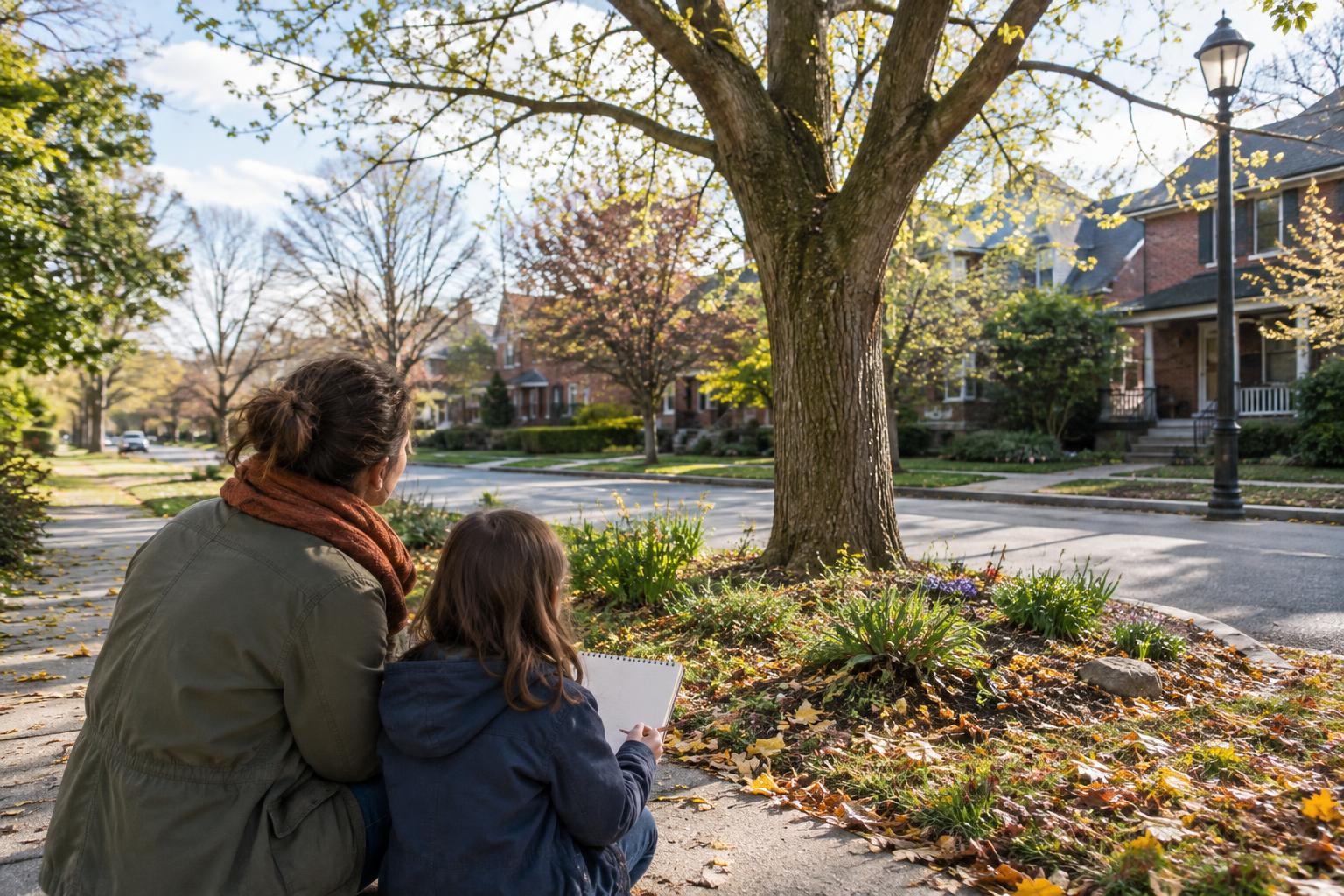
Bring a small notebook or a sheet of paper divided into two columns, one for each block. Children can draw instead of writing. Useful things to record include trees, places to sit, curb ramps, crosswalks, bus stops, places to throw away litter, and sounds that are easy to hear from the sidewalk. Choose just a few features so the walk still feels like an exploration, not an inspection.
Agree on a few ground rules before you start. Stay in public spaces, leave plants and property as you find them, and do not photograph people, homes, or license plates for the project. People on the street are neighbors going about their day, not evidence for a theory. If someone asks what you are doing, a simple explanation such as “We’re noticing street features on our walk” is enough.
Notice what is there and what you cannot know
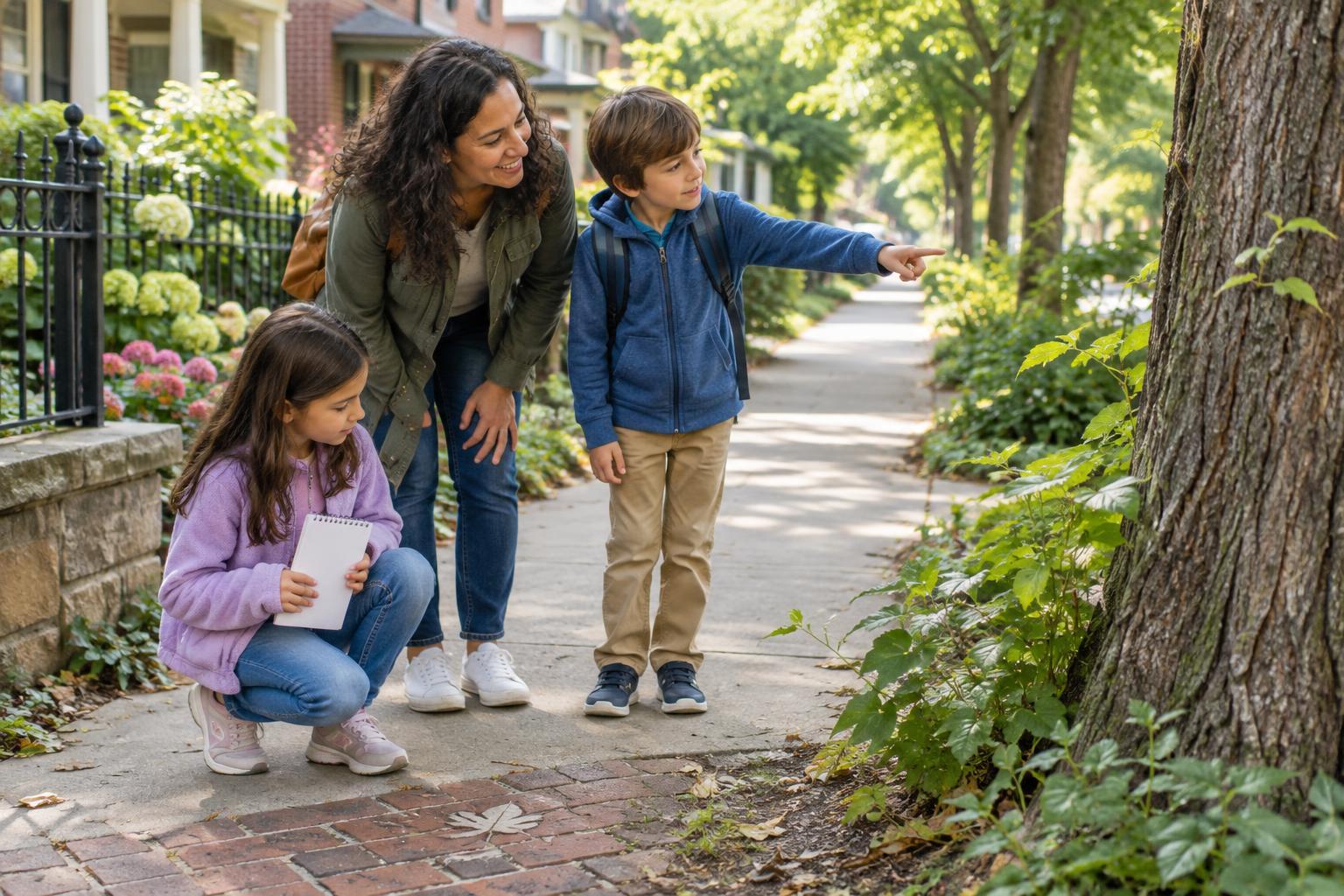
Walk each block at an unhurried pace and stop where you can do so without blocking anyone’s way. Invite children to name something they can directly observe: “There are three trees along this stretch,” or “The crossing has a signal.” Then ask how that feature might shape an experience: “Would the trees offer shade at this time of day?” or “Can we see approaching traffic from here?” The second question is an idea to test, not a fact about everyone who uses the street.
It helps to separate observations from guesses on the page. A cracked sidewalk is observable; why it has not been repaired is not. A quiet street at the moment you visit does not mean it is always quiet. Likewise, the appearance of a building cannot tell you who lives there, what they value, or how they feel about their neighborhood. Children can practice saying “I wonder” instead of filling in a story they do not know.
Compare access and comfort without ranking neighbors
After visiting both blocks, look across your two columns. Which features were present on each? Where was it easier for your group to move, rest, or notice something interesting? Your answers may depend on the weather, time of day, your route, and the needs of the people walking with you. A stroller user, a person using a mobility aid, and a child who wants a quiet place to pause may notice different things.
Try sentences that compare conditions rather than communities: “Block A had more places to sit on our route,” not “People on Block A care more about their street.” Even a feature you dislike may have a history you cannot see. The comparison becomes more useful when it makes room for uncertainty. You can say what you noticed, what you did not check, and what you would need to learn before drawing a broader conclusion.
Turn the walk into a question worth keeping
Back at home, ask each person to choose one detail they had never noticed before. Draw a small map marking features such as a shady spot, a difficult crossing, or a place where you heard birds. You might return at another time to see whether your observations change. Comparing the same route on two walks can show children why a single visit offers only a partial picture.
Finish by choosing a question rather than delivering a verdict: “How do people decide where a bench goes?” or “What makes this crossing easier to use?” Those questions can guide a future walk or a conversation about how shared spaces work. The lasting lesson is that a neighborhood is more than what a visitor can see in a few minutes, and careful curiosity leaves room for the people who know it best.