Start with one artwork
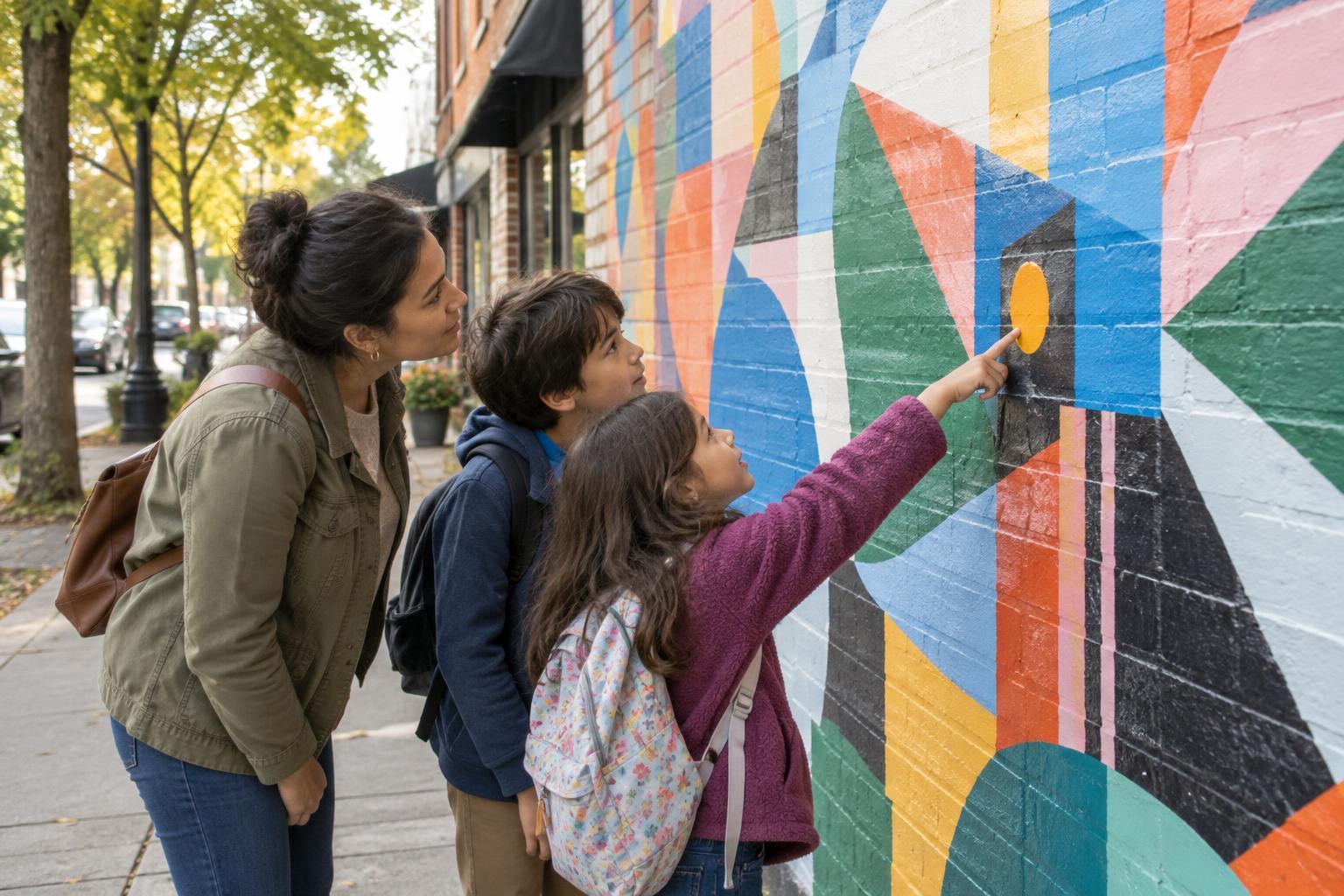
You do not need a planned art trail to explore public art with kids. A mural on a wall, a sculpture in a plaza or a mosaic along a walkway can be enough. Pick one work that your family can view safely from a public space, and give yourselves permission to spend a few minutes there. The goal is not to cover ground or identify the “right” interpretation. It is to see what becomes interesting when you slow down.
Before you begin, find a place to stand or sit that does not block a doorway, path or bike lane. Look at the whole work first. Then invite everyone to choose a detail they want to investigate. A child might notice a tiny shape or a surprising color before an adult does. Let that observation lead the conversation.
Move from noticing to wondering
Begin with questions that can be answered by looking: “What shapes do you see?” “Where does your eye go first?” “What looks different when you step a little farther back?” These prompts welcome many kinds of responses. A younger child might point, name colors or trace a shape in the air. An older child might compare repeated patterns or notice how the work fits its surroundings.
Next, make room for questions without immediate answers. Why might the artist have chosen this size? Does the work seem different from each side? What would you ask its maker? Try saying “I notice…” and “I wonder…” rather than explaining everything at once. If your child offers a story about the artwork, ask which details inspired it. An imaginative answer can begin with careful looking; it does not have to be presented as the artist’s intention.
Look at the place around the art
Public art is part of a setting, not just an image to view on its own. Take a few steps to see what changes. Does sunlight bring out a texture? Do trees, buildings or passing people become part of the view? From a safe distance, compare how the artwork looks up close and farther away. If touching is not clearly permitted, look for texture with your eyes instead of your hands.
Ask why this might be a place where people encounter art. An artwork near a library may be seen by people arriving for many different reasons; one beside a walking route may become a familiar landmark. You do not need to know its full history to notice these relationships. If a label is present, read it after making your own observations, then discuss what new questions it raises. If there is no label, leave the maker and meaning as open questions rather than guessing.
Give everyone a way to respond
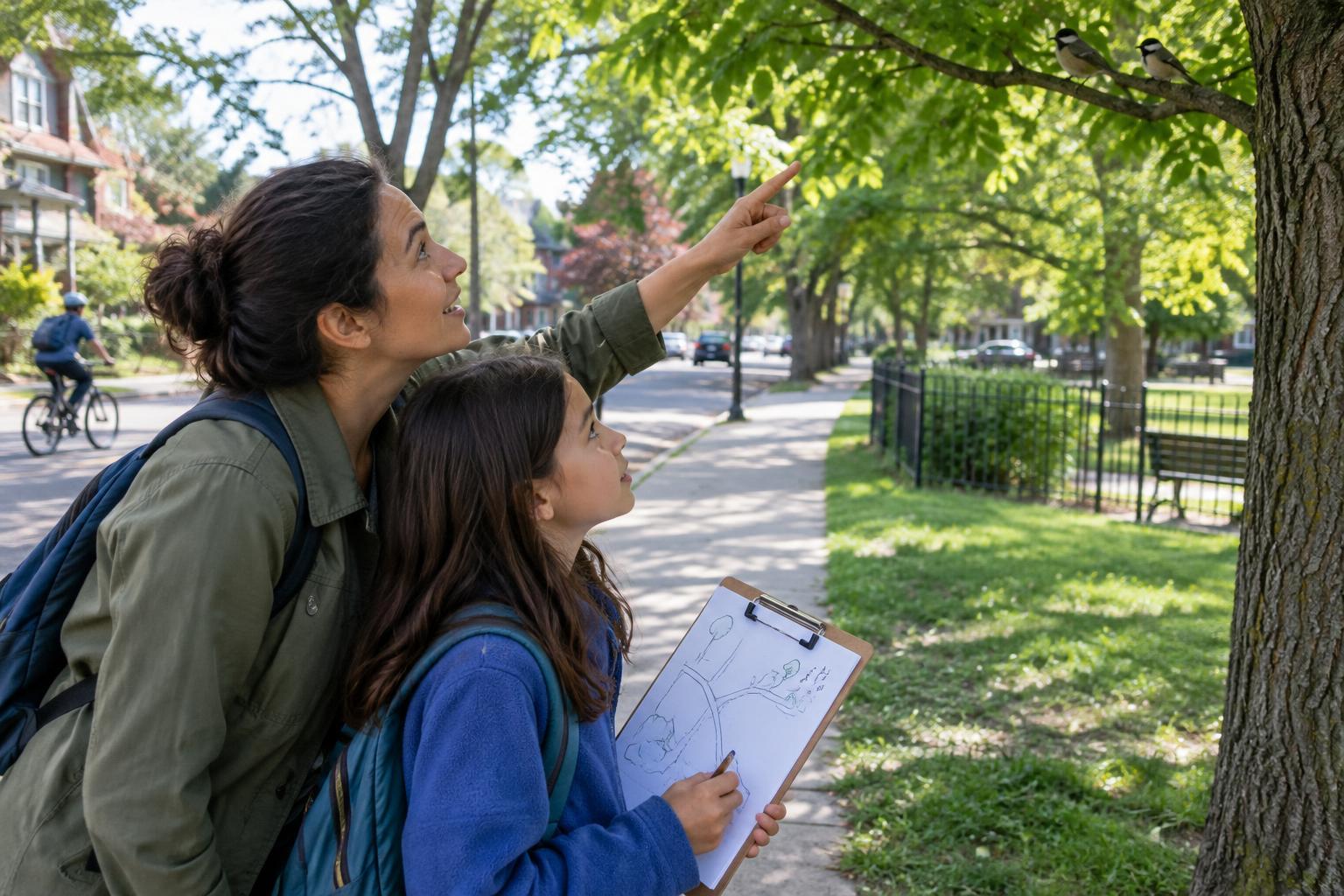
Some kids enjoy talking; others prefer drawing or moving. Offer a small choice: sketch a favorite detail, make a shape with your hands, describe the artwork in three words or invent a title. A quick drawing is a record of what caught someone’s attention, not a test of artistic skill. If your family takes photos, check any posted rules and stay aware of other people who may be in the frame.
For a playful comparison, ask each person to choose one detail and explain why they picked it. Different answers show how many routes there are into the same artwork. You can also invite a child to guide the group’s looking for one minute: they choose where everyone stands and what everyone tries to spot. Keep the activity brief if attention starts to wander. Returning another day can reveal more than pushing for a longer visit.
Carry the looking home
On the way back, ask one simple question: “What do you remember most?” You might be surprised by an answer that has little to do with the part you noticed. At home, a child could use paper scraps to make a pattern inspired by the artwork or draw it from memory, then compare the drawing with what they recall seeing. There is no need to reproduce the original.
On future walks, look for another public artwork and compare the experience. Is it made of different materials? Does it invite you to walk around it or view it from one spot? Close looking can become a familiar habit: pause, notice, ask and respond. Each outing offers a way to pay attention to the neighborhood while making space for a child’s own ideas.