Start with one small question
After rain, familiar streets can look different. A shallow puddle appears beside a curb, drops slide down a window, and one patch of soil looks darker than the pavement around it. These changes offer a focused question for a family walk: where can we actually see water going? You do not need to trace every drop or explain an entire drainage system. The goal is to practice noticing and asking questions together.
Choose a short route you already know, or watch from a porch, doorway or window. A light rain or a walk after the rain has stopped may be easier than heading out during a downpour. Check that paths are comfortable for your group, and skip the activity if weather, standing water or slippery surfaces make it unpleasant or unsafe. Bring paper for a few notes if you like, but memories and conversation work just as well.
Follow the clues you can see
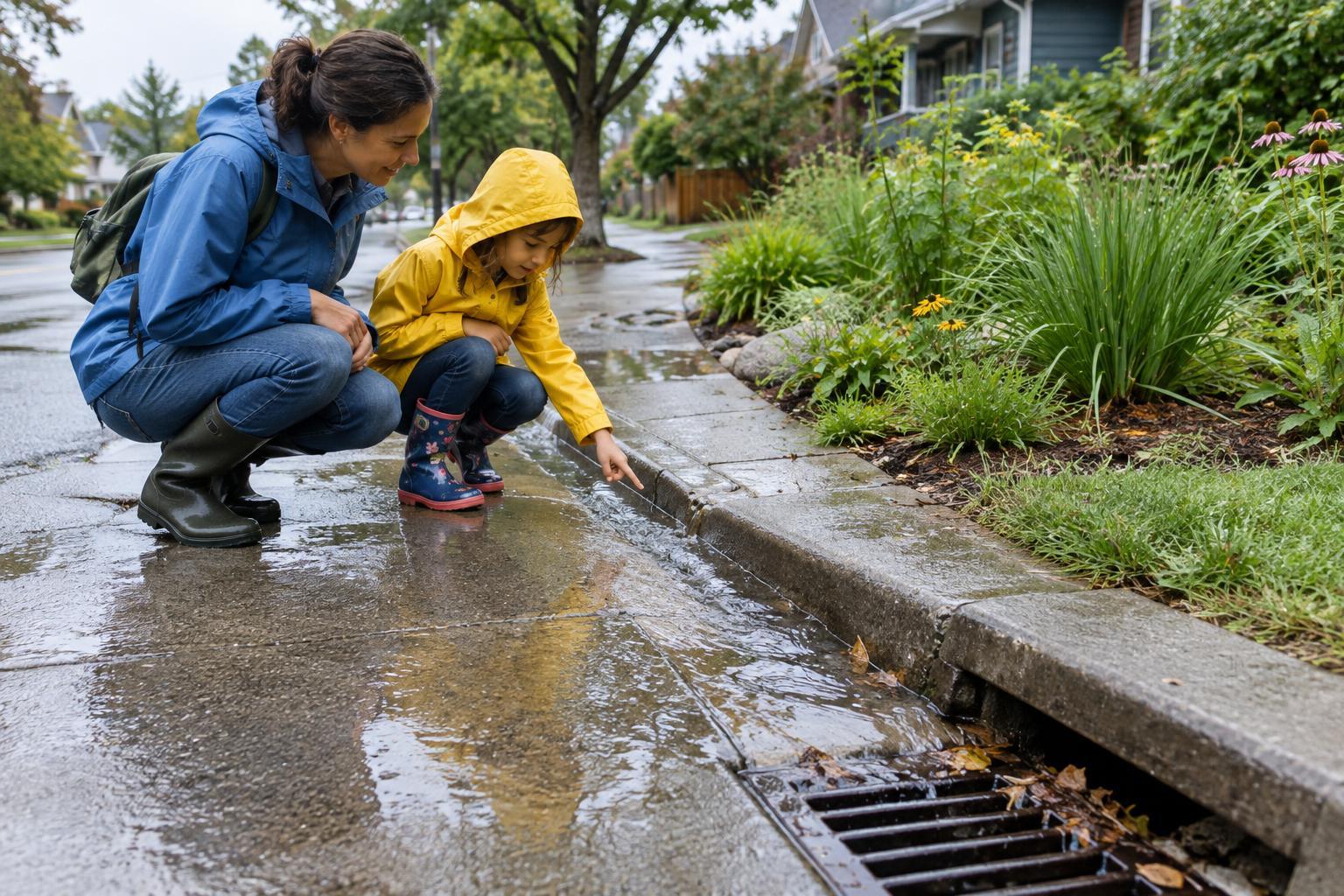
Begin at a place where water has collected. Ask, “What is next to the puddle?” and “Does the ground look flat, or does it tilt?” Children might notice that water gathers in a low spot or runs along the edge of a sidewalk. Try looking from a different safe standing position: a slope that was hard to spot at first may become easier to see. There is no need to step into the street or walk close to a drain to investigate.
As you continue, compare surfaces. Water may spread across pavement, bead on a painted railing, or darken soil beneath a tree. A planted area might look wet while a nearby patch stays dry because something sheltered it. These observations invite predictions: if it rains again, which spot might get wet first? Treat predictions as ideas to revisit, not answers that must be right.
A gutter or drain may be visible along your route. It is fine to point one out from a safe distance, but avoid lifting covers, reaching inside or putting anything into an opening. What happens beyond a drain is not usually visible from the sidewalk, and systems can differ from place to place. “We can see water moving toward it; we cannot see where it goes next” is a useful conclusion.
Make a tiny water-path sketch
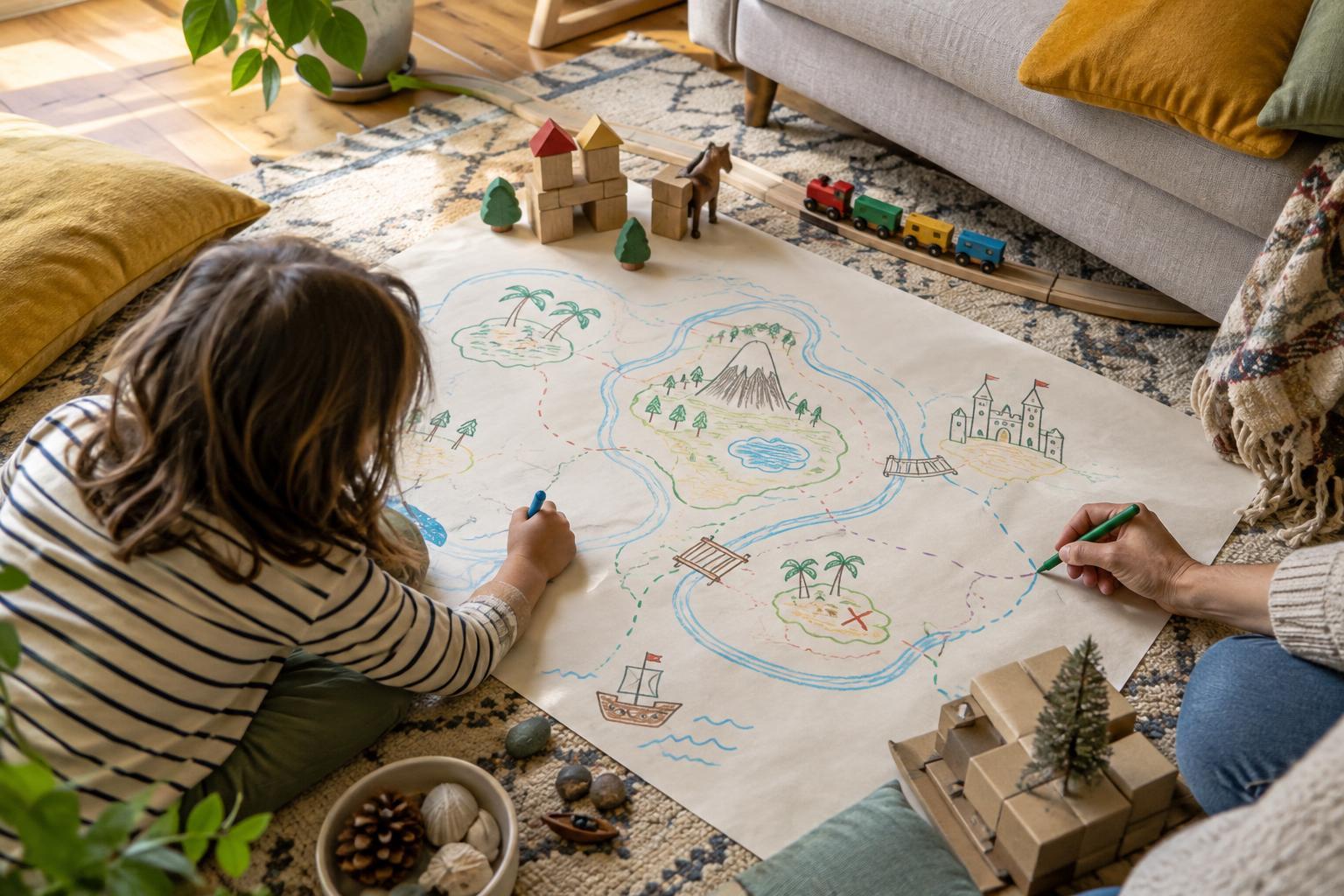
At home or while stopped somewhere comfortable, draw a simple sketch of one observed spot. Add only a few landmarks: perhaps a tree, a curb, a building edge and the puddle you noticed. Use arrows to show water you actually saw moving. For a possible route that you did not see, draw a different kind of line or add a question mark. Younger children can choose symbols or describe the scene while an adult draws.
This distinction between observation and guesswork gives the sketch a purpose beyond making a map. A child might say, “The water went past the leaf,” then wonder, “Would it still go that way if the leaf moved?” You can talk about how a blocked or uneven patch might change the path without moving debris yourself. If you visit the spot again, compare the sketch with what you see rather than trying to prove the first version correct.
For an indoor extension, place a few drops of water on a washable, slightly tilted tray and watch where they travel. An adult can help keep water away from electronics and surfaces that should stay dry. This small model may help children think about slopes, but it will not behave exactly like a street with many different materials and obstacles.
Keep the outing curious and comfortable
Rainwater near roads, drains or bins may contain things you cannot identify by looking, so keep hands out of puddles and wash up after outdoor play. Watch for traffic, give other people room to pass, and observe buildings and yards from public places without entering them. If the walk becomes more about cold feet than interesting questions, it is time to head home.
End by asking each person to name one thing they saw and one thing they still wonder about. Perhaps the surprising find was a dry circle beneath an overhang or a thin stream along a curb. The next rainfall offers a chance to look again. Even if the water takes a different visible path, the family has practiced a lasting neighborhood skill: paying attention to ordinary changes without assuming that every mystery needs an immediate answer.