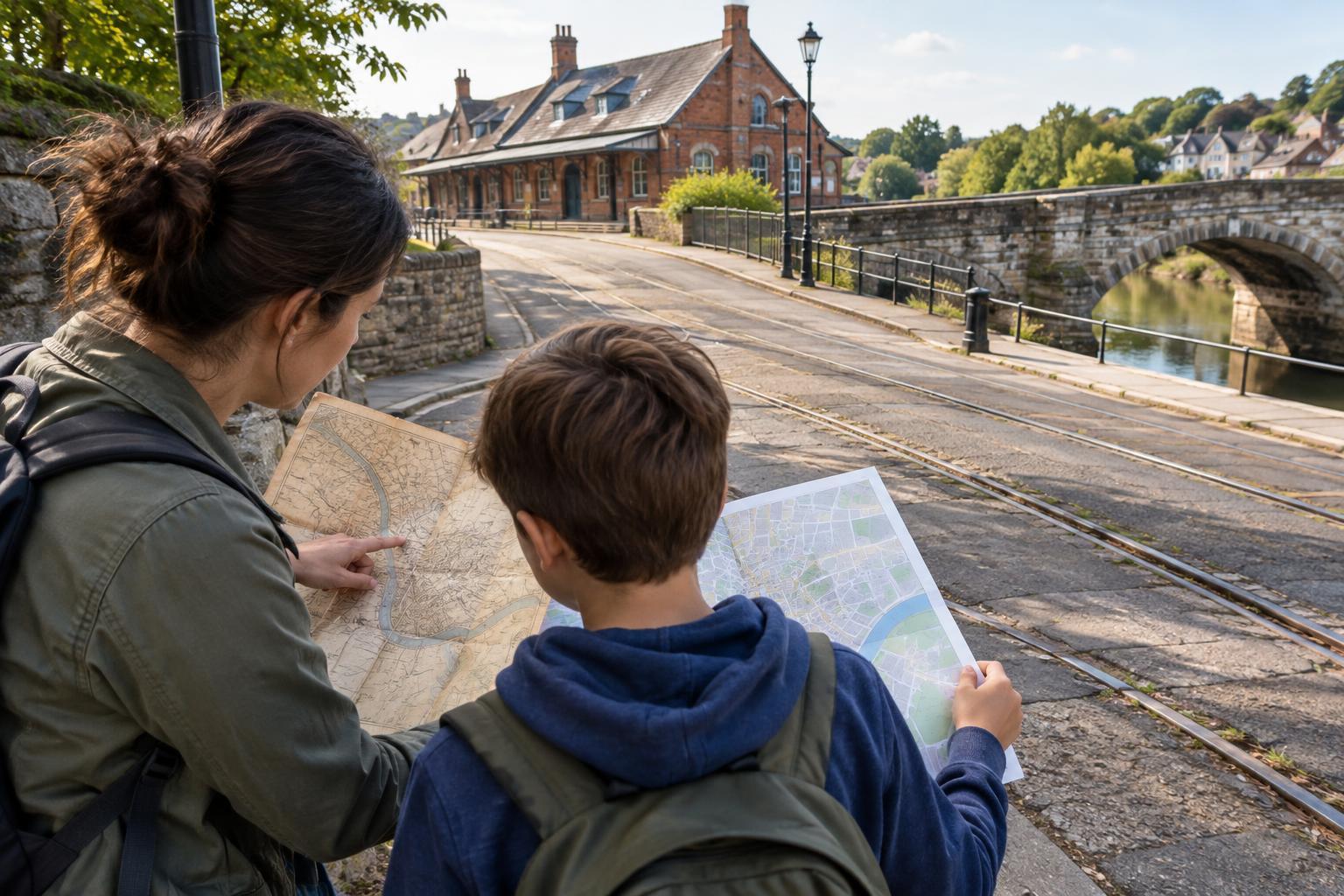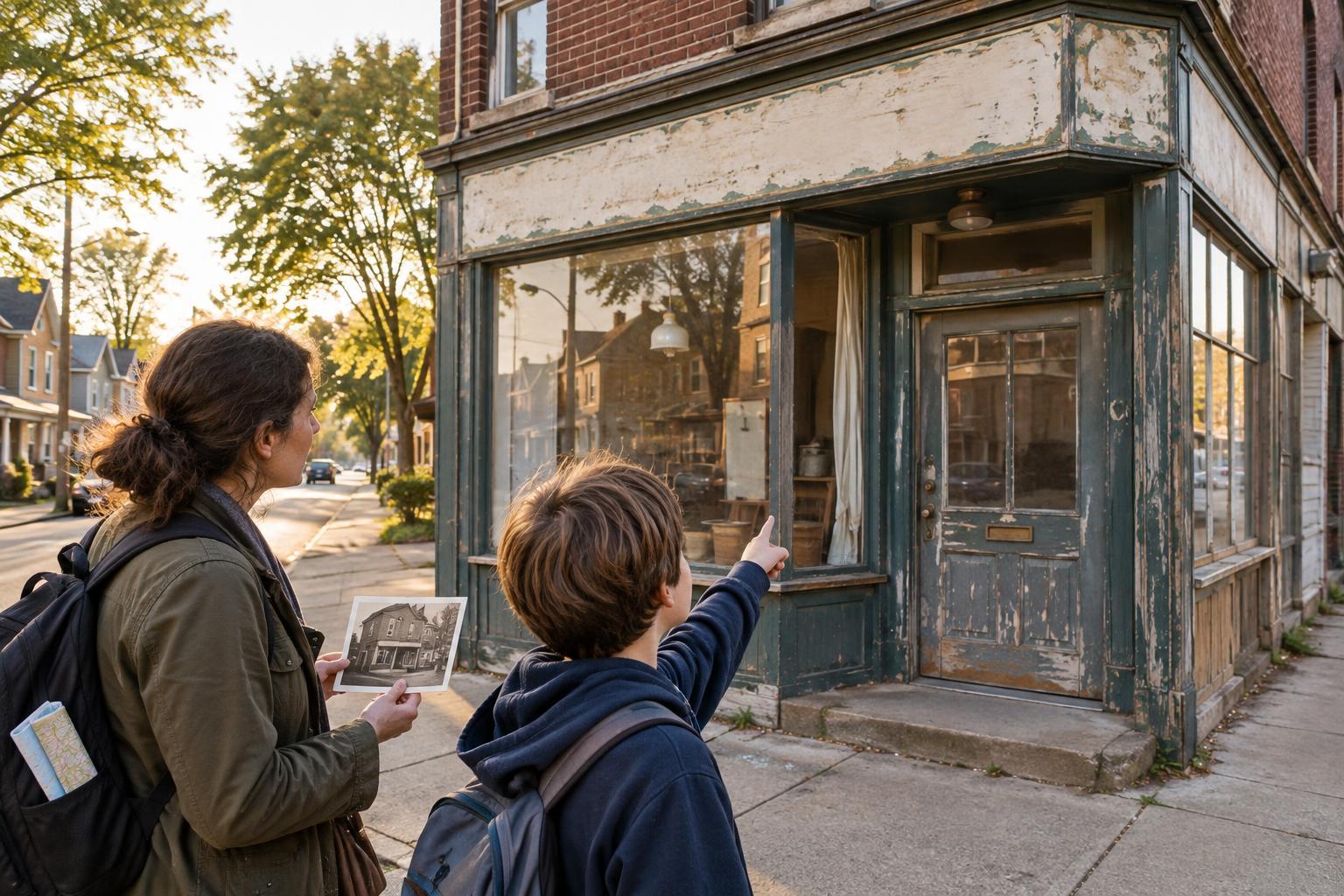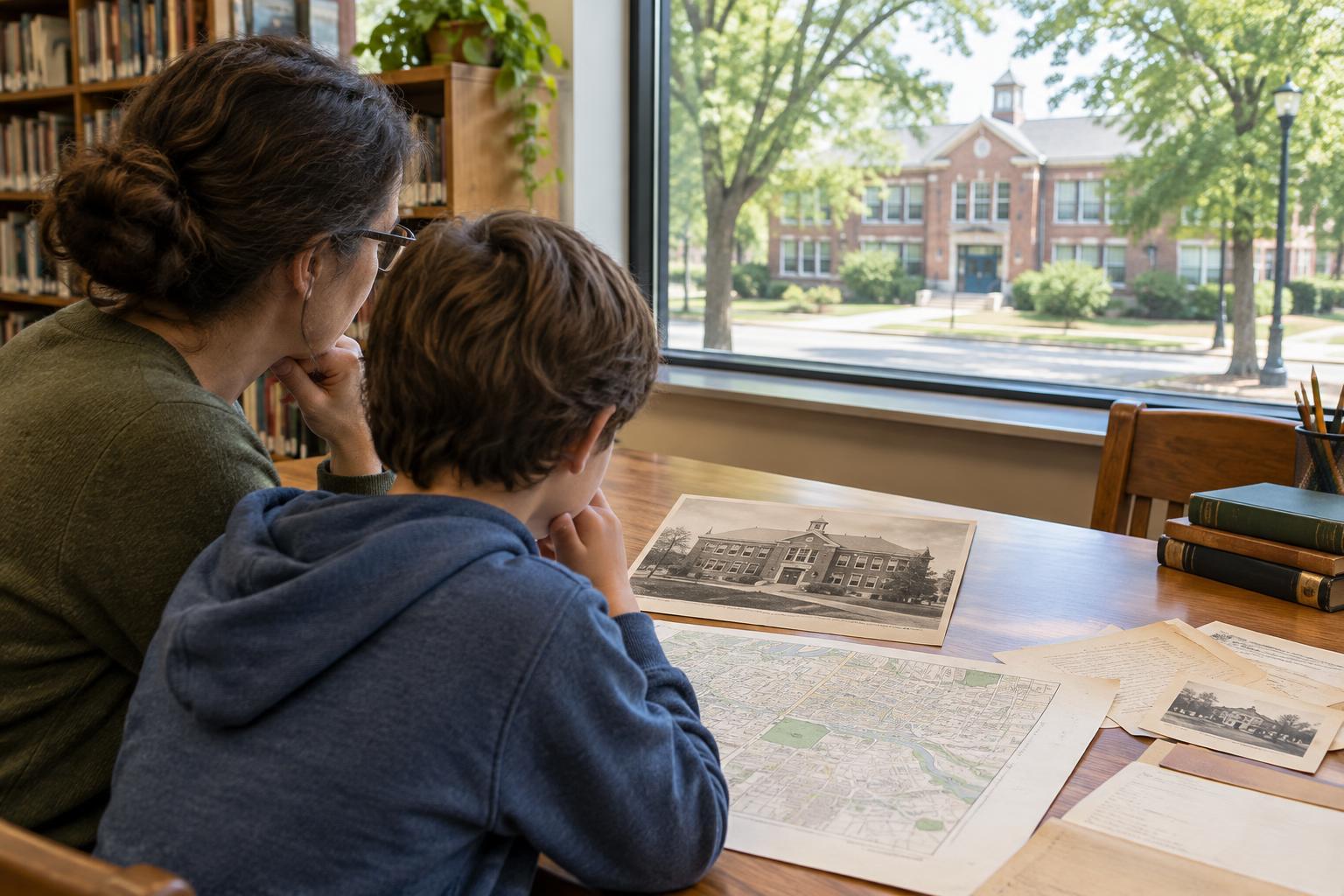
Begin with a question you can investigate
A familiar school building can prompt surprisingly rich questions. When was it built? Did it always serve the same ages? What stood on the site before the playground? Exploring one question at a time makes local history feel like a puzzle rather than a hunt for every fact about the school.
Start by writing down what your family already knows and marking it as a starting point, not a conclusion. A child might notice that an older entrance faces a different street from the one families use today. Together, turn that observation into a question: Has the way people enter the building changed? Give your project a manageable scope, such as the building, the school’s name or the surrounding block.
Schools may have moved, merged or changed names. When searching, keep a short list of possible names and addresses. That list will help you recognize relevant material without assuming that two references to a similarly named school describe the same place.
Find clues in places open to the public
A public library or local historical society is a useful place to begin. Ask what maps, neighborhood photographs, newspaper archives, school histories or public directories are available. Some collections can be searched online; others may require a visit or help from a librarian. Catalog descriptions are clues in themselves: they can suggest names, dates and subjects to investigate further.
Try looking for the school on maps from different periods. A map may show the size of a lot, nearby streets or whether a building appears to have been added. Publicly available school board minutes, municipal records or building documents may offer more detail, though what survives and what is accessible varies by place. Old newspapers can show how the wider community described events such as a building opening, a renovation or a change in school boundaries.
Record where each clue came from as you go. A simple note with the item’s title or description, its date if known, and where you found it will make it easier to revisit. If an image has no clear date, label it “date unknown” rather than guessing from clothing, cars or building features.
Compare sources instead of relying on one
Historical sources answer different questions. A map can show what was drawn at the time, but it may not explain how a space was used. A newspaper article can reveal what someone considered newsworthy, but it may leave out other experiences. A photograph captures one moment and may not show the whole building. Encourage children to ask, “What does this source show?” and “What can’t it tell us?”
Make a two-column page labeled “What we found” and “What we still wonder.” If a photograph appears to show an addition, look for a later map or a public record that might help date it. If sources disagree, preserve both details in your notes. A difference may reflect an error, a change over time or two uses of the same name.
Looking at the surrounding neighborhood adds context. Compare street layouts, nearby parks and other public buildings across maps. Rather than declaring why a school changed, describe what the evidence supports: for example, that a later map shows a larger building, while the reason for its expansion remains unknown.
Make a timeline that leaves room for uncertainty
Once you have a few reliable clues, arrange them on a timeline. Use cards or a sheet of paper so you can move entries as you learn more. Each entry can include a date, a short description and a source note. For an undated photograph, place it in an “unknown date” area until another clue helps narrow the range.
Invite each family member to choose one detail to illustrate: a change in the building’s shape, an earlier street name or an object visible in a public photograph. Children can draw a “then and now” view using sources for the past and their own observations for the present. Drawings make a good alternative when a collection does not permit copying or sharing its images.
Observe respectfully and share carefully
A walk on public sidewalks can help connect archival clues to the present-day site. Look for features you can see without entering school grounds, such as the building’s shape or its position on the block. Follow posted rules, do not interrupt school activities and avoid photographing children or staff.
The most useful family history project is not necessarily the one with the most names. Focus on buildings, shared spaces and community changes rather than assembling information about individual students. Public availability does not always make a personal detail appropriate to repeat, especially when children are involved. If you share your timeline, distinguish confirmed findings from open questions and keep your source notes alongside it. That way, your project invites others to keep exploring without presenting guesses as facts.