Start with curiosity, not a perfect question
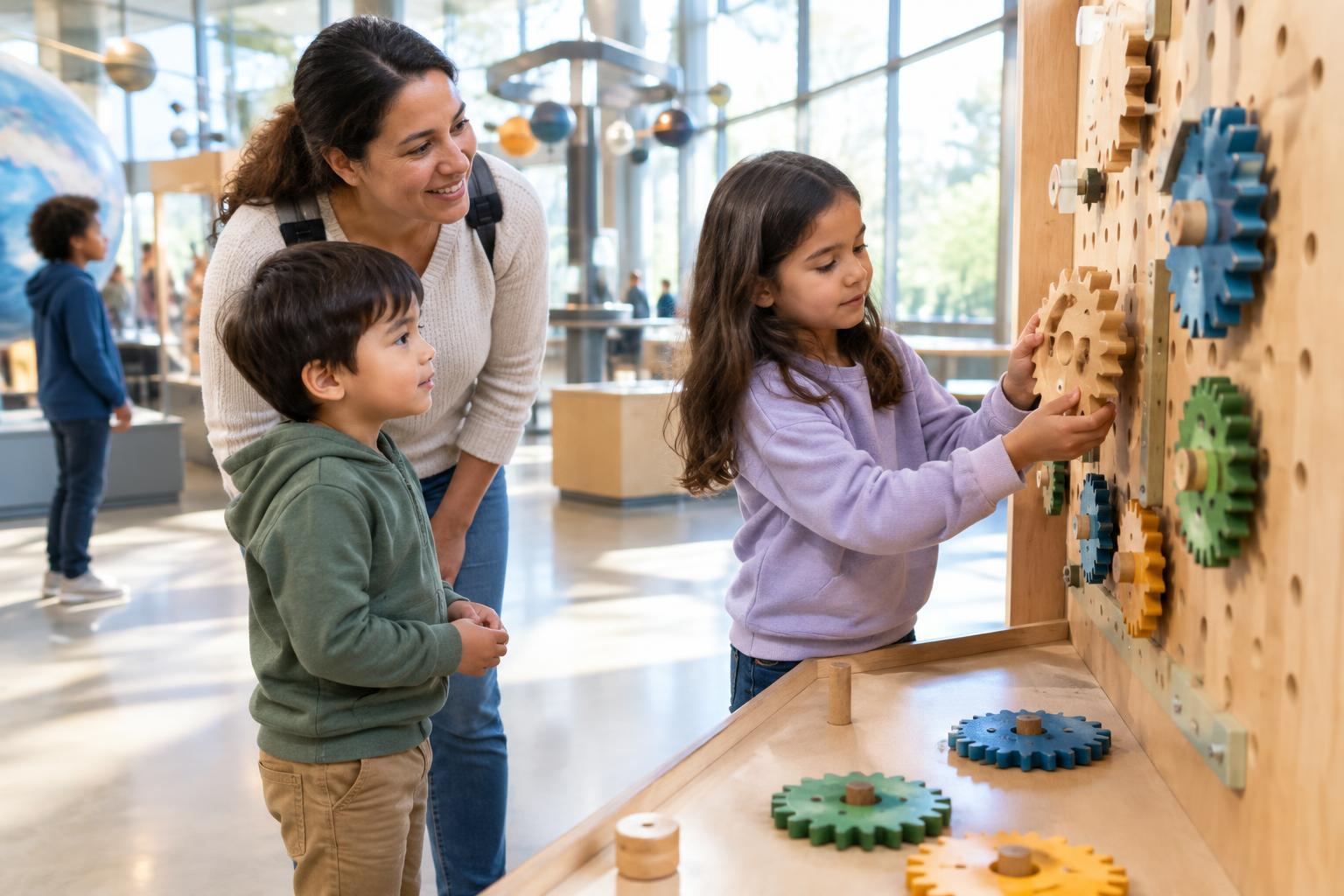
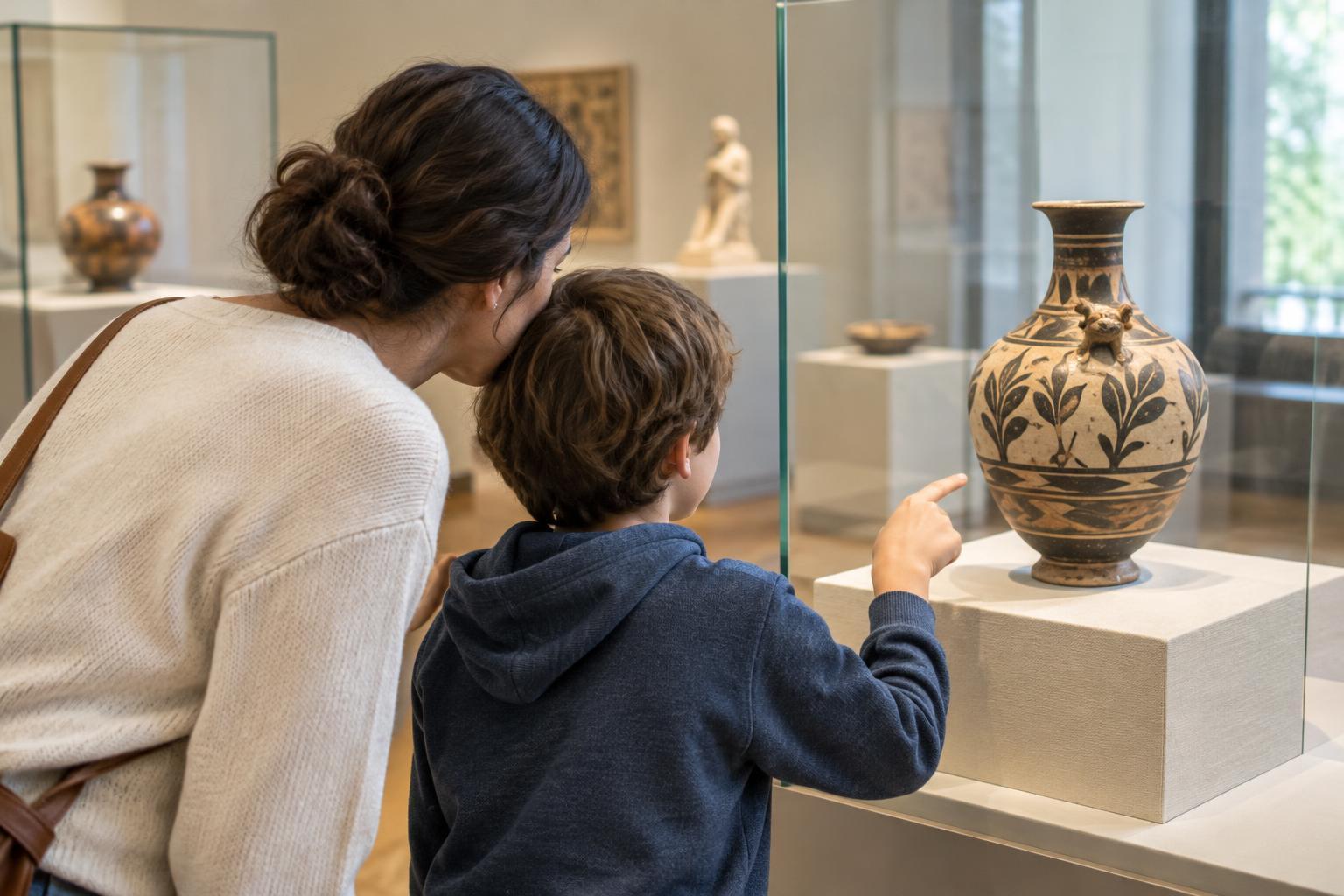
Children do not need a polished question to have a useful conversation at a museum. “What is that?” or “How did they make it?” can open the door to a closer look. Before your visit, invite your child to name one thing they hope to see or find out. You can also practice with an object at home: look at it together, say what you notice, and wonder aloud about something you cannot tell just by looking.
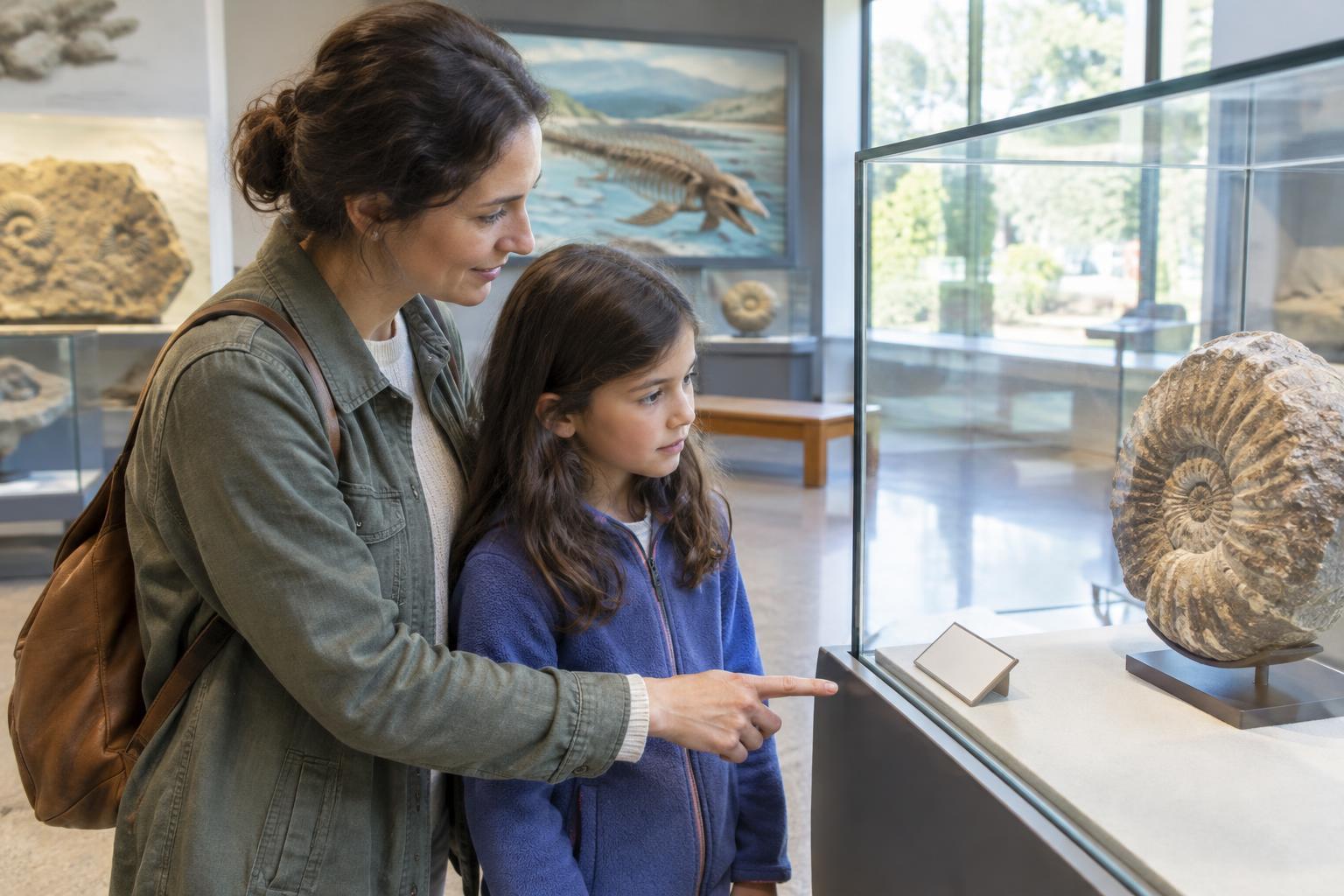
Once you arrive, give questions time to emerge. A child may need to examine a display, read a label with you, or watch a demonstration before knowing what to ask. Try prompts such as “What surprises you?” and “What would you like to know more about?” Write down a question if your child wants to remember it. There is no need to turn every stop into a quiz.
Find the right person and moment
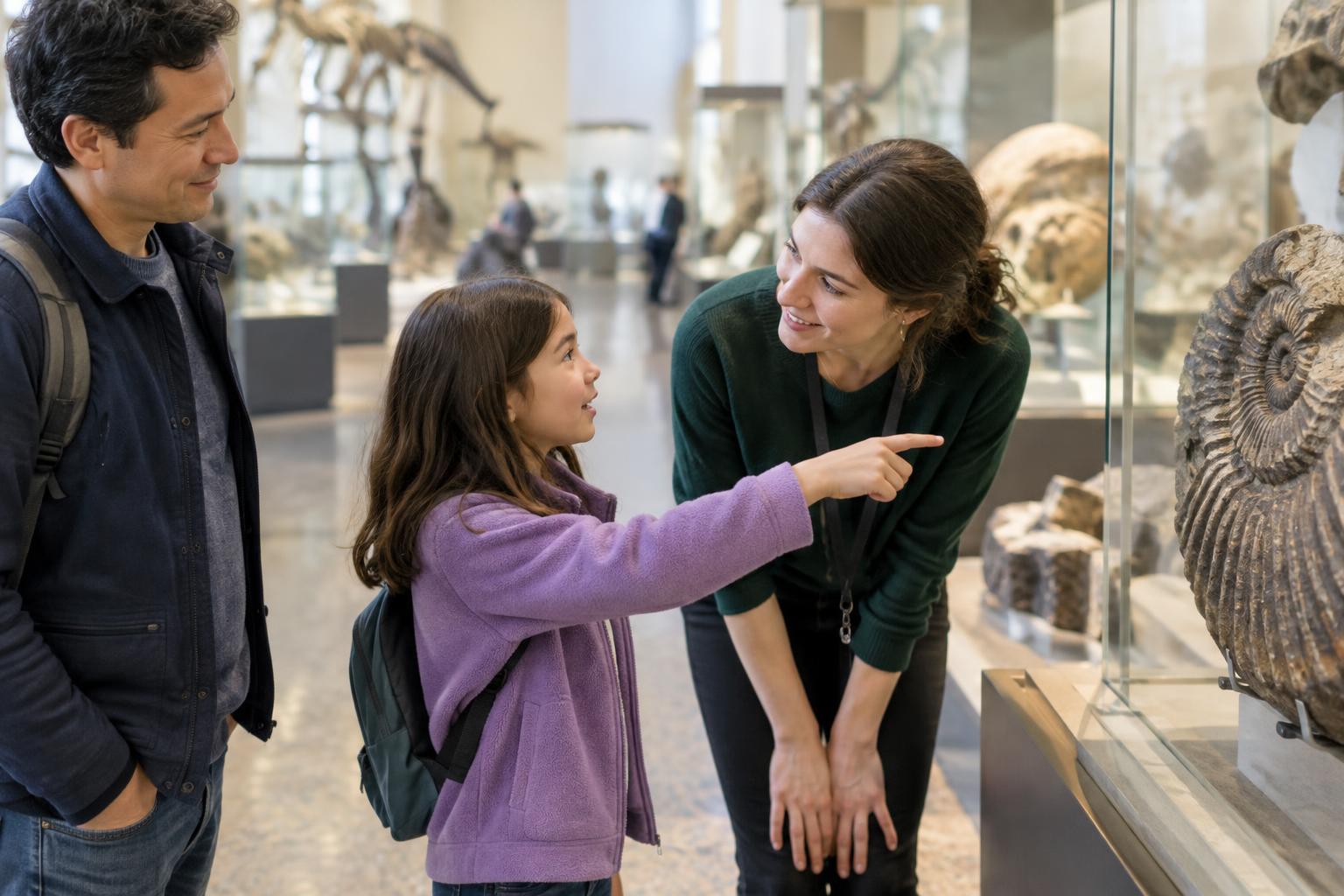
Museums may have educators, guides, volunteers, gallery attendants, and front-desk staff with different roles. A staff member near an activity might be able to explain how to try it, while a guide leading a tour may be ready for questions at a designated pause. If you are unsure whom to ask, a simple “Is there someone we could ask about this?” works well. Check posted signs for guidance, too, especially around objects that should not be touched.
Help your child notice whether someone is already speaking with another visitor or managing a busy entrance. Waiting nearby, raising a hand during a group activity, or returning in a few minutes shows respect for everyone’s time. You can model a short opening: “Excuse me, may we ask a question about this?” If the person cannot answer, they may suggest a label, another staff member, or a place to learn more.
Give children more than one way to speak up
Some children are eager to approach a guide; others find it intimidating, particularly in a new or crowded place. Offer choices rather than insisting they talk. Your child could ask independently, whisper a question for you to repeat, point to an object while you begin, or listen as you ask. Afterward, ask whether they want to pose a follow-up. Participating in a conversation can begin with listening.
A few useful question starters are “Why is it displayed this way?”, “How do people know what it was used for?”, and “What should I look at closely?” The best questions depend on the exhibit. At an art display, a child might ask about materials; at a history display, they might ask whose stories are represented. Encourage them to ask what they genuinely wonder, even if the answer seems obvious to an adult.
Make room for an answer—and for uncertainty
When someone responds, pause long enough for your child to take in the answer. It can help to look back at the object together and say, “Can you spot what they were describing?” Resist the urge to translate every sentence immediately. If a word is unfamiliar, your child can ask what it means, or you can ask the staff member to explain it another way.
Not every question has a short answer, and the person you ask may not know. That is a valuable part of learning, not a failed exchange. You might say, “What could we look for next?” If your child has a different idea, they can share it respectfully: “I thought it might be for something else. What makes you think that?” This keeps the focus on evidence and discovery rather than getting the answer right.
Keep the conversation going after the visit
A brief thank-you is enough to close the conversation. Later, ask your child which answer stayed with them, whether anything still puzzles them, and what they would ask if they could return. You might draw the object from memory, compare it with something familiar, or look for a related detail on a neighborhood walk. These small follow-ups show that asking a question is the start of exploring, not just a way to finish an assignment.
If a conversation did not happen, the visit can still be a success. Perhaps the museum was busy, your child preferred to observe, or the question came to mind on the way home. Save it for another visit or use it to guide your next shared activity. The lasting skill is not speaking to a guide every time; it is learning that curiosity can be voiced, investigated, and shared.