Start with a notebook you will actually use
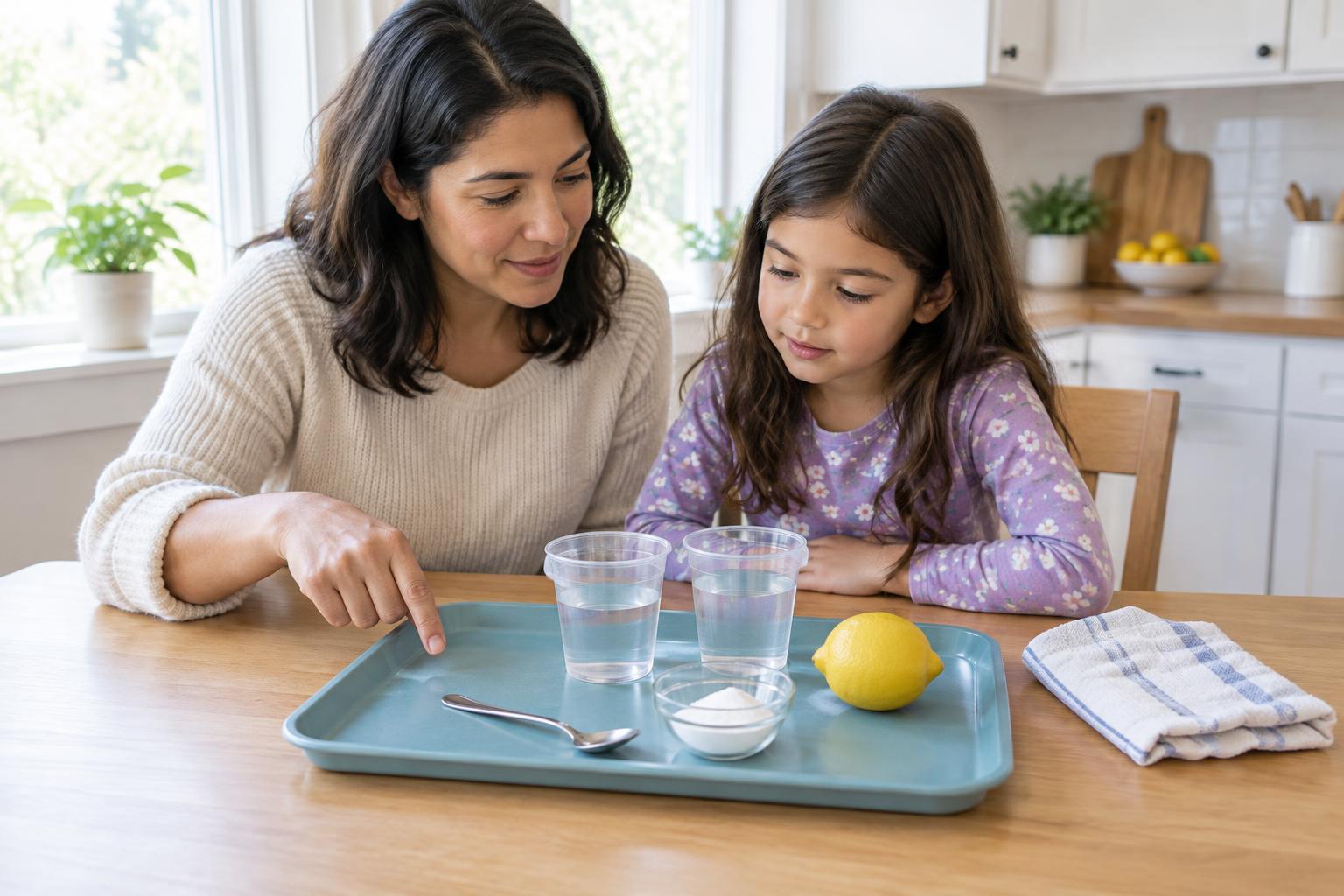
A science notebook does not need special paper or carefully planned experiments. A small notebook, a pencil, and a place to keep them are enough. You can use it to follow a puddle as it dries, compare shadows at different times, or notice what changes in a jar of seeds. The aim is to record what you observe, not to produce a polished school report.
Give each entry a simple starting point: the date, the place, and a short description of what you are looking at. For example, “Kitchen windowsill: bean seeds” is more useful later than “Plants.” If several people share the notebook, let each person add a name or mark. Younger children can dictate their observations while an adult writes the words they choose.
Draw what is there, not what you think should be there
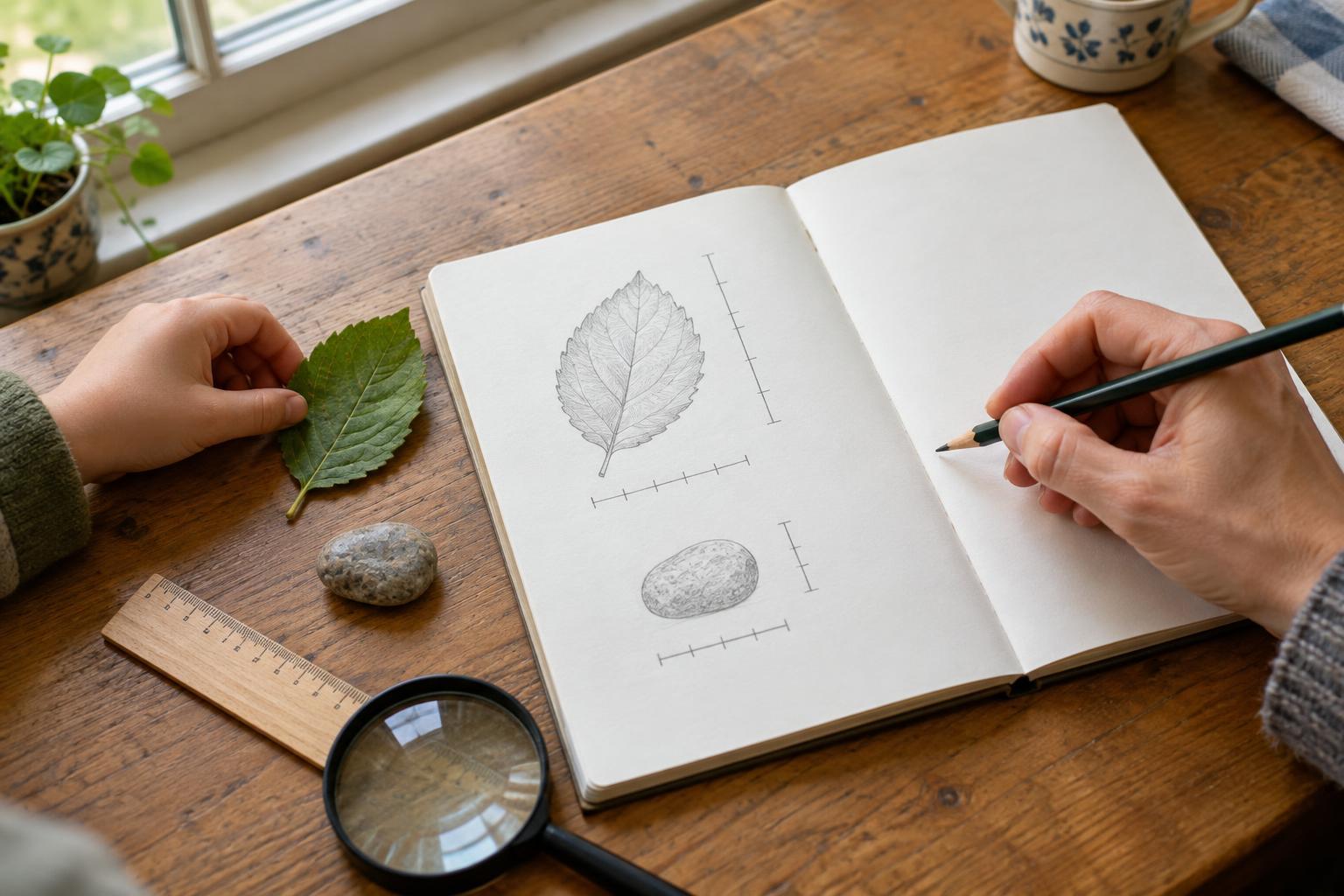
A drawing slows you down and encourages a second look. Ask: What shape is the object? Which parts are bigger or smaller? Are there spots, lines, edges, or gaps? A quick sketch of a leaf might show its veins, a torn edge, and a dark patch that someone would otherwise forget. Artistic skill is not the point; an uneven drawing can still preserve a useful detail.
Try drawing the same object twice, with a little time between sketches. A melting ice cube or a sprouting seed offers visible changes to look for. Add arrows to point out details and short labels such as “wet patch” or “new root.” If you are unsure what something is, describe its appearance rather than guessing its name. “Three tiny pale bumps” leaves room for discovery.
Choose measurements that help you compare
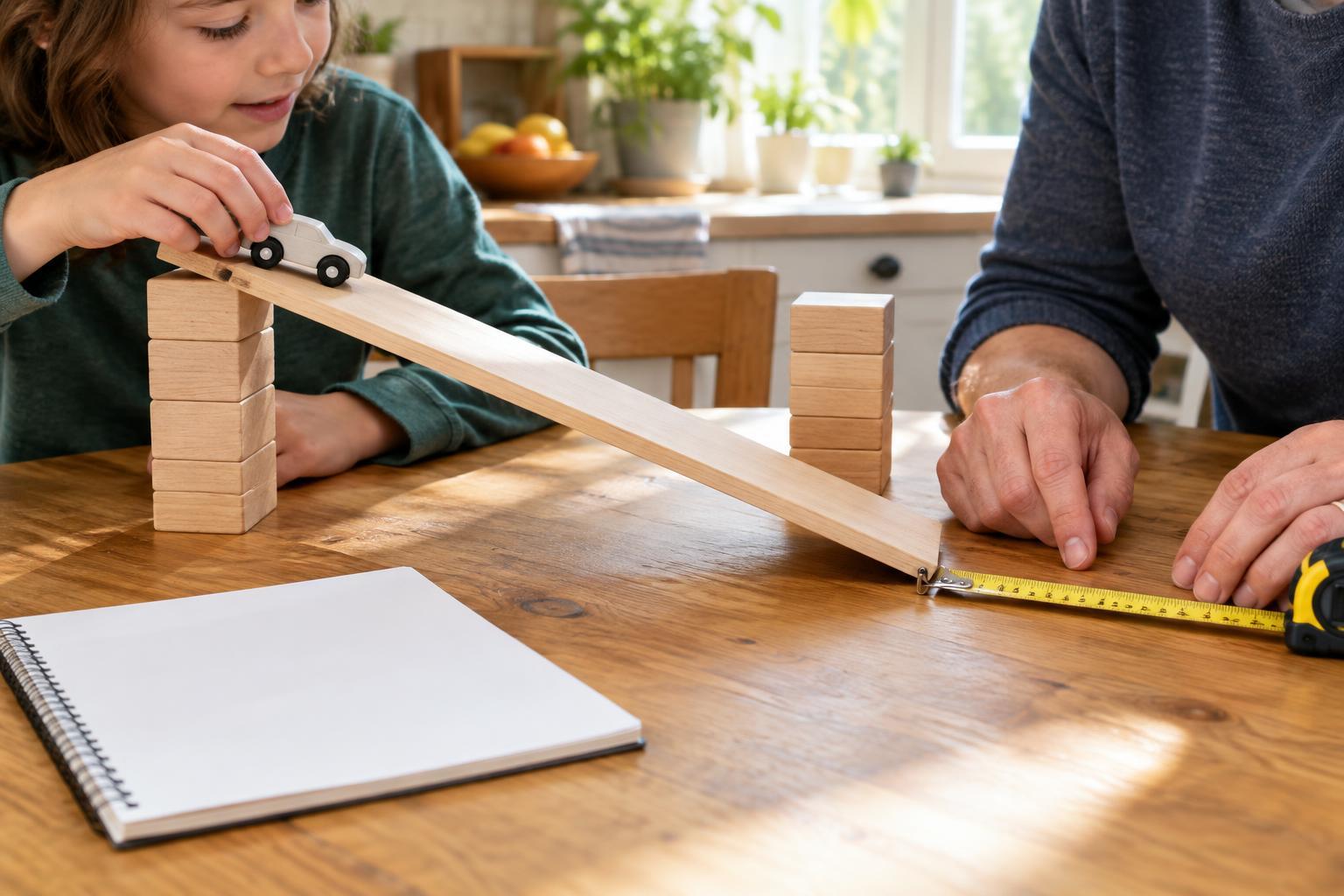
Measurements make observations easier to revisit. Depending on the activity, you might record length, height, time, temperature, or a count. Pick one or two that answer a question you care about. For a growing seedling, height and number of leaves may be more useful than measuring the width of its container. Write the unit beside every number so “4” does not become a mystery next week.
You can keep the tools simple. A ruler works for short distances, a clock or timer for duration, and repeated counts for things such as birds seen from a window. When precise tools are not available, comparisons still help: “longer than my thumb” or “about half the puddle is left.” Use the same method each time when possible. If a child measures a plant from the soil to its tallest leaf today, measuring from that same point next time makes the comparison clearer.
Make room for questions and changing ideas
A notebook is also a place for questions that do not have immediate answers. After an observation, invite everyone to ask what they wonder. Why is one side of the windowsill warmer? Does the puddle shrink at the same rate every day? Write the questions down, even if you cannot investigate them right away. They can become the starting point for a later walk or small experiment.
It can be fun to add a prediction, then return to it without treating a surprise as a mistake. If you expect all the seeds to sprout together and they do not, that difference is worth recording. Write what happened before offering an explanation. A phrase such as “Maybe the seeds got different amounts of light” shows an idea in progress, not a proven answer.
Return to old pages and look for patterns
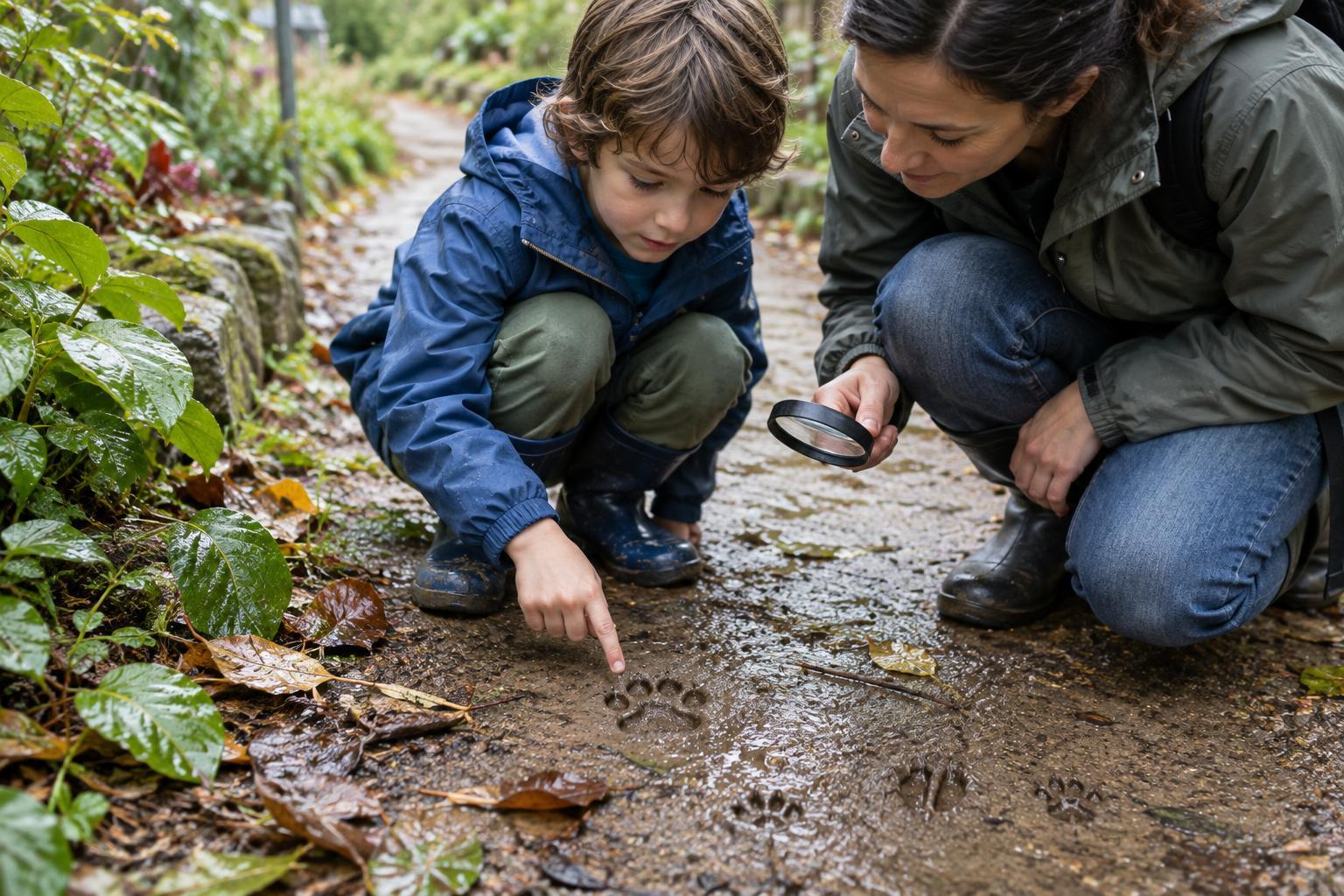
A single page captures a moment; several pages make change easier to see. Revisit a familiar subject after a day, a week, or a different kind of weather. At home, you might track a shadow across a wall. On neighborhood walks, you might sketch the same tree from the same spot. Keep observations from each visit together so you can flip between them.
Every so often, look back through the notebook as a family. Ask what stayed the same, what changed, and which questions you would like to follow next. You do not need to fill every page or reach a final conclusion. A useful science notebook is one you can reopen, add to, and learn from as your curiosity grows.