Start with the space, not the supplies
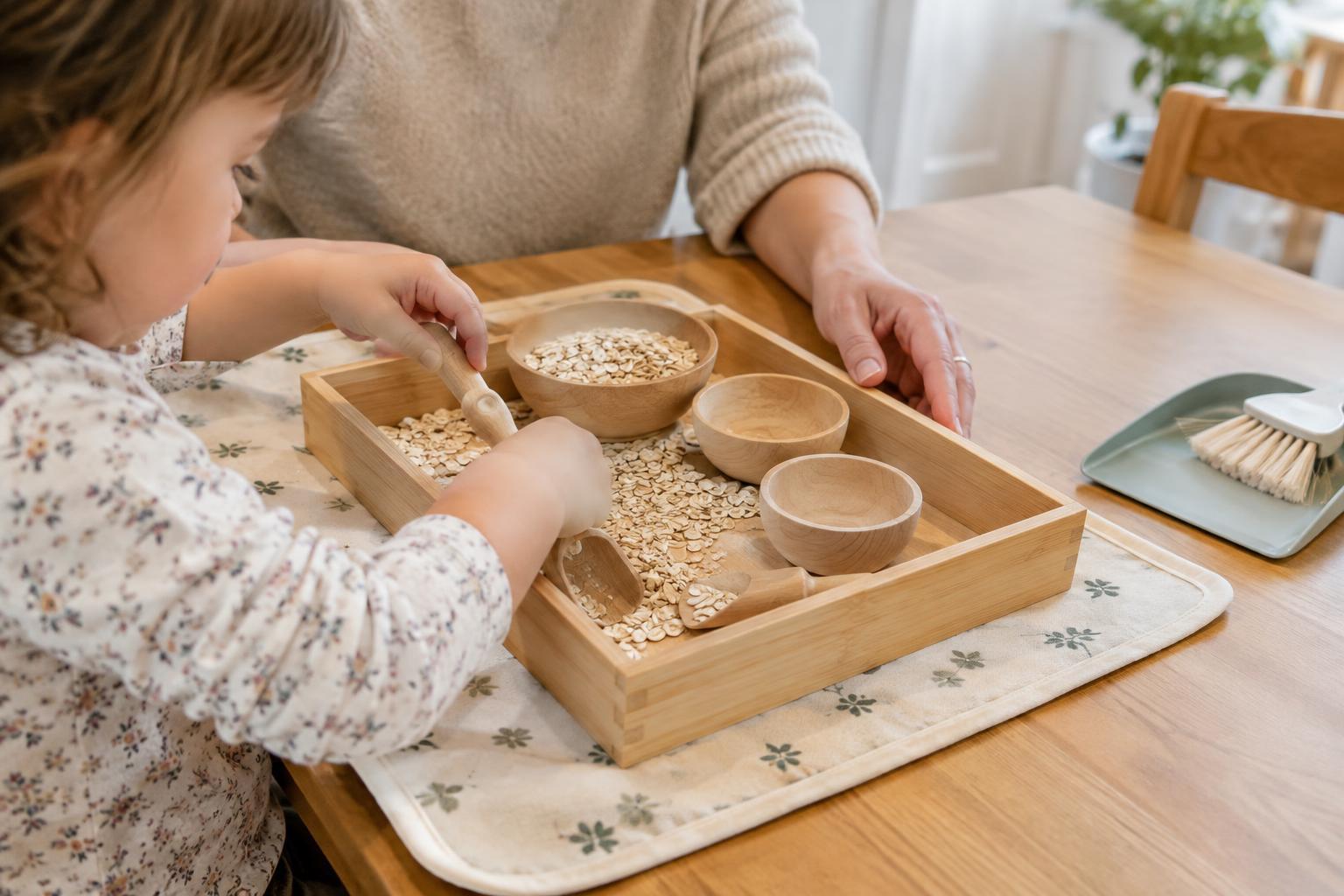
Sensory play invites children to notice texture, sound, movement and change. Indoors, the challenge is often less about finding an exciting activity than deciding where it will happen. Choose a spot with a wipeable surface or put a washable cloth beneath the play area. A shallow tray, baking sheet or large container lid can mark the space where materials belong.
Keep the first setup small. One tray on a table may be easier to enjoy than several activities spread across the floor. Before starting, look at what is nearby: move papers, electronics and anything that should stay dry. Put a towel and a container for used tools within reach. These few minutes of preparation can make it easier to say yes to exploration without worrying about every spill.
Choose materials that suit your household
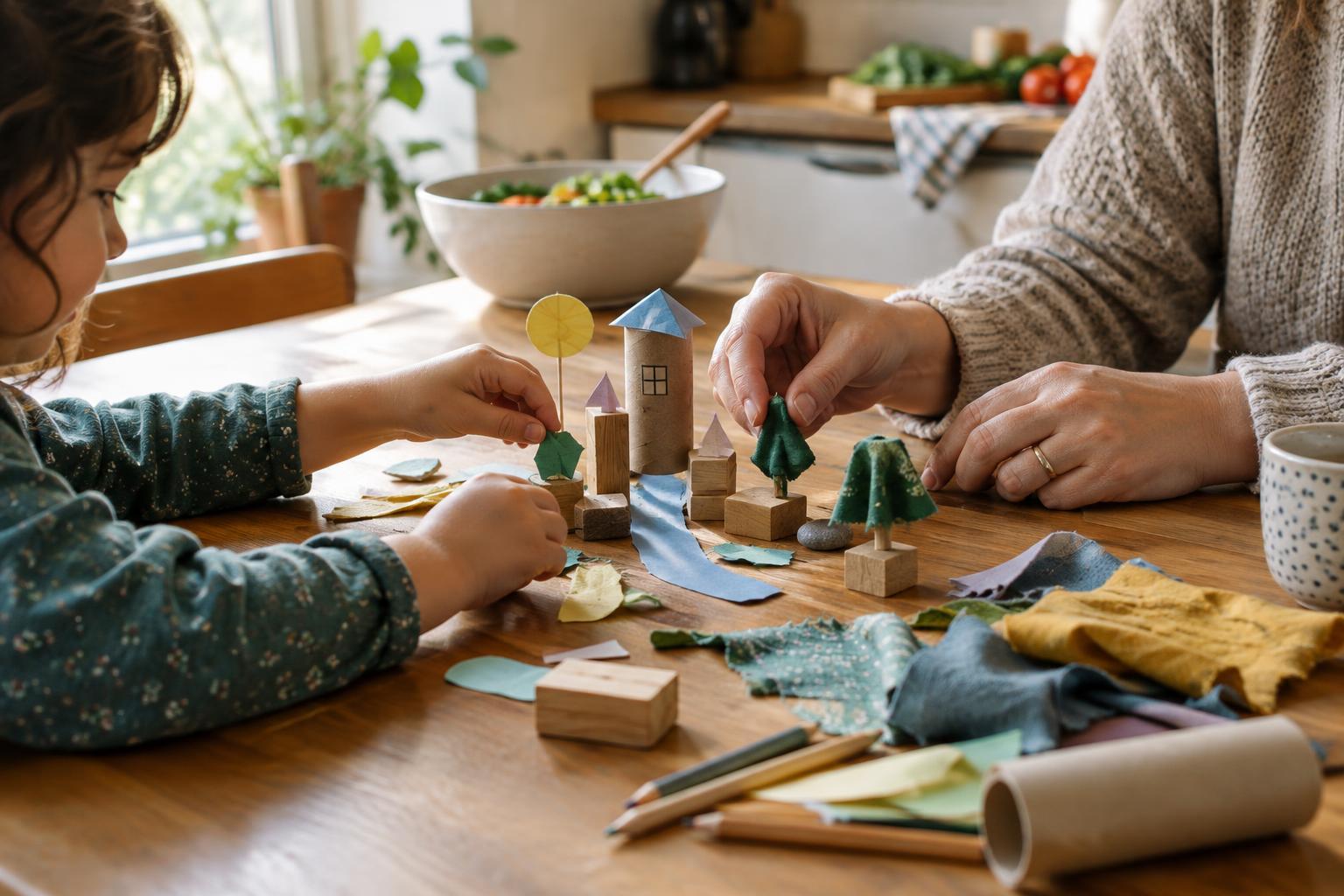
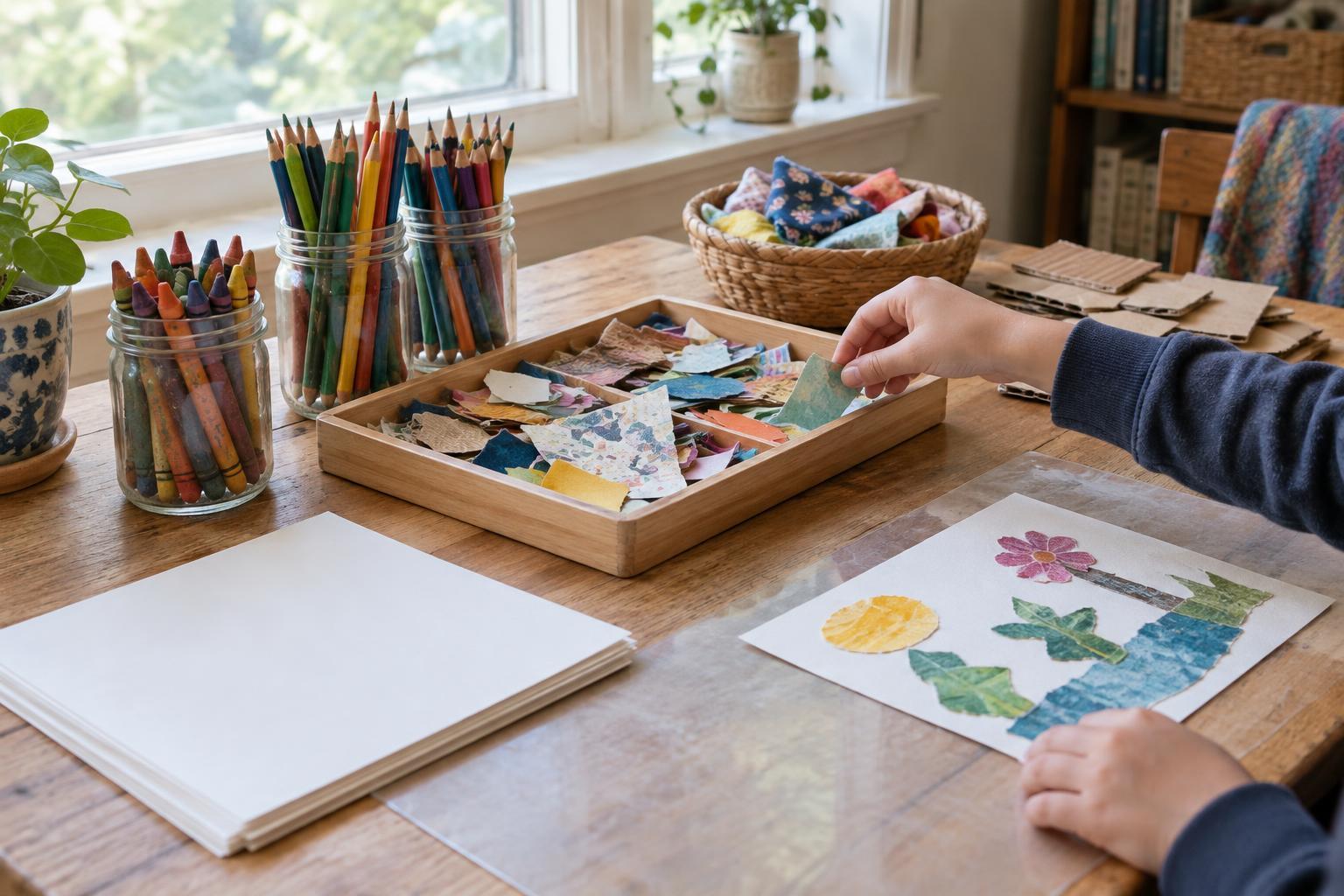
Sensory play can begin with ordinary objects. A bowl of water and a few cups offers chances to pour and compare. Damp cloths can be squeezed, folded and arranged. Play dough can be rolled or pressed with a spoon. Crumpled paper, cardboard tubes and fabric scraps can become a quiet sorting or building activity. You do not need to combine many materials to hold a child’s interest.
Match the materials to the child and the space. For children who still put objects in their mouths, avoid small loose pieces and supervise closely. Check household items for sharp edges or parts that could come off. If a child dislikes a texture, offer a tool such as a spoon or brush so they can explore without touching it directly. Participation can mean watching, describing or choosing the next object, not just putting hands in the tray.
Set a few clear boundaries
Simple boundaries help children know what they can do. You might say, “The water stays in the tray,” or “The dough stays at the table.” Show what that looks like before play begins. A small amount of material makes the boundary easier to practice: it is simpler to refill a cup than to manage a full jug that spills.
Give children freedom inside those limits. They can decide whether to pour, stack, press or sort, while you keep the play area and materials consistent. If something repeatedly lands outside the tray, pause and adjust the setup. A deeper container, fewer tools or a move to the floor may work better than repeating the same reminder. A boundary should help the activity succeed, not turn every movement into a correction.
Make cleanup part of the activity
An ending routine is easier to follow when children know it is coming. Give a brief notice before play ends, then name a small first job: put the cups in the bowl, gather the fabric pieces or roll the dough into one ball. These jobs let children take part without expecting them to handle the whole cleanup.
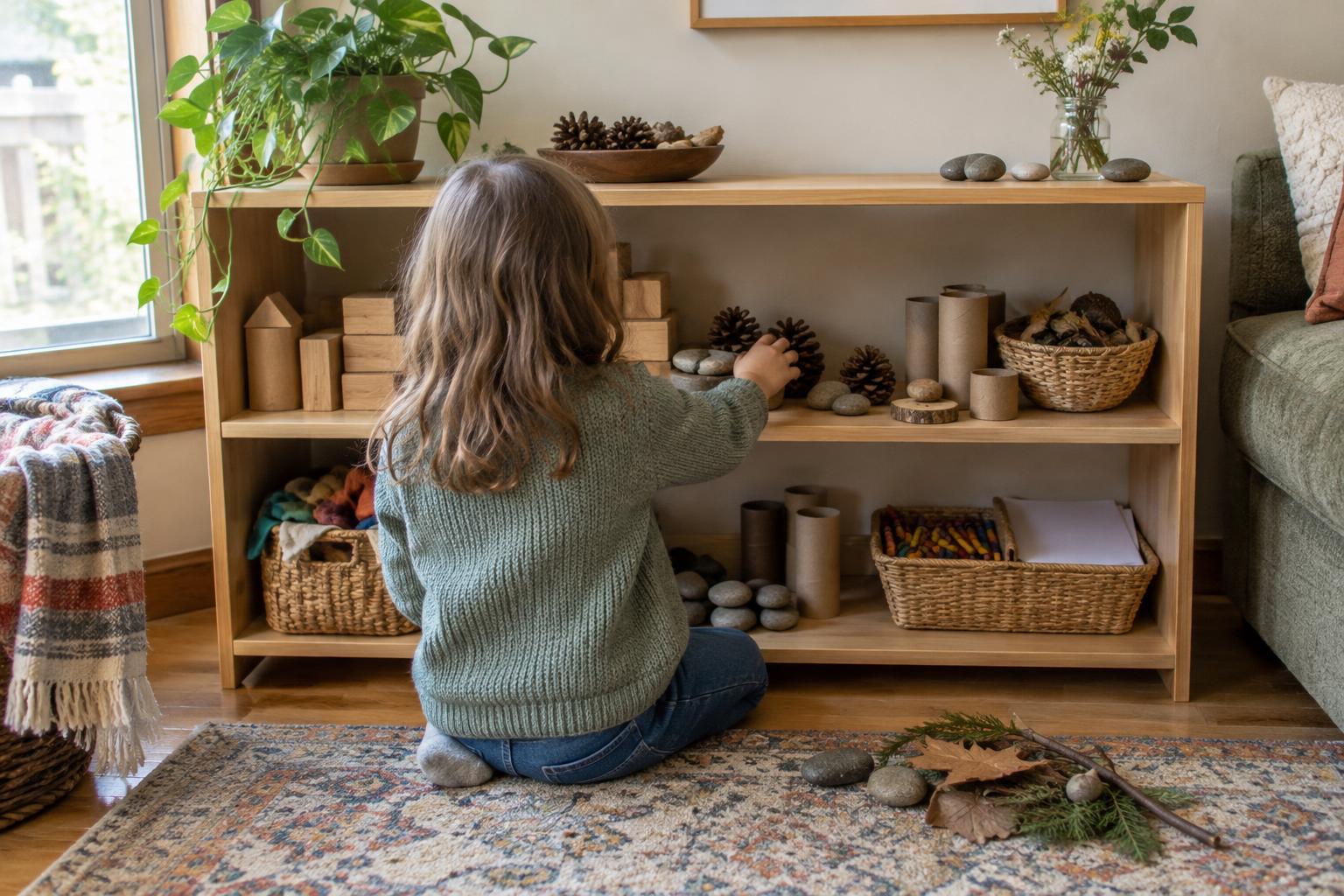
Store reusable materials where you can reach them next time. A labeled container is useful, but an ordinary box works too. Empty and dry water-play tools before putting them away. For activities with many pieces, place a second empty container beside the tray so sorting everything back feels like another round of play. Notice which materials took more effort to clean than the family enjoyed using; it is fine to leave those out next time.
Keep the invitation fresh without making it bigger
A manageable activity can be repeated with one small change. Offer the same cups with a sponge instead of a spoon, or add a cardboard ramp to a tray of fabric scraps. Ask open questions such as “What feels different?” or “What could you try next?” Then leave room for the child’s own ideas. The aim is not to produce a finished project but to give them time to investigate.
Some days, five minutes at the table is enough. On others, a child may return to the same tray again and again. Sensory play works best at home when it fits the people, space and time available. A contained setup, materials you are comfortable using and a predictable finish can make everyday exploration easier to welcome indoors.