Start with a closet search
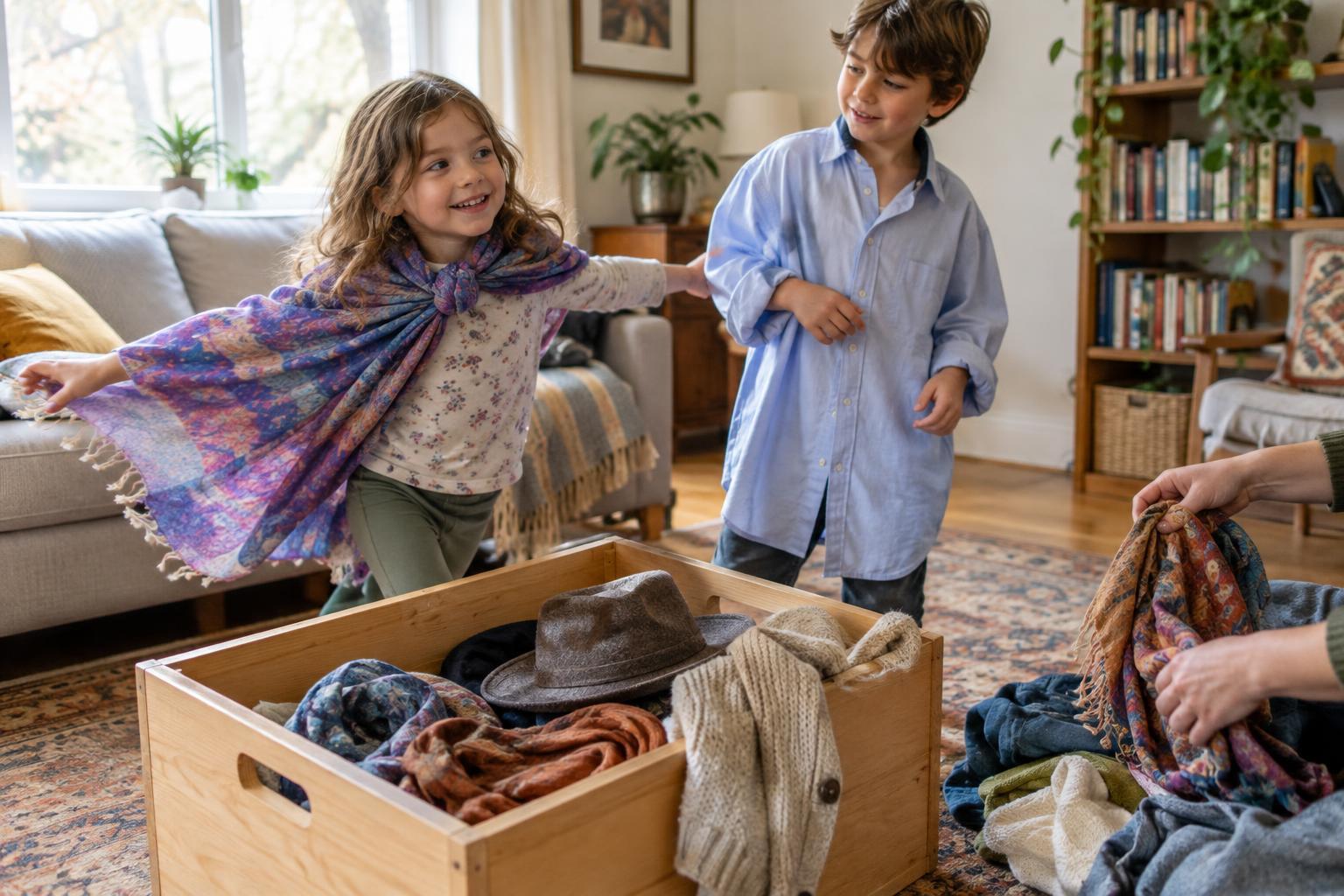
A dress-up box does not need store-bought costumes. An oversized shirt can become an artist’s smock, a cardigan can belong to a storybook traveler, and a scarf can suggest a cape, a river or a picnic blanket. The most useful pieces are often ordinary clothes that children can reinterpret again and again.
Invite everyone in the household to help choose what goes in the box. Look for clean items that are no longer in regular use, are comfortable to wear and are easy to put on and take off. A button-up shirt, soft vest, roomy skirt, fabric belt or pair of mittens might be a good start. Ask before borrowing anyone’s clothing, including items that seem forgotten at the back of a closet. That small step makes the collection feel shared rather than taken.
You do not need to fill the box immediately. Begin with five or six versatile pieces and notice what children reach for. A small collection leaves room for children to invent characters instead of searching for a complete outfit.
Choose pieces that are easy to play in
Before adding anything, try a quick movement test: can a child walk, sit, reach and see clearly while wearing it? Set aside clothes that drag on the floor, shoes that are hard to balance in, or accessories with sharp edges. For younger children, skip small detachable decorations and long cords that could catch or tangle. Remove pins, check pockets and wash items as needed.
Comfort matters as much as appearance. Soft layers work across many kinds of play and are less likely to interrupt a story with an itchy collar or tricky fastening. If a shirt is much too large, rolling its sleeves may be simpler than altering it. Keep any scissors, fabric glue or sewing tools in an adult-led preparation step, not loose in the play box.
Aim for a mix of shapes and textures rather than a rack of assigned roles. A checked shirt does not have to mean farmer, and a shiny scarf does not have to mean royalty. When clothes are offered as materials instead of fixed costumes, children have more freedom to decide what they mean.
Give the collection a practical home
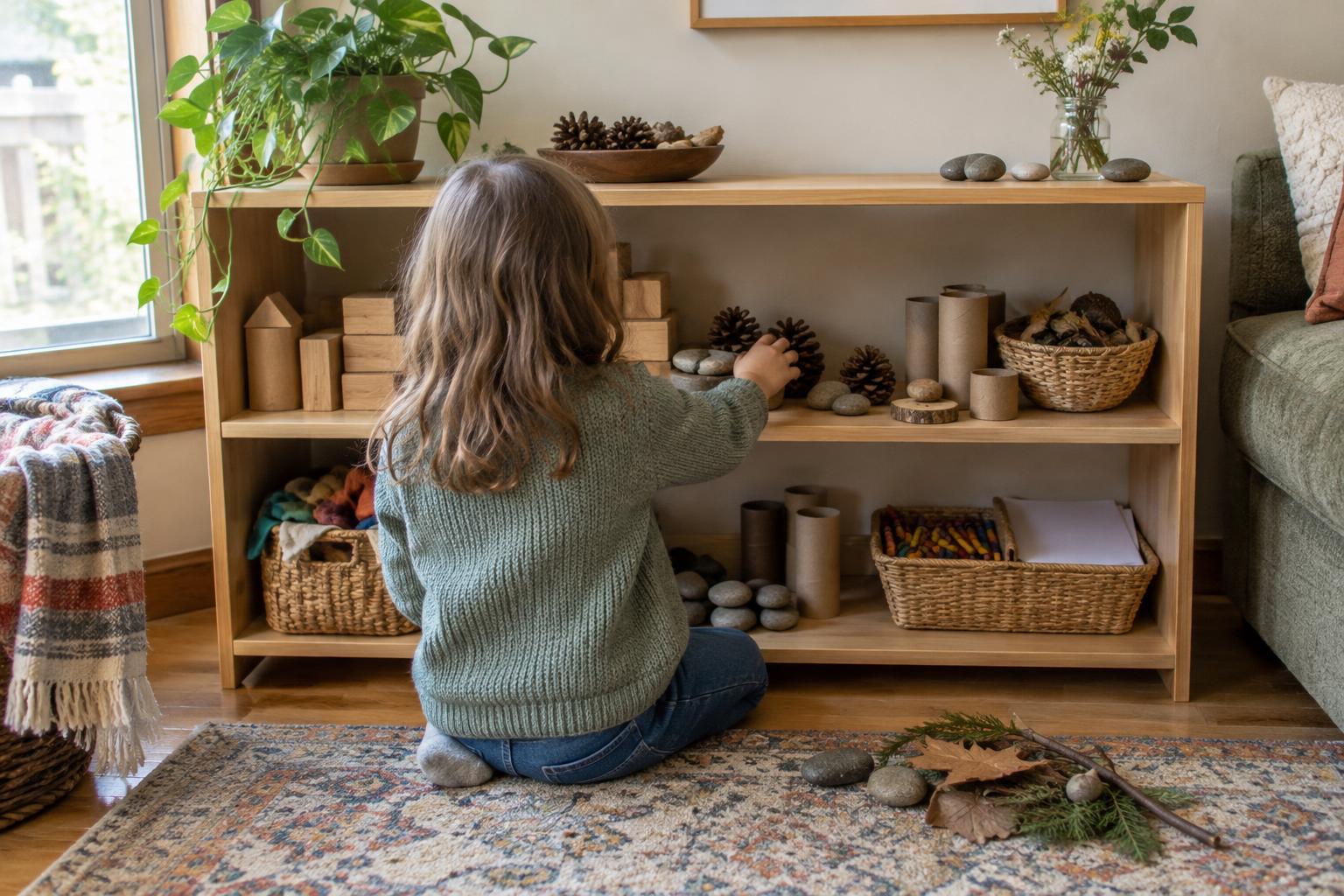
A low basket, sturdy box or spare drawer can hold the clothes. Choose a spot children can reach and a container they can open without help. If you use a box with a lid, pick one that is lightweight and easy to remove. A few broad groups, such as tops, fabric pieces and accessories, can make cleanup easier without turning the collection into a complicated sorting job.
Make a simple rule that the clothes return to their home when play ends. You can invite children to decide whether a piece needs washing, folding or a quick repair before it goes back. This turns upkeep into part of caring for shared materials. If the box becomes crowded, rotate a few pieces out rather than adding a larger container.
Leave a little clear floor space nearby and, if available, a mirror at a suitable height. Neither is essential: a child can describe an outfit to a friend or family member just as easily. The goal is to make dressing up inviting, not to build a perfect play area.
Let the clothes spark a story
Children may begin by trying on everything at once. If they want an idea, offer an open-ended prompt: Who might wear this jacket on a rainy day? What could this scarf become if it were not a scarf? Where is this traveler going, and what will they carry? These questions give a story somewhere to start without deciding it for them.
Ordinary objects can add possibilities without becoming part of the clothing collection. A cardboard box might be a train, a shop counter or a spaceship console. Paper tickets, a hand-drawn map or a notebook can help children extend a scene. They can also make up characters who are simply themselves doing something new, such as guiding a visitor through an imaginary city.
Follow their lead when the story changes. A shirt that began as a scientist’s coat might become a tent roof five minutes later. That flexibility is the point: dress-up play gives children a way to experiment with ideas, language and roles without needing to get the details right.
Keep the box fresh without shopping
When interest fades, change the invitation before changing the contents. Spread three familiar pieces on the floor and ask what they could become together. Swap a scarf for a different color, or move the box near a blanket fort. Even a new question can make an old garment feel worth exploring again.
Check the collection occasionally for fit and wear. Return borrowed clothes when their owners need them, mend simple problems where practical, and remove pieces that are no longer comfortable or safe for play. A good dress-up box is not a finished project. It is a small, adaptable collection that grows out of what your household already has—and the stories children choose to tell with it.