What is a sound map?
A sound map shows where you notice sounds, rather than where you find streets or buildings. A bird calling near a tree, footsteps on a path, and a bus slowing at a corner can all become marks on the page. The map does not need to be precise. Its purpose is to help you pay attention to how a place feels and changes as you move through it.
This is an easy activity to adapt for different ages. Younger children can draw pictures of what they hear, while older children may enjoy inventing symbols and adding notes about distance or direction. Adults can join in by listening too, rather than trying to identify every sound. “I hear something tapping, but I can’t see it” is a useful observation.
Choose a route and gather supplies
Start with a familiar, manageable route: a walk around one block, a trip to a nearby park, or a path between home and a place you often visit. You can also map sounds from a porch, yard, or window. A stationary map can be especially helpful if walking is difficult or if your group wants more time to notice quiet sounds.
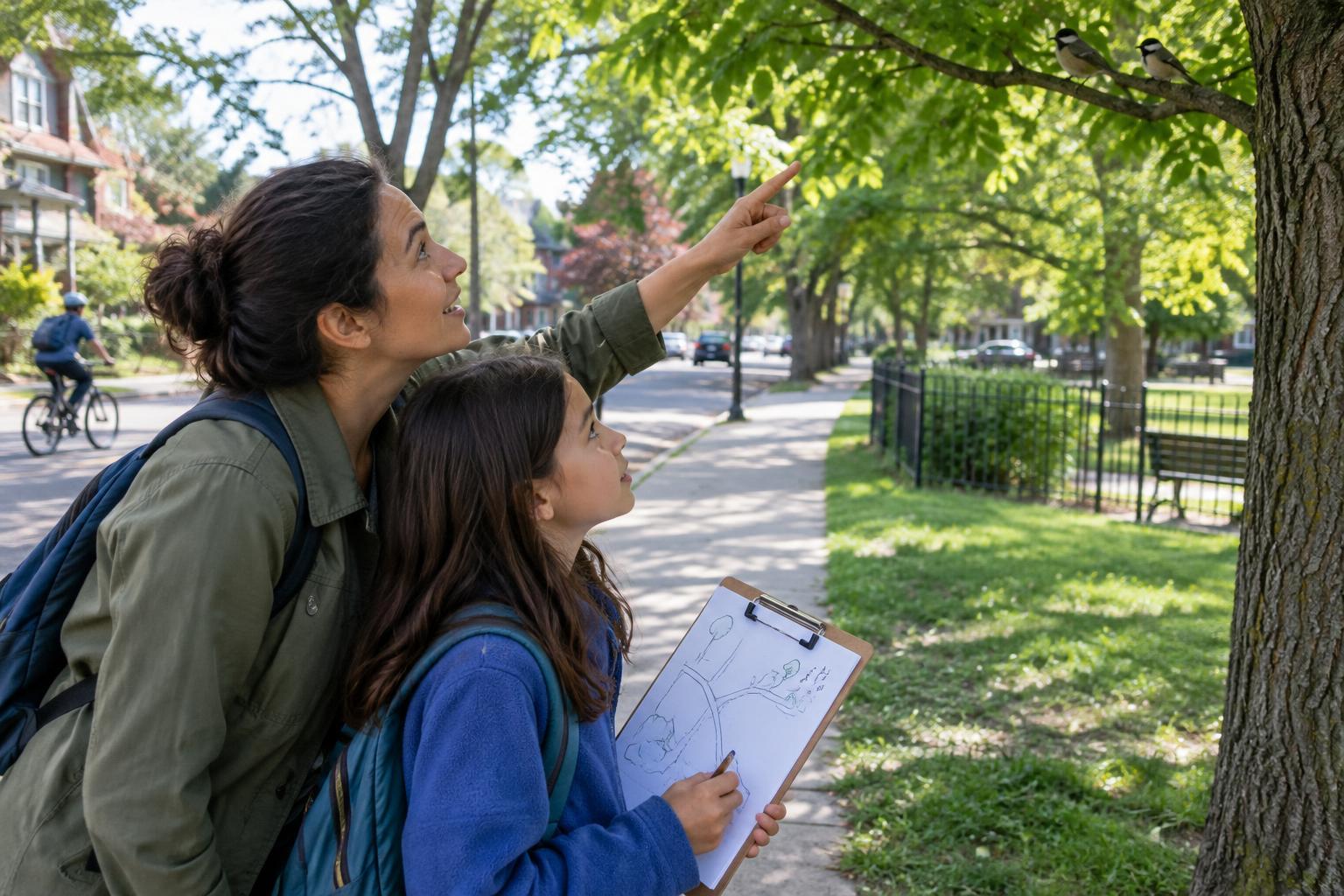
Bring paper, a pencil, and something firm to write on. Draw a loose outline before you begin, marking a few landmarks such as a crossing, bench, large tree, or building entrance. Leave plenty of blank space for sound marks. A phone recording is optional, but you do not need one to make a useful map. Listening and drawing are enough.
Plan for comfort and safety as you would for any neighborhood outing. Choose a time and route that suit your group, stay aware of traffic, and stop in places where you can stand without blocking others. If someone finds a sound uncomfortable, move away or take a break. There is no need to get close to a noise to include it on the map.
Listen, pause, and mark what you notice
At your starting point, pause for about a minute. Try listening without talking first, then share what you noticed. Which sound seems nearest? Is anything faint or partly hidden by another noise? Put a small mark at your location and draw or write the sounds around it. You might use a wavy line for wind, dots for footsteps, or a little sketch of a dog.
As you follow your route, stop at a few more points and repeat. Give each sound a place on the page based on where it seems to come from, even if you are unsure of the exact source. You can draw an arrow toward a distant sound or place a question mark beside a mystery noise. If a sound moves, such as a bicycle passing, show its path with a line.
Encourage descriptions as well as names. A sound might be steady, sharp, soft, rattling, or rhythmic. Two family members may hear different things at the same stop, especially when several sounds overlap. Add both observations. Your map is a record of what your group noticed, not a test with one correct answer.
Look for patterns on your finished map
When you return, look at the map together. Where did you add the most marks? Were there sounds you heard along the whole route and others you noticed only once? You could circle sounds made by people, underline sounds from nature, or choose your own categories. Talk about sounds that helped you recognize a place, such as a gate closing or shoes crossing a particular surface.
Try comparing two maps of the same route made at different times, if that fits your routine. You might notice different activities or discover that a sound is easier to hear when you pause in another spot. Avoid treating one map as a complete account of the neighborhood. It captures a short listening experience, and that is what makes it interesting.
Keep the discovery going
A sound map can become the starting point for a creative project. Make a legend for your symbols, use colored pencils to show loud and quiet sounds, or turn the route into a short story told through what a character hears. You could also invite someone else in your household to make a map from the same window and compare what each of you chose to include.
If you decide to record audio, be considerate of other people’s privacy and follow any rules that apply where you are. A paper map lets you focus on public spaces without collecting anyone’s conversation. Whether your page fills with marks or holds only a few, it can reveal something easy to overlook: familiar places have details worth listening for.