Start with a place to pause
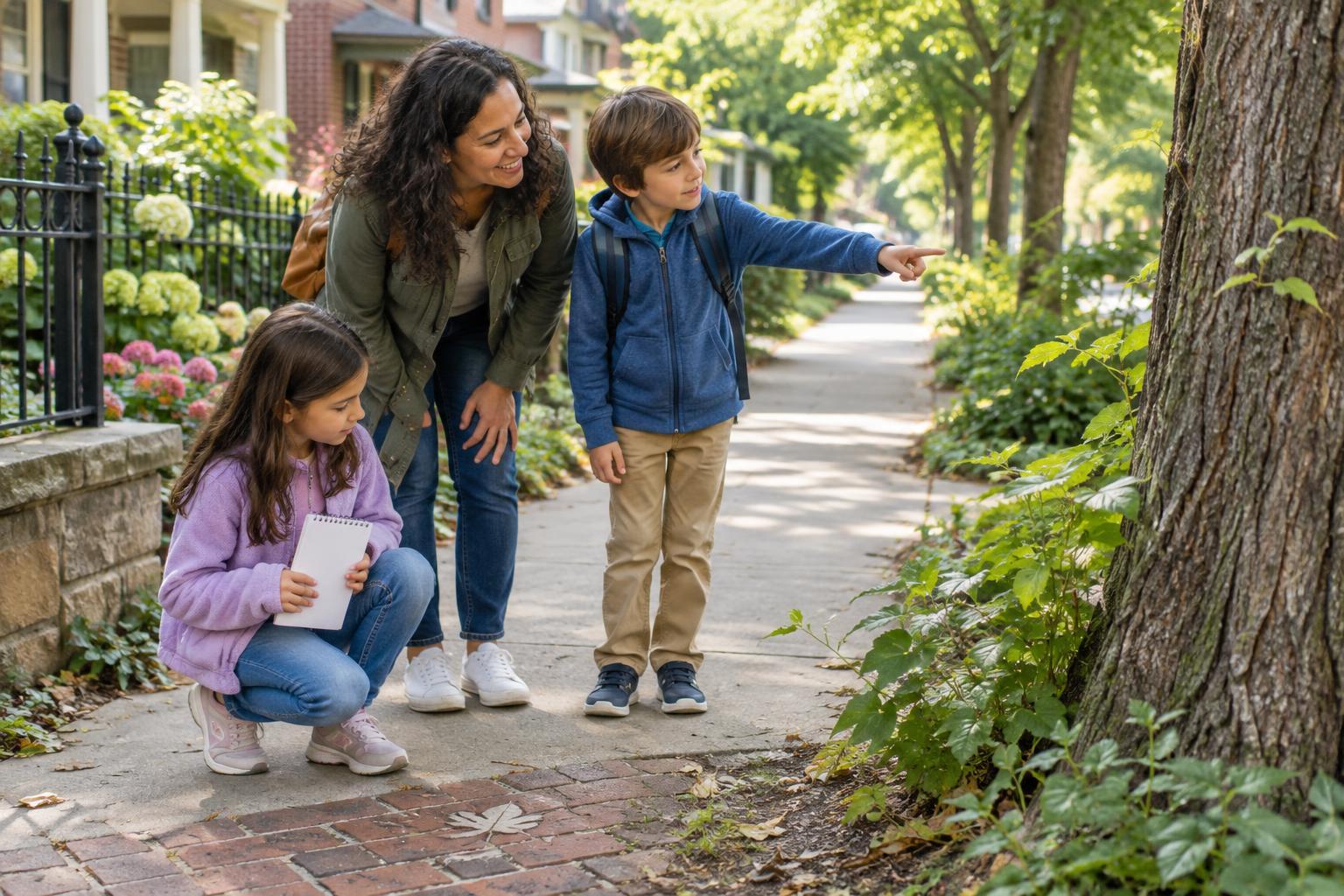
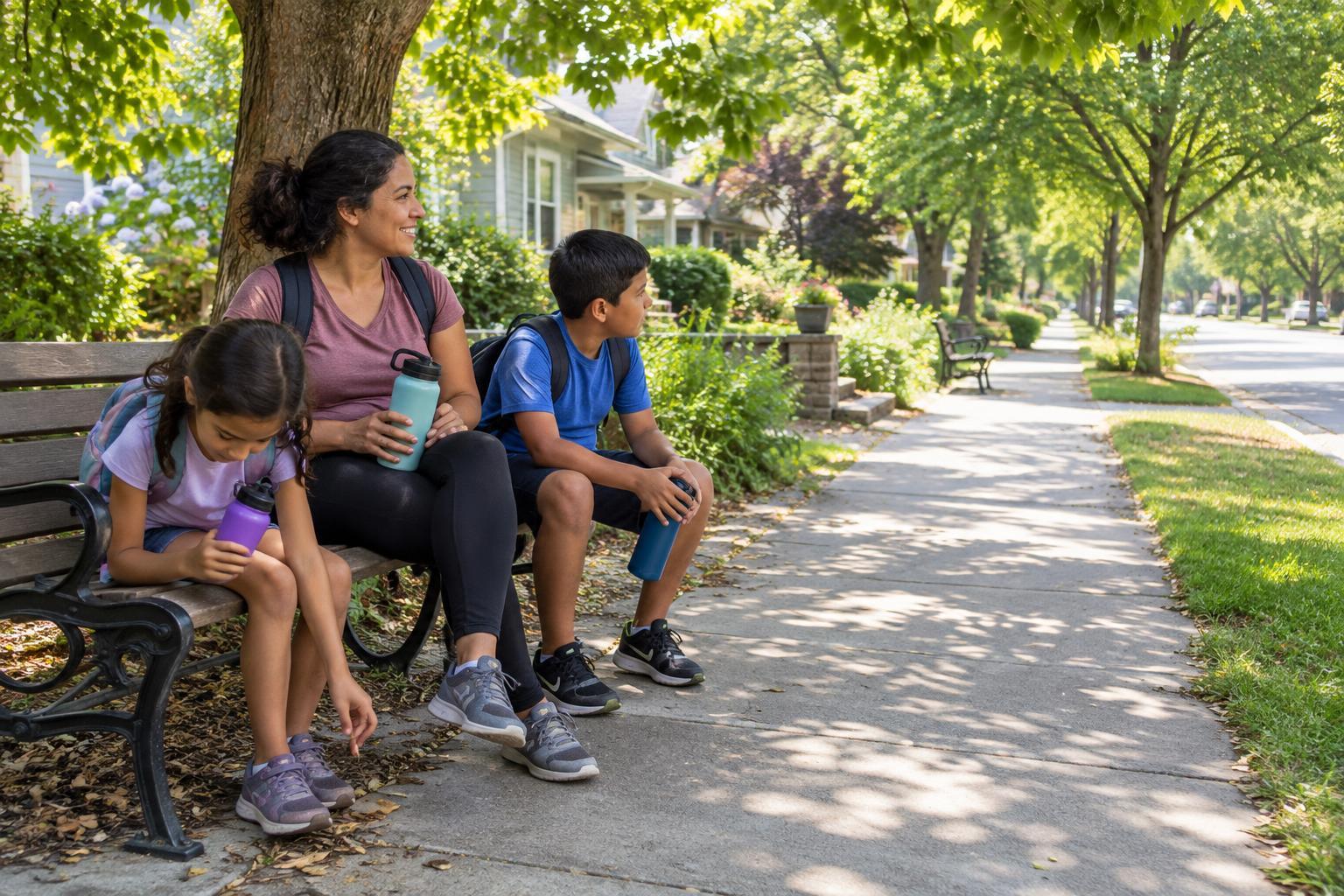
A good wildlife walk does not have to cover much ground. Choose a familiar spot where you can stop without blocking a path: a park bench, a wide sidewalk near a tree, or a window overlooking a courtyard. Spend a few minutes looking and listening before moving on. Animals may be easier to notice when your group is still than when everyone is searching at once.
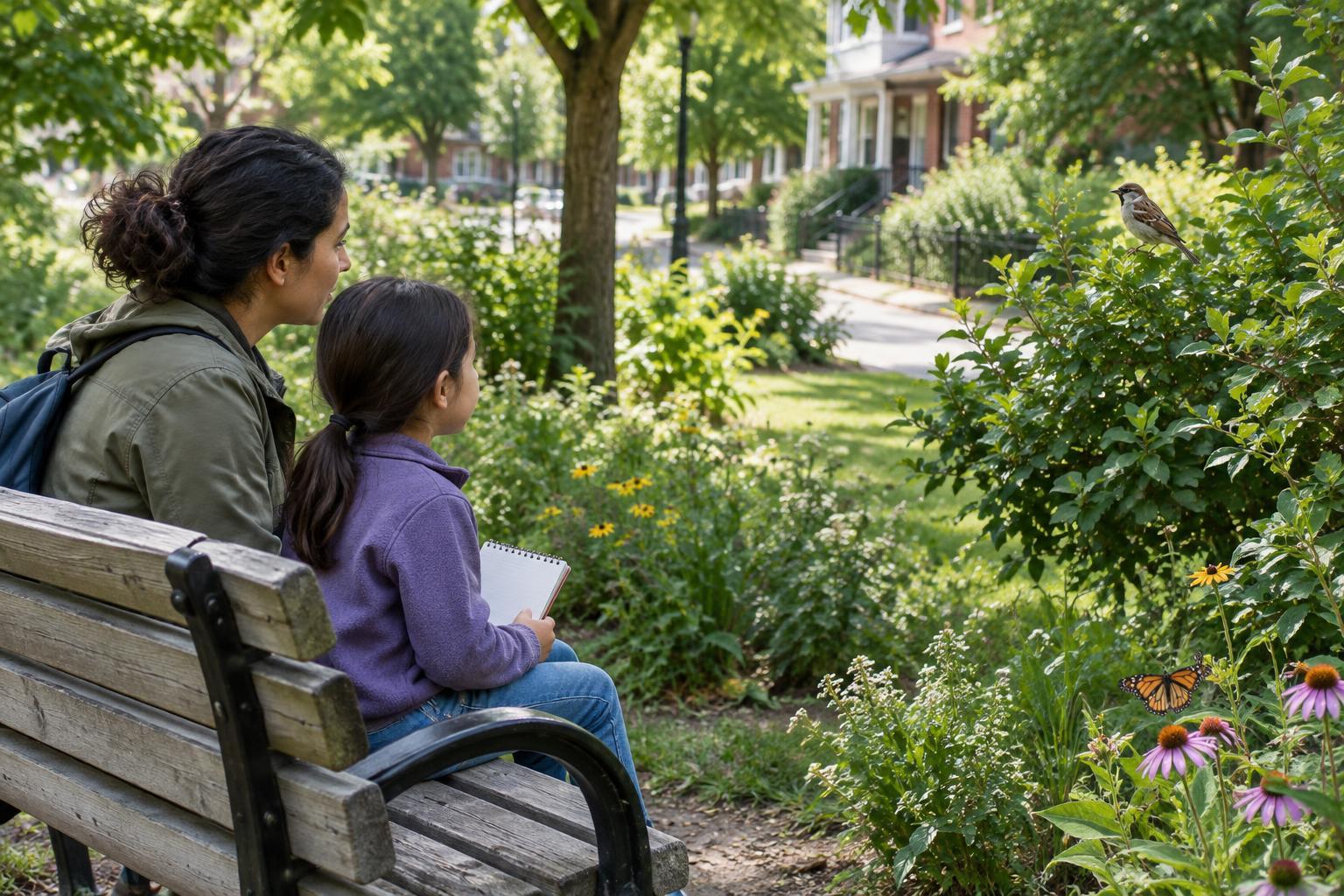
Invite children to scan in layers. What is happening at ground level, among shrubs, on rooftops, and in the sky? A bird might be hopping under a bush while another rests on a wire. You may also notice insects around flowers or signs of an animal you never see. Keep the first goal simple: find something living, then watch what it does.
Watch behavior before naming species
It can be fun to identify a bird, but a name is not required for a good discovery. Ask questions that can be answered by watching: Is it walking, hopping, gliding, or climbing? Does it search the ground, visit a plant, or stay high above the street? What changes when another animal comes close? These details give children something to investigate even when they do not know what they are seeing.
Try describing an animal without guessing its identity. You might record “small brown bird with a short tail” or “dark insect visiting yellow flowers.” If you want to identify it later, note its size, colors, shape, and location while they are fresh in your mind. It is fine to leave an observation unidentified; careful noticing matters more than a confident-sounding guess.
Give wildlife room to make its own choices
A safe distance is one that lets an animal continue what it was doing. If it freezes, moves away, gives repeated alarm calls, or changes course as you approach, step back. Use your eyes or binoculars rather than moving closer for a photograph. Never reach into a nest, burrow, or hiding place, and do not try to handle an animal, even if it seems calm.
Stay on public paths and respect private property, planted areas, and posted rules. Keep children close near streets and water, and follow local rules for pets. Avoid feeding wildlife: watching animals find their own food is both more interesting and less likely to draw them toward people. After exploring, wash hands, especially before eating, and leave droppings, feathers, and other finds where they are.
Use sounds and signs to widen the search
Some city animals are easier to hear than to see. Pause and count the different sounds you can distinguish: a short chirp, a repeated call, a buzz near a flowering plant, or movement in dry leaves. Notice where each sound seems to come from without pushing through plants to find its source. Listening quietly is often enough to make an overlooked place feel busy.
Look for clues, too. A chewed leaf, a web between railings, or tracks in a soft patch of ground can prompt questions about who passed by and what they were doing. Treat clues as possibilities rather than proof. Several animals may use the same space, and weather or people may have changed what you see.
Make a small neighborhood field journal
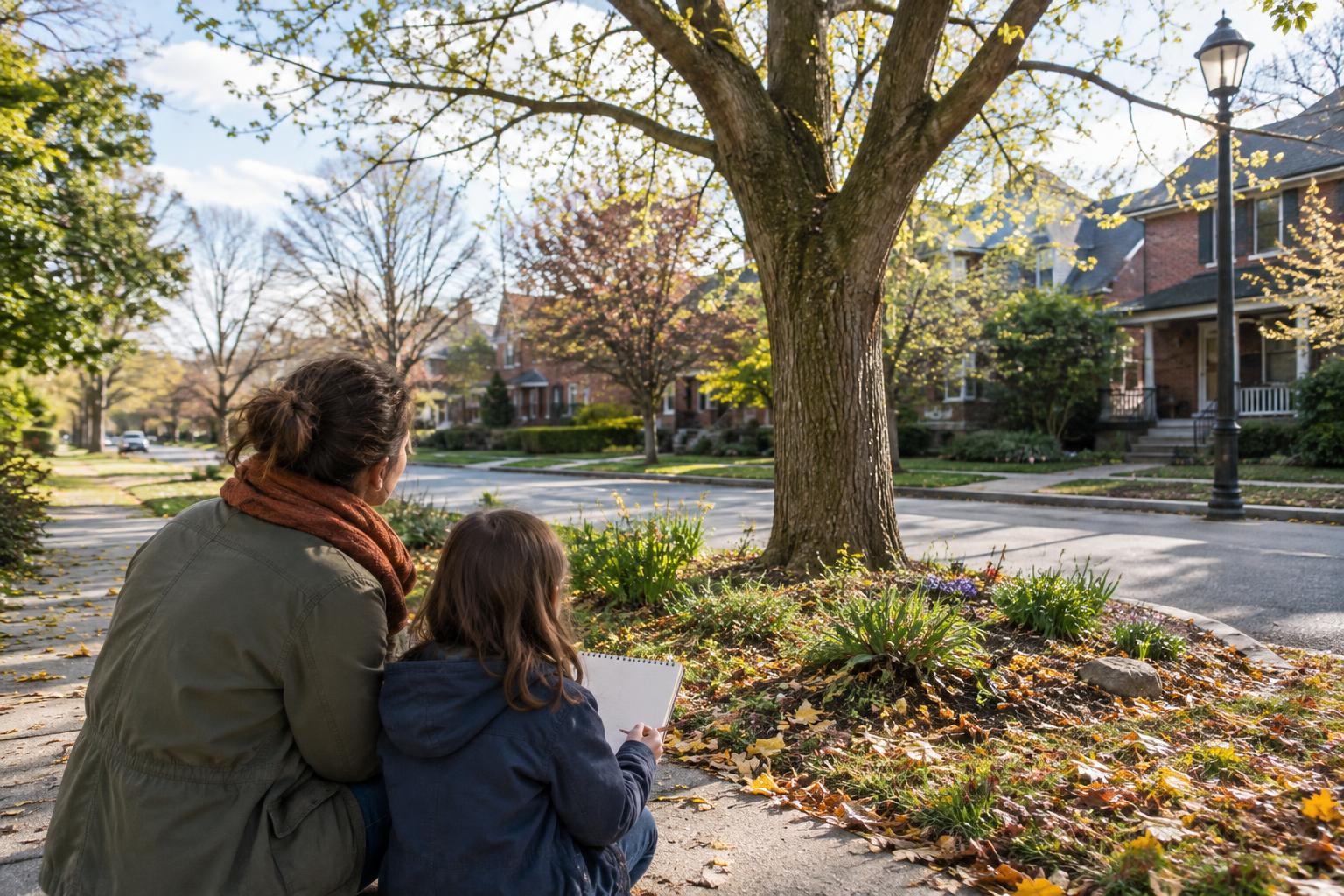
Bring a notebook, or make a few notes when you get home. Write down the place, the weather as you experienced it, what you noticed, and one question to investigate next time. Children can draw a silhouette, map where an animal moved, or invent symbols for sounds. A quick sketch can capture details that are hard to put into words.
Return to the same observation spot on another day. Compare what is similar and what has changed without expecting every visit to produce a sighting. One day might bring several birds; another might offer only a spiderweb or an unfamiliar call. Over time, repeated visits can help your family recognize the ordinary routines of the wildlife sharing your neighborhood.