Choose a spot you can visit again
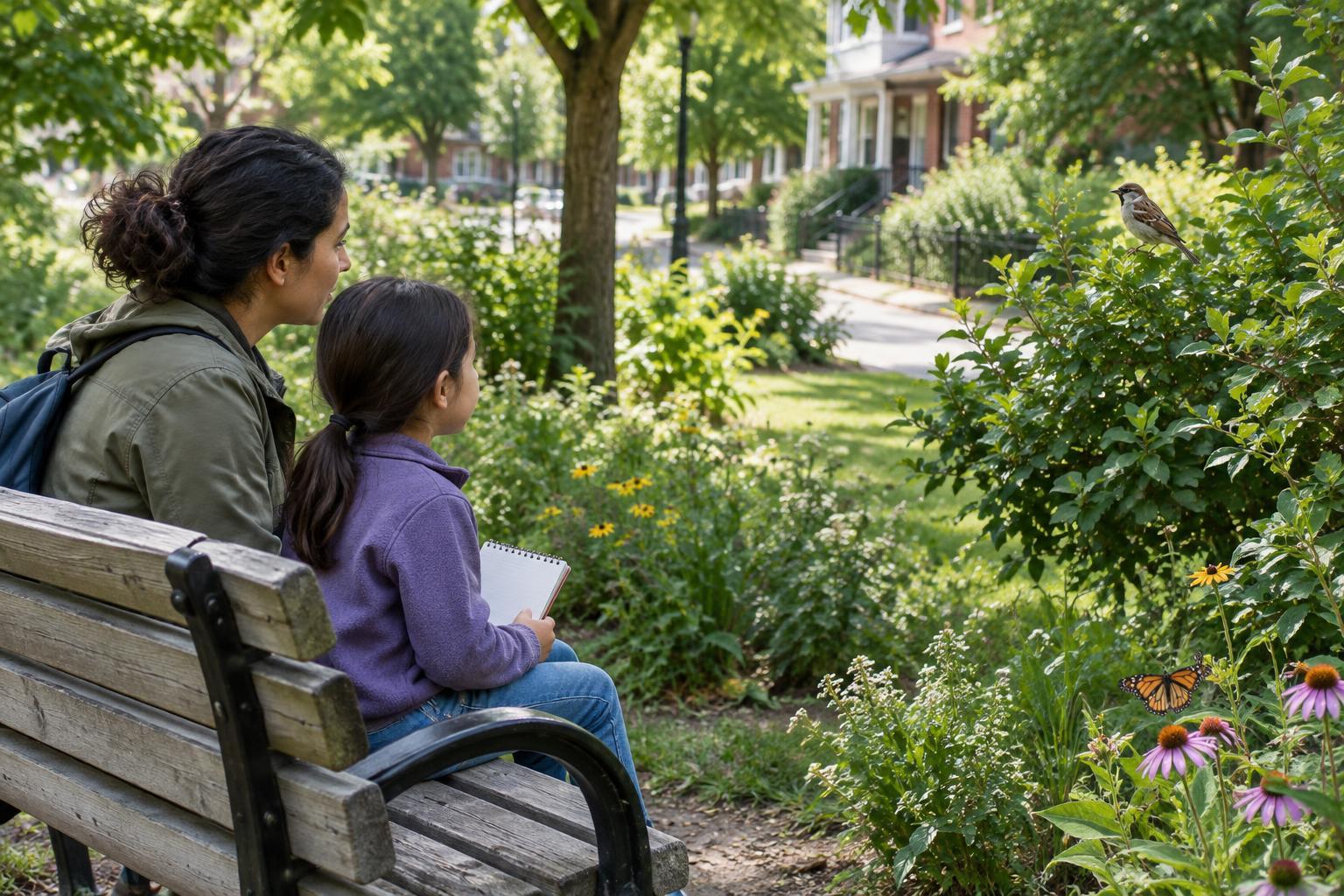
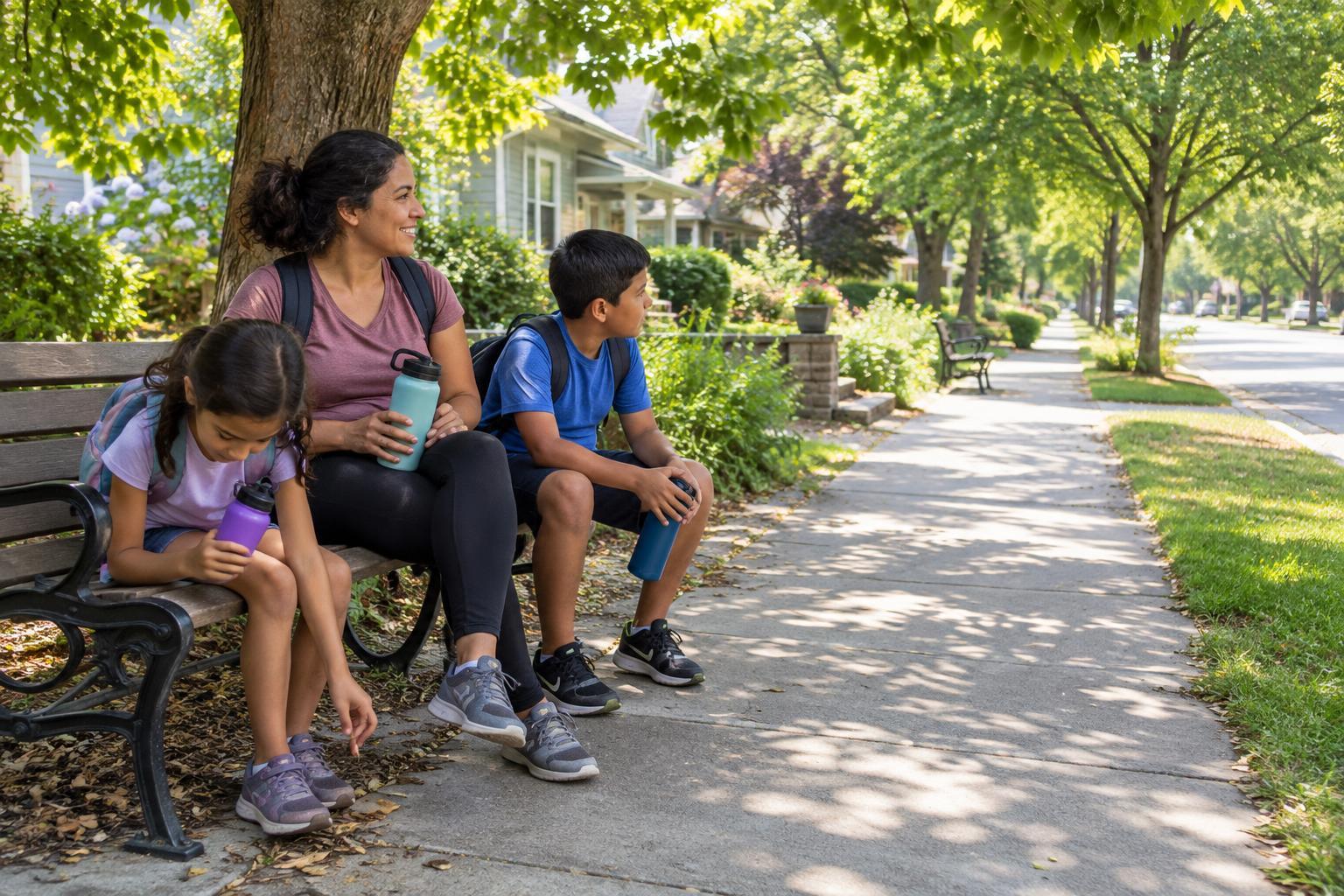
You do not need a dramatic landscape to explore seasonal change. A street tree, a small garden beside a sidewalk, a view across a park, or a row of buildings can offer plenty to notice. The best spot is one your family can reach comfortably and revisit without needing special access. Look for a place where you can stand or sit safely without blocking a path, entering private property, or disturbing plants and animals.
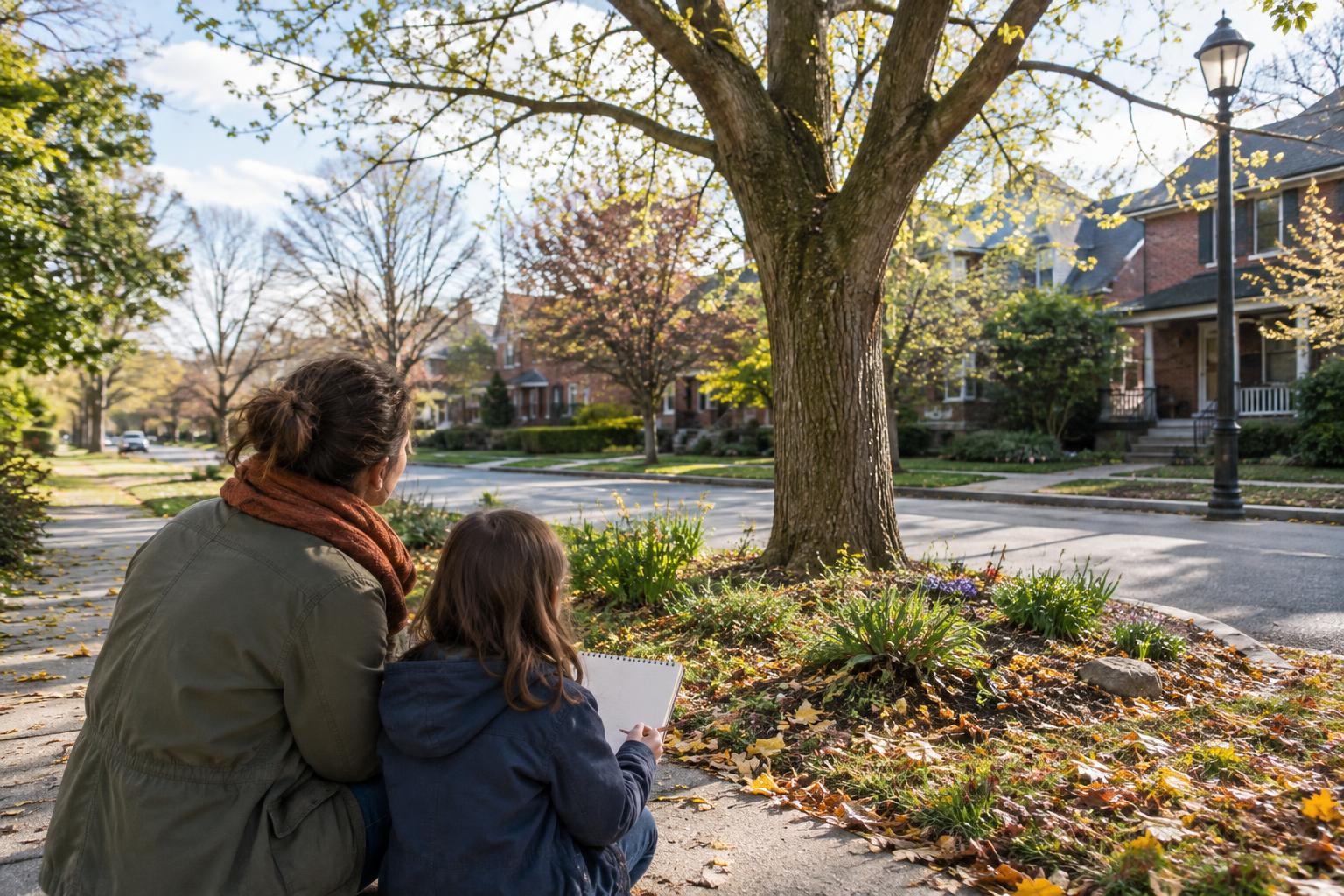
Decide on a consistent observation point: a particular bench, a pavement seam, or a view from a window. Give it a name, such as “the corner tree” or “our park view.” Returning to roughly the same position makes comparisons easier. If your child cannot visit in person every time, observations from a window or photos taken by another family member can still be part of the project.
Make a simple record of each visit
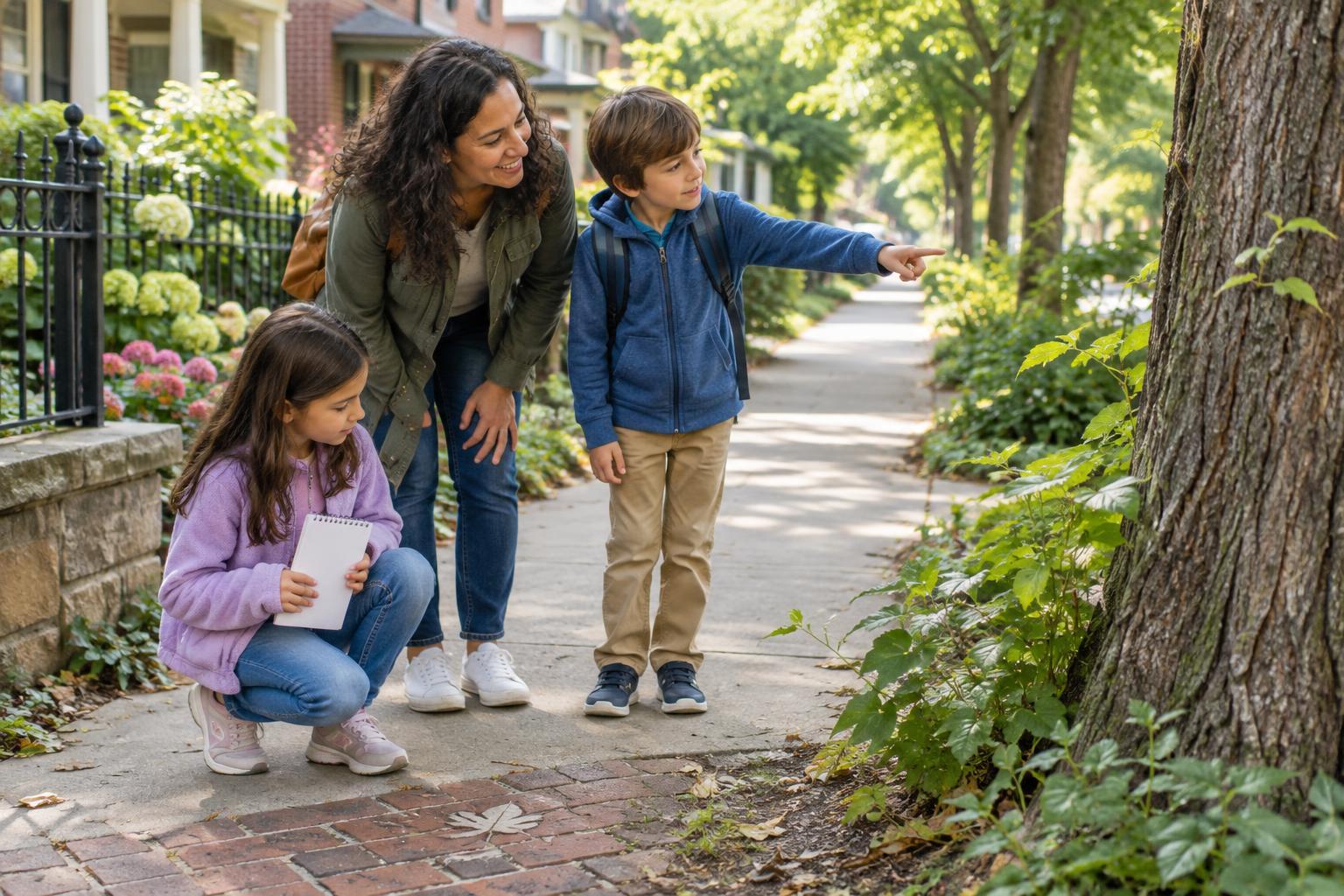
Bring a small notebook, a sheet of paper on a clipboard, or a device for notes and pictures. At the top of each entry, write the date, approximate time, and a few words about the weather. Then record what you can see, hear, smell and feel. You might note the shape of a tree’s canopy, the length of a shadow, the sound of traffic or birds, or whether the ground feels dry underfoot. There is no need to identify every plant or animal; a careful description is valuable on its own.
Try repeating one task on every visit. Sketch the same view, take a photo from the same position, or count how many different leaf shapes you can see without picking any. Young children can choose colors that match the scene or dictate one sentence to an adult. Older children might draw a small map and mark where they noticed a change. Keep the records together so everyone can look back at them.
Look beyond the most obvious seasonal changes
Leaves and flowers often catch the eye first, but they are only part of the story. Notice where sunlight falls at the time you usually visit. Are some areas shaded now that were bright before? After rain, does water collect in the same places? Listen for changes in the mix of sounds, and look for clues about how animals use the space, such as tracks in soft ground or birds visiting a tree. Observe from a distance rather than approaching nests or wildlife.
Neighborhoods change through human activity, too. A shop might put out different displays, people may use a public space in different ways, and street trees may be cared for by local workers. Avoid making assumptions about why something changed. Instead, write down what you saw and turn your guesses into questions: “Was this planter moved?” or “Does this path stay muddy after every rain?”
Compare visits without expecting a perfect pattern
After a few visits, spread out your notes, sketches or photos. Ask your child to find one thing that changed, one thing that stayed the same, and one thing they want to check next time. A side-by-side drawing can make small differences easier to spot. You can also make a simple page with four spaces for seasonal observations, adding details as you go rather than trying to fill it all at once.
Try to visit at a similar time of day when you can, but do not worry if your schedule varies. Time of day, recent weather and maintenance can affect what you notice. A tree may look different after a windy day than it did the week before, even within the same season. These variations are useful clues. They help children see that a season is not a single fixed scene but a stretch of changing conditions.
Let the spot lead to new questions
A repeat visit works best as an invitation to wonder, not a test of what anyone remembers. Ask open questions such as “What did you notice first today?” and “What would you like to look at more closely next time?” If your child becomes interested in a crack where plants grow or a puddle that disappears, follow that curiosity. A few attentive minutes can be more rewarding than a long visit with a checklist.
At the end of a year, look through your records together. Choose a favorite observation and talk about what surprised you. You might make a small display of sketches at home or plan another year of visits to the same place. The familiar spot will still have new things to show you—and your family will have a way to notice them.