Start with one small question
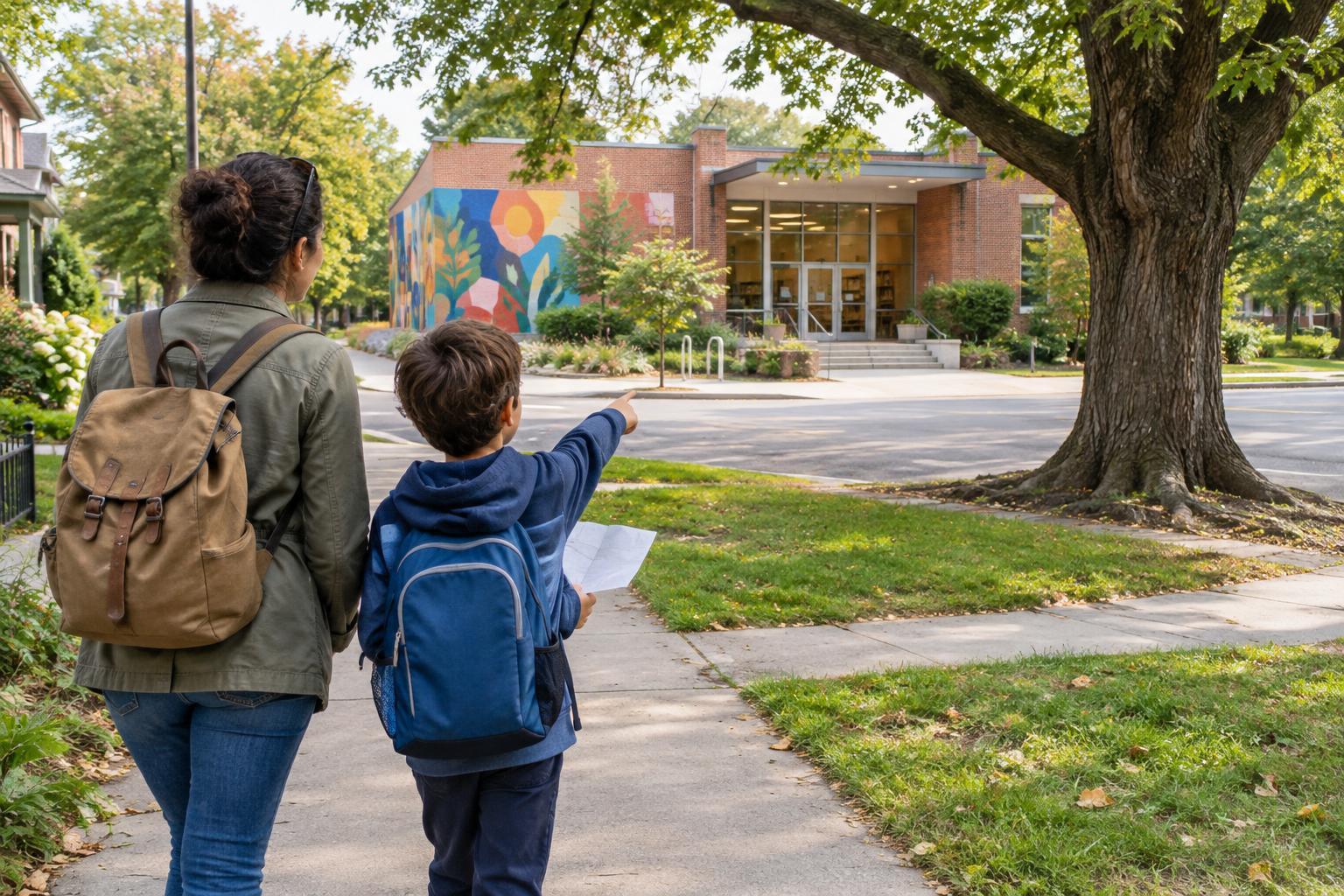
A successful neighborhood walk does not need a destination. For young explorers, the trip to a familiar corner and back can be enough. Begin with one question that invites looking: Where do we see signs of different seasons? What shapes repeat on buildings? How many ways do people move through this area? A question gives the walk a purpose without turning it into a test.
Choose a question that fits what children can observe from public paths. You might look for places where plants grow, compare doors and windows, or notice how the same street changes from one block to the next. If a child becomes interested in something else, follow that curiosity when you can. The aim is to practice paying attention, not to finish a checklist.
Choose a route that leaves time to stop
Pick a familiar route with comfortable places to pause, such as a wide sidewalk, a public bench, or a spot away from busy crossings. A short loop makes it easy to head home when energy runs low. If you are walking somewhere new, think through crossings, surfaces, shade, and available restrooms before you leave. A route that works for one family may not work for another, so adapt it to the ages and mobility needs of everyone joining.
Let children know roughly where you are going and when you will turn back. A simple plan might be, “We’ll walk to the next intersection, look for three interesting details, then come home.” Bring water and anything your family ordinarily needs for a brief outing. Check the weather and choose clothing that lets everyone focus on exploring rather than being too hot, cold, or wet.
Make observation playful
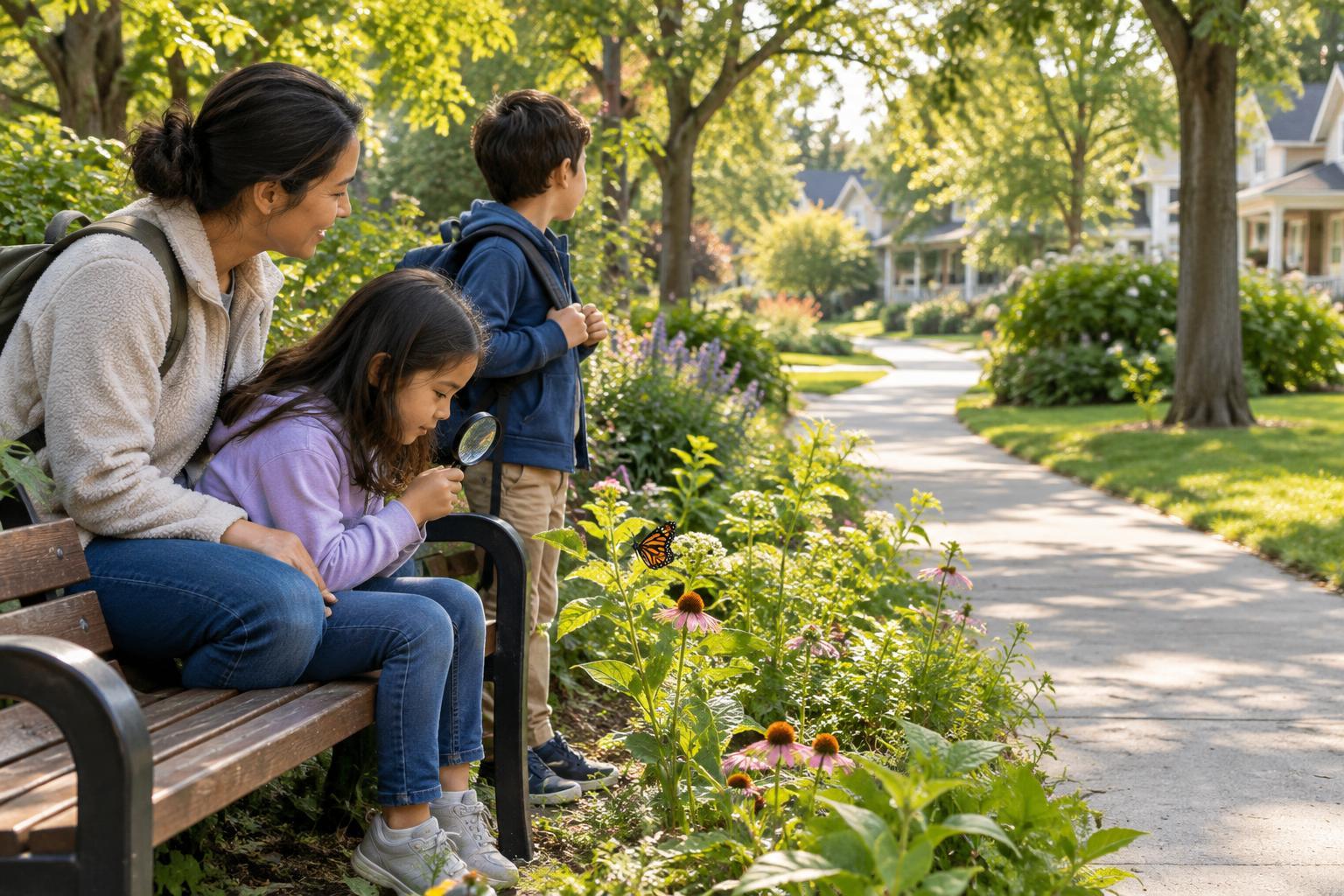
Give each child a role that encourages noticing. One might be the shape spotter, another the sound listener, and another the route helper. Roles can change halfway through so nobody feels stuck with an assignment. For children who enjoy collecting, try a mental collection: three different textures seen but not touched, two kinds of signs, or one thing that made them wonder.
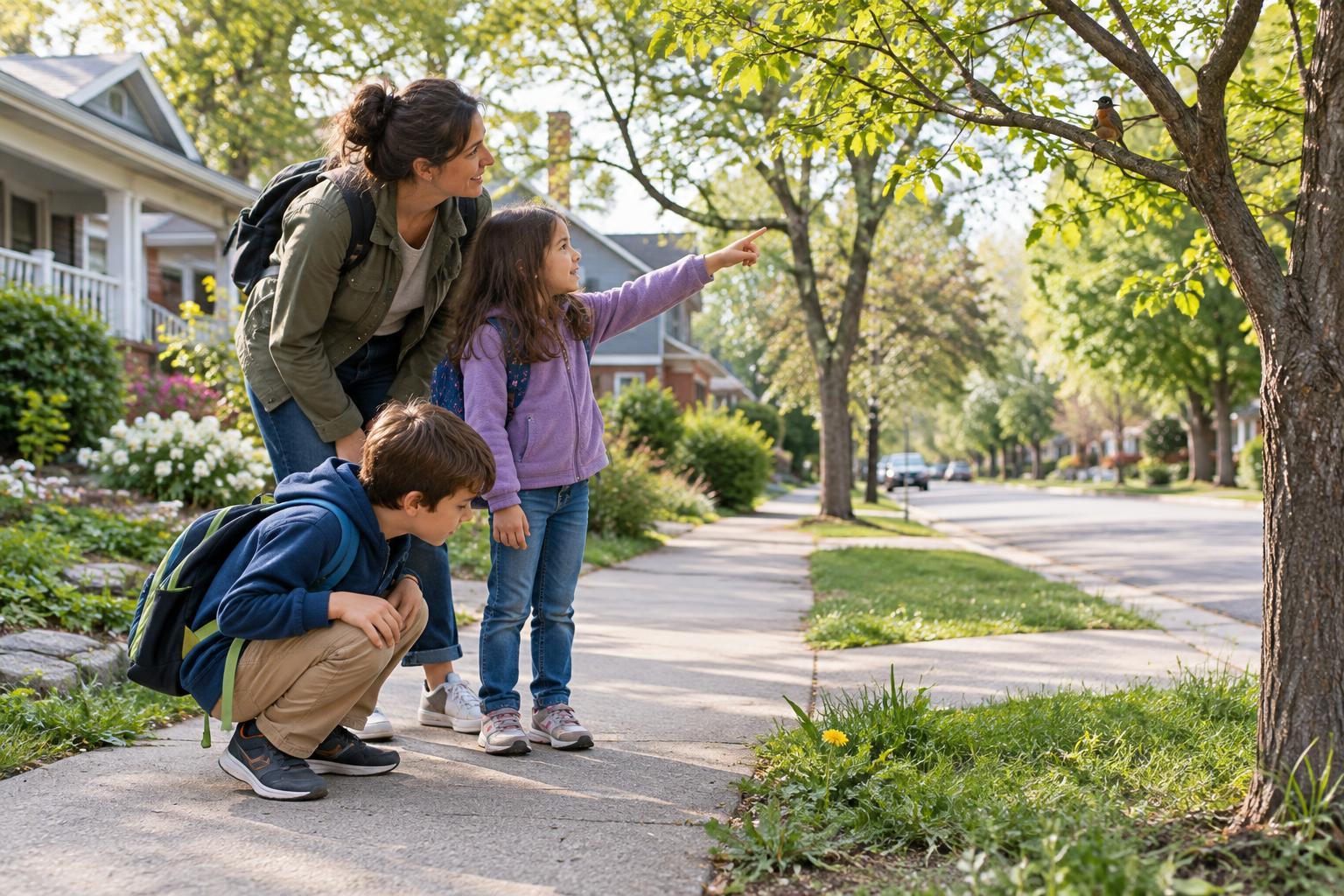
Ask open questions instead of supplying answers right away. “What do you notice about this wall?” can lead to observations about color, materials, or repairs. “What might this space be used for?” invites a guess that you can revisit later. Younger children may prefer pointing and naming; older children may enjoy sketching a detail or comparing two places. Silence counts, too. A quiet minute can give everyone time to hear and see more.
Use ordinary neighborhood features as starting points. A puddle can prompt a conversation about where water goes. A tree surrounded by pavement can lead to questions about how plants find room to grow. A faded sign may spark curiosity about what a building was used for before. It is fine to say, “I don’t know.” Together, you can decide whether the question is worth exploring after the walk.
Explore with care for people and places
Before setting out, agree on a few clear boundaries: stay together, stop before crossings, and observe private homes and yards from public spaces. Avoid blocking paths or entrances when you pause. If your route includes a planted area, encourage looking without picking. These habits help children understand that discovery can be curious and respectful at the same time.
People are part of a neighborhood, but they are not exhibits. If children notice someone working, traveling, or gathering with others, you can talk about what they see without making assumptions about that person’s life. Ask permission before taking a photo of anyone, and be thoughtful about photographing homes. A child can remember a place with a sketch, a few words, or a description of its colors instead.
Bring the walk home
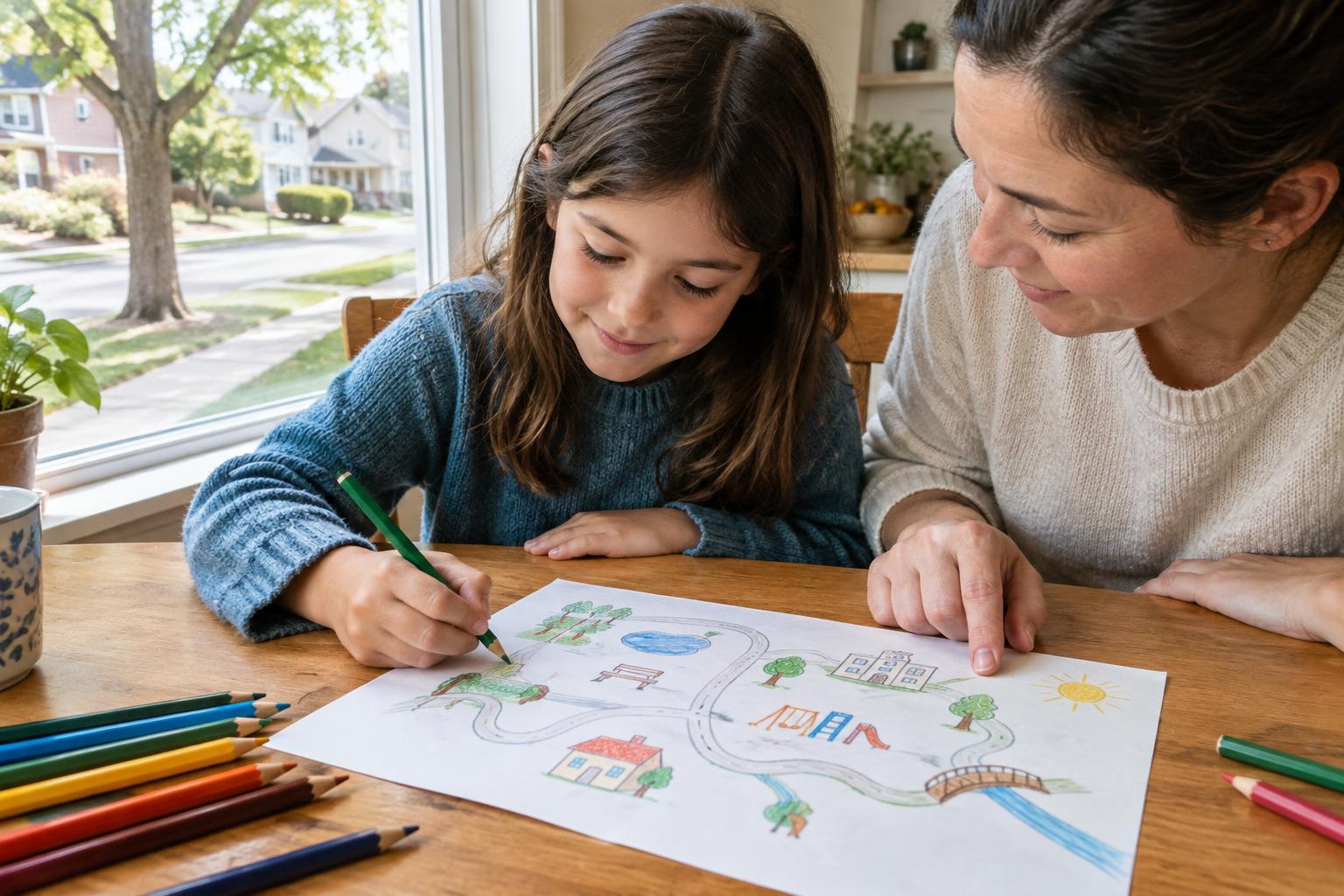
When you return, ask each person to share one thing they noticed and one question they still have. Keep the conversation brief if everyone is tired. You could draw a simple map together, mark a favorite stopping place, or add a sketch to a notebook. There is no need to record every detail; choosing what felt memorable is part of the learning.
If the walk was enjoyable, repeat the same route another day with a different question. Look for new sounds, compare the trees, or notice which details you missed the first time. Returning to a familiar place helps children see that a neighborhood is not a fixed picture. Even a few blocks can offer fresh discoveries when you make time to look.