Start with a question, not a land label
A walk past a river, a visit to a historic building, or a familiar place name can spark a question: What Indigenous histories are connected to this area? That is a more useful starting point than trying to find one definitive answer to “Whose land is this?” Indigenous communities have distinct histories and present-day lives. More than one Nation may have relationships with a place through residence, travel, trade, kinship, or other connections.
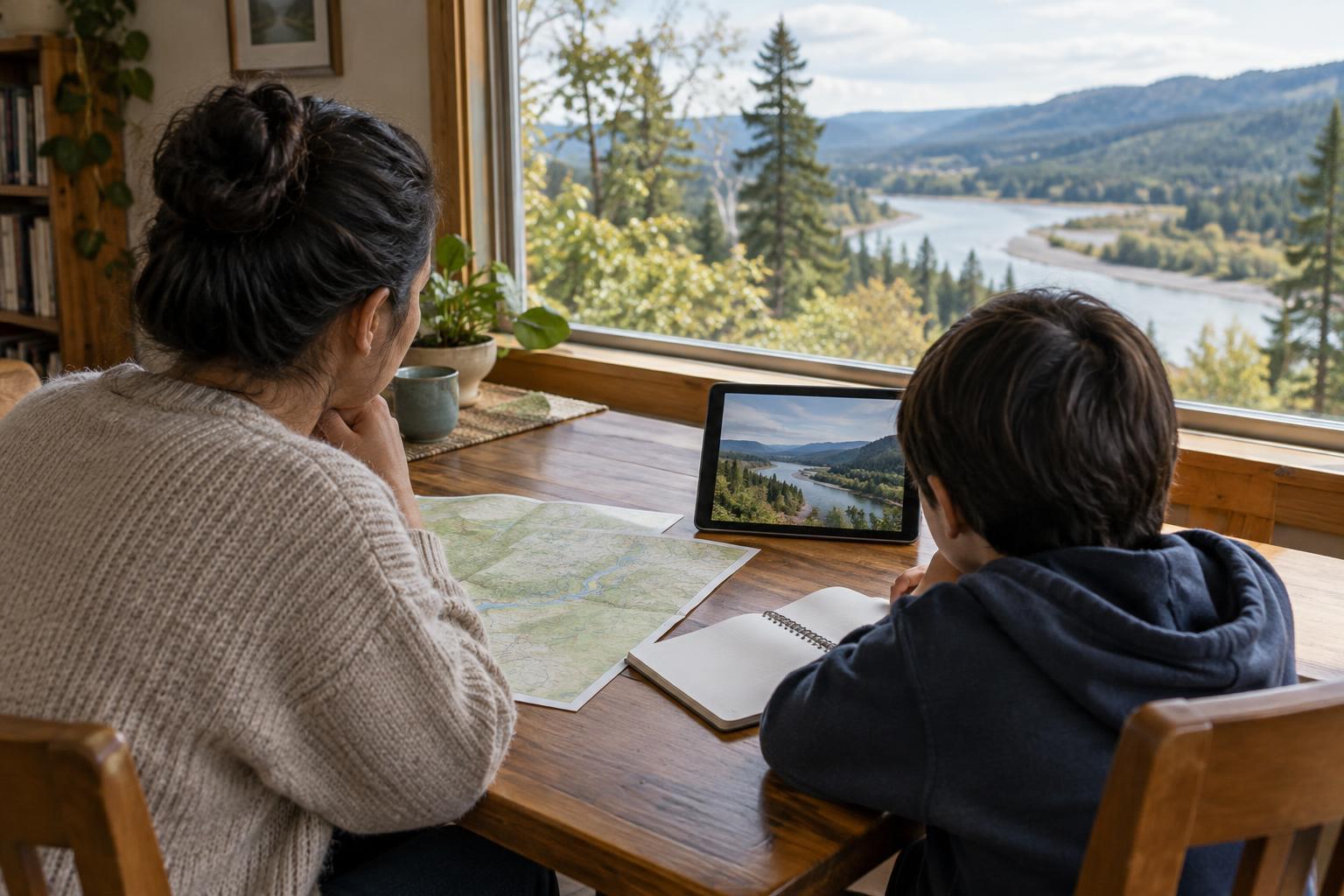
Choose a small question your family can investigate, such as how a nearby waterway has been used over time or what a local place name means. Write down what you already know and where you learned it. Treat a school worksheet, museum label, or map as a lead to check, rather than as the final word.
Look for what Tribal Nations share publicly
When you identify a Nation connected to the area, look for its own public materials. A Tribal government website may offer history pages, educational resources, language information, or statements about place and identity. A Nation’s cultural department, museum, or community publication may also share resources intended for general readers. Read the page’s description of who produced it and who it is for; a resource created by a Nation offers a different perspective from one written about that Nation.
Local libraries and historical organizations can help you locate these materials, but an archive’s collection is not a substitute for a community’s account of itself. If a source uses an unfamiliar name, note its spelling and context rather than assuming that all names for a people or place are interchangeable. Some older labels were assigned by outsiders; a Nation’s current self-identification is an important guide.
You do not need to contact a Tribal office to answer every family research question. Begin with resources people have chosen to make public. If you do have a specific question that public materials cannot answer, check whether the organization invites inquiries, keep your message brief, and accept that staff may not be able to respond.
Use maps and archives as clues
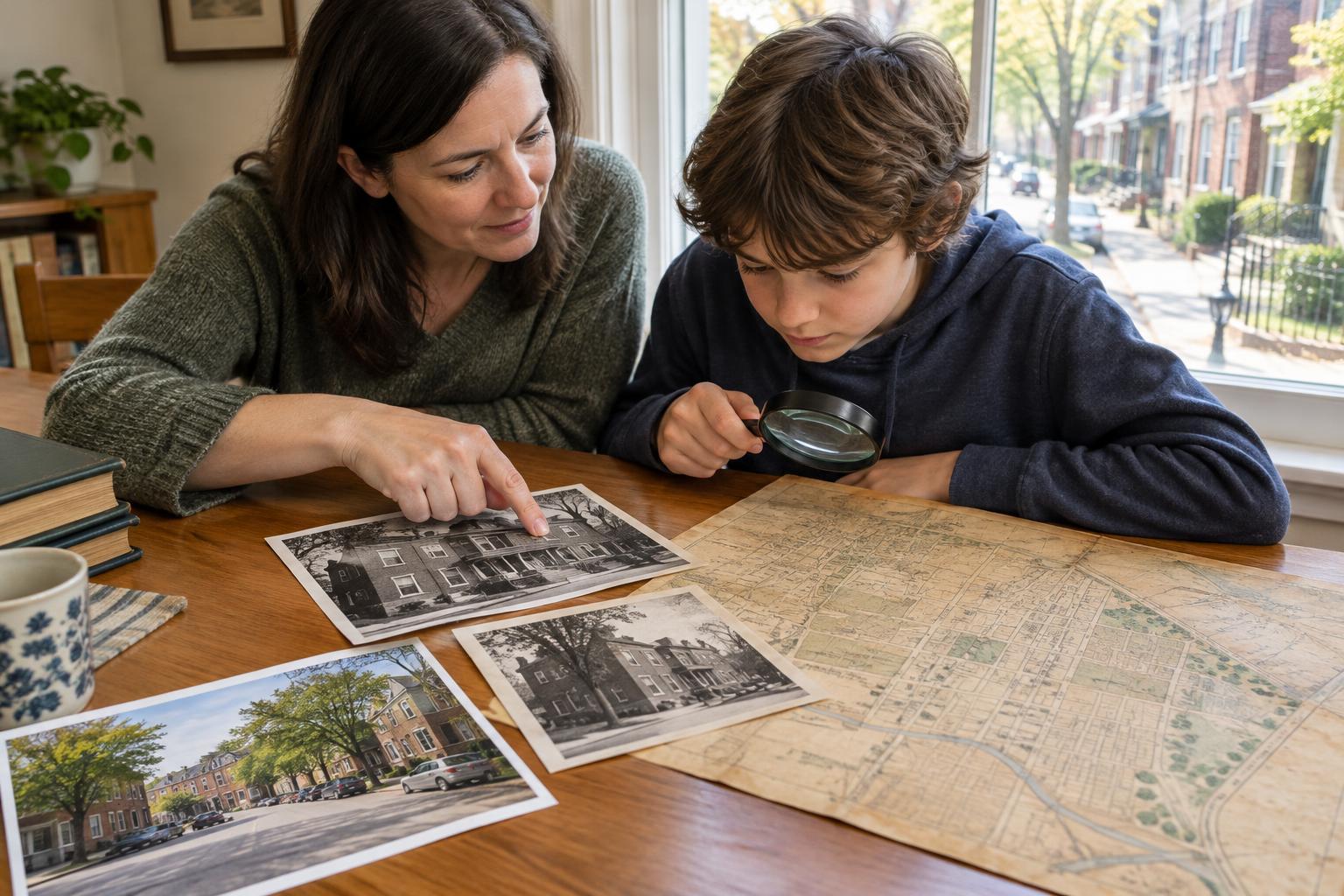
Historic maps can make an investigation feel concrete, but their boundaries and labels reflect the mapmaker’s purpose. A map may leave out seasonal movement, shared use, or relationships that do not fit a simple border. A modern map showing Indigenous territories can be a helpful prompt for further reading, not proof that every boundary was fixed or that a community’s connection ended at a line.
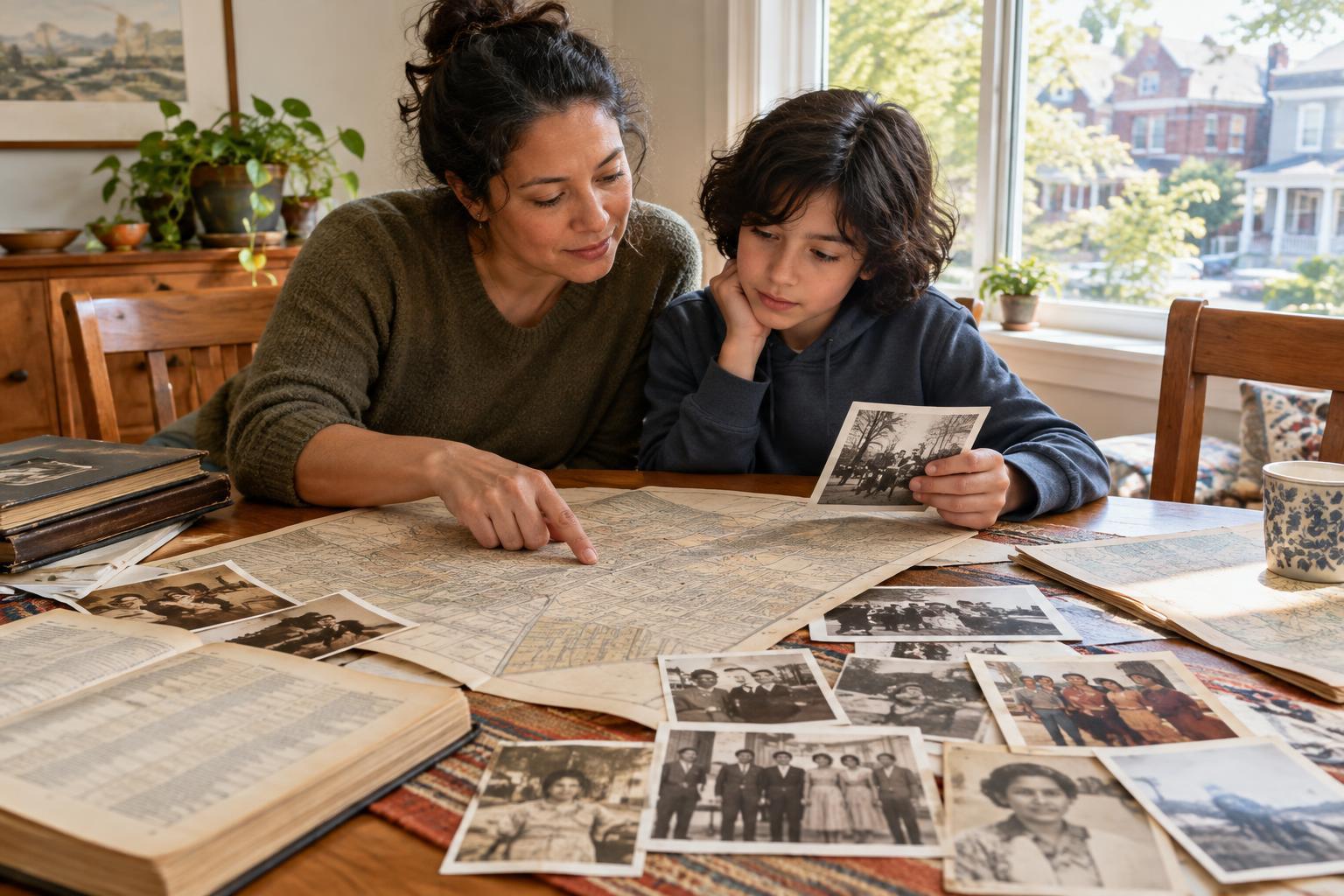
Older newspapers, town records, photographs, and exhibit labels also need context. Ask who created an item, when it was created, whose voice is present, and whose is missing. Descriptions such as “first settlers” can erase people who were already there. If a Tribal source and an older local account tell a story differently, record that difference. It may reveal more about the older account’s viewpoint than about the community it describes.
Make the research an everyday family activity
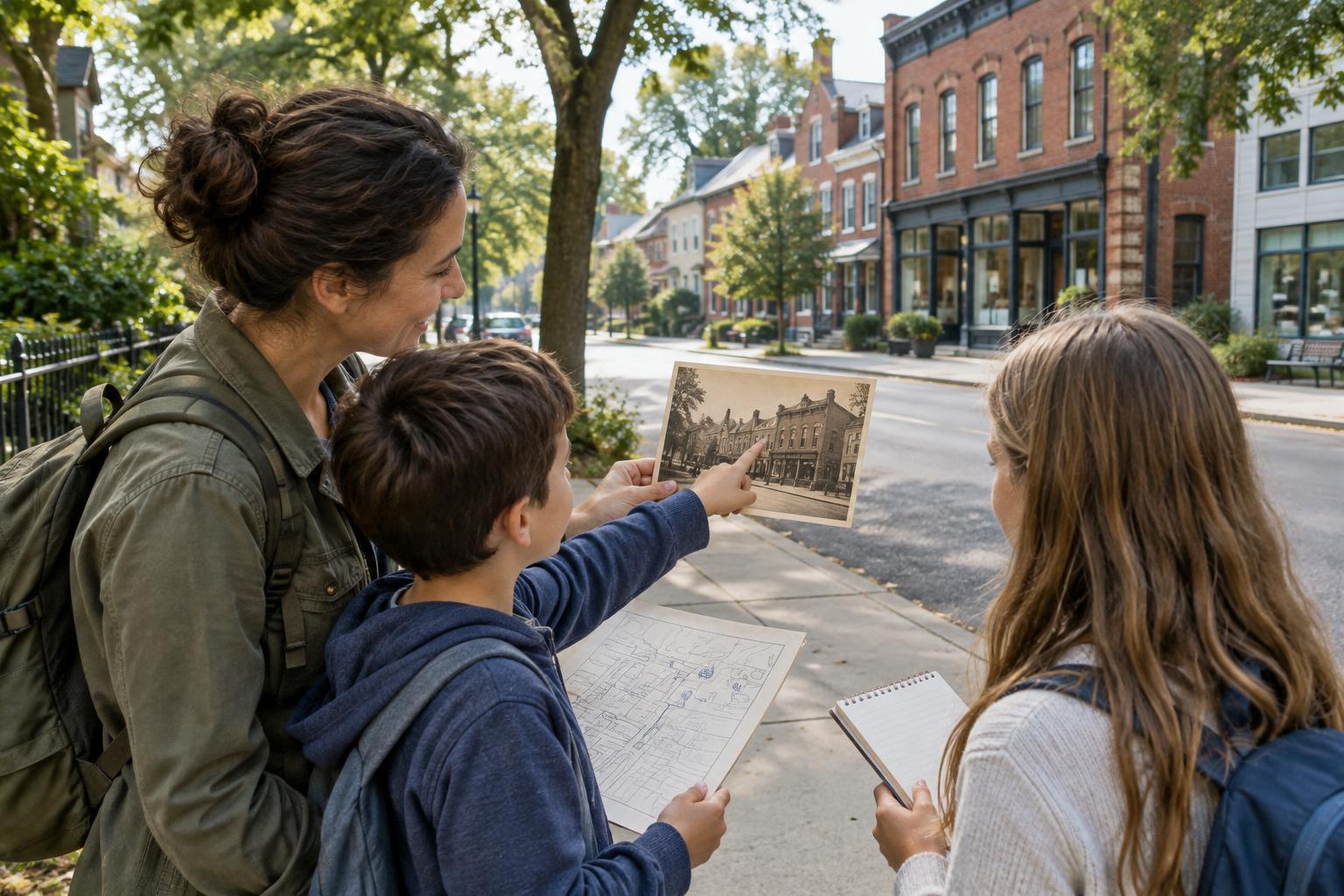
Try a short observation walk. Let a child choose one feature—a stream, hill, road name, or gathering place—and sketch it. Back home, look for a publicly available Tribal source connected to the wider area. Alongside each new fact, write its source. Keep questions you cannot yet answer in a separate column. This makes uncertainty part of the activity rather than something to hide.
For younger children, compare two ways of describing the same place: what they noticed today and what a public source says about its history or significance. Older children might compare a Tribal account with a local history page and ask whose perspective each one centers. Keep the activity focused on learning and observation. Avoid reenacting ceremonies, copying designs, or collecting objects from a site; these are not necessary for understanding its history.
Leave room for living communities and limits
Indigenous history is not only a story of the distant past. As you read, notice how a Nation describes its work, priorities, and community today, while remembering that no single page can represent every member’s experience. If your family makes a display or shares what it learned, name the sources and distinguish their words from your own observations.
Some knowledge is not meant for public circulation, and some public sources may offer only a broad introduction. Do not press for details about sacred places, practices, or objects. A good local history project can end with a more precise question, a better understanding of whose accounts to seek, and a commitment to keep listening.