Start with the space you already share
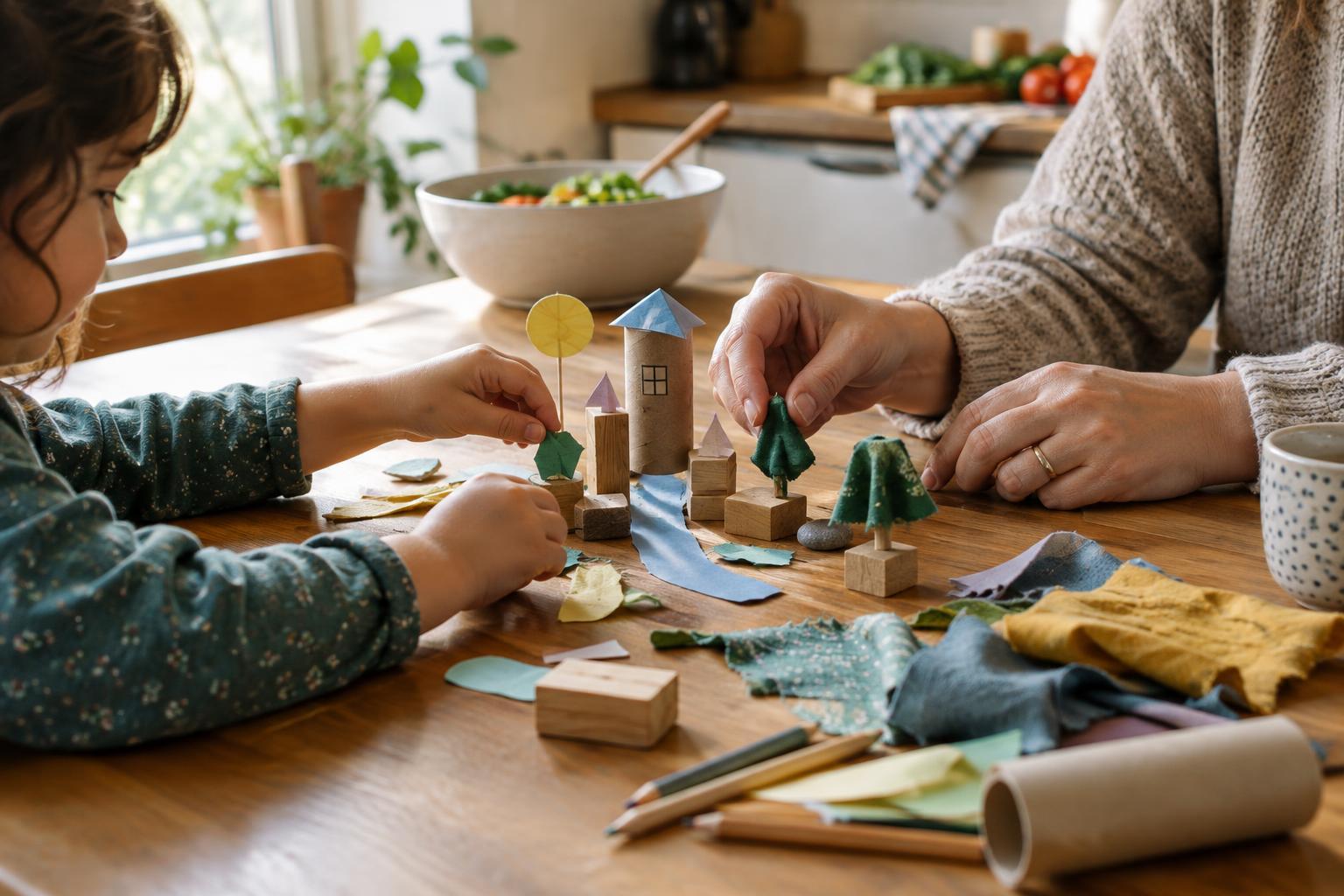
A creative play space does not have to be a permanent corner filled with supplies. In a small home, the kitchen table, a patch of living-room floor or a cleared end of a desk can become a place to draw, build and invent. The useful question is not “Where can we fit a playroom?” but “What surface can we make available for a little while?” Choosing a shared space also lets children see that making things is a normal part of daily life.
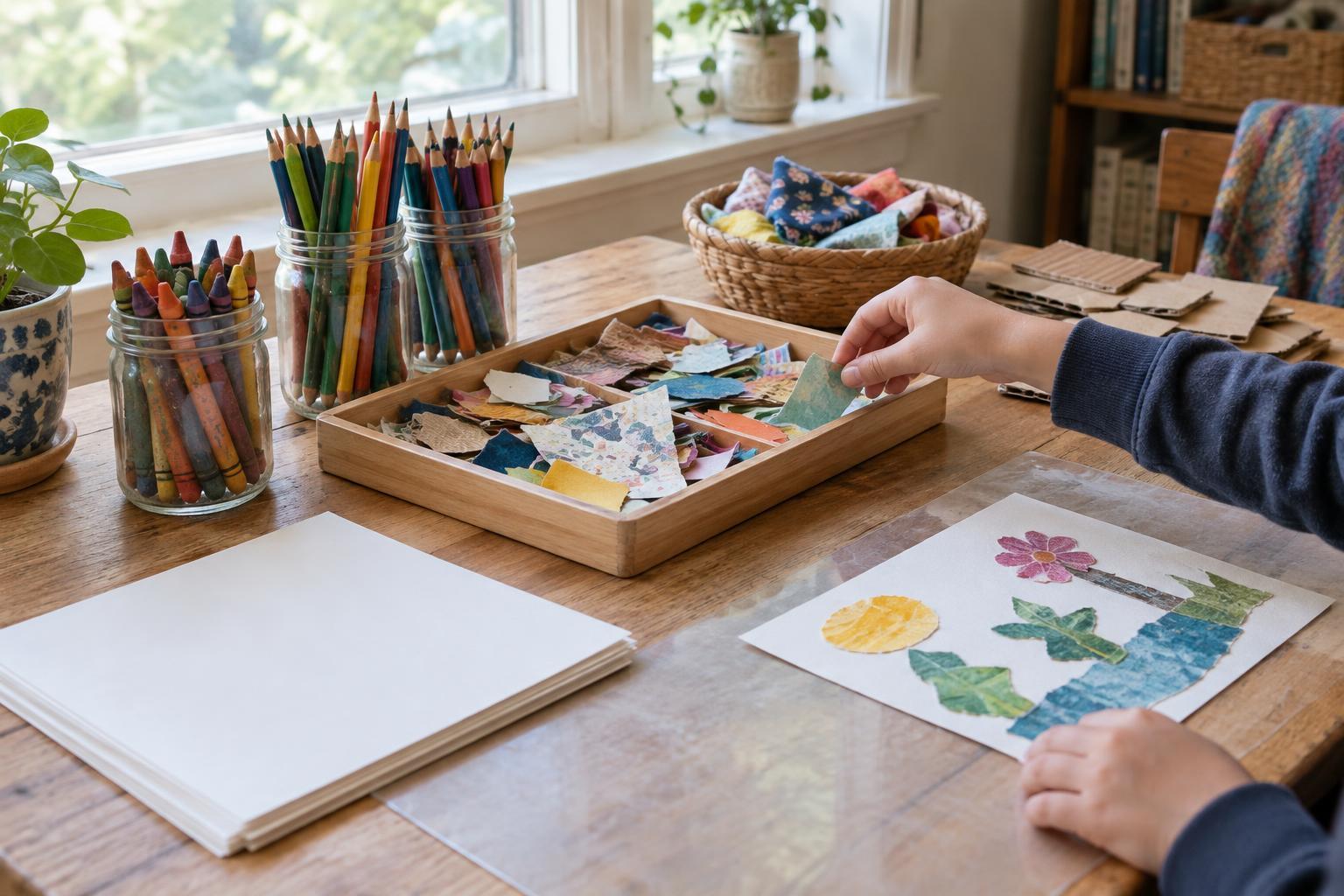
Notice how your home is used before moving furniture. Is there a table that is free for twenty minutes after a meal? Could a floor mat mark a building area without blocking a walkway? Pick one starting spot and keep its setup modest. A wipeable mat or scrap-paper work surface can help define the area and make cleanup easier. If the spot is near a door, heater or busy path, choose somewhere else so projects can happen without people constantly stepping around them.
Build a small, portable collection
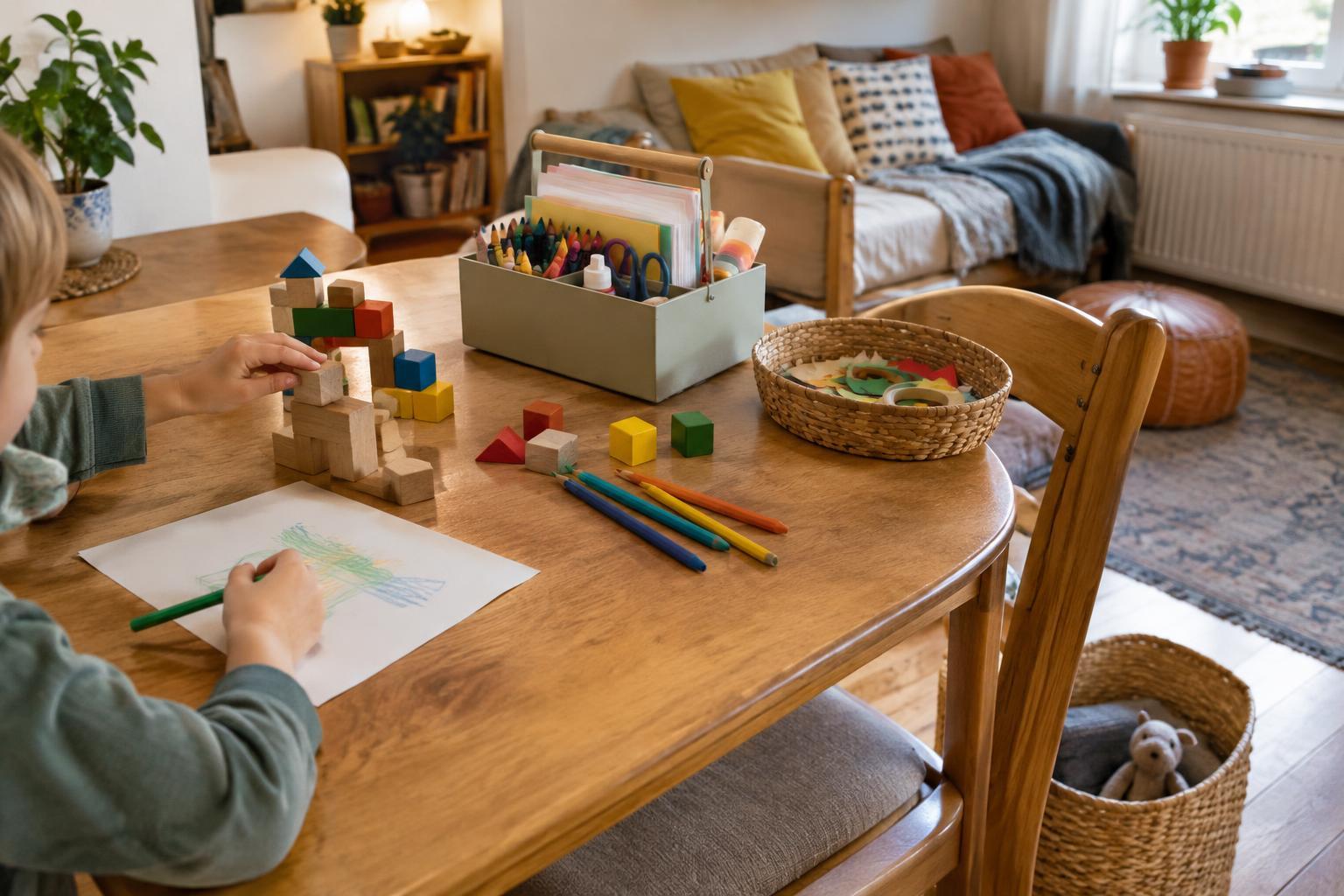
Begin with materials that invite more than one kind of play: paper, washable drawing tools, tape, cardboard offcuts and a few reusable building pieces. A child might turn the same cardboard into a shop sign, a puppet stage or a map of an imaginary town. You do not need to set out everything at once. Offering a small selection gives children a place to begin and leaves room for their own ideas.
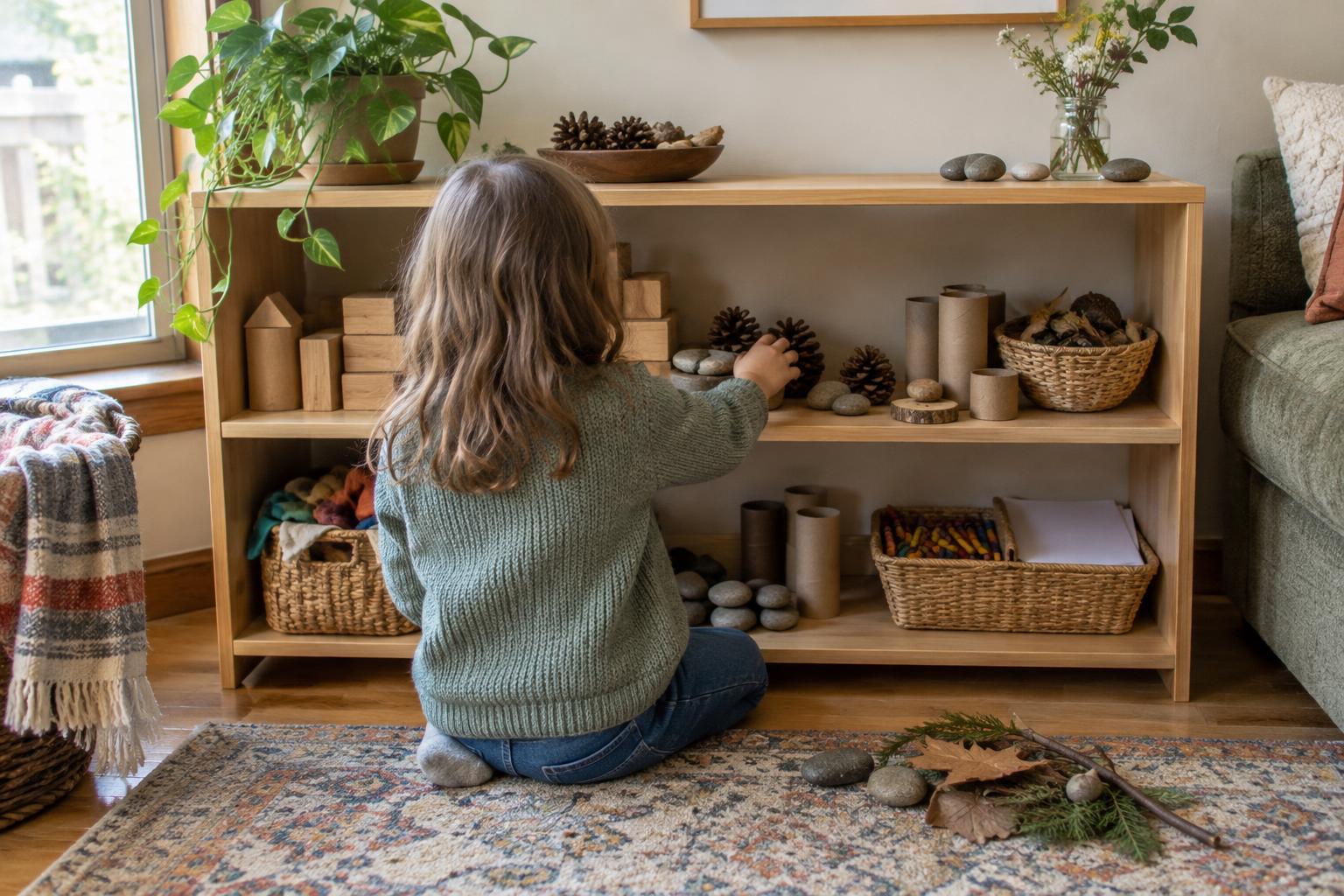
Keep the collection in a handled basket, shallow bin or other container that is easy for an adult or child to carry to the chosen surface. Smaller containers inside it can separate drawing tools from loose pieces. If storage is especially tight, let supplies rotate: keep a few favorites available and put the rest away until interest returns. Before saving packaging or household scraps, consider whether they are clean, sturdy and suitable for the children using them. Keep small parts and tools that need adult help out of reach when they are not in use.
Make setup part of the invitation
A good setup gives a child something to notice without deciding what they must make. Place a few sheets of paper beside colored pencils, or set cardboard pieces next to tape and ask, “What could these become?” For pretend play, a scarf and two chairs may be enough to suggest a stage, a campsite or a bus. Open-ended materials are useful in a small home because they can support many stories without requiring a shelf of single-purpose toys.
Match the invitation to the time and space you have. On a busy evening, drawing at the table may be more manageable than a large construction project on the floor. If a child wants to keep building, agree on a place where a small work-in-progress can stay without taking over a shared surface. A tray or a corner of a shelf can hold one ongoing creation; a photo can help remember a larger one that needs to be taken apart.
Plan an easy way to finish
In a compact home, cleanup works best when it is part of the activity rather than a surprise at the end. Before play begins, show where finished work, reusable materials and scraps will go. A folder can hold flat artwork, while a box can collect pieces for future building. It is fine to recycle or discard materials that are no longer useful. Leaving a little time to sort together makes the space easier to share again.
Children may need help deciding what to keep, especially when every drawing feels important. You might invite them to choose one piece to display and a few to save, then revisit the collection together later. The goal is not a perfectly tidy home at every moment. It is a routine that allows play to happen again without requiring a major reset from the adults who live there.
Let the space change with the child
Watch what your child returns to over several play sessions. If drawing tools are used often but building pieces rarely leave the bin, give the drawing supplies the easiest spot to reach. If pretend play takes over, make room for a few flexible props instead. A creative play space is more useful when it reflects current interests than when it follows a fixed picture of what one should look like.
You can also bring everyday discoveries into the space without adding much clutter. After a neighborhood walk, invite a child to sketch a doorway they noticed or build a tiny street from paper and blocks. A museum visit might inspire a homemade display label for a favorite creation. These connections give familiar materials fresh possibilities. In a small home, the best creative space may be one that appears when needed, welcomes an idea and then makes room for the rest of the day.