Start with what your family actually uses
Art materials tend to spread because they arrive in different shapes and at different times: a new box of crayons, paper from a school project, a bag of collage scraps. Before buying organizers, gather the supplies you already have in one place. Sort them into broad groups such as drawing tools, paper, paint, building materials and reusable odds and ends. You do not need a separate container for every color or craft.
As you sort, test dried-out markers and glue, put caps back on usable supplies, and recycle or discard items your family cannot use. Set aside anything that needs adult supervision, including sharp tools or materials with small pieces. If children help with the sorting, ask which supplies they reach for most often. Their answers can guide which materials deserve the easiest-to-reach spots.
A modest collection that gets used is more valuable than a large one that is hard to navigate. Keep enough variety to invite experimentation, but give each category a space it can fit into comfortably.
Give everyday supplies an easy home
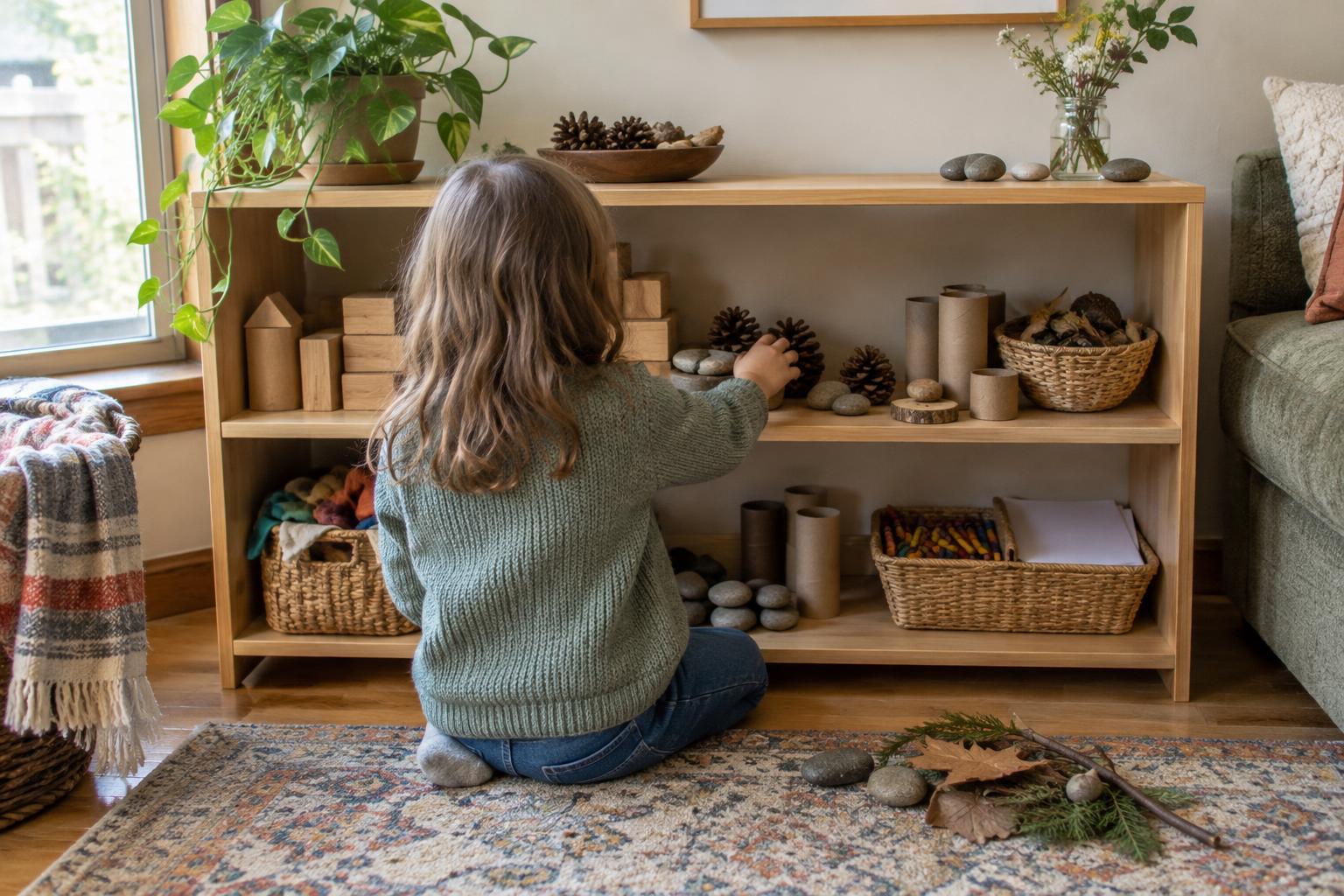
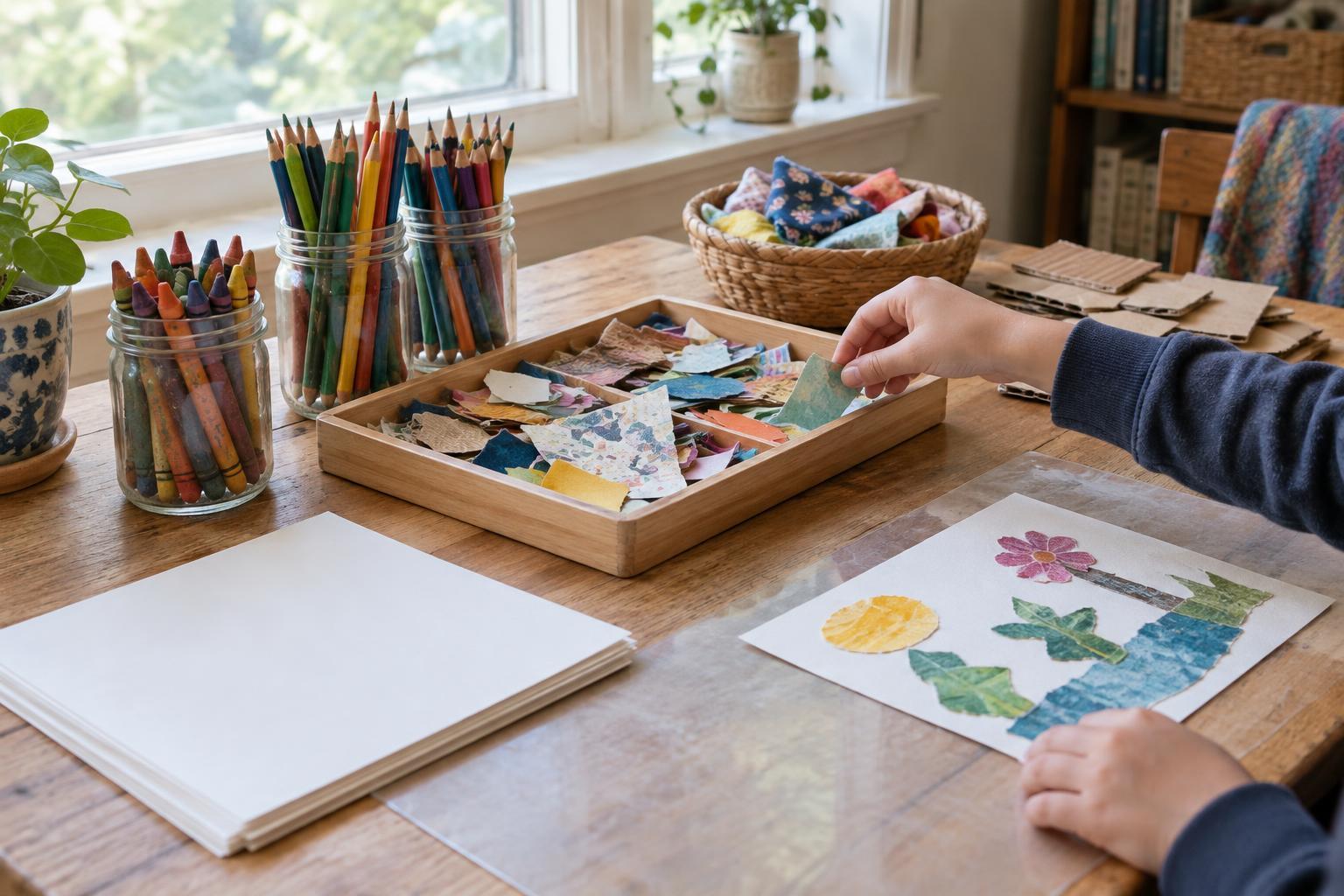
Store frequently used materials near the place where children create, if possible. A small tray or caddy can hold pencils, crayons, washable markers, glue sticks and child-appropriate scissors. A folder, shallow bin or upright file can hold blank paper. Simple labels with words or pictures make it easier for children to put things back without asking where each item belongs.
Choose containers that are easy to open and return to a shelf. Reused food tubs, sturdy boxes and jars can work, provided they are clean and suitable for the materials inside. Open containers are useful for supplies children may choose independently; closed containers can keep paint, ink or tiny collage pieces together until an adult is ready to help. Put heavier or spillable items where a child will not have to reach over their head for them.
Try making cleanup part of the activity rather than a separate, overwhelming job. A child can return drawing tools to the caddy while an adult checks caps and wipes the table. When every supply has a clear destination, resetting the space takes less decision-making.
Keep scraps with a purpose
Leftover materials can inspire new work, but not every scrap needs to be saved. Give reusable pieces one container with a firm size limit. Add clean paper offcuts, interesting cardboard shapes, ribbon lengths or other pieces your family is likely to use. Flatten boxes before storing them, and keep only a few sizes that suit the projects your children enjoy.
Before adding something, ask: Could we use this in a project we can imagine? Is it clean, dry and safe to handle? Does it fit in the container? A scrap that fails those tests can leave the house without being a missed opportunity. Avoid saving food-soiled packaging, broken objects with sharp edges or mystery materials just because they look intriguing.
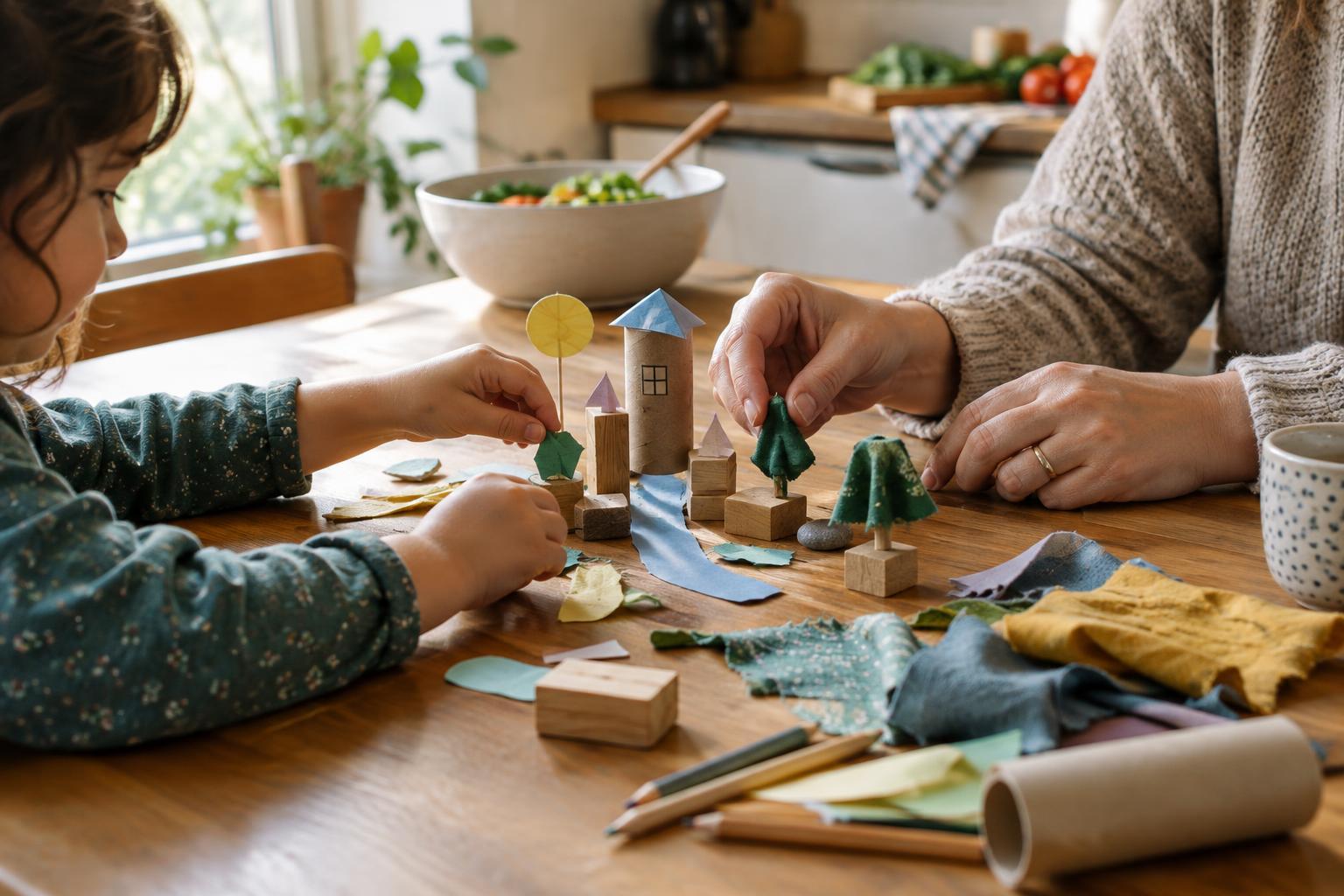
When the container fills, make a collage or construction session from what is already there. Spread the pieces on a table and invite children to choose a starting shape, then build an animal, a map of an imaginary neighborhood or a textured picture. Using leftovers before collecting more keeps the stash useful rather than turning it into another pile.
Make room for works in progress
The supplies are only half the storage puzzle. Wet paintings, unfinished models and drawings intended as gifts also need places to go. Choose a drying spot that can stay undisturbed, such as a covered tray or a designated section of a table. For projects that take several days, a shallow box can hold the work and its loose pieces together.
Decide with children what happens when a project is finished. Some pieces can be displayed for a while, some can be given away, and some can be photographed before being recycled. A folder or portfolio offers a clear limit for flat favorites. For bulky creations, a shelf can serve as a temporary gallery rather than permanent storage.
It helps to make these choices at a calm moment, not while someone is proudly handing you a new masterpiece. Children may want to tell you the story behind a piece before deciding what to do with it. Making space for that conversation respects the work without requiring you to keep every version forever.
Let the system change with the projects
A storage setup should make creating easier, not become a project of its own. After a few weeks, notice which containers stay tidy and which ones overflow. If children keep carrying supplies to another room, a portable caddy may be more useful than a fixed shelf. If a material is rarely chosen, consider putting it away until a planned activity calls for it.
You can also rotate a small selection of materials to spark fresh ideas: offer paper and crayons one week, then bring out cardboard and collage pieces for a building project. The rest can stay stored without being spread across the table. This is especially helpful when space is limited, but it works only if everyone knows where the stored supplies belong.
The goal is not a perfect-looking craft area. It is a place where children can find materials, try ideas and help put things away afterward. Keep the rules simple enough to follow on an ordinary day, and adjust them as your family’s interests change.