Begin with one question, not the whole town
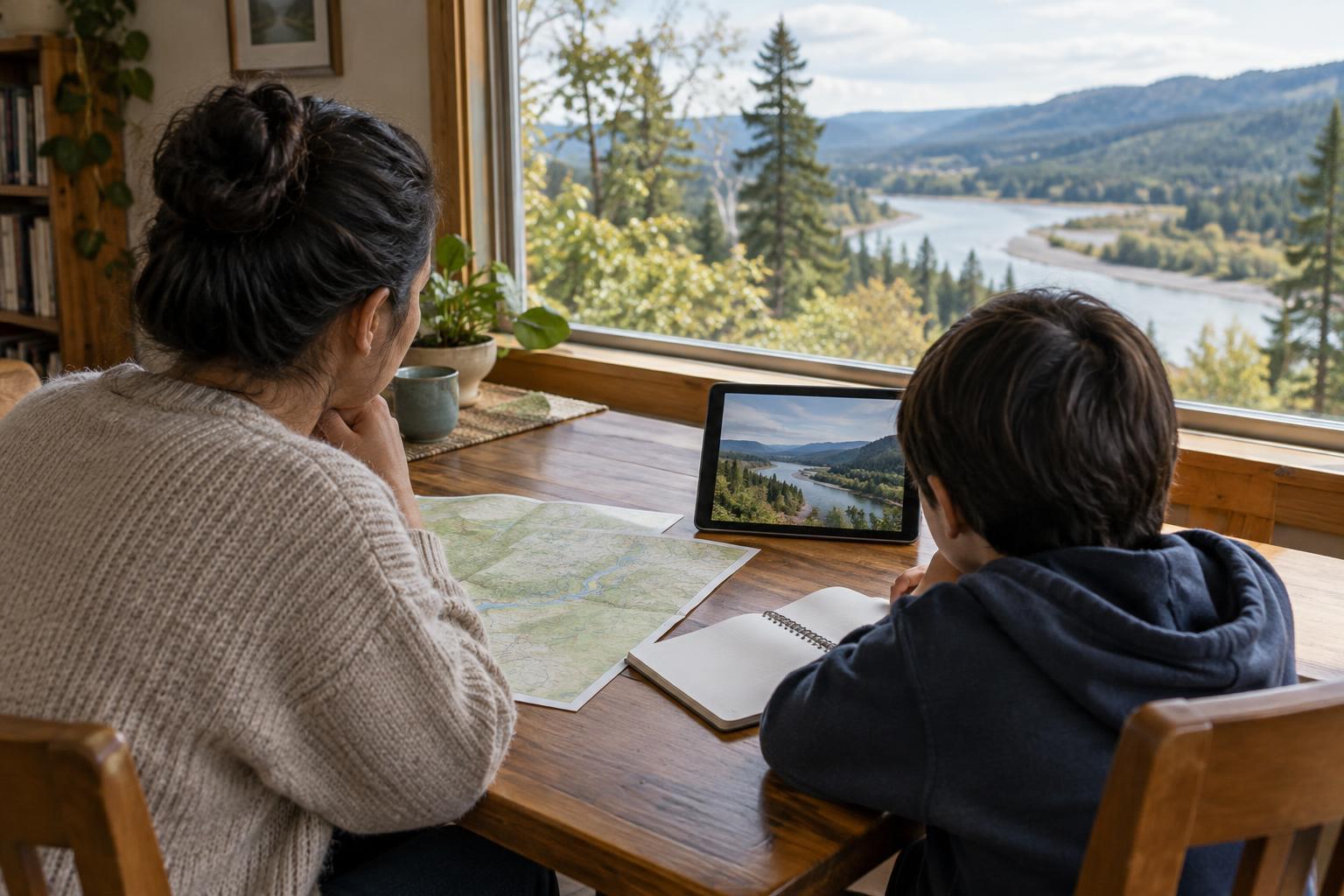
A local history walk does not need to explain every building on a street. Start with a question your family can explore in an hour or less: Where did people shop? How did children get to school? What changed along the river? A narrow question gives children something to look for and helps you choose stops without turning the outing into a long list of facts.
Invite everyone to contribute an idea, then pick a theme you can investigate from public places. An old photograph might suggest a route between a former shop and a present-day crossroads. A map might raise questions about a street name or the shape of a park. You can also begin with something you pass regularly but have never examined closely. Curiosity is enough; you do not need an unusual landmark.
Gather clues and mark what is uncertain
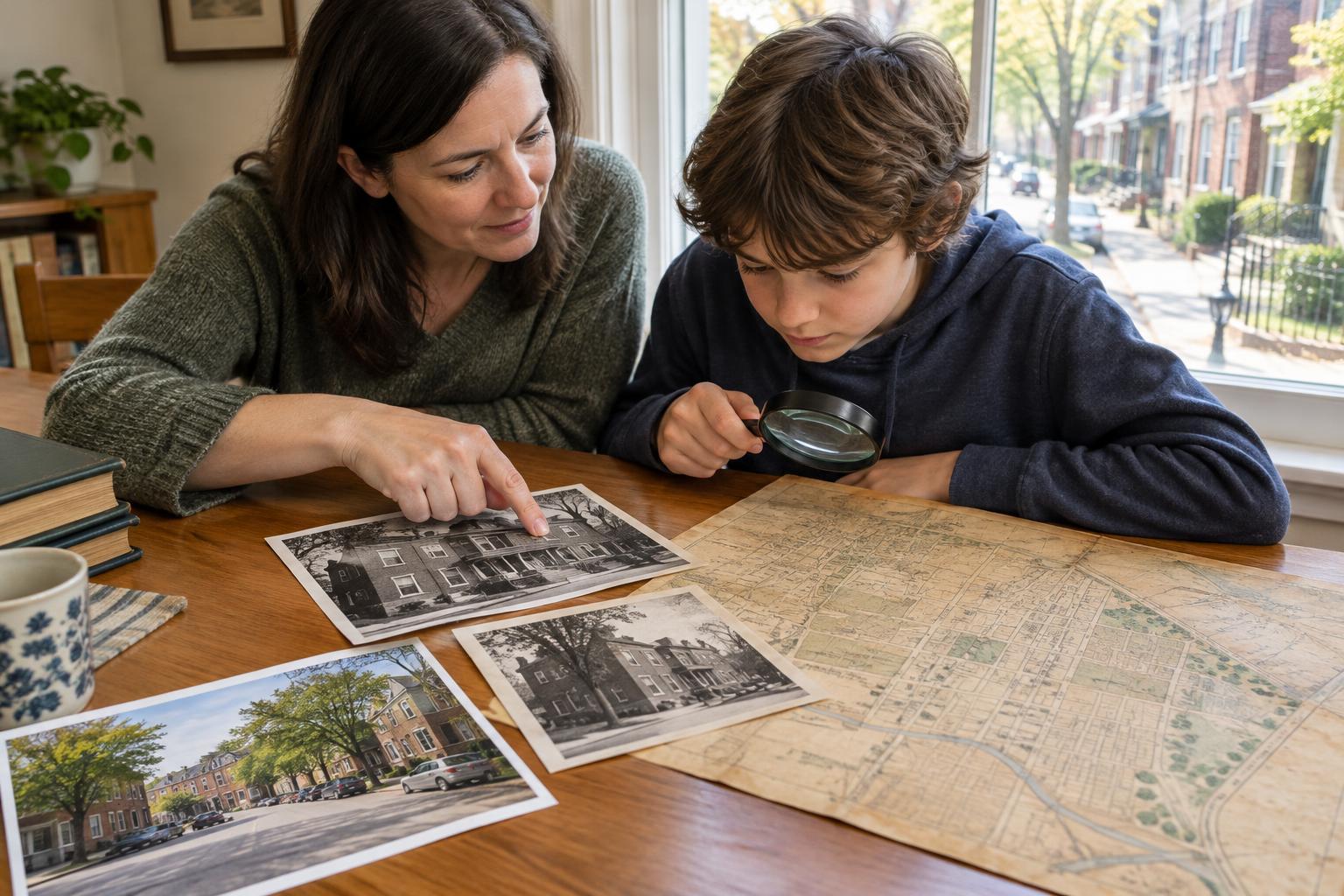
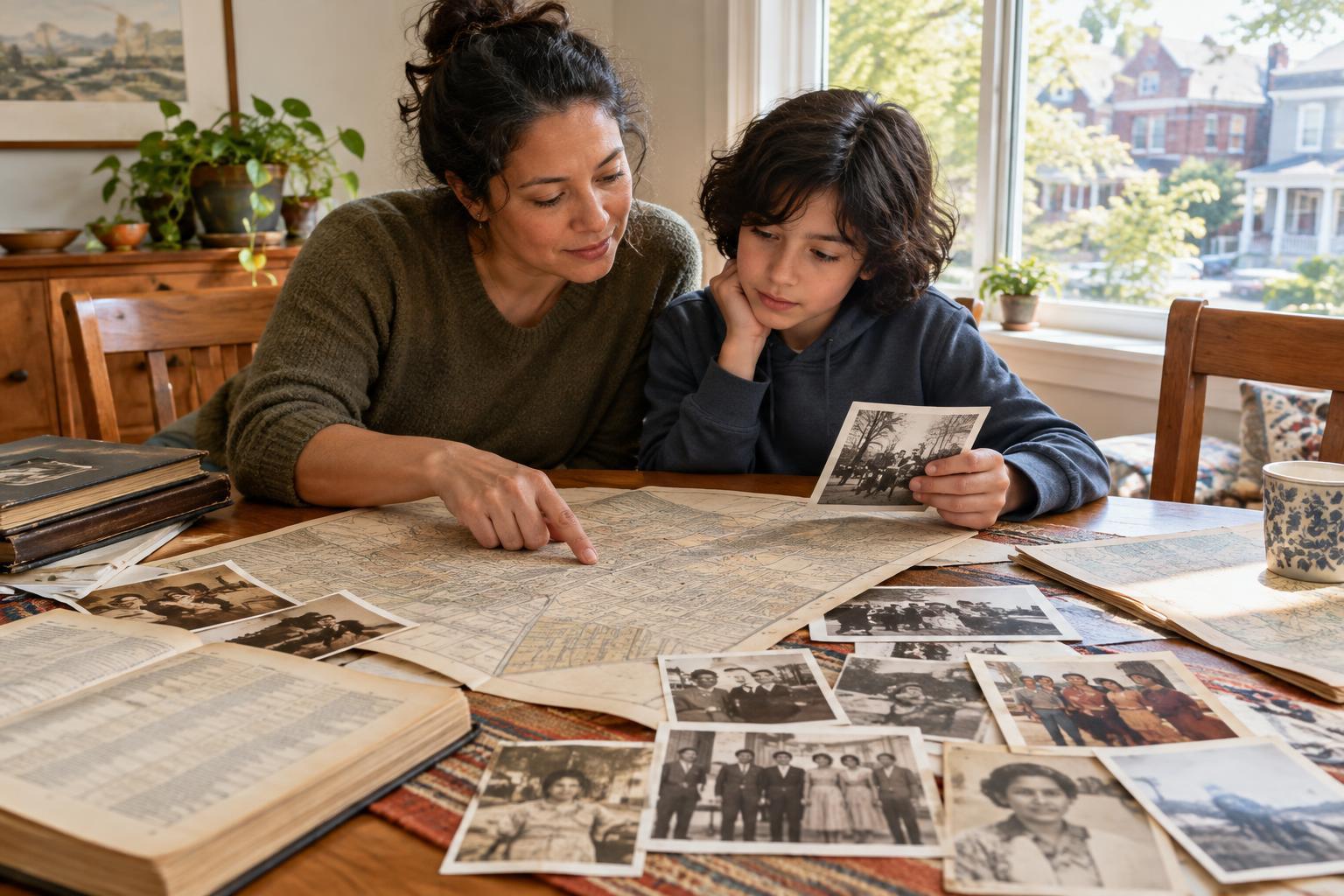
Look for a small set of materials before you draw the route. A library, local archive or historical society may have maps, photographs or short accounts you can consult. Public signs and building details can add clues, too. Record where each piece of information came from so you can find it again. If two sources describe a place differently, keep both possibilities in mind rather than turning a guess into a fact.
Make a simple note for each possible stop: what you know, what you hope to see and one question a child could answer by looking. For example, a photograph may show a storefront on a corner. At that corner, your question might be, “What features look the same, and what has changed?” A photo can show an earlier moment, but it cannot by itself explain why a change happened. Phrases such as “It looks like” and “We still need to find out” make room for honest investigation.
Build a route for walking, not just reading
Choose three to five stops close enough together that the walk feels enjoyable at your family’s pace. Plot a loop or an out-and-back route, then check it in person if you can. Notice crossings, sidewalk conditions, places to pause without blocking others and options for shortening the trip. Include a rest stop when useful, and check practical details such as public restroom access separately. A historically interesting point is not a good stop if your group cannot reach or view it comfortably.
Plan to observe from sidewalks and other public spaces unless you have permission to enter a site. Older buildings may now be homes or businesses, so treat them as places people use today, not as exhibits. Before leaving, share the route with the family and decide what to do if someone gets tired or the weather changes. The goal is a walk you can adapt, not an itinerary you must complete.
Give each stop a small job
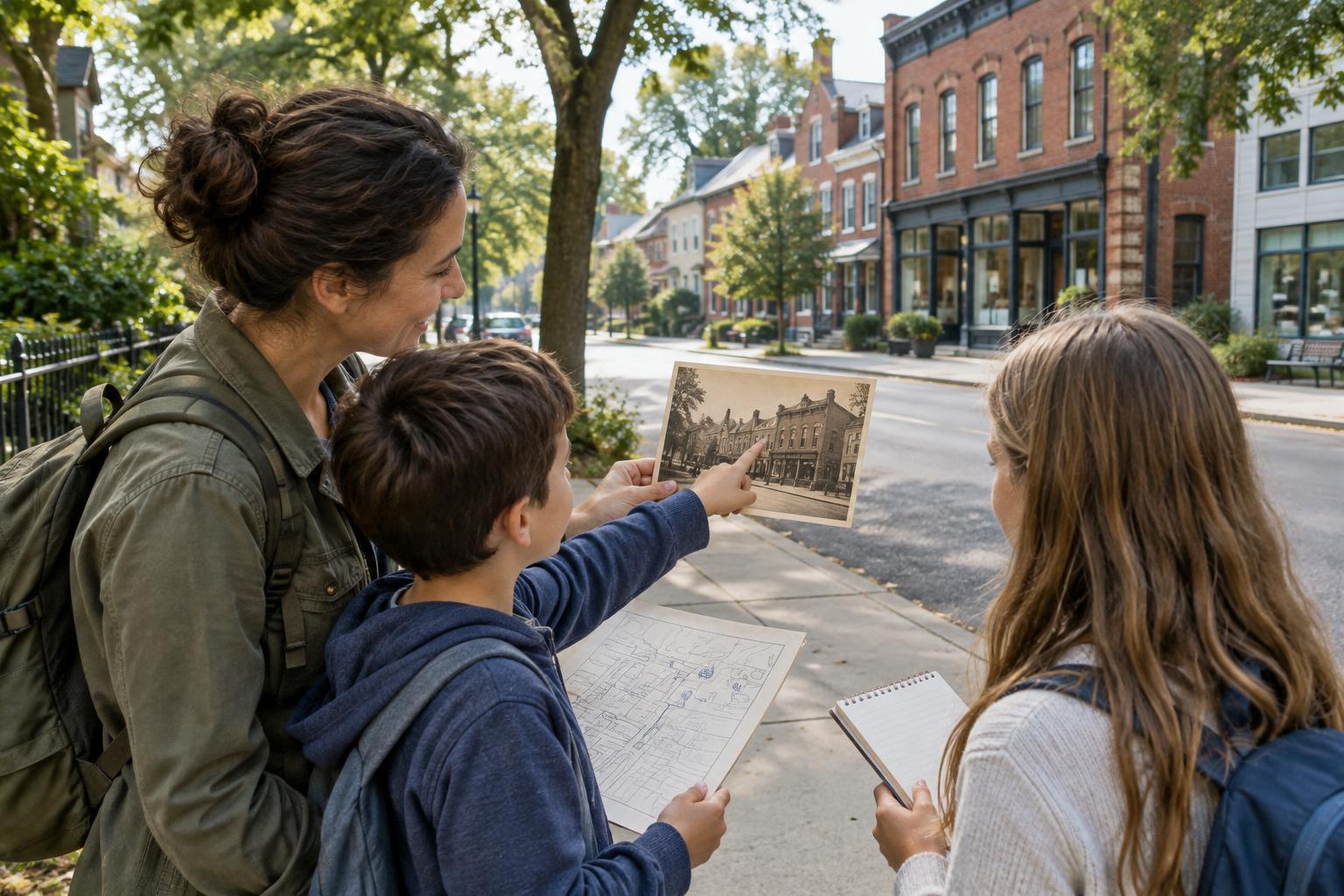
At each stop, offer one short story or clue, followed by something to do. Children might match a photograph to their view, sketch a doorway, count different kinds of signs or look for evidence of an older street layout. Ask open questions: “What do you notice first?” “What might this place have been like to visit?” “What would help us answer that?” You can invite younger children to spot shapes and older children to compare evidence, without requiring everyone to give the same answer.
Leave time to notice the present-day neighborhood as well. A route about former shops can include the businesses serving residents now. A walk about transportation can prompt discussion of how people move around today. These comparisons make history feel connected to everyday life while avoiding the idea that a place’s past matters more than its present. If a topic involves displacement, exclusion or hardship, use clear, age-appropriate language and acknowledge that different people may have experienced the same place differently.
Bring the questions home
After the walk, ask each person to name one thing they noticed and one thing they still wonder about. Mark unanswered questions on your notes. You could arrange sketches, permitted photographs and a few sentences into a family route map, distinguishing what you observed from what you learned in a source. If you took pictures, be considerate about photographing residents or sharing images that identify people.
Your first route can stay small. You might revisit it in another season, try the same question on a nearby street or investigate a single clue that surprised you. Family history walking works best as an ongoing conversation with a place: research suggests what to look for, walking raises new questions and those questions guide the next search.