Start with a small goal
A museum map can make a large building feel easier to explore, especially when you have limited time or young visitors with limited stamina. The aim is not to cover every gallery. A short route gives your family enough structure to get started while leaving space to notice something unexpected.
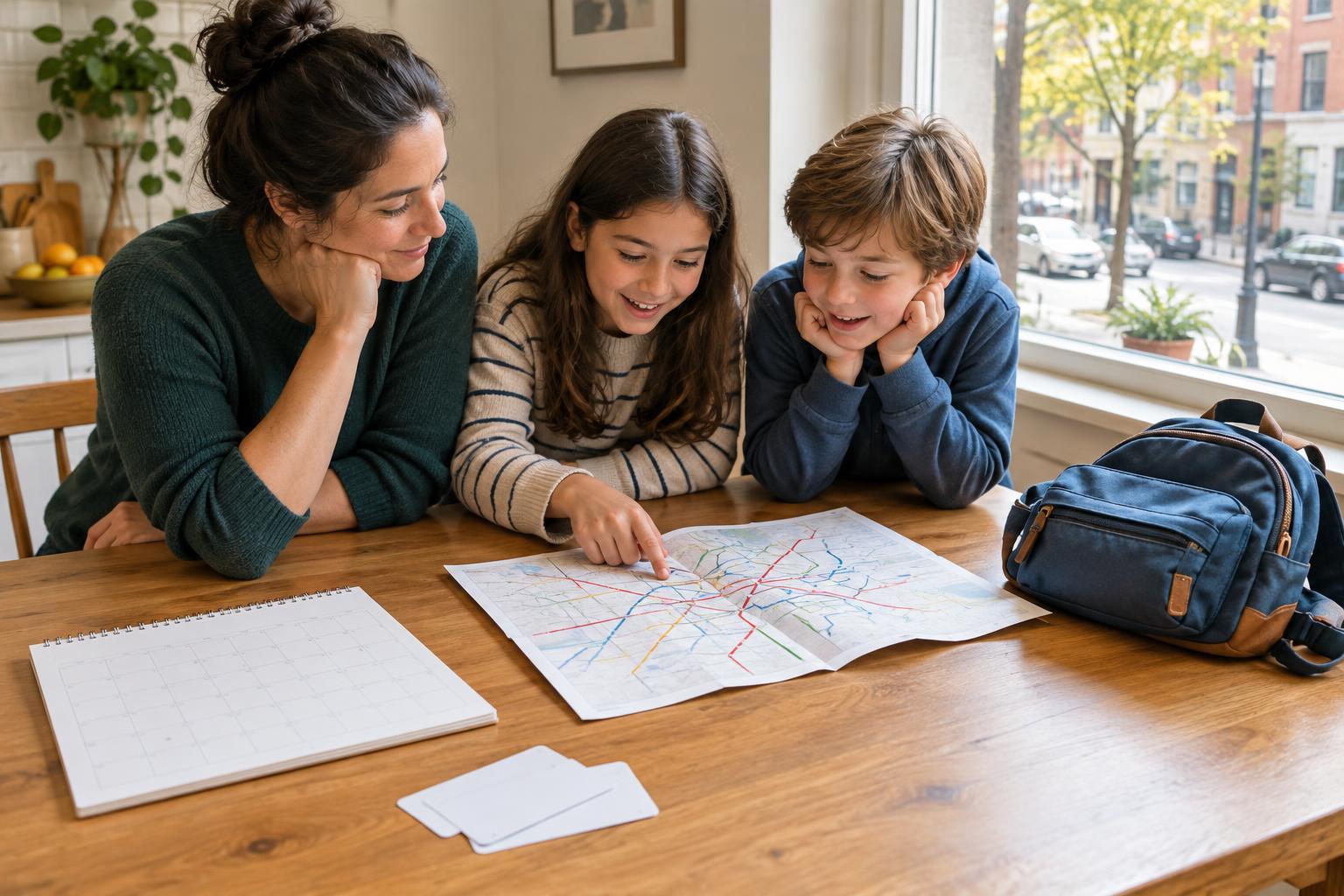
Before choosing stops, decide what a successful visit would look like today. Perhaps everyone wants to see one favorite subject, try an interactive activity or look closely at three objects. You can invite each child to name one thing they hope to find. If interests differ, choose a route with one stop for each person rather than trying to settle on a single theme.
Find the practical landmarks first
Look at the map’s legend before tracing a path through the exhibits. Find the entrance you will use, restrooms, elevators or ramps if needed, seating and any designated eating area. Maps vary, so check the labels rather than assuming these features are in familiar places. Marking a possible break spot now can save a tiring search later.
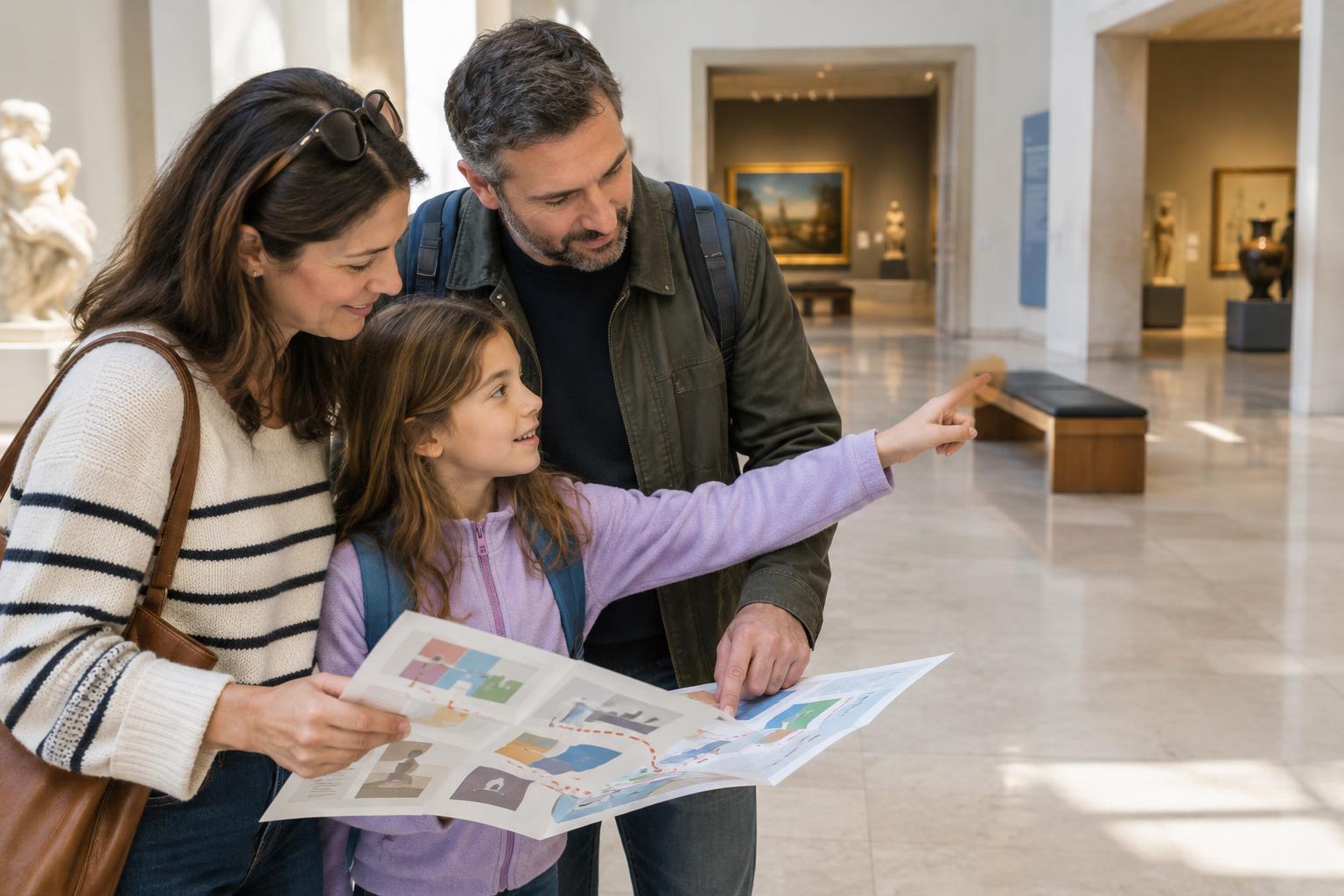
Next, notice how the floors and galleries connect. A room that looks close on paper may require a staircase, a long corridor or a trip around a one-way space. If the museum offers a printed map, a child can hold it and help match signs in the building to names on the page. If you are using a phone, consider taking a screenshot so the route is easy to revisit.
Choose two or three main stops
Pick a small number of places that seem worth reaching even if you see little else. You might choose one exhibit connected to a child’s current interest, one place where visitors can make or test something, and one unfamiliar gallery to explore together. Check any visit information available to you for access rules or activity times; not every space will be open or suitable for every age.
Then connect those stops in an order that avoids unnecessary backtracking. A simple loop, or a path that ends near the exit, is often easier than repeatedly crossing the building. Treat nearby galleries as optional discoveries, not extra obligations. If the map suggests a long distance between two favorites, consider saving one for another visit. A route feels short because it is selective, not because everyone walks quickly.
Give children a job along the way
The map can be part of the activity rather than just a tool for adults. Ask a child to spot the next gallery name, count the turns to a landmark or find the symbol for a lift. For a child who is not reading yet, you can point out colors, shapes or pictures on the map and look for matching signs together. These small tasks make navigation feel like shared exploration.
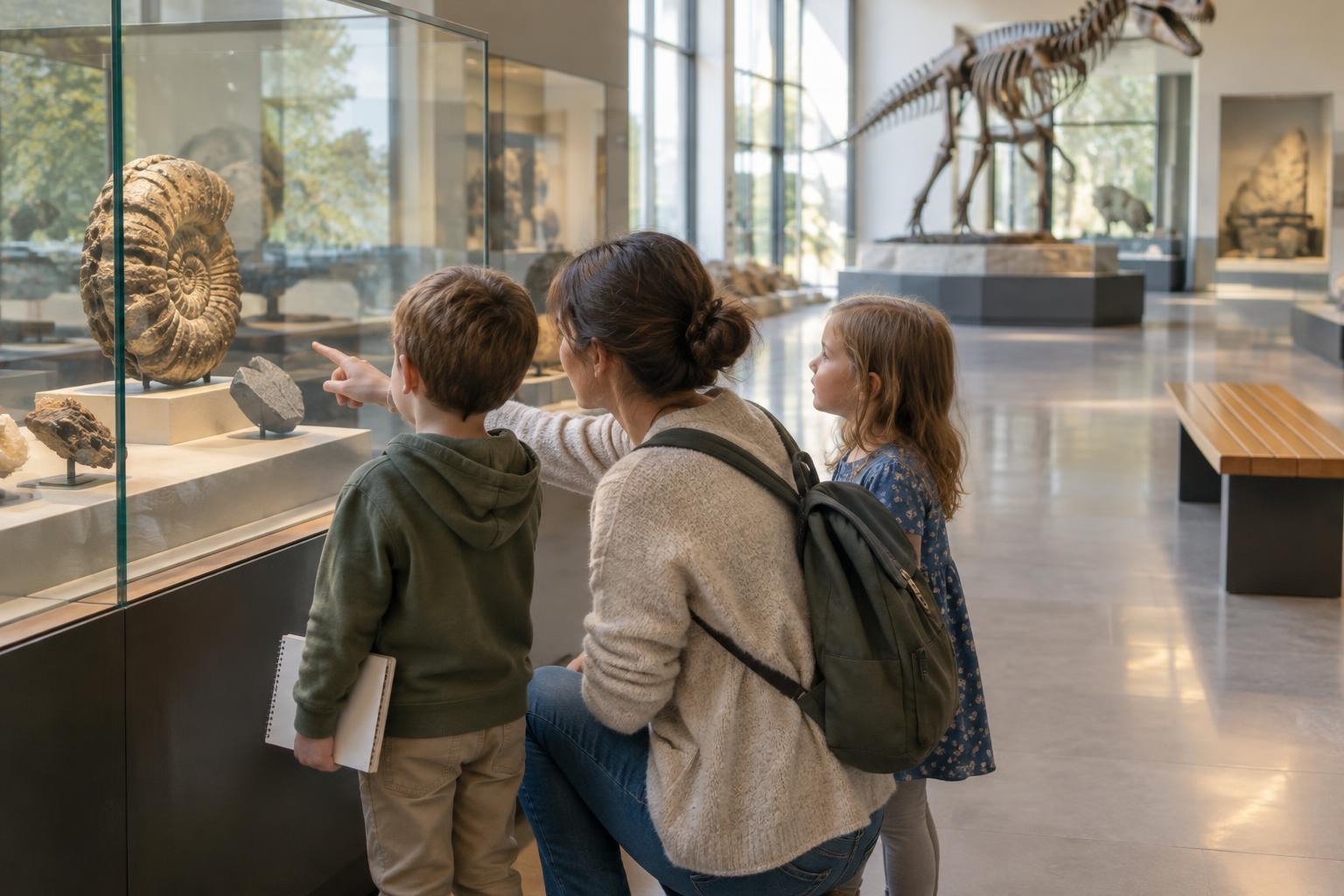
At each main stop, pause before moving on. Let everyone choose one detail to examine or one question to ask. You do not need to know every answer: describing what you see and wondering aloud can be rewarding on its own. If a gallery is especially absorbing, stay longer and remove a later stop from the plan. The map should help you make choices, not hurry you through them.
Keep an easy way to finish
As you plan, identify a point where the family can decide whether to continue. It might be a bench between galleries or a familiar landmark near the entrance. When you get there, check how everyone feels. If energy is fading, take the shortest suitable route out. Ending while children are still curious can be more pleasant than pushing through one last exhibit.
Before leaving, you can look at the map together and recall the route you actually took. Which stop was a favorite? What did you pass that you might explore next time? Your path may differ from the one you drew at the start, and that is fine. A useful museum route is a flexible invitation to look closely, take breaks and enjoy what fits your family that day.