What a rain gauge measures
A rain gauge measures the depth of rain that lands in its opening. If an open, straight-sided container collects rain without tipping or overflowing, the depth of water inside gives you a simple measure of that rainfall. A wider container catches more water than a narrow one, but its water level rises by the same amount when both have straight sides and receive the same rain.
Making a gauge is a chance to ask questions before looking for answers. Will a short shower leave a measurable amount? Does the water level change more during a steady rain or a brief downpour? Children can make predictions, read a scale and compare observations over time. The goal is not a perfect weather-station reading; it is a careful, repeatable way to notice what happens outdoors.
Build a simple gauge
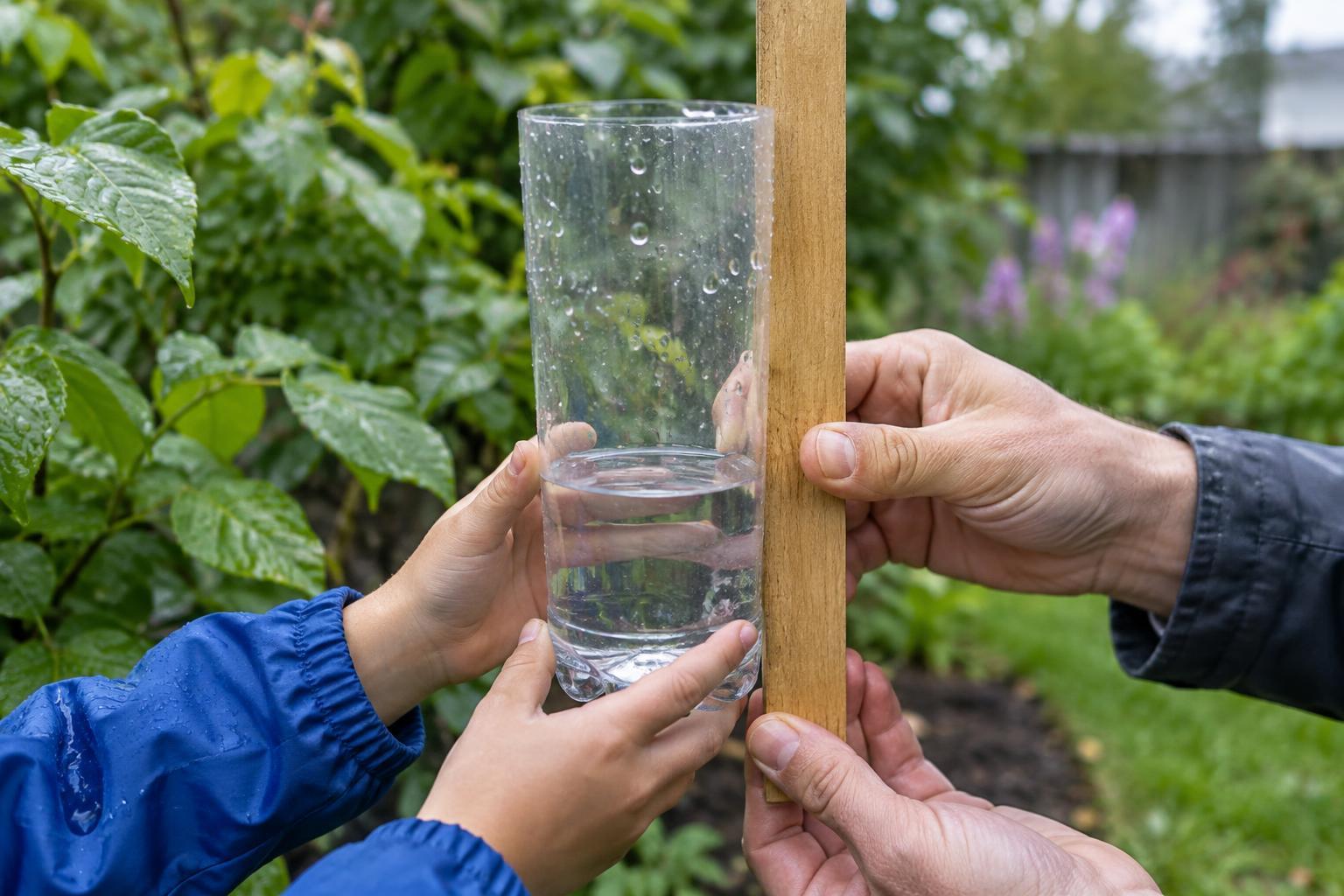
Gather a clear, straight-sided plastic container with a flat bottom, a ruler, waterproof tape and a notebook. A container with a wide, open top is easier to read and less likely to tip than a tall, narrow cup. Avoid containers whose sides flare outward, since the water depth in them will not rise evenly. Skip the funnel, too: a funnel wider than the container changes how much water enters for each unit of depth.
Set the container on a level surface and check that it stands upright. Tape the ruler to the outside with its zero mark aligned as closely as possible with the inside floor of the container. If a thick base makes that difficult, leave the ruler separate and lower it into the container when you take a reading, touching its end to the inside bottom. Choose either millimeters or inches and use the same unit every time.
Before setting the gauge outside, pour in a little water to practice. Look across the container at eye level rather than down into it, and read the level at the bottom of the water’s curved surface. Then empty and dry the container so your first rain reading starts at zero.
Choose a spot and take a reading
Put the empty gauge in an open, accessible place where an adult can help check that it is stable. Keep it away from roof edges, downspouts and overhanging branches: water dripping from them could make a reading larger than the rain that fell directly into the opening. An uneven or sheltered spot can affect a reading as well. If the container might blow over, place it in a sturdy holder that does not cover its opening.
Record when you put the gauge out. After the rain ends, read the water level before emptying it, and note the time of your reading. You can instead check it at roughly the same time each day, emptying it after every measurement. Whichever routine you choose, write it down so you know what period each number covers. If the gauge tips, overflows or is emptied by accident, mark that reading as incomplete rather than guessing.
Safety comes before a measurement. Do not go outside to check the gauge during thunder or other hazardous weather; wait until conditions are safe. Collected rainwater is for observation, not drinking. Wash hands after handling water that has been sitting outdoors.
Turn measurements into an investigation
Make a table with columns for the start and end of each observation period, the water depth and a short note about conditions. A note might say “light rain most of the afternoon” or “gauge partly sheltered by a nearby plant.” Write down a zero when you checked the gauge and found no rain. Use a different mark for a missed check; zero and unknown do not mean the same thing.
Once you have several readings, draw a bar chart with observation periods along the bottom and rainfall depth up the side. Ask which period had the greatest depth, which had the least and whether the results matched your predictions. For a fairer comparison, use similar observation periods and keep the gauge in the same place. If water sits in the gauge for a long time, evaporation may lower the level, so prompt readings are more useful.
You can extend the activity by looking for signs of rain around the neighborhood after it is safe to go out. Are there puddles in low spots? Is the soil damp beneath a tree? These clues invite discussion, but they are not substitutes for the gauge: surfaces drain, absorb and dry at different rates. The most useful discovery may be that a good measurement includes both a number and a clear account of how you collected it.