Start with a character, not a perfect craft
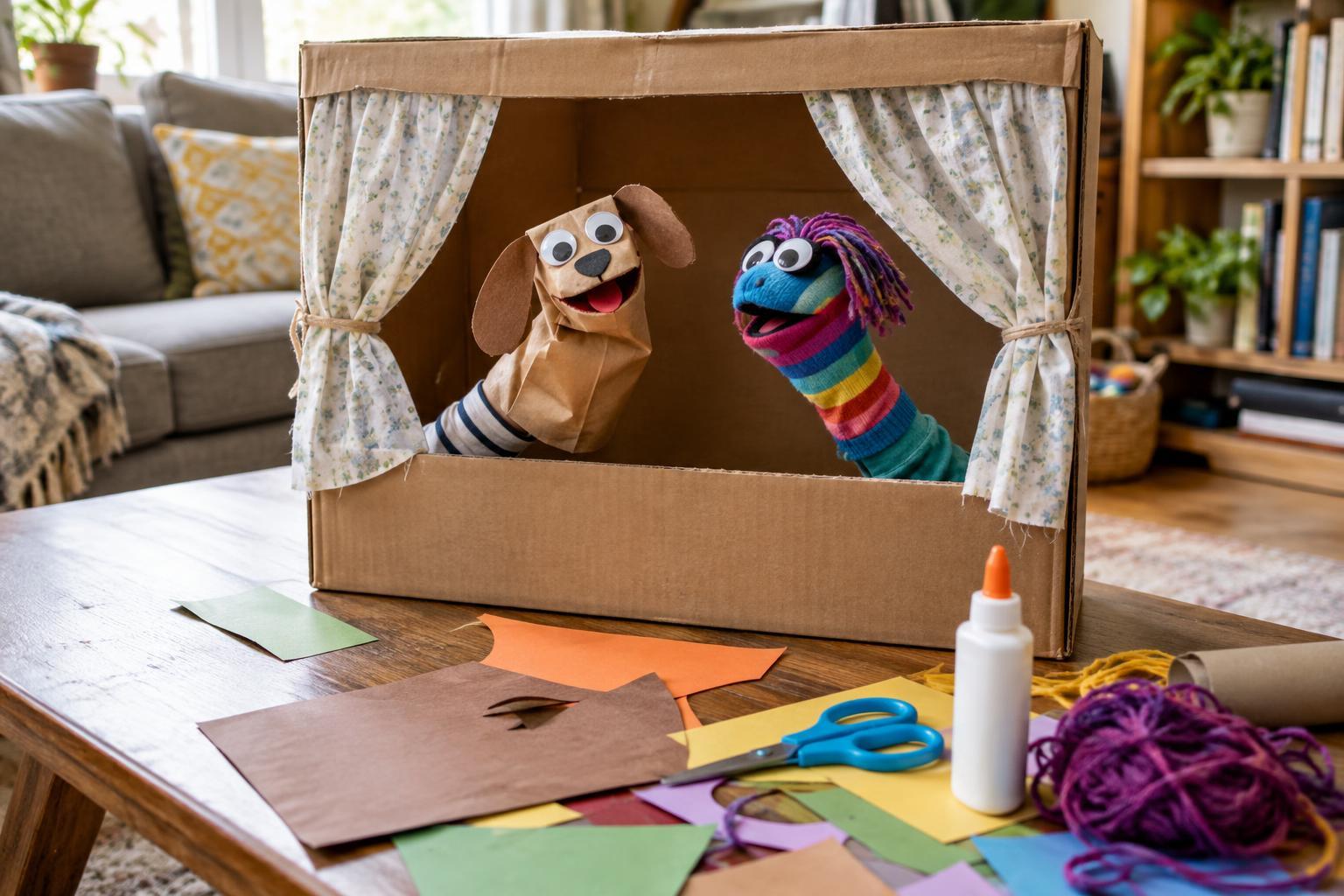
A puppet show can begin with a paper bag, an old sock or a shape cut from a cereal box. Ask each child what kind of character they want to make before choosing materials. A bag might become a shy bear, a talking bus or a creature no one has named yet. There is no need for every puppet to look polished: a few features that help a child recognize their character are enough.
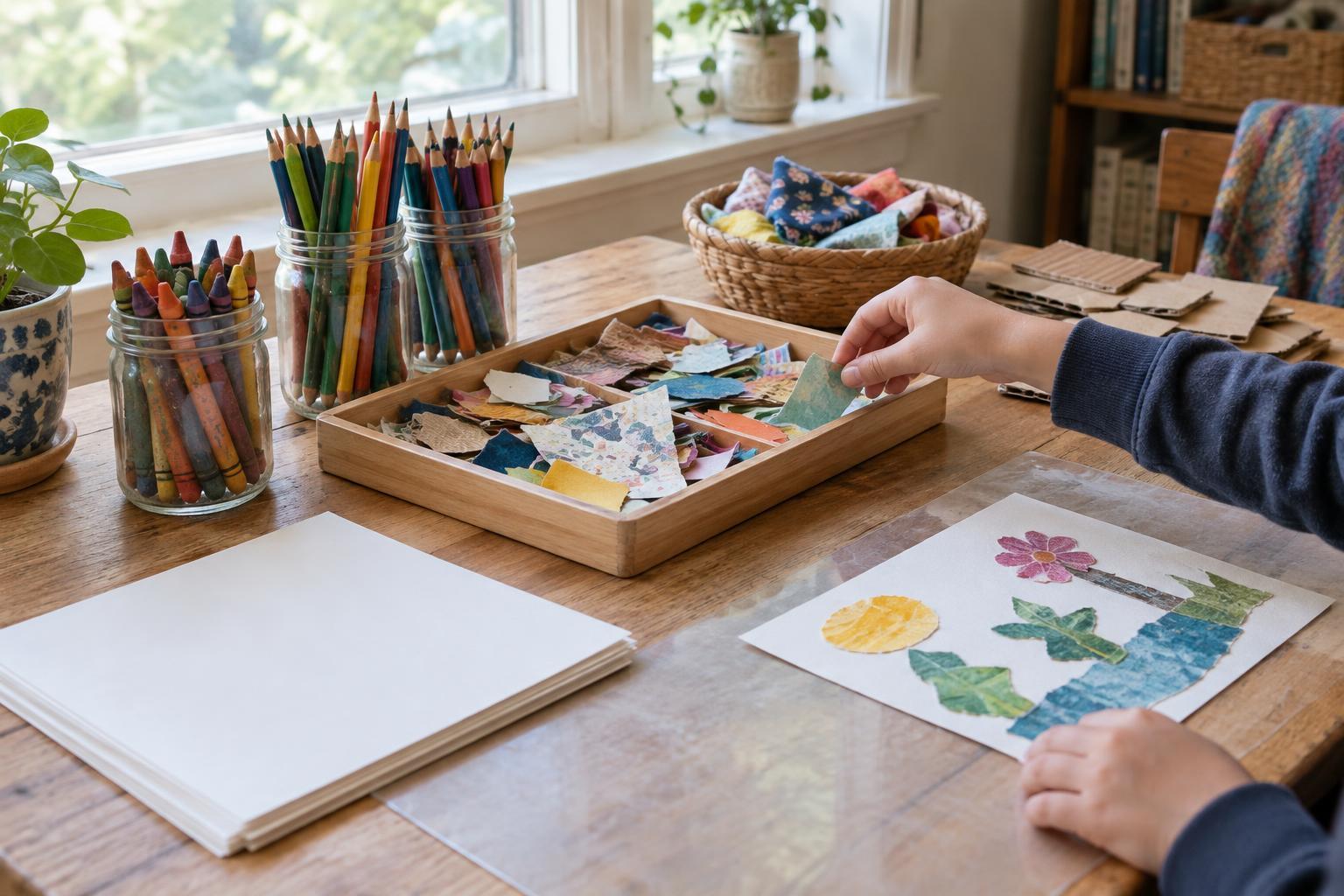
Set out a small selection of supplies, such as scrap paper, crayons, yarn, fabric offcuts, tape and glue. Too many choices can make it harder to begin, so invite children to add materials as an idea takes shape. An adult can handle sharp scissors or tricky attachments while children make decisions about colors, expressions and details. Keep small loose pieces away from children who might put them in their mouths.
Choose a puppet style that fits your time
For a quick puppet, draw a face on a paper bag and use its folded bottom as a moving mouth. A sock can become a character with fabric scraps for ears or a paper collar. For a flat puppet, draw a figure on lightweight cardboard, cut it out and tape a craft stick or a folded strip of cardboard to the back. Each style moves differently, which can give children ideas for how the character talks or acts.
Invite children to test their puppets as they make them. Can the puppet nod, hide, dance or look surprised? If an attachment falls off, try a simpler one rather than stopping the game to fix every detail. Children who prefer drawing to assembling can make a cast of flat paper characters. Those who do not want to perform can still enjoy designing scenery or choosing what happens next.
Build a stage from what you have
A sofa back, a tabletop or a doorway can become a stage. Drape a sheet over two chairs if the performers want to stay hidden, or use a large cardboard box with one side open for a smaller show. Check that the setup is steady and that children can move without pulling furniture or fabric down. A stage is useful because it gives the puppets a place to appear, but performing in an open space works just as well.
Scenery can be as simple as a drawing of a park taped behind the action or a blue scarf standing in for a river. Let children decide which details help tell their story. They may also want to make sounds: paper can rustle like leaves, and gentle taps on a box can suggest footsteps. Try a few effects before the show so the children can choose their favorites.
Find a small story to tell
A short problem gives a puppet show an easy starting point. Perhaps one character has lost a favorite hat, two neighbors want to share the same bench, or a visitor needs help finding the way home. Ask three questions: Who is in the story? What do they want? What changes by the end? The answers can be playful or surprising. A puppet might discover that the missing hat has been on its head all along.
There is no need to write a full script. Children can draw three quick pictures for the beginning, middle and end, then speak for their puppets as they go. If they enjoy repeating lines, give each character a phrase to say when it enters. If they would rather improvise, agree only on the first scene and see where the conversation leads. An adult can act as a narrator if the performers need help moving from one scene to another.
Make room for every kind of performer
Before inviting an audience, let the children try a short rehearsal. Practice how the puppets enter and leave, and decide where to place them when they are not in a scene. A show for one family member counts; so does a performance for a row of stuffed animals. Keeping the first show brief makes it easier to finish and leaves room for a second story if everyone wants one.
Afterward, ask what the children liked about their characters or what might happen in another episode. Avoid treating the performance as a test of clear speech or memorization. A quiet child might prefer to move a puppet while someone else provides its voice, and a younger child might simply enjoy making a character pop up at the right moment. Save the puppets in a box, and the next show can begin with a familiar cast.