Start with a small place and a simple question
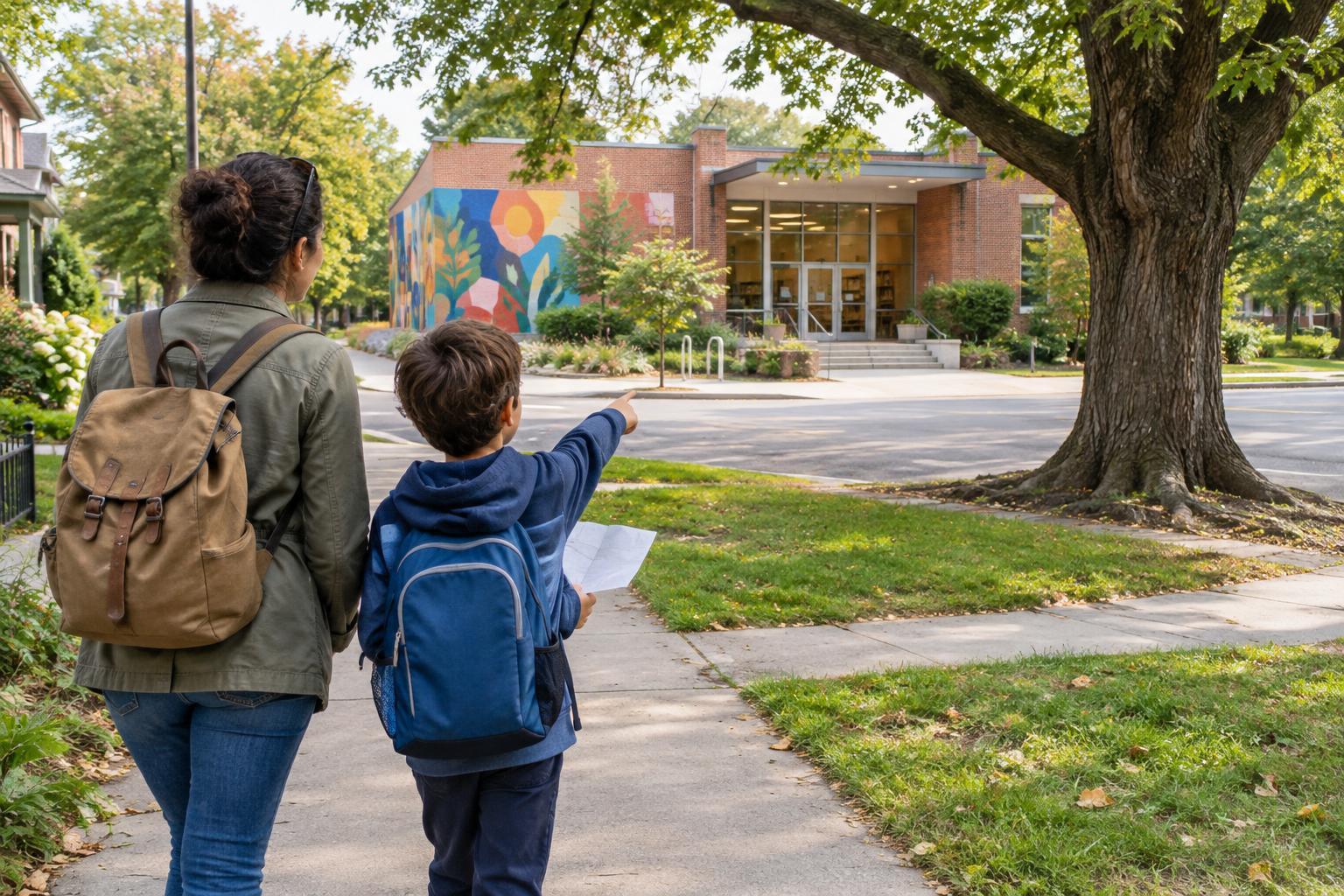
Neighborhood discovery does not require a special destination. A walk around one block, a view from a window or a few minutes near a shared outdoor space can offer plenty to investigate. The goal is not to identify everything correctly. It is to practice looking closely and asking questions together.
Choose one prompt before you begin: What repeats? What changes from one spot to another? What helps people find their way? Young children might hunt for circles or different kinds of leaves. Older children may enjoy comparing building entrances or wondering why one street feels quieter than another. Let the question guide you, but leave room for unexpected finds.
Look for patterns hiding in plain sight
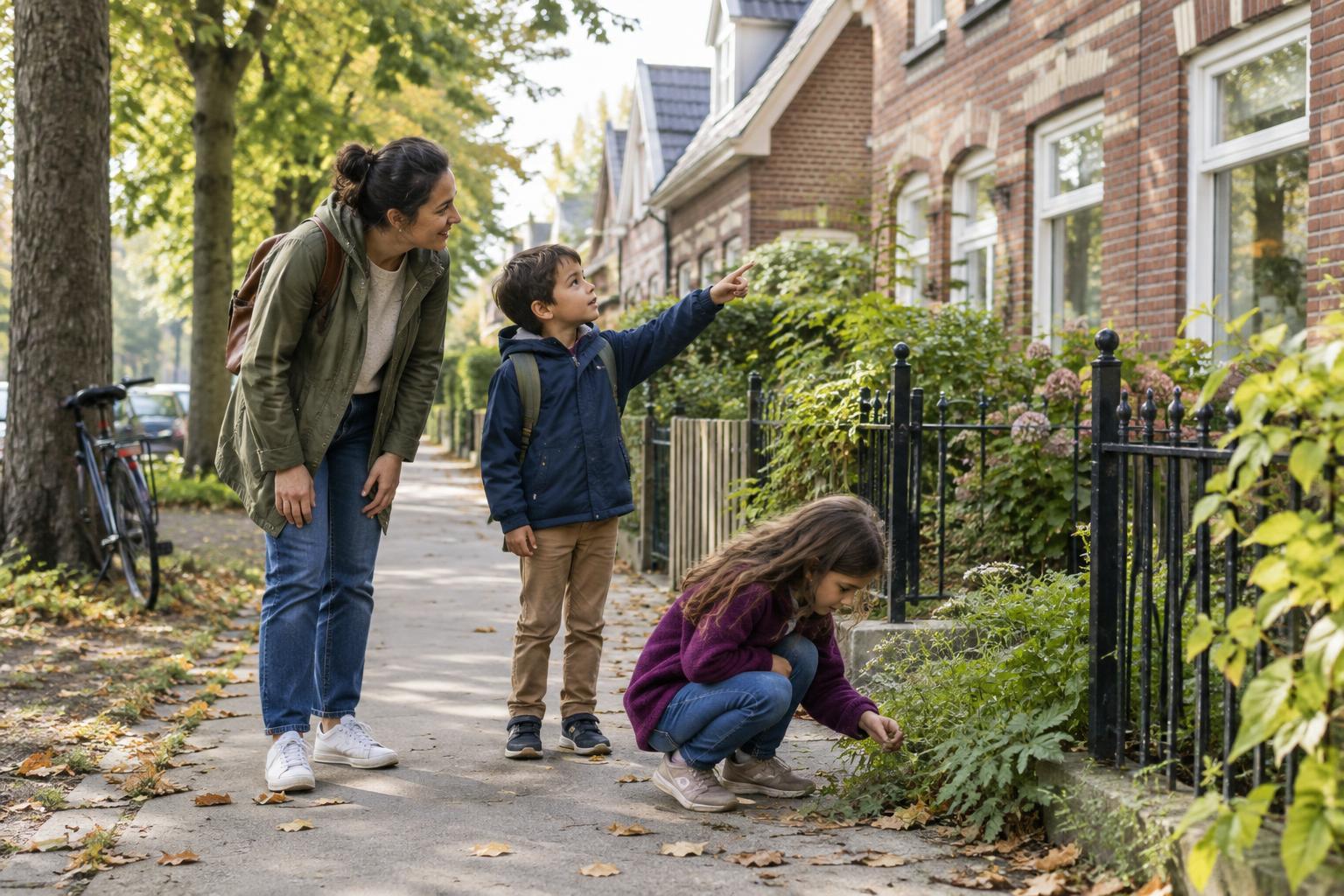
Patterns make a familiar place feel new. Notice the shapes of windows, the spacing of trees, the colors of doors or the materials used for walls and paths. You might find that some buildings share a feature while others look completely different. Ask, “What do you see that makes you say that?” This invites children to describe evidence rather than guess what an object is for.
Try a quick pattern challenge: pick something to count until you reach the next corner, such as benches, flowerpots or different kinds of gates. The number is less important than the comparison. Were the objects clustered together or spread out? On a return visit, children can check whether their pattern still holds.
Use your ears, nose and sense of movement
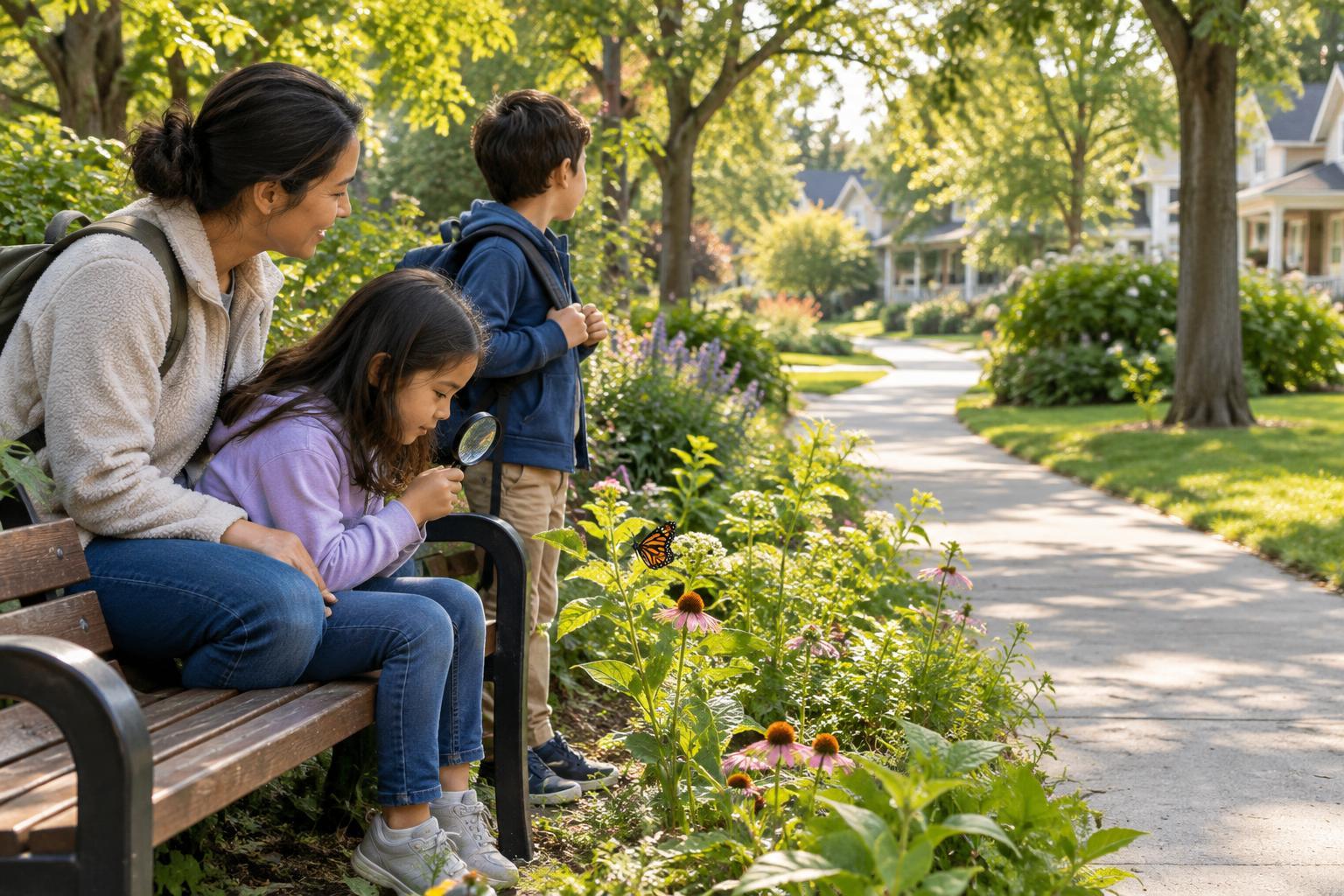
Discovery is more than a visual scavenger hunt. Pause safely and listen: Which sounds seem close, and which seem far away? Can you hear footsteps, birds, traffic or leaves moving? Notice where a breeze feels stronger or where the ground changes from smooth to rough. You can also ask which smells are easy to recognize, without touching or tasting anything you find.
A simple “sound map” can capture the moment. Draw a dot for where you stand, then add marks around it for sounds you hear in different directions. There is no need for an accurate street map. If someone in the family experiences a place differently, compare observations. One person may notice a vibration, a color or a texture that others missed.
Notice clues about how a place is used
Signs, ramps, paths, bike racks and crossing signals can prompt useful questions: Who might use this space, and what helps them move through it? A faded painted line or an older-looking doorway might suggest that a place has changed, but appearances alone cannot tell its whole story. Treat these details as clues to investigate, not proof of what happened.
Invite children to imagine a gentle redesign. Where would they add a place to rest, clearer directions or more shade? This exercise connects observation with empathy: different neighbors may need different things from the same street. Keep the conversation grounded in what you can actually see, and remember that public spaces are shared with people going about their day.
Bring the discoveries home
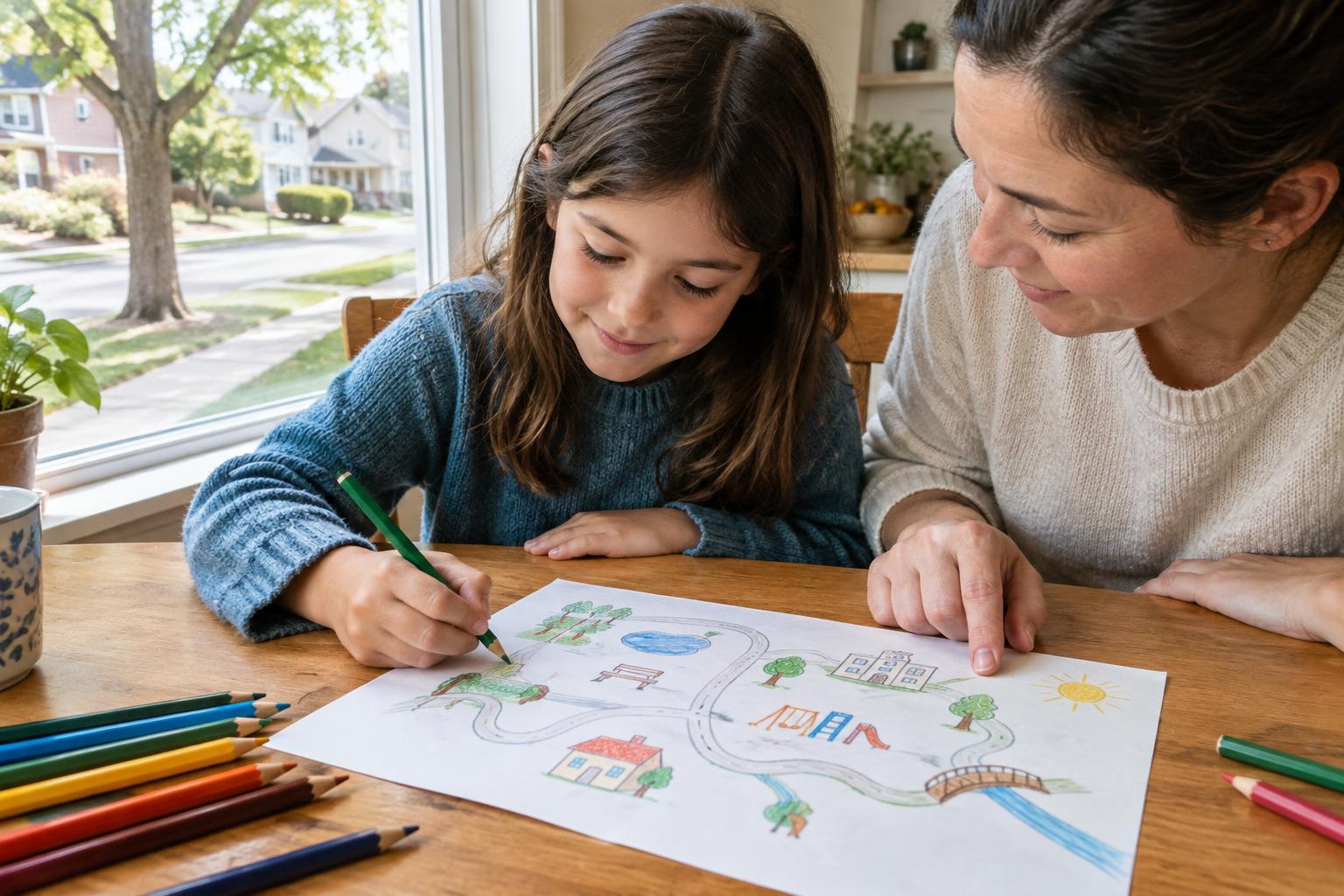
Afterward, ask each person to name one surprise and one question. Children can sketch a favorite detail, make a collage of shapes they remember or draw a route with symbols instead of street names. If you want to compare visits, use the same short route at another time and look for differences in light, sounds, plants or activity.
Keep the outing comfortable and respectful. Choose a route that suits your family, stay in permitted public areas, follow crossing rules and observe wildlife from a distance. Avoid photographing people or homes in ways that intrude on privacy. A successful neighborhood discovery trip does not need a long walk or a completed checklist. Coming home with a new question is enough.