Two ways of making sense of the world
Imagine finding a wet patch on the sidewalk beneath a tree. A child might say, “The ground is dark and wet.” That is an observation: something they can notice directly. “It rained last night” is an inference: an explanation they have worked out from the clue. The inference might be right, but a sprinkler or a tipped watering can could also explain the patch.
Both ways of thinking matter. Observations give children details to work with, while inferences help them connect those details to possible explanations. The goal is not to stop kids from guessing. It is to help them recognize when they are describing evidence and when they are building a story from it. That distinction makes it easier to ask better questions and change their minds when a new clue appears.
Give the difference a simple vocabulary
Try introducing two sentence starters: “I notice…” and “I think… because….” If a child says, “That bird is scared,” you might ask, “What do you notice that makes you think so?” They may point out that it hopped away when someone approached. Hopping away is observable; being scared is one possible explanation. The exchange does not need to turn into a correction. It can be a chance to make the child’s reasoning visible.
Encourage observations through more than sight. A child can notice that a stone feels rough, a door makes a squeaking sound, or a piece of fruit smells sweet. For safety, choose familiar objects and avoid tasting or touching unknown materials. Inferences often include words such as “maybe,” “probably,” or “must.” These words can be useful signals, but the strongest test is to ask whether another person could check the statement with their senses or a simple measurement.
Play a two-column detective game
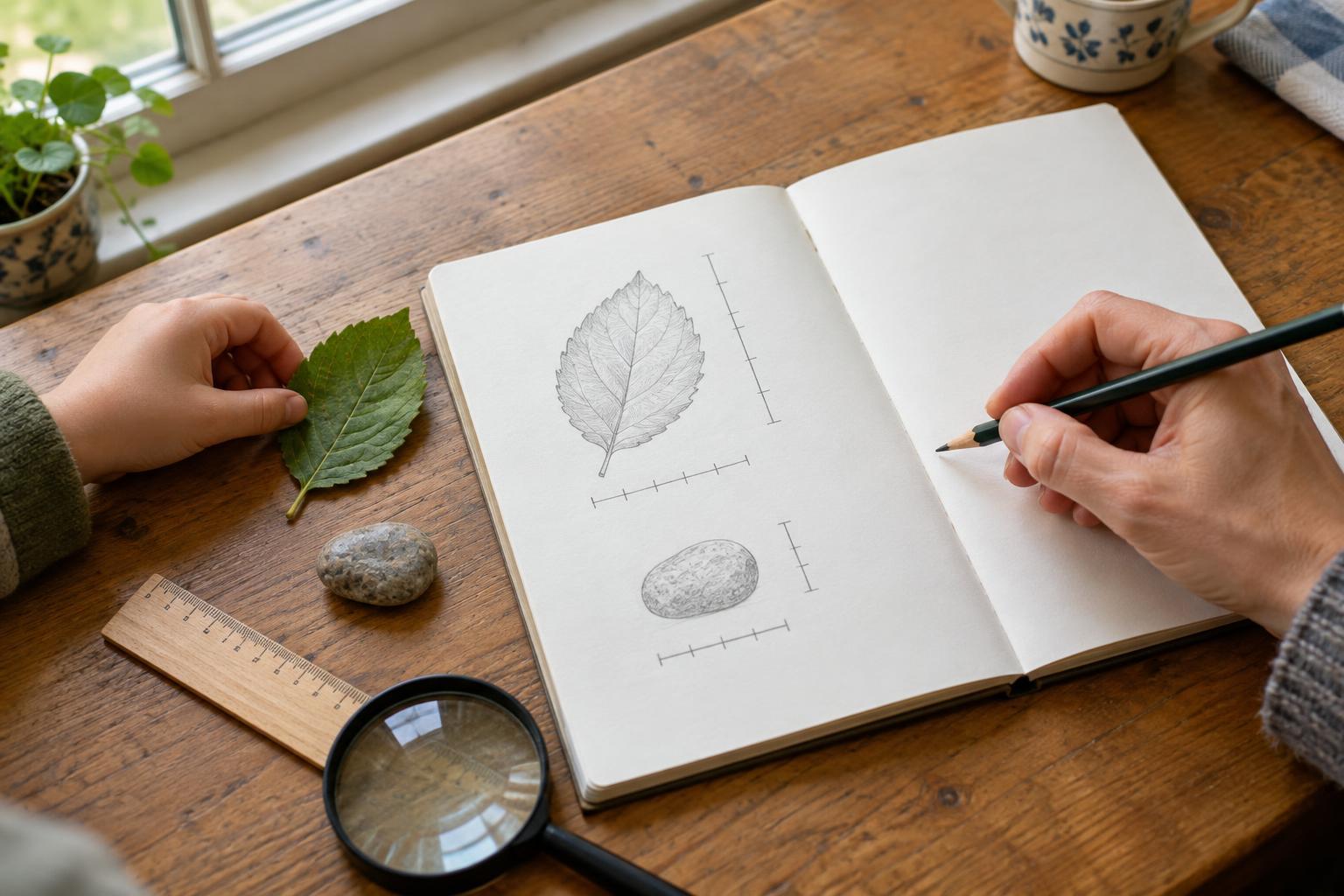
Choose an ordinary object or scene, such as a houseplant, a puddle, or a window with condensation. On a sheet of paper, label one column “What we notice” and the other “What we think might be happening.” Let the child fill the first column with details before discussing explanations. For a houseplant, they might write, “One leaf is yellow,” “The soil feels dry,” and “The pot is near the window.” In the second column, they might suggest that the plant needs water.
Next, invite more than one possible explanation. Could the yellow leaf be old? Could the plant be getting too much or too little light? There is no need to solve every mystery on the spot. If the question is safe to investigate, choose one thing to check, such as whether other leaves change over the next few days. Keeping a quick drawing or note helps kids compare what they expected with what they later observe.
Take the skill on a walk
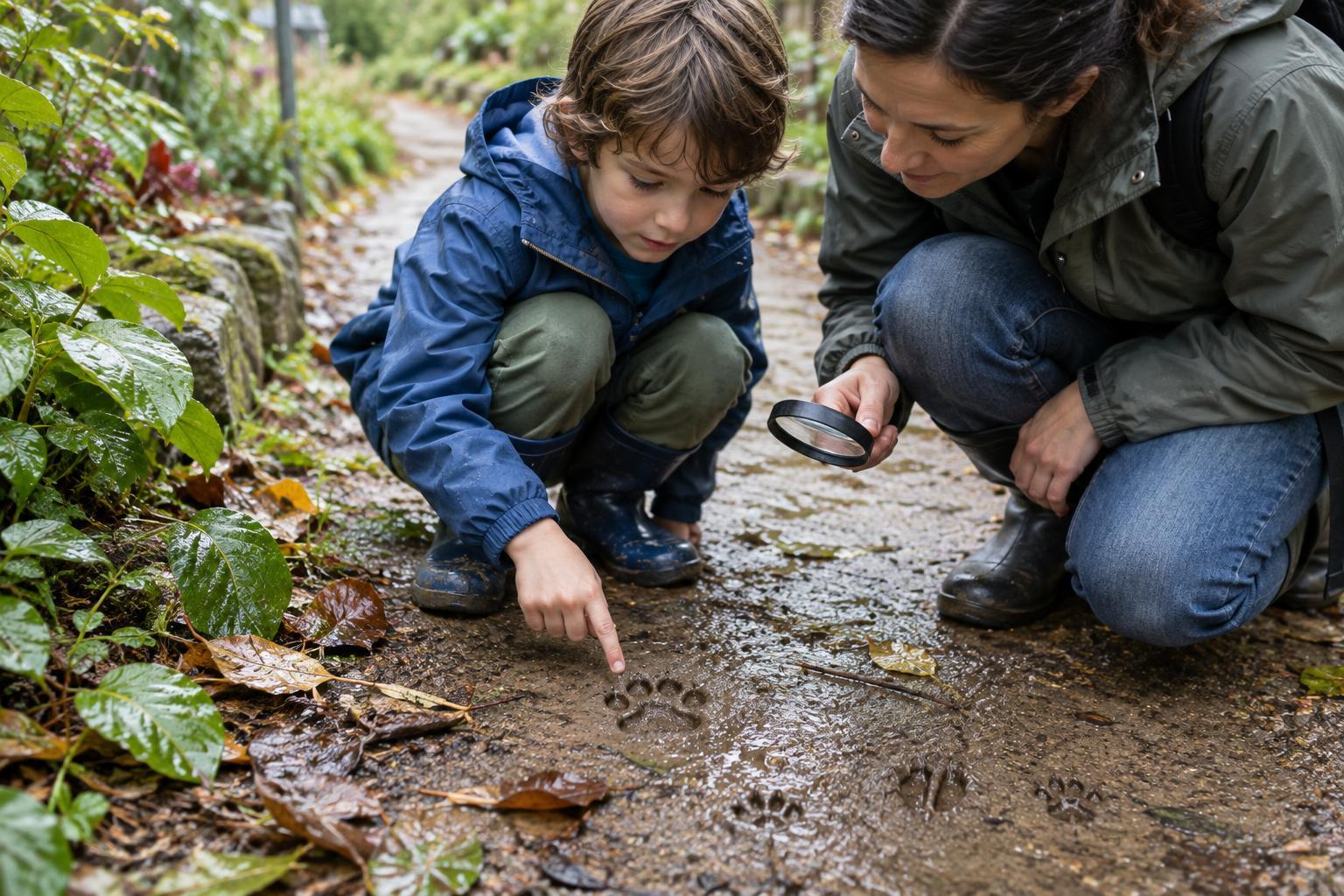
A neighborhood walk offers clues that do not require special equipment. Look for cracks in pavement, tracks in soft ground, seeds caught along a fence, or a shadow that changes position. Ask, “What can we say for sure about what is here?” and then, “What might have happened?” If you spot a trail of ants, for example, you can observe their direction and where they gather without assuming you know what drew them there.
Keep the activity respectful and low-impact. Watch insects without disturbing them, stay on permitted paths, and leave unfamiliar plants and objects where they are. If a child proposes an imaginative explanation, welcome it before asking which details support it. A playful idea can lead to a useful next question, even when it turns out not to fit the evidence.
Make room for changing your mind
Children may feel that a changed answer is a wrong answer. Show them that revising an inference is a normal part of figuring things out. You might say, “I thought the sidewalk was wet because of rain. Now I see a sprinkler nearby, so I have another idea.” You are modeling how to use new information rather than treating the first explanation as a final verdict.
At the end of an activity, ask three short questions: “What did we notice? What did we think it meant? What could we check next?” Some mysteries will remain unsolved, and that is fine. The lasting skill is the habit of looking closely, explaining a guess, and staying open to another possibility.