Start with an invitation, not a finished example
A creative activity can be shared across ages when it begins with a question rather than a model to copy. Try “What kind of place could we build?” or “How many ways can we make a mark?” One child might stack boxes into a tower, another might draw a map, and a third might invent the people who live there. They are exploring the same idea without needing the same skills or the same result.
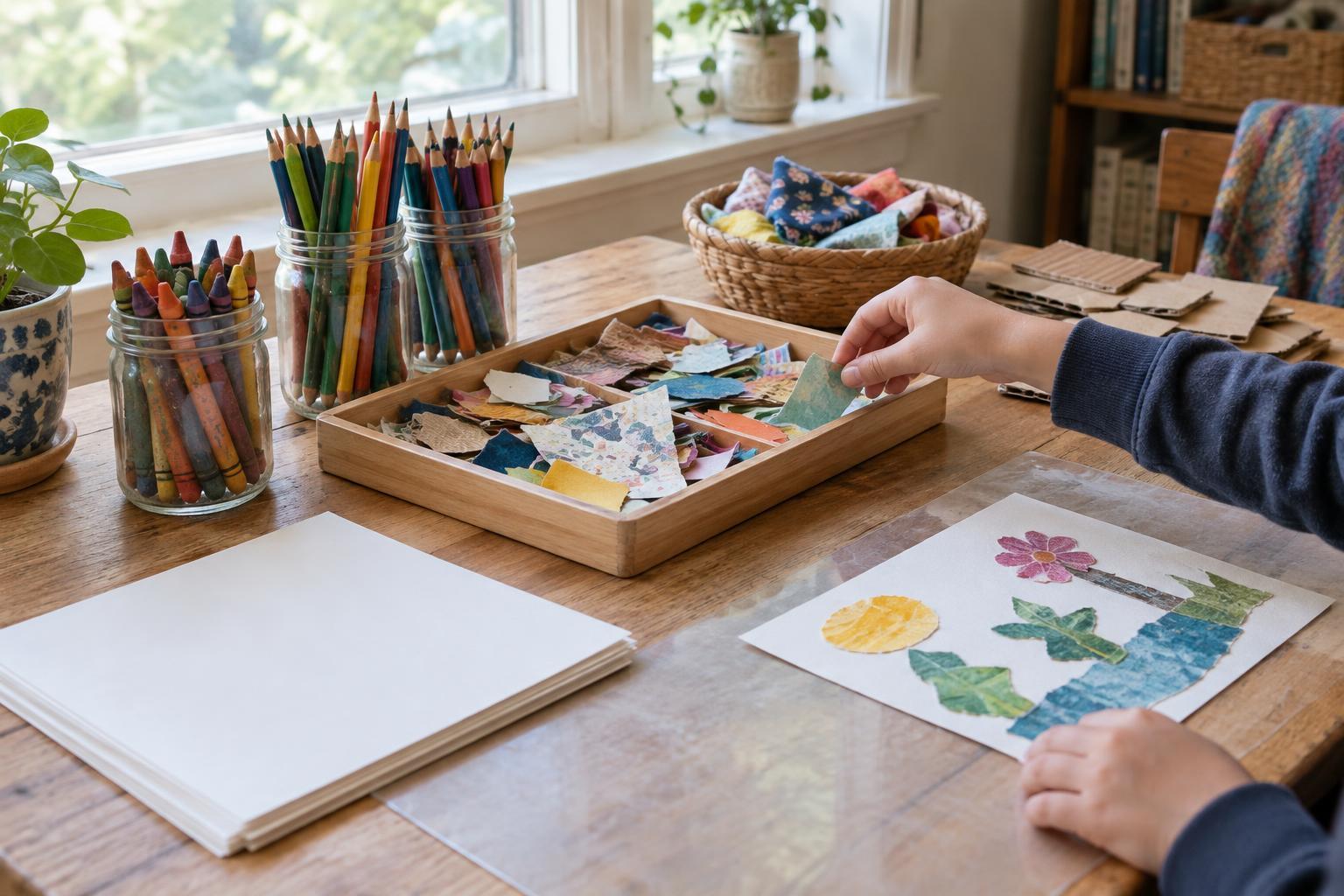
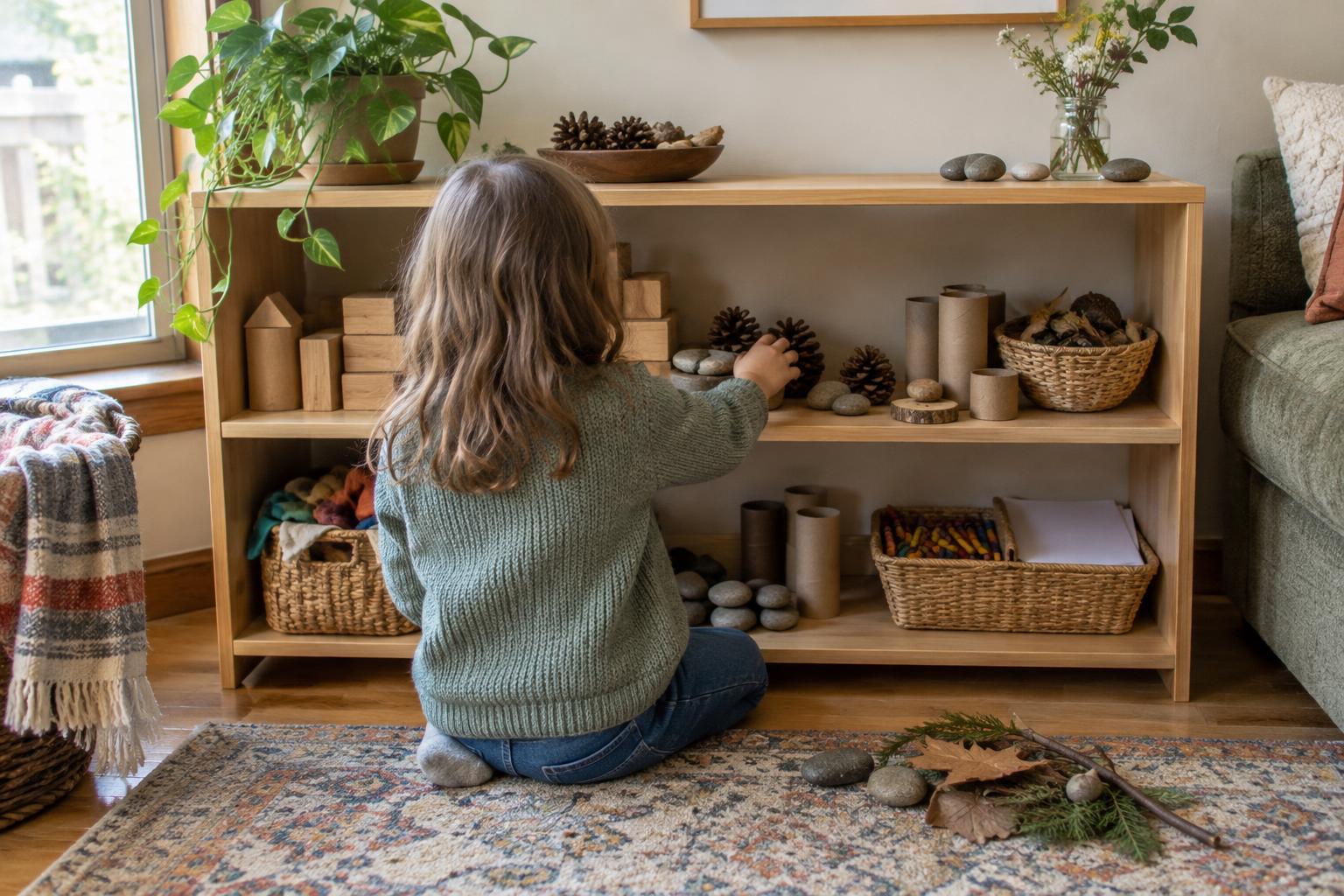
Set out a small number of materials and let children decide what to make. Paper, washable drawing tools, large boxes, fabric scraps and reusable containers can support many ideas. You do not need every possible supply within reach at once. Keeping a few extras nearby makes it easier to offer a new challenge when a child is ready, without interrupting someone who is happily experimenting.
Match the materials to the child, not just their age
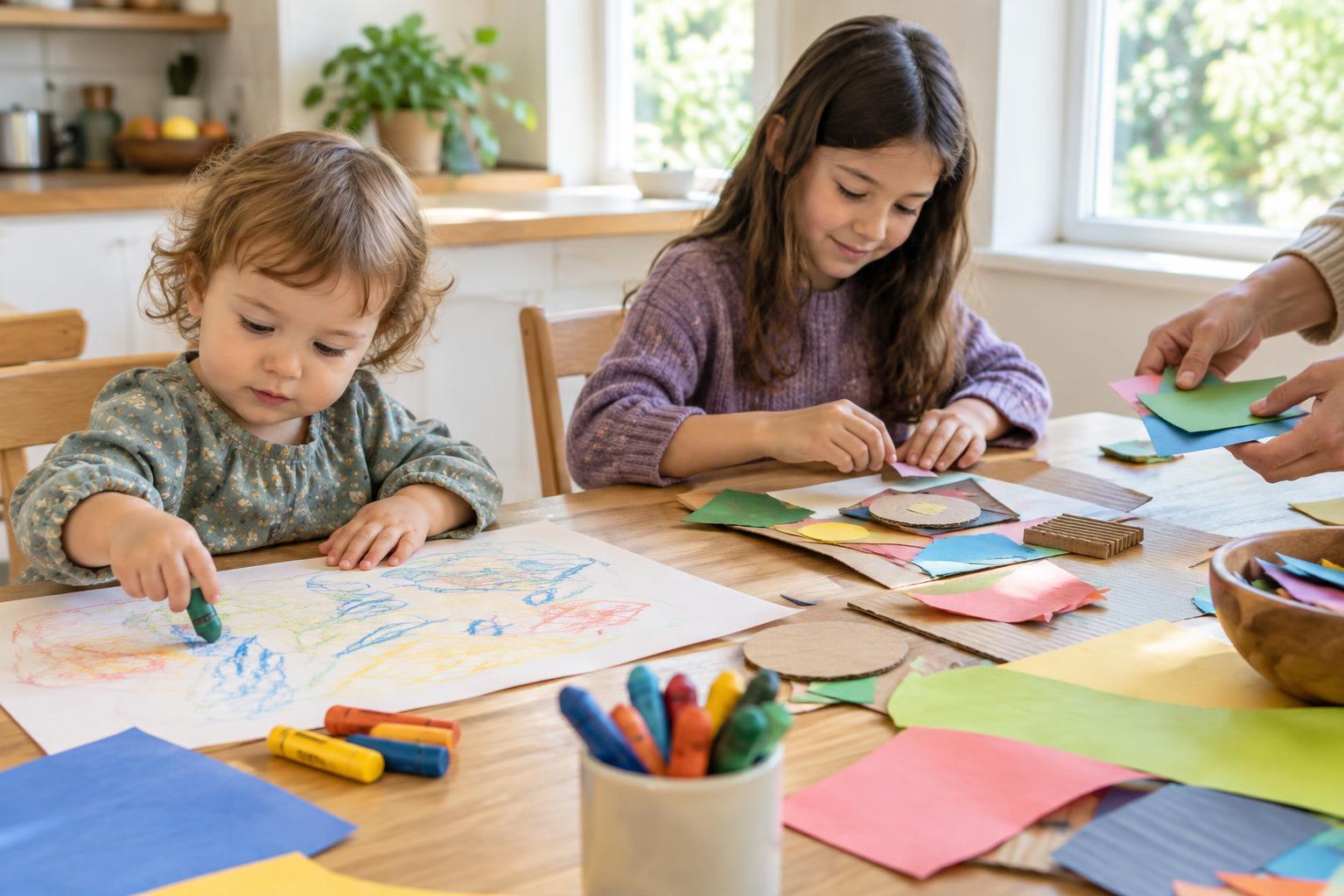
Younger children often enjoy the immediate actions of play: making a mark, filling a container, moving a piece of fabric or knocking down a structure they have built. Give them room to repeat an action. A large sheet of paper taped in place or a box they can decorate from all sides may be more inviting than a project with several steps. Expect the process, rather than a recognizable final object, to hold their attention.
Older children may want to plan, revise and add details. The same box can become a shop with signs, a vehicle with controls or part of a miniature neighborhood. Offer optional tools such as rulers, labels or a notebook for sketches, but avoid making complexity a requirement. Children's interests and abilities do not follow a fixed schedule; a child of any age may prefer simple sensory exploration one day and an elaborate plan the next.
Give mixed-age groups different ways to contribute
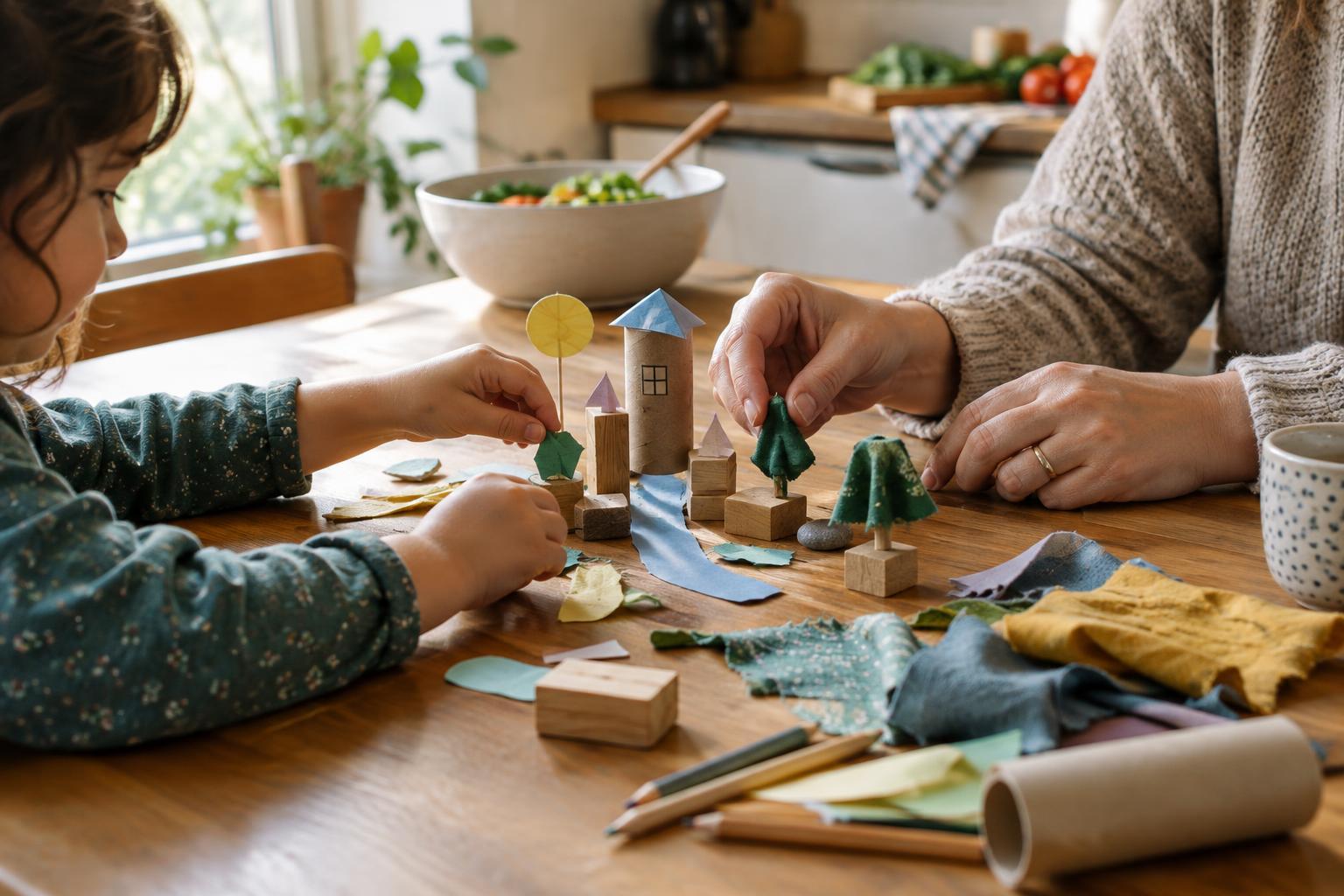
When children play together, a shared theme works better than assigning identical tasks. For a pretend city, one child could arrange large boxes into buildings, another could draw doors and windows, and another could tell stories about what happens there. Roles can change as the play develops. Ask “What would you like to add?” rather than deciding that the oldest child must lead or the youngest must watch.
Shared projects also need space for separate ideas. A child who wants to build a quiet house does not have to turn it into part of someone else's busy street. Try placing the creations near each other and inviting connections only if the children want them: a path between buildings, a delivery route or a visit from an imaginary neighbor. This leaves room for both collaboration and independence.
Adjust the challenge without taking over
If a child seems unsure where to begin, offer one manageable choice: “Would you like to start with a roof or a doorway?” If they are absorbed, step back. You can extend the activity later with an open question, such as “How could someone get inside?” or “What else could this material become?” Questions invite problem-solving, while instructions about what the project should look like can narrow the possibilities.
It helps to keep expectations flexible when attention spans differ. A younger child may join for a few minutes, leave, and return to a creation that an older child has continued. You might photograph a temporary construction, save a drawing for another day or simply clear the space together. A project does not need to be finished or kept to have been worthwhile.
Make room for safe, comfortable exploration
Choose materials with the children in mind and supervise as needed. Keep small parts away from children who may put them in their mouths, check boxes and recycled items for sharp edges, and use tools that children can handle safely. If one activity needs closer supervision, set it at a separate table while others work with simpler materials. A washable surface and an easy cleanup plan can help everyone relax into the play.
Notice comfort as well as safety. Some children welcome messy materials; others prefer a brush, a tool or a dry alternative. Some like to describe their work aloud, while others want to show it without explaining. Creative play becomes more welcoming when children can choose how to participate. The goal is not to produce matching projects, but to give each child a way to explore, contribute and try an idea of their own.