Start with one object
A gallery can offer more to see than a family has time or energy to explore. Instead of trying to cover every room, invite everyone to choose one object to spend a few minutes with. It might be a painting, a tool, a piece of clothing or a sculpture. There is no need to pick the most famous item. The best choice is one that catches someone’s attention and can be viewed comfortably without blocking other visitors.
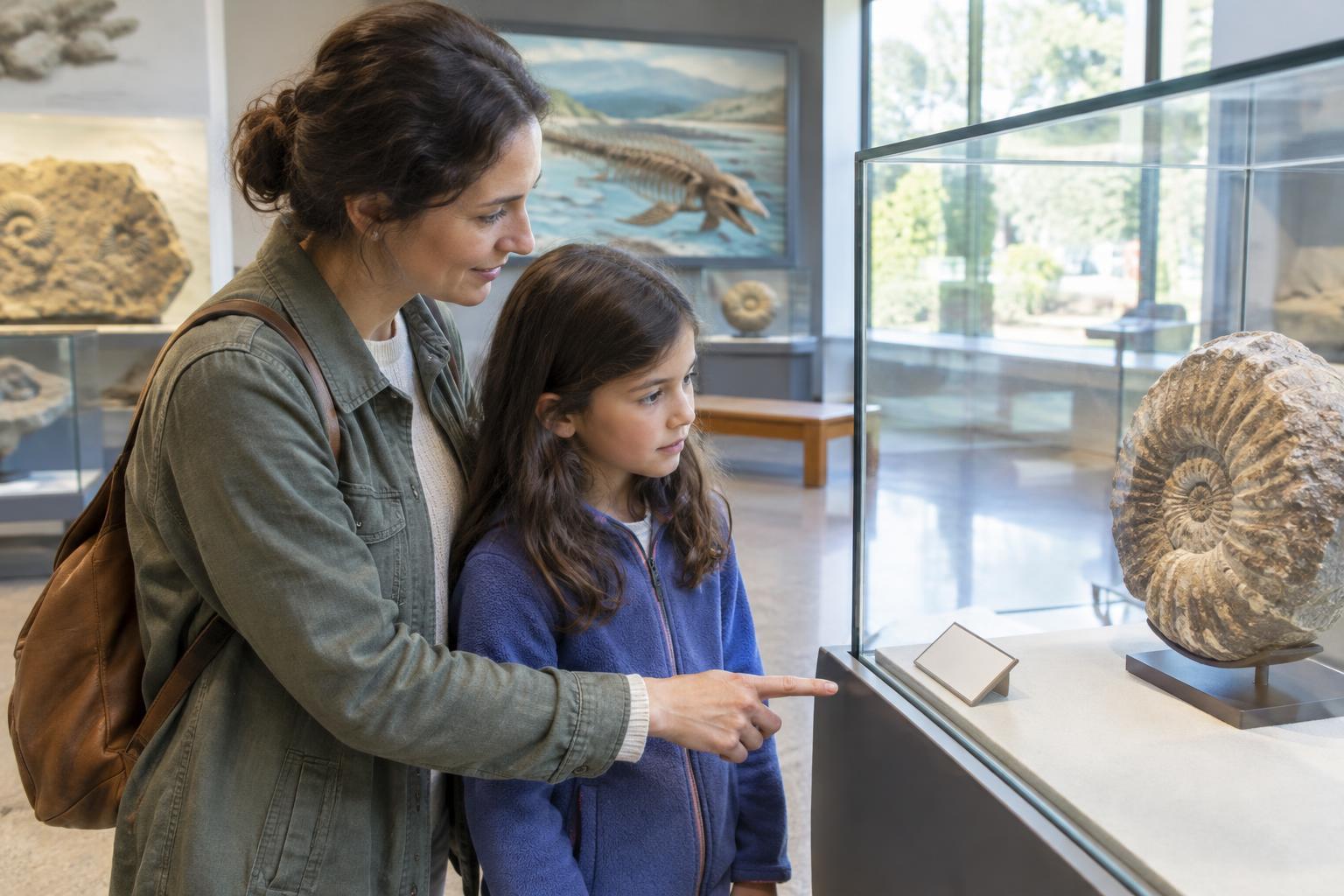
Before you begin, check the gallery’s rules about distance, touching, photography and sketching. Find a place where your group can pause without crowding the display. Read the label if you like, but consider looking first. Close looking is not a test of who knows the most. It is a chance for each person to notice something, ask a question and change their mind.
Question 1: What do you notice?
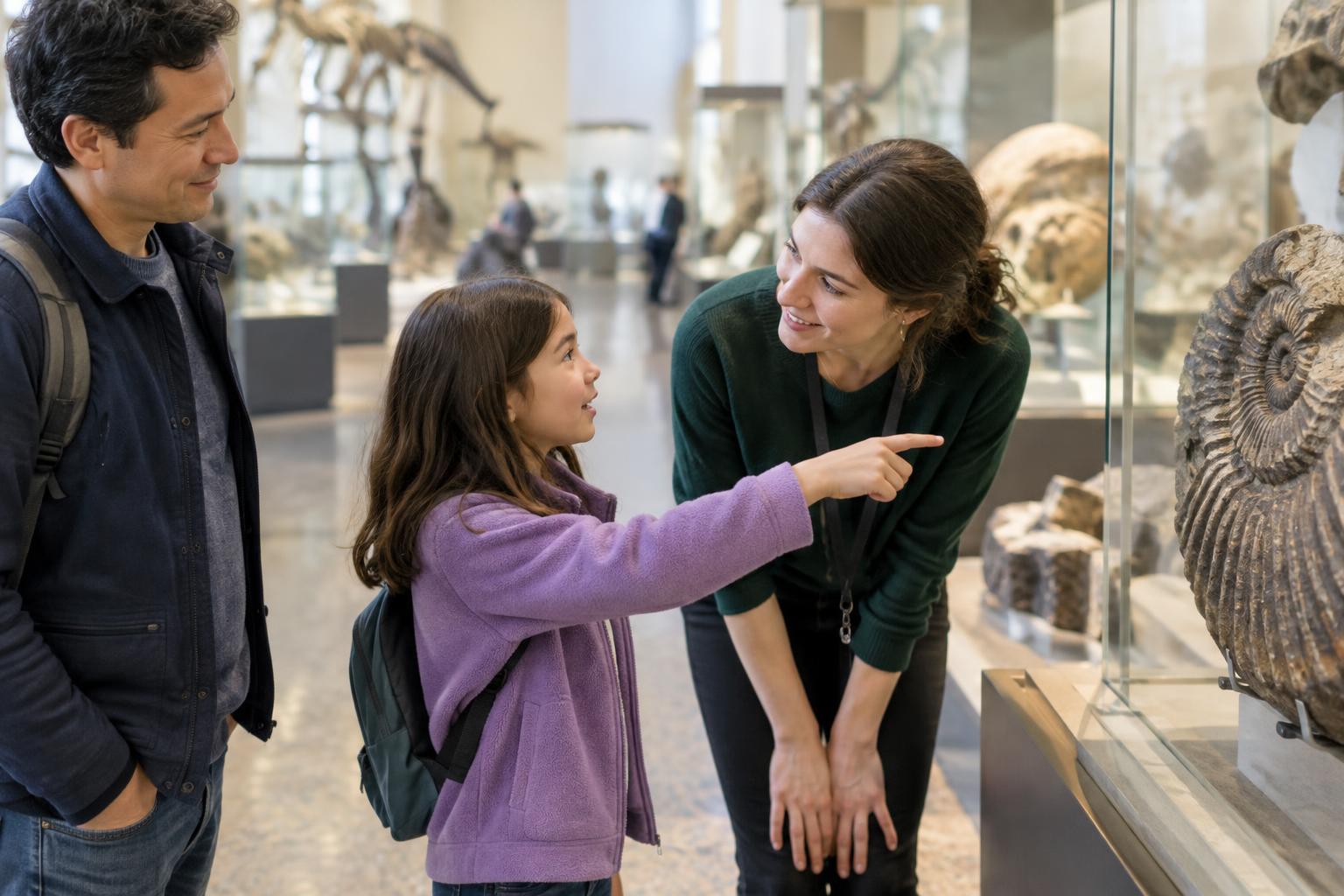
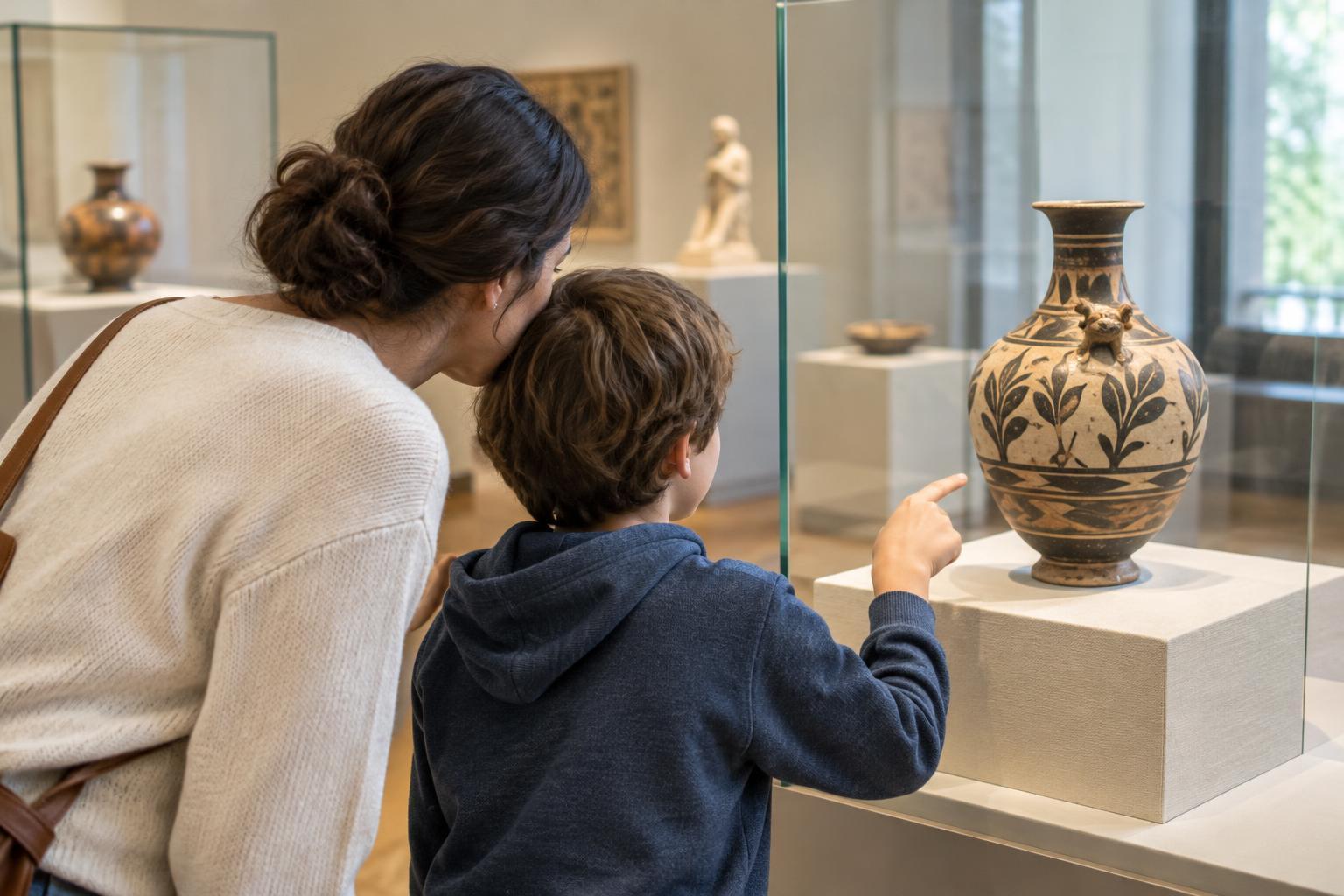
Give everyone a quiet moment to look, then take turns naming details. You might notice a color, shape, mark, material, pattern or expression. Try to describe what you can see before deciding what it means. “There is a small blue patch near the edge” leaves more room for conversation than “The blue patch is a cloud.” If a display can be safely viewed from more than one angle, move and see whether a new detail appears.
Younger children may enjoy finding a detail for others to spot. Someone who cannot see the object clearly might use an accessible description, a permitted audio guide or another person’s observations as a starting point. The goal is shared attention, not identical answers.
Question 2: What do you think is happening?
Now move from observation to interpretation. What might this object show, do or have been used for? What details support that idea? A child may think a figure looks worried while an adult sees concentration. Ask each person what led them there. Different readings can sit side by side, especially when there is not enough information to settle the question.
Keep guesses flexible. You can say, “At first I thought this was made for carrying something, but the handle makes me wonder.” Then, if there is a label, read it together and compare what it explains with what remains uncertain. A label can add context without replacing the pleasure of looking.
Questions 3 and 4: What would you ask, and how was it made?
For the third question, imagine you could ask one person connected with the object something about it. You might ask its maker why they chose a material, ask a former owner where they kept it or ask a curator how it arrived in the collection. You do not need to know the answer. A good question can reveal what interests your family and give you something to look for on nearby labels.
The fourth question turns attention to making. Which parts appear carefully planned? Do you see joins, brushstrokes, stitching, wear or repairs? Think about what hands, tools or steps might have been involved, while remembering that appearances can be misleading. With an object from another time or culture, resist filling gaps with assumptions. Look for information the gallery provides, and let unanswered questions stay open.
Question 5: What will you remember?
Before moving on, ask everyone to choose one detail, thought or question they want to carry away. It could be a surprising texture, an unfamiliar use or a color they would like to draw later. If gallery rules allow, make a quick sketch or take a photo. Otherwise, try describing the object to one another from memory after you leave the room.
The activity can take five minutes or much longer; stop while curiosity is still alive. On the way home, your family could look for a connection in everyday life: a similar pattern on a building, a familiar tool made from a different material or an object at home with its own story. One carefully observed gallery object can become a starting point for noticing more.