Start with a question, not a script
“I’m bored” doesn’t always mean a child needs a new toy or a packed schedule. Sometimes the hardest part is deciding how to begin. Offer a small question that suggests a situation but leaves the answers open: “Who might live in this cardboard box?” or “What would we do if the couch were a mountain?” The child gets to choose the characters, rules and ending.
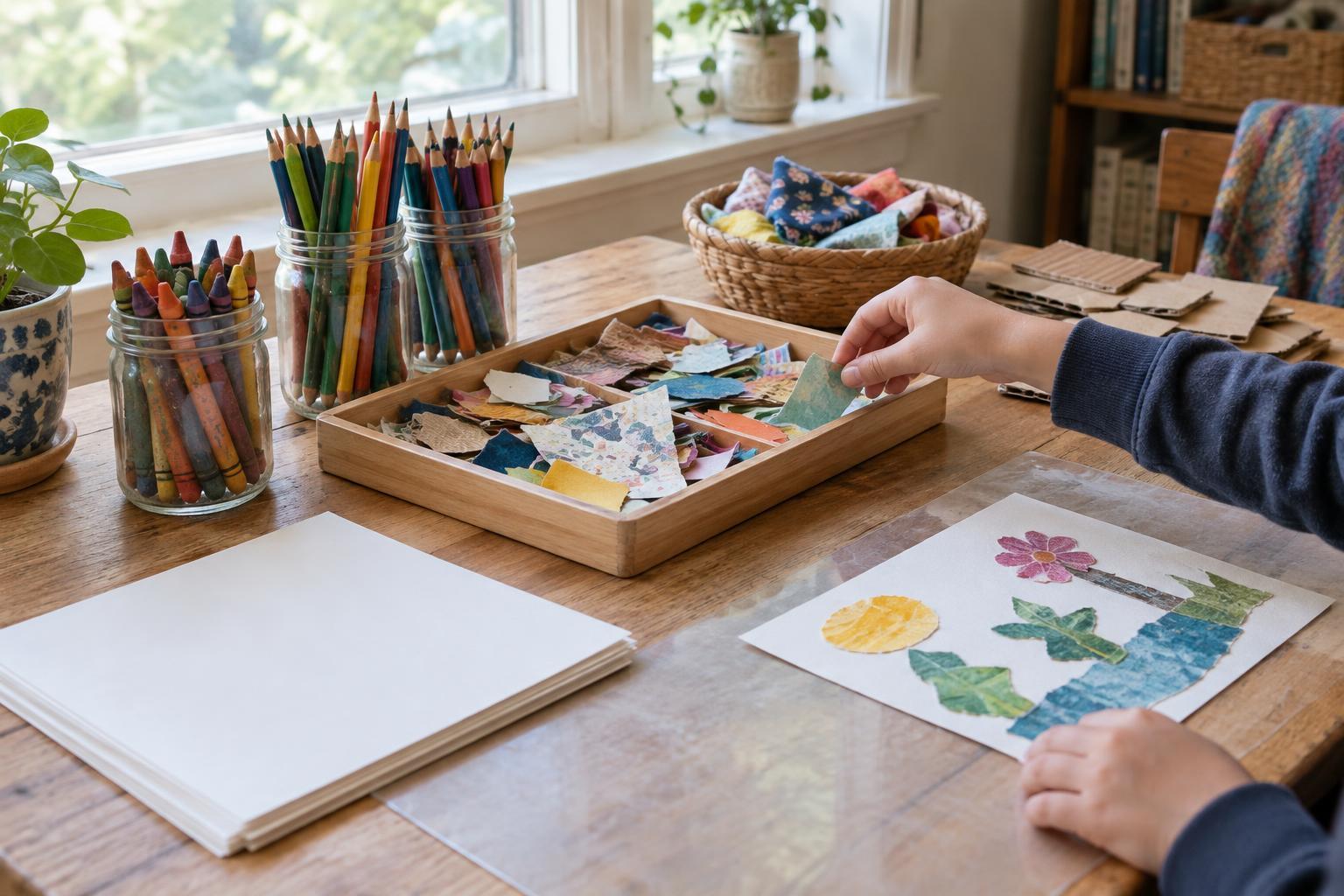
A useful prompt needs only three ingredients: a place, a problem and a few possible props. The place could be a kitchen table or a blanket fort. The problem might be a missing parcel or a visitor who needs directions. Props can be paper, cushions, empty containers or washable drawing supplies. Set out only what you’re comfortable having used, then give the idea a moment to grow before suggesting anything else.
Open a very unusual lost-and-found
Gather a few safe objects, such as a mitten, a spoon and an empty box. Announce that the lost-and-found desk is open. Who owns each item, and how can the staff find them? A spoon might belong to a tiny chef, while the box might have arrived from a faraway planet. Kids can make claim tickets, interview imaginary customers or sort objects by clues.
If the story stalls, introduce one gentle complication: two customers claim the same mitten, or an object has no name on its tag. Resist supplying the solution. Ask, “What could the desk workers try next?” This prompt works well with one child acting out several roles or with a group taking turns as clerks and visitors.
Build a neighborhood that needs something
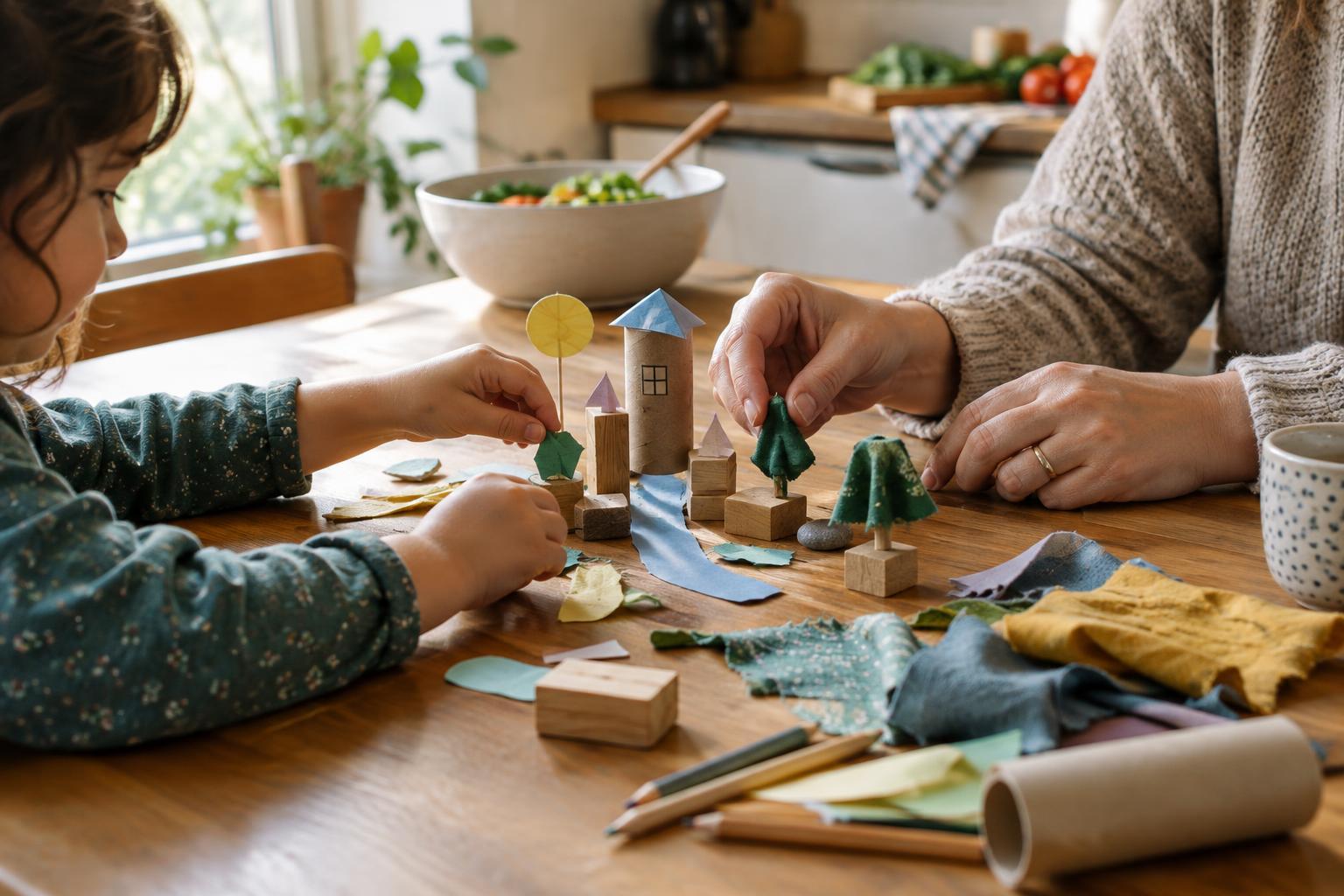
Use blocks, folded paper or cushions to create a miniature neighborhood. Begin with a few familiar places: homes, a park and a street. Then ask what the neighborhood is missing. Perhaps its residents need a bridge over a pretend river, a quiet corner for reading or a place to repair bicycles. Children can plan where it belongs and explain how people will use it.
The neighborhood can change as the story develops. A new resident might need an accessible route, or rain might make a path hard to cross. Keep the challenges playful rather than turning them into a test with one right answer. For an easy connection to everyday observation, invite kids to notice useful details on a future walk, such as signs, benches or paths, and add their own versions to the make-believe map.
Send a cardboard-box expedition
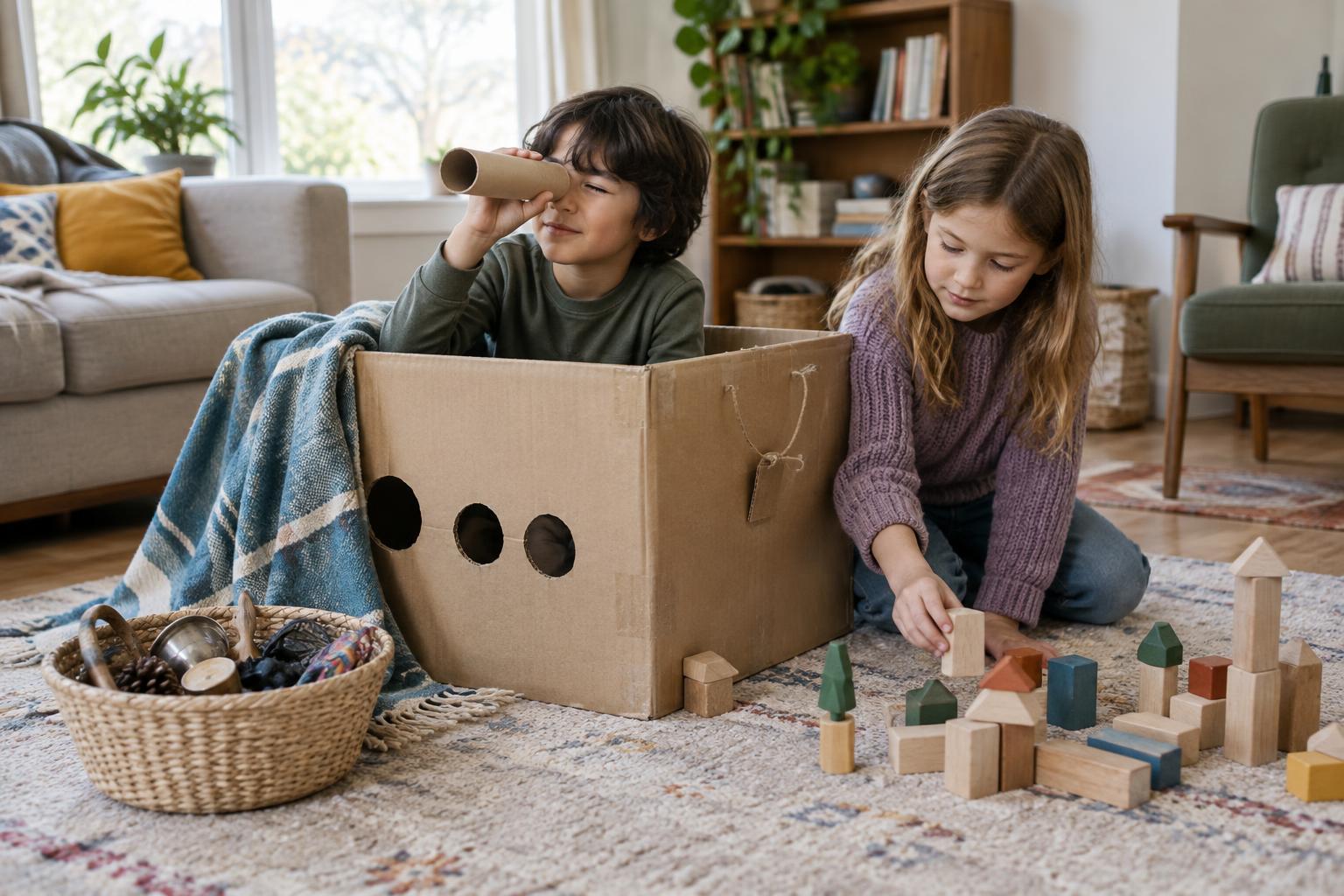
An empty box can become a bus, submarine, research station or delivery vehicle without much decoration. Ask, “Where are we going, and what is our job when we arrive?” A child might draw a control panel, pack a paper map or invent a message from someone at the destination. A small box works too: it can carry a toy figure on the journey.
To keep the expedition moving, offer choices rather than instructions. “Did we spot something surprising, or did we hear it first?” gives the child room to decide what happens. If they prefer making the vehicle to acting out the trip, let construction be the play. Check that boxes are stable, keep packing materials away from younger children when appropriate, and leave doors or lids easy to open.
Make room for short games and changing ideas
Not every prompt has to become an afternoon-long adventure. A five-minute pretend café can be satisfying if a child takes an order, invents a menu and closes up shop. You can join as a customer, then step back when the child is ready to run things. If they change the café into a spaceship halfway through, follow the new idea rather than steering them back to the original plan.
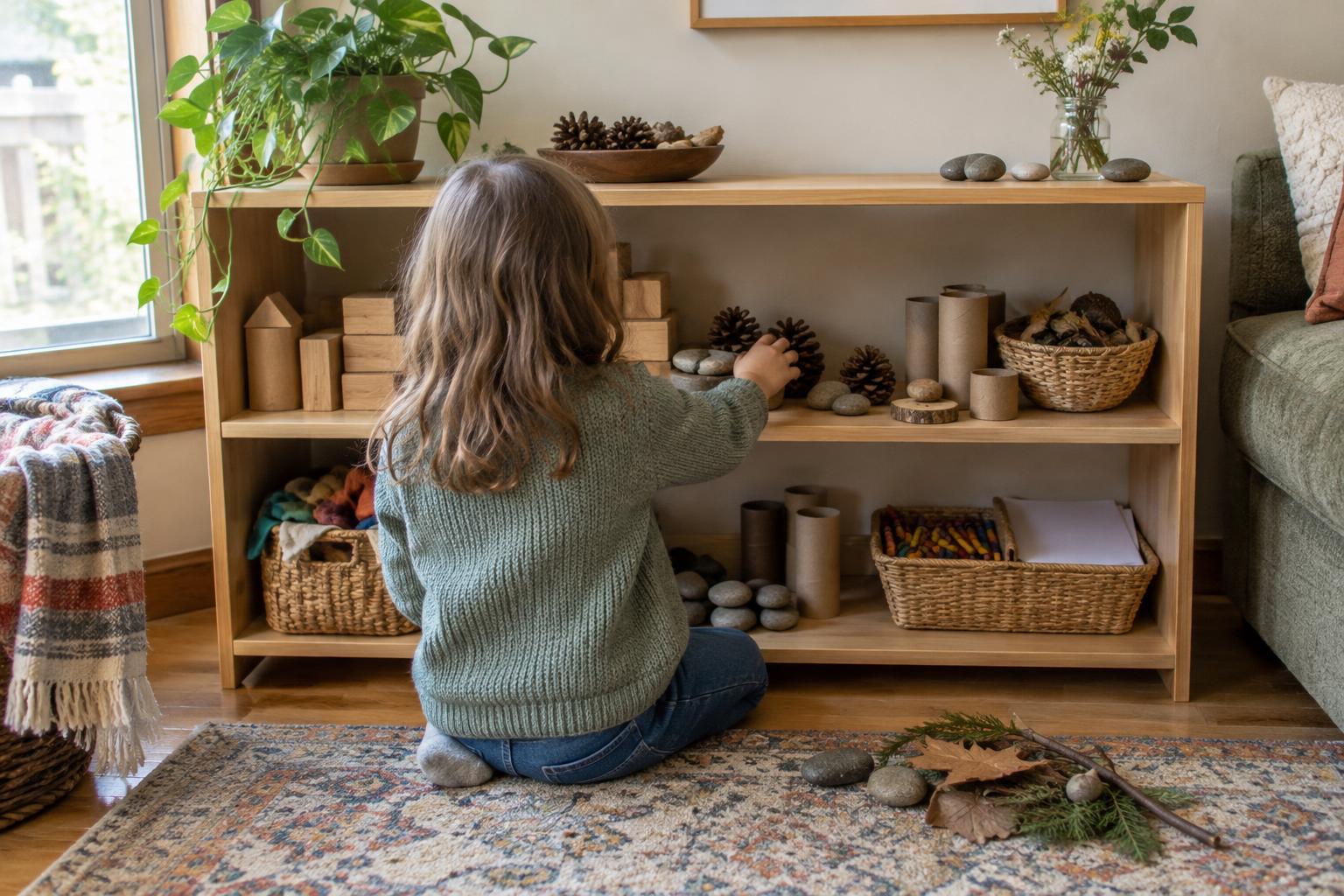
For days when choosing still feels difficult, offer two starting points: “Would you rather open the lost-and-found or build a neighborhood?” Put the supplies within reach and allow some quiet thinking time. If neither idea appeals, ask the child to choose one ordinary object and decide what it could be in a story. The goal isn’t to eliminate every bored moment; it’s to make starting feel possible and give children ownership of what comes next.