Begin with a question you can investigate
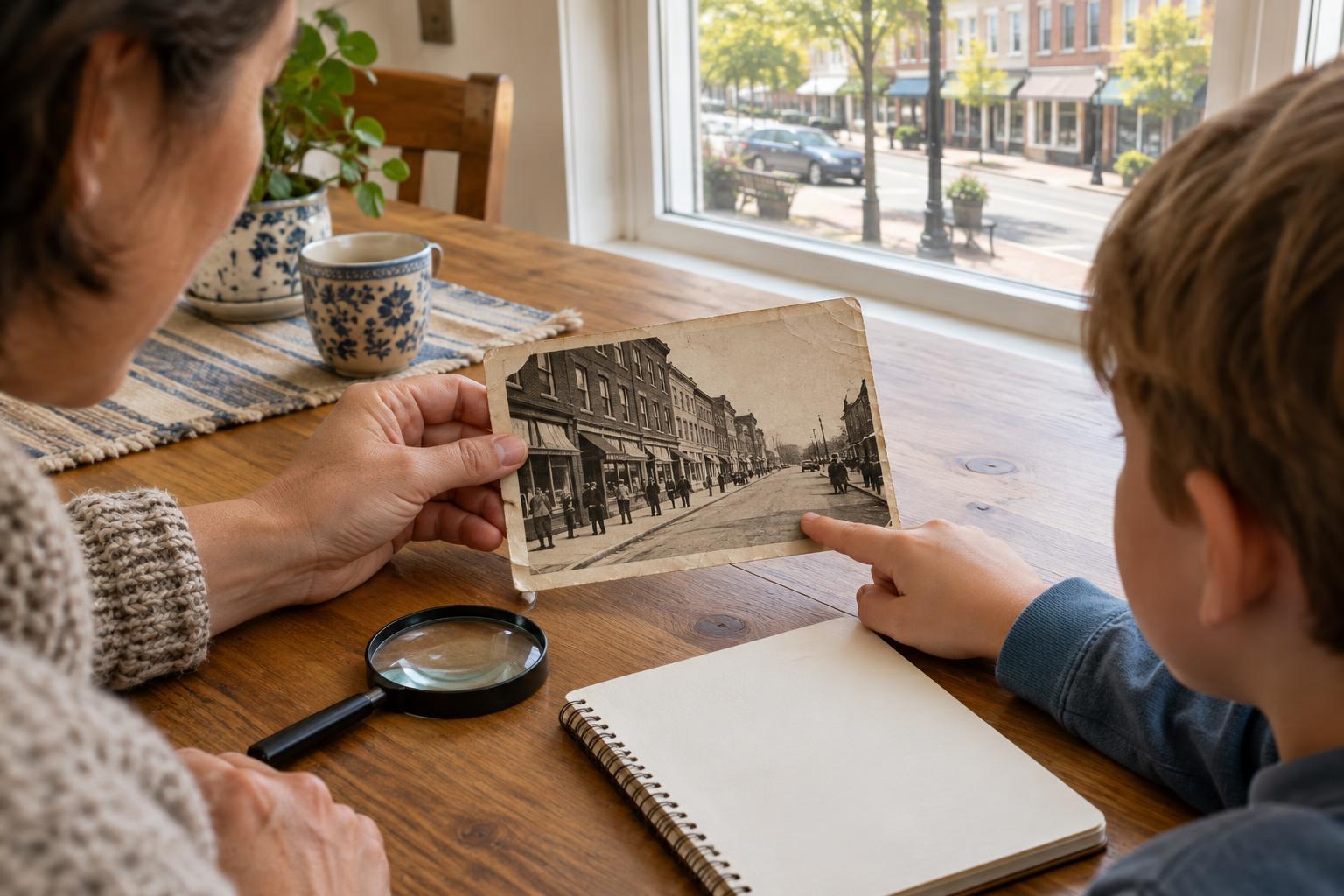
Local history often begins on an ordinary walk. A child might notice a faded name on a building, a street that changes direction or a photograph showing a familiar corner with different shops. Instead of trying to tell the whole story of a neighborhood, turn that observation into a question: “What used to be in this building?” or “How has this crossing changed?” A narrow question gives everyone something to look for and makes it easier to recognize what they still do not know.
Write down the question before searching for an answer. Add what prompted it, such as the wording on a sign or the shape of an older doorway. This first note is useful because memories of what you saw can shift once you begin reading about the place.
Know what primary and secondary sources do
A primary source is a record, object or account created during the time you are investigating, or by someone with direct experience of the event. For a question about a former shop, possible primary sources include an old advertisement, a dated photograph, a business directory entry or a receipt. The building itself may also offer clues. These sources bring you close to the period, but they do not automatically provide a complete or accurate story. An advertisement, for example, tells you what a business wanted people to know.
A secondary source interprets or explains the past using sources and later analysis. A local history book, an exhibit label or an article about the neighborhood may connect details that are hard to understand separately. Secondary sources are valuable starting points: they can suggest names, dates and places to investigate. Their explanations are still worth checking against the evidence they cite when that evidence is available.
The distinction depends on your question. A book written years later is usually a secondary source for the events it describes. If your question is how people in that later period understood local history, the book itself becomes a primary source. Ask, “Primary evidence for what?” rather than treating either label as a permanent stamp.
Build a small trail of evidence
Start with one accessible overview, perhaps a library book or an interpretive display, to collect possible search terms. Note a street name, business name or approximate period mentioned there. Then look for a record from the period in a library collection, a local archive, a museum collection or your family’s own materials. You do not need a large collection to begin: two or three relevant items can lead to a good discussion.
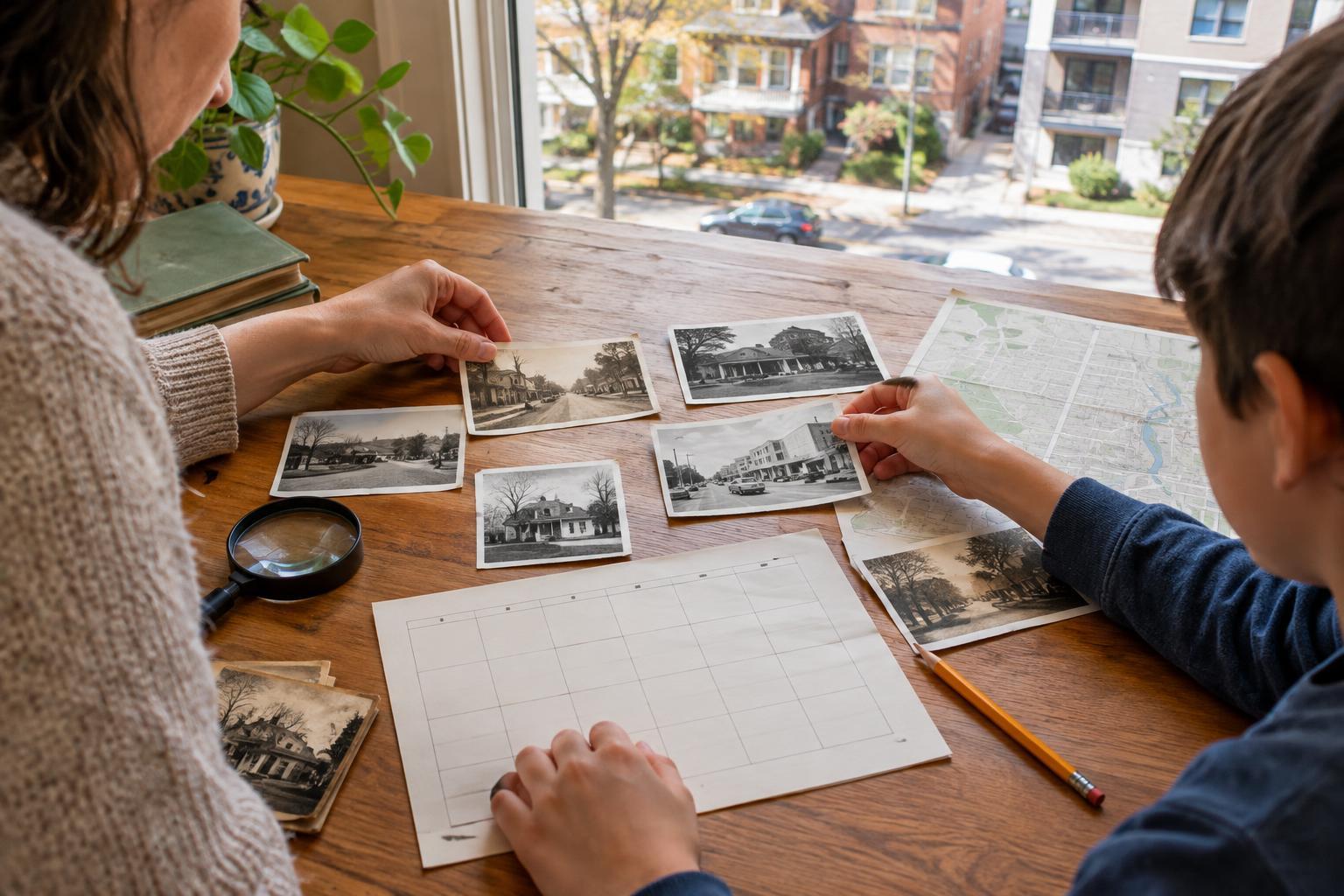
For each item, record what it is, who made it if known, when it was made or published and where you found it. Keep observation separate from interpretation. “The photograph shows a sign reading ‘Bakery’” is an observation; “the bakery was popular” is a claim the image alone cannot establish. With children, try making two columns labeled “What we can see or read” and “What we wonder.” This keeps a promising guess from quietly becoming a fact.
Check whether a source is an original, a copy or a later transcription. A transcription can make handwriting easier to read, while an image of the original may reveal a crossed-out word or a note in the margin. If a date, creator or location is uncertain, preserve that uncertainty in your notes.
Compare sources without forcing a perfect match
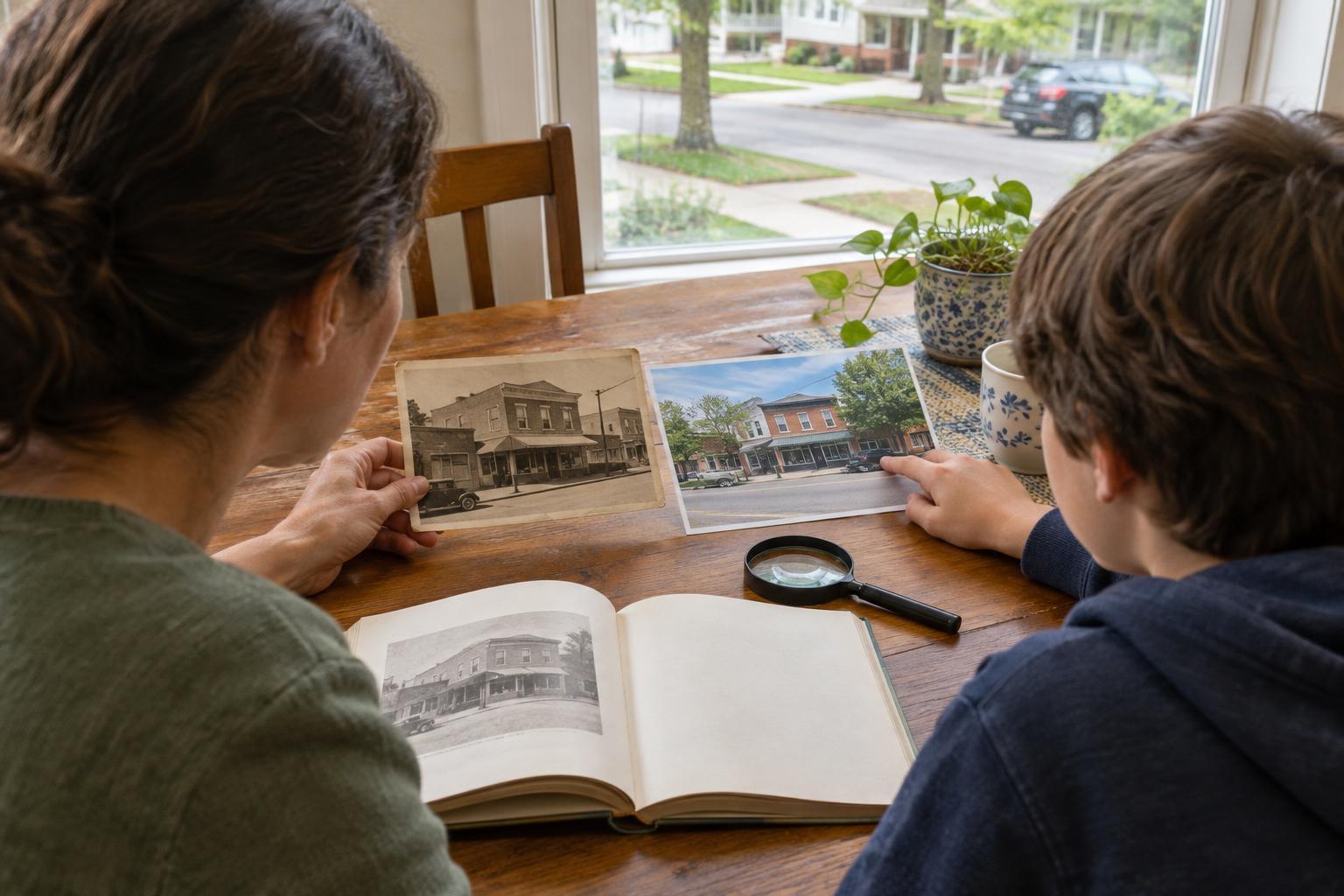
Suppose an exhibit label says a building housed a grocery store, while a photograph shows a different business name on its window. The sources may describe different years, different parts of the building or a mistake in identification. Check their dates and locations before deciding they conflict. An address might also have changed, so look for nearby landmarks rather than relying only on a number.
Ask what each source was made to do and whose view it represents. A directory lists information for a particular purpose; a personal letter describes one person’s experience; a photograph captures only what was within the frame. Seek another type of source when you can. If the evidence remains thin, “We found evidence that a grocery operated here at one point” is a stronger conclusion than an unsupported claim that it was always a grocery.
Share the story and the questions that remain
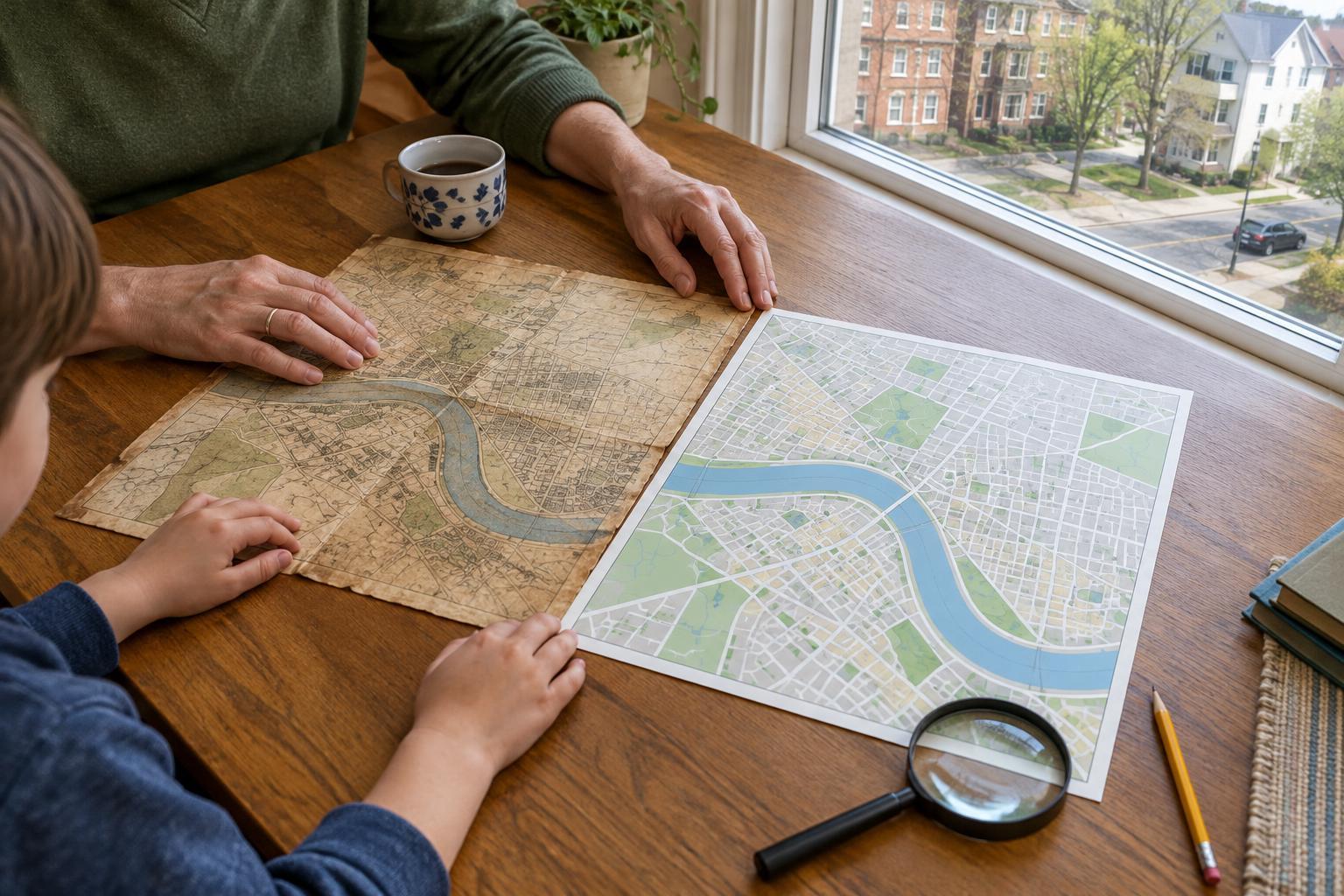
Finish with a short family field note: state the question, describe your strongest evidence and explain what you think it suggests. Include where each item came from so you can find it again. A simple sketch of the site today beside a description of an older image can help children notice change without pretending that every detail is settled.
If your investigation leads to a place you can visit, look from a public space and follow any posted rules. Treat private homes and personal records with care, and ask permission before sharing someone else’s materials. The most useful ending may be a new question: Who used this place? What changed next? Local history is not just about finding an answer; it is practice in noticing evidence, listening to different perspectives and being honest about what you cannot yet tell.