Two approaches, two kinds of fun
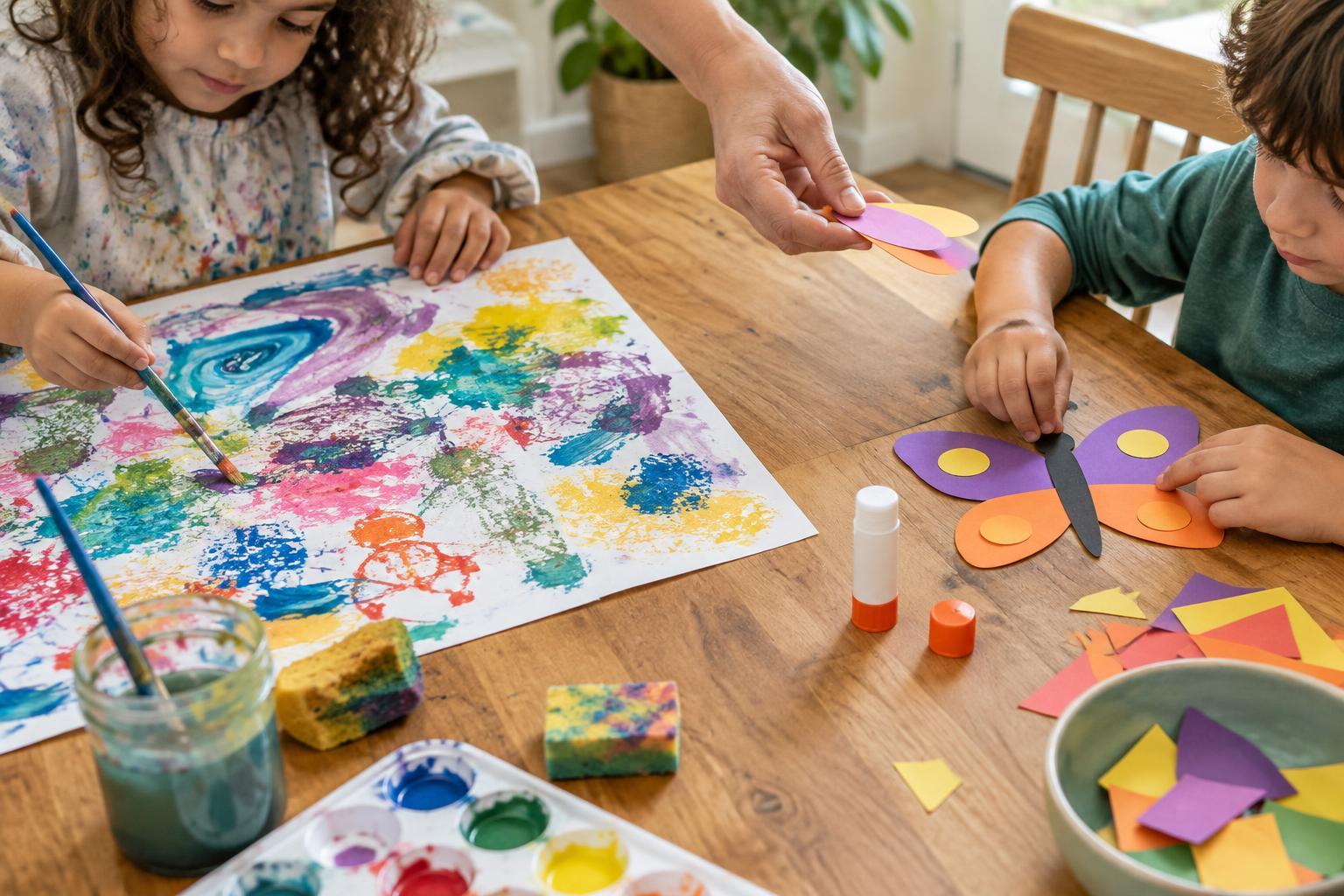
A child presses a sponge into paint, notices the speckled mark it leaves, and tries it again with less paint. That is process art: the exploration is the point, and nobody needs to know what the finished page will look like. In a craft project, a child might follow a few steps to turn that same painted paper into a paper bird. The activity has a recognizable goal, even if each bird looks different.
Neither approach is automatically more creative. Process art makes space for questions such as “What happens if I layer these colors?” Crafts invite children to plan, follow a sequence, and solve problems on the way to a result. Many activities sit between the two. A child can follow a pattern for a paper lantern, then invent their own cutouts or decorations. The useful question is not which label is better, but what kind of experience you want to offer today.
When to choose process art
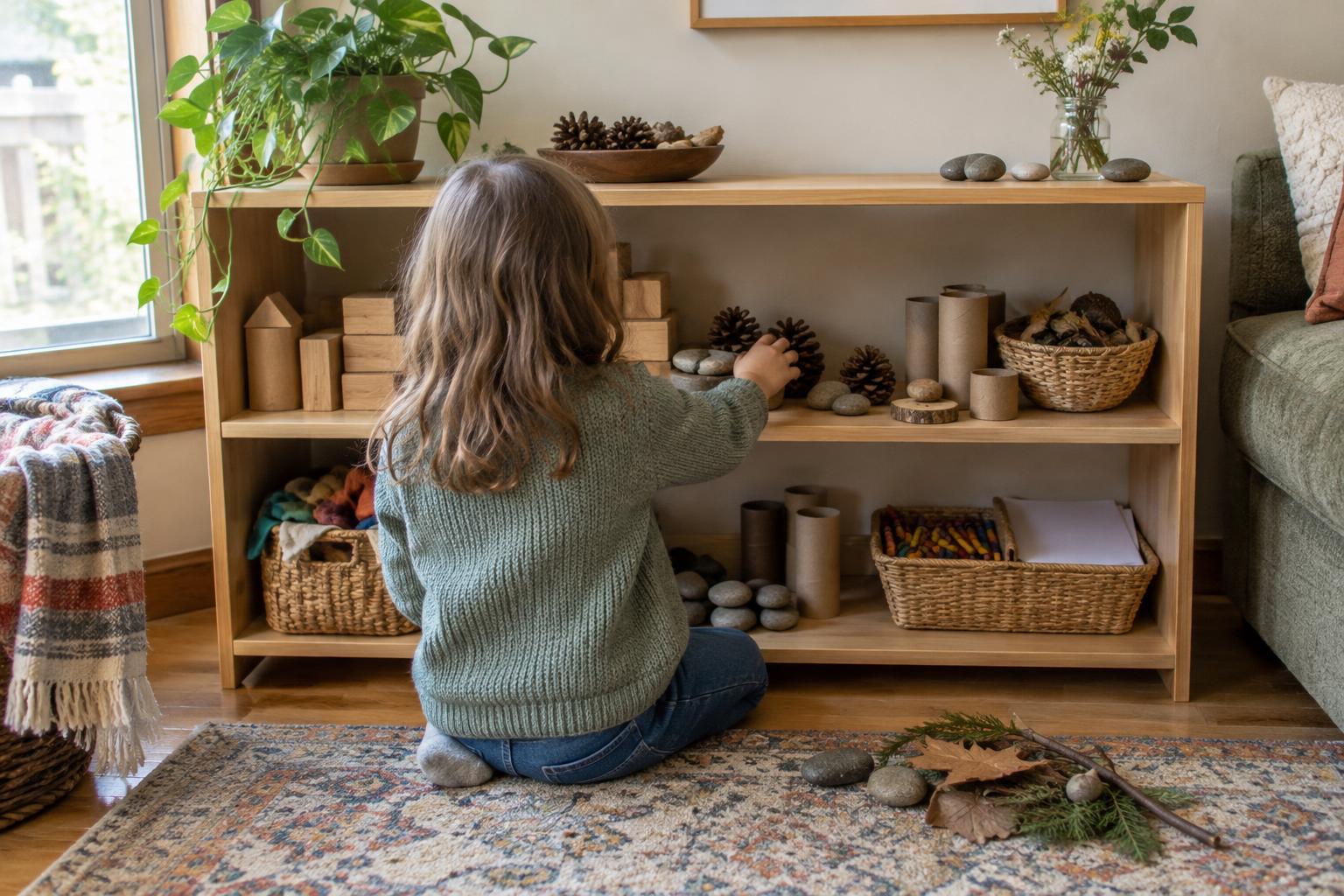
Choose process art when there is time to explore without rushing toward a finished object. Set out a small number of materials that invite different actions: paper, washable paint, sponges, and a brush, for example. You might ask, “What kinds of marks can these make?” rather than demonstrate a picture to copy. A tray, old table covering, or outdoor work surface can make open-ended experimentation easier to welcome.
Process art can be especially useful when children have different interests or skill levels. One may spend ten minutes mixing colors; another may fill several pages with prints. Both are participating fully. If a child asks what they are supposed to make, offer a gentle starting point, such as testing one tool on a scrap of paper, without deciding the final image for them.
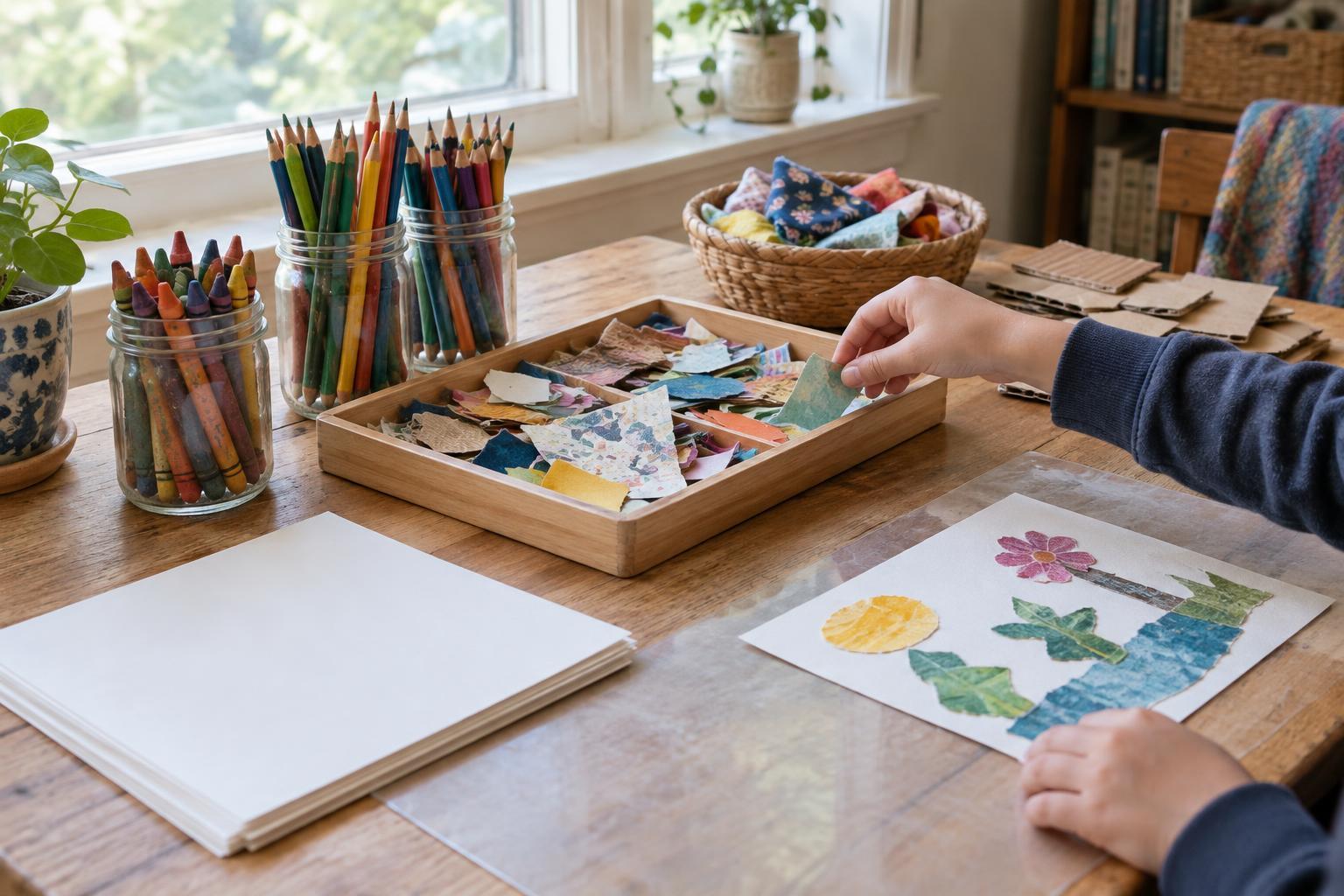
The experience does not have to be messy or elaborate. Arrange scraps of colored paper into temporary designs, make rubbings from textured surfaces, or use a flashlight to explore the shapes of shadows. Choose materials appropriate for the children involved, supervise small objects and tools, and check that surfaces are safe to handle.
When a craft project is the better fit
A craft project can be a good choice when a child wants to make a gift, decorate a space, or learn how to use a particular tool. A clear example and a few manageable steps can help turn an idea into something they can hold. It also gives adults a way to prepare materials ahead of time when the activity needs to fit into a short window.
The challenge is to leave room for the maker. If every color, shape, and placement must match an adult’s sample, a child may spend more energy worrying about mistakes than making decisions. Try defining only the essential steps. For a cardboard building, those might be folding a base and attaching walls; the windows, roof, signs, and purpose of the building can be up to the child.
Match the amount of guidance to the child and the task. You can cut a difficult shape in advance while inviting the child to choose how to assemble or decorate it. If a project calls for sharp tools or hot glue, an adult should handle those parts. A craft is still worthwhile when the result is lopsided, surprising, or nothing like the example.
Try a flexible middle ground
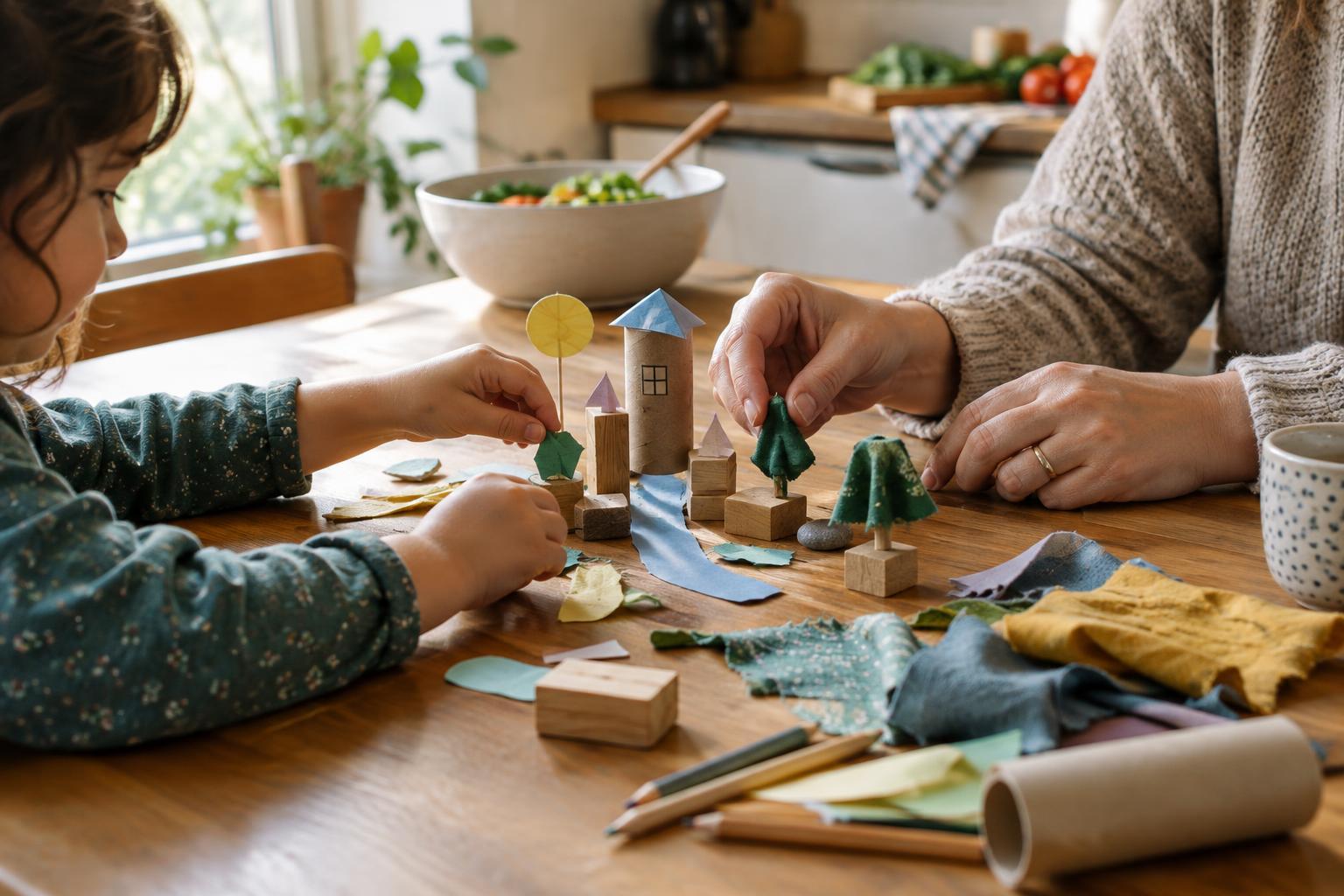
You do not have to settle on one approach for an entire afternoon. Start with a period of exploration, then offer an optional project. Children could experiment with leaf rubbings gathered during a neighborhood walk, for instance. Later, anyone who wants to can cut out a favorite rubbing and add it to a handmade map or greeting card. Those who prefer to keep testing textures can do that instead.
Before you begin, consider three practical questions: How much time is available? Does the child want to investigate materials or make something specific? How much setup and cleanup can you comfortably manage? The answers may change from day to day. A brief drawing experiment at the kitchen table can be just as inviting as a carefully prepared craft session.
Pay attention to what the child does, not just what they produce. Comments such as “You tried the sponge on wet paper and dry paper” notice a choice without judging the result. At the end, ask whether they want to display, use, save, or recycle their work. Whether the activity ends with a finished object or a table full of discoveries, the child has had a chance to make something their own.