Start with the object, not the words
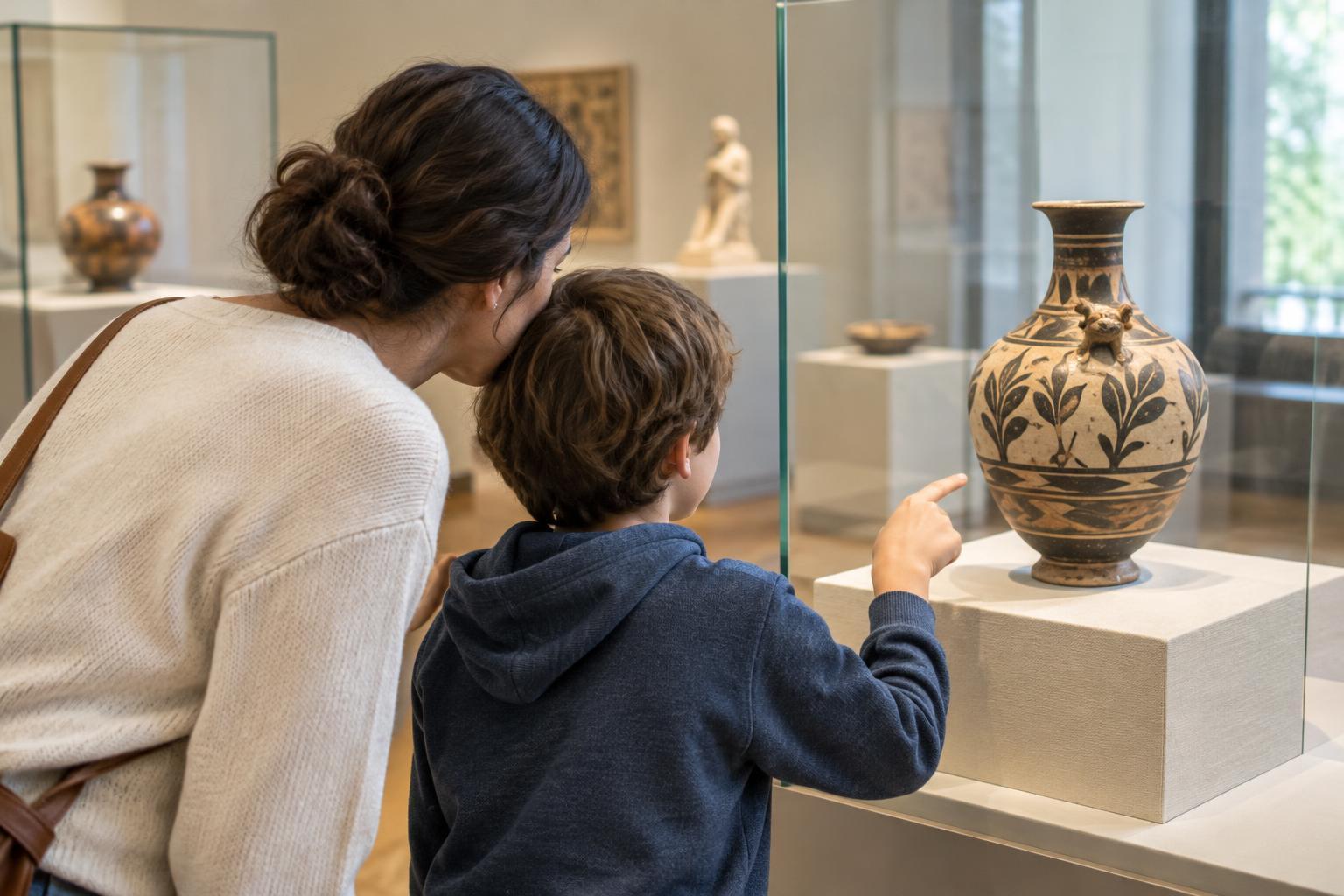
An exhibit label can tell you what an object is, where it came from or why it matters. But for a child, the most interesting part of a display may be the object itself: its surprising shape, tiny details or resemblance to something familiar. Give everyone a moment to look before reading. That pause lets children form their own impressions instead of waiting for the label to tell them what to think.
You might say, “What caught your eye?” or simply share what you noticed: “I didn’t expect it to be so small.” Neither approach requires a correct answer. If a child is eager to move on, you can move on too. A museum visit is not a test of how many displays a family can cover.
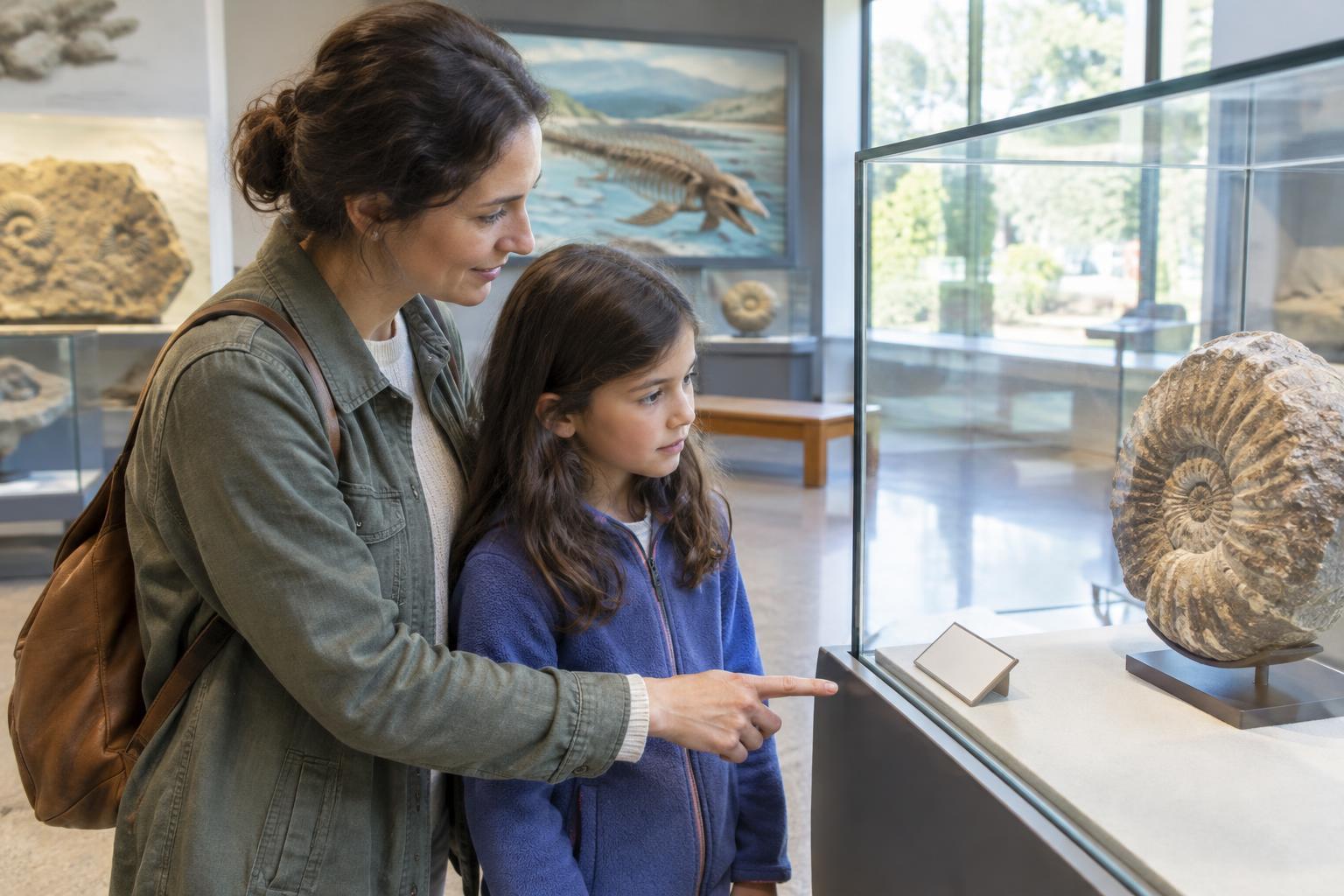
Read only the part that helps
Labels often contain more information than a family needs in one moment. A title, a date, a material or one short sentence may be enough to make a display more interesting. Scan the label yourself and choose a detail that connects to what your child has noticed. If they are looking at the texture of an object, the material might be useful. If they are wondering who used it, a sentence about its purpose might open up a conversation.
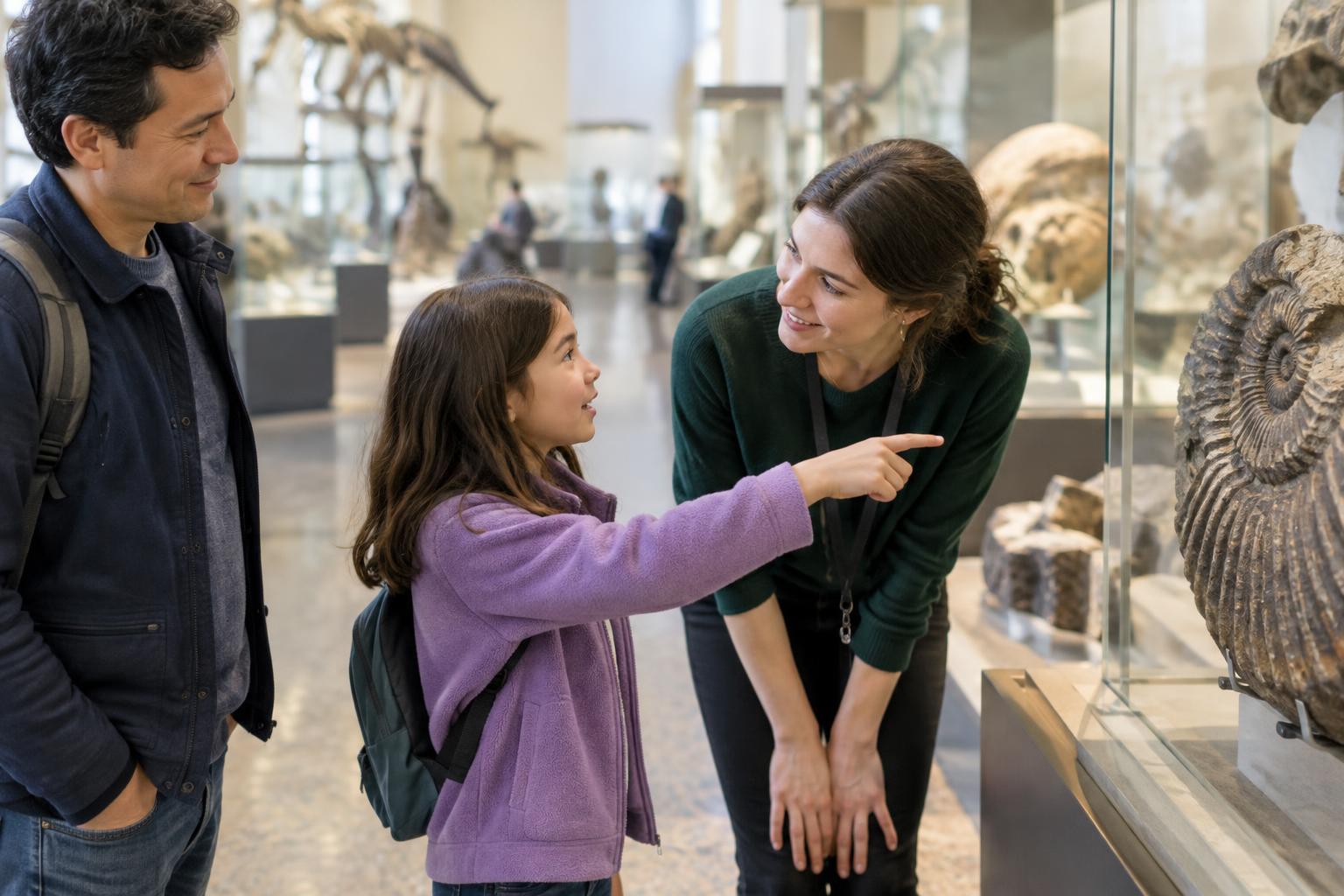
For children who want to read independently, offer a choice rather than an assignment: “Want to read the title, or should I?” If the wording is dense, put the idea into everyday language while keeping its meaning. You do not have to explain every unfamiliar term. Sometimes it is enough to say, “That’s a new word for me too,” and use the surrounding display to think about what it might mean.
Trade questions for shared wondering
It is easy to slip into quiz mode: “What year was this made?” or “Can you tell me what it’s called?” Those questions can be useful when a child enjoys recalling facts, but repeated checks may make looking feel like schoolwork. Try questions that leave room for several responses instead: “What would you like to know about this?” “What looks familiar?” or “What part should we look at again?”
You can also wonder aloud without asking anything. “I’m curious how someone carried that,” invites a child to join in if they want. If the label answers your question, read that part together. If it does not, let the question remain open. Not every conversation needs a tidy ending, and noticing what a label leaves unexplained is another way to engage with it.
Make space for different reading styles
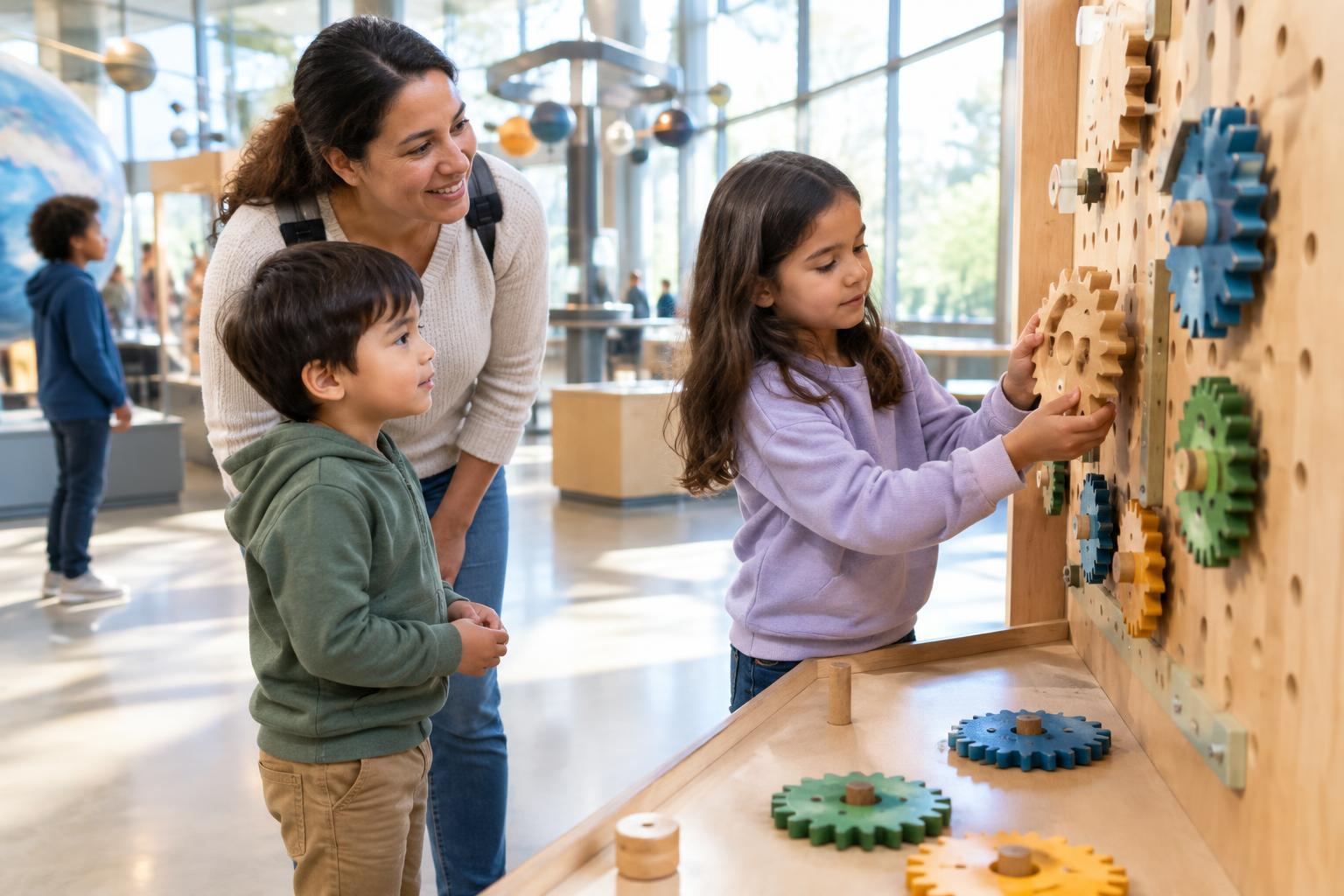
One child may want every label read aloud; another may prefer to glance at images and keep moving. Both can be engaged. Before entering a gallery, you might agree that each person can choose one display where the group will stop for a closer look. This gives a child some control without making the visit depend on a fixed route or a reading goal.
When several people are visiting together, take turns choosing how to explore. At one display, someone might read the label. At the next, someone might describe what they see before anyone reads. A younger child might point to a favorite detail while an older child reads a sentence aloud. If a label is hard to reach or the gallery is crowded, no one has failed by skipping it. You can enjoy the display from where you are.
Carry one idea beyond the gallery
You do not need a worksheet or a full recap to keep the visit meaningful. On the way out, each person can name one thing they remember. It might be a fact from a label, an object’s color or a question no one answered. These small memories show what mattered to each visitor, which may be different from what the museum text emphasized.
Later, a child might draw an object from memory, build a loose version with household materials or point out something similar on a neighborhood walk. Keep the invitation optional. The aim is not to prove that information was retained; it is to give curiosity another place to go. Used this way, exhibit labels become helpful companions to looking rather than instructions for how a family must experience a museum.