Begin with what the photograph shows
A historic photograph can feel like a window into another time, especially when it shows a street your family knows today. But it is only one view, taken from one position at one moment. The people or objects outside the frame may be just as important as those inside it. Treat the image as a collection of clues rather than a complete story.
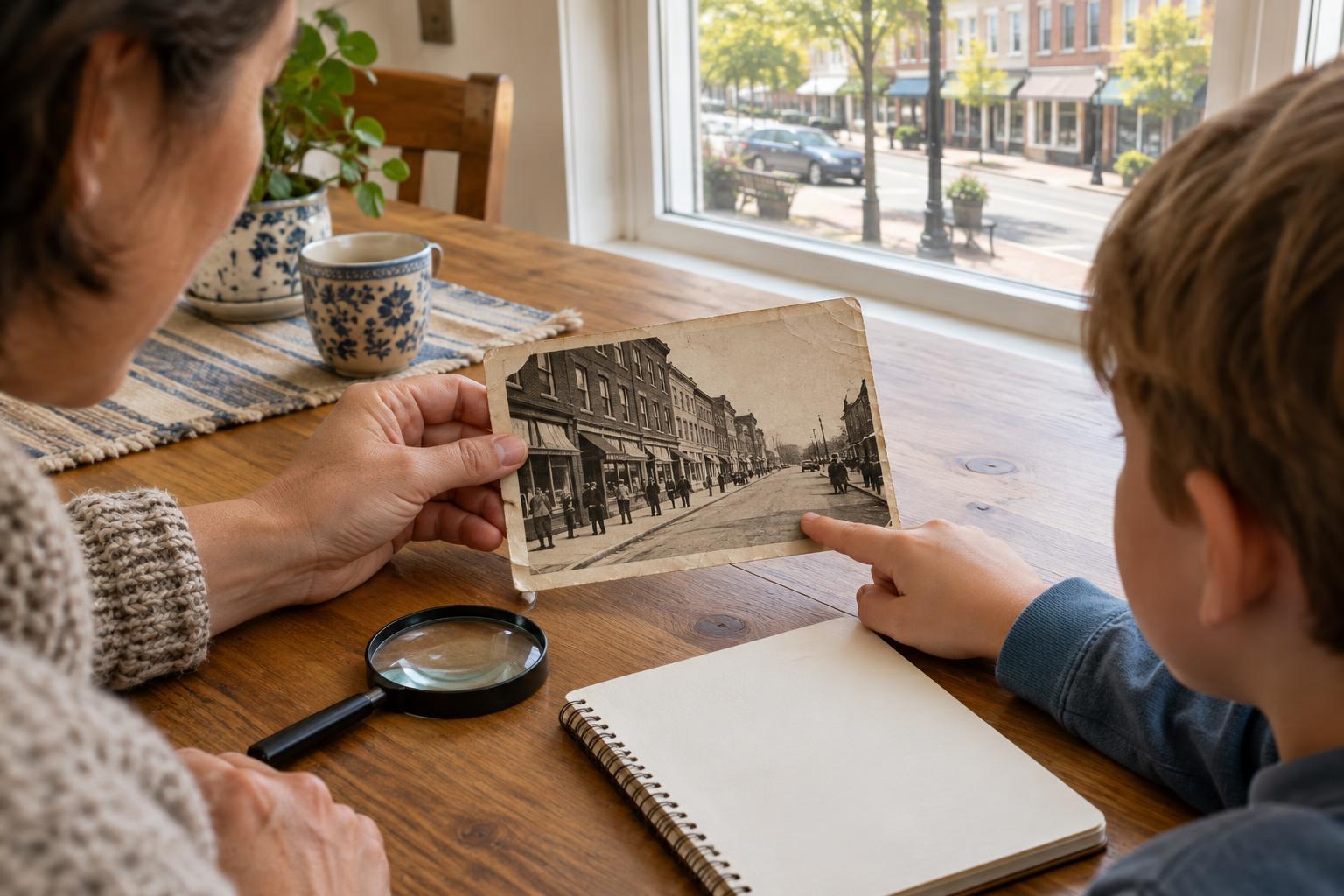
Start by giving everyone a quiet minute to look. Then take turns naming details without explaining them: three people stand near a doorway; one shop sign is partly hidden; the road surface looks uneven. This simple distinction between observing and interpreting helps children see how easily a guess can begin to sound like a fact. If someone says, “They are waiting for a parade,” ask, “What do we see that gives us that idea?”
Look for connections to the place
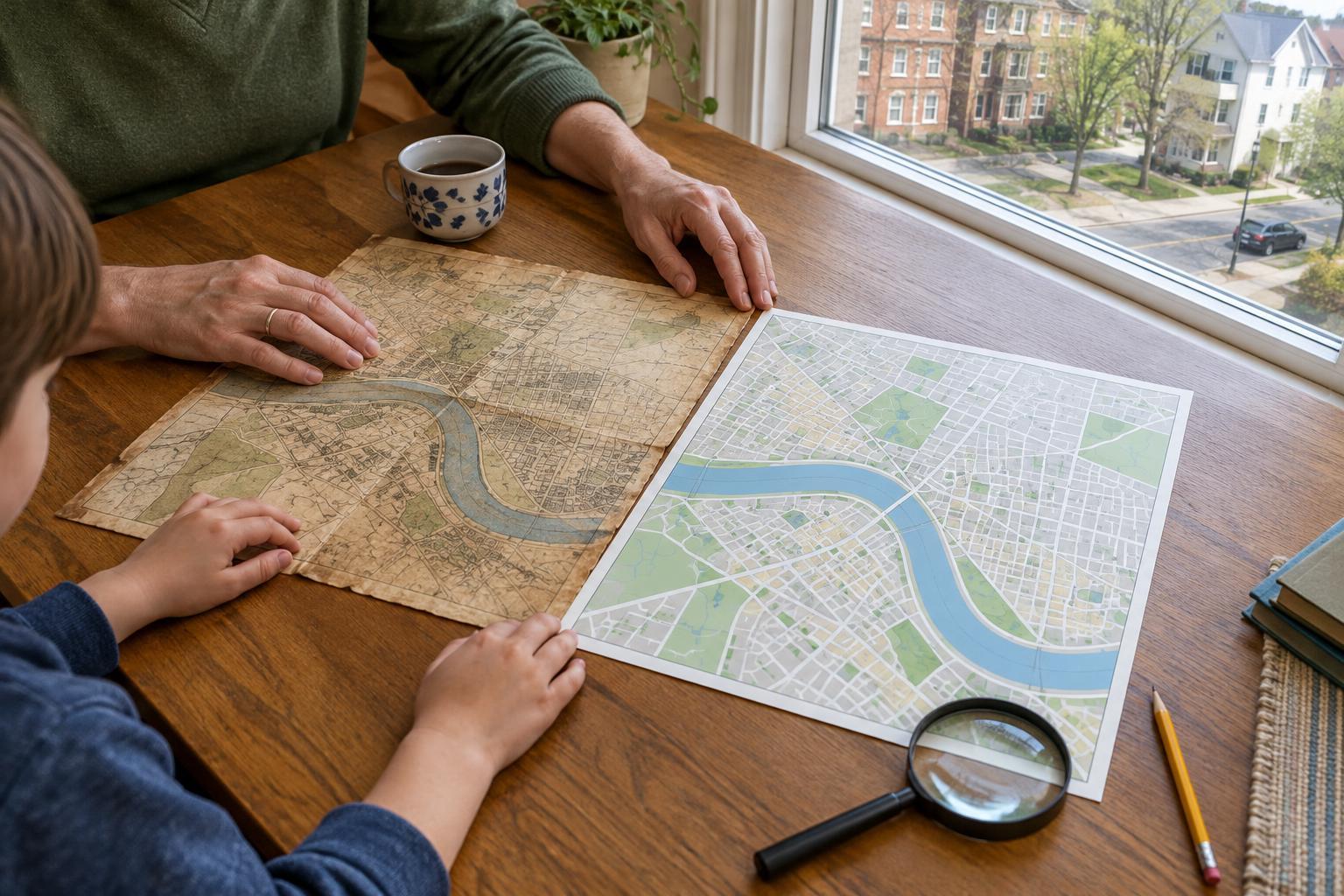
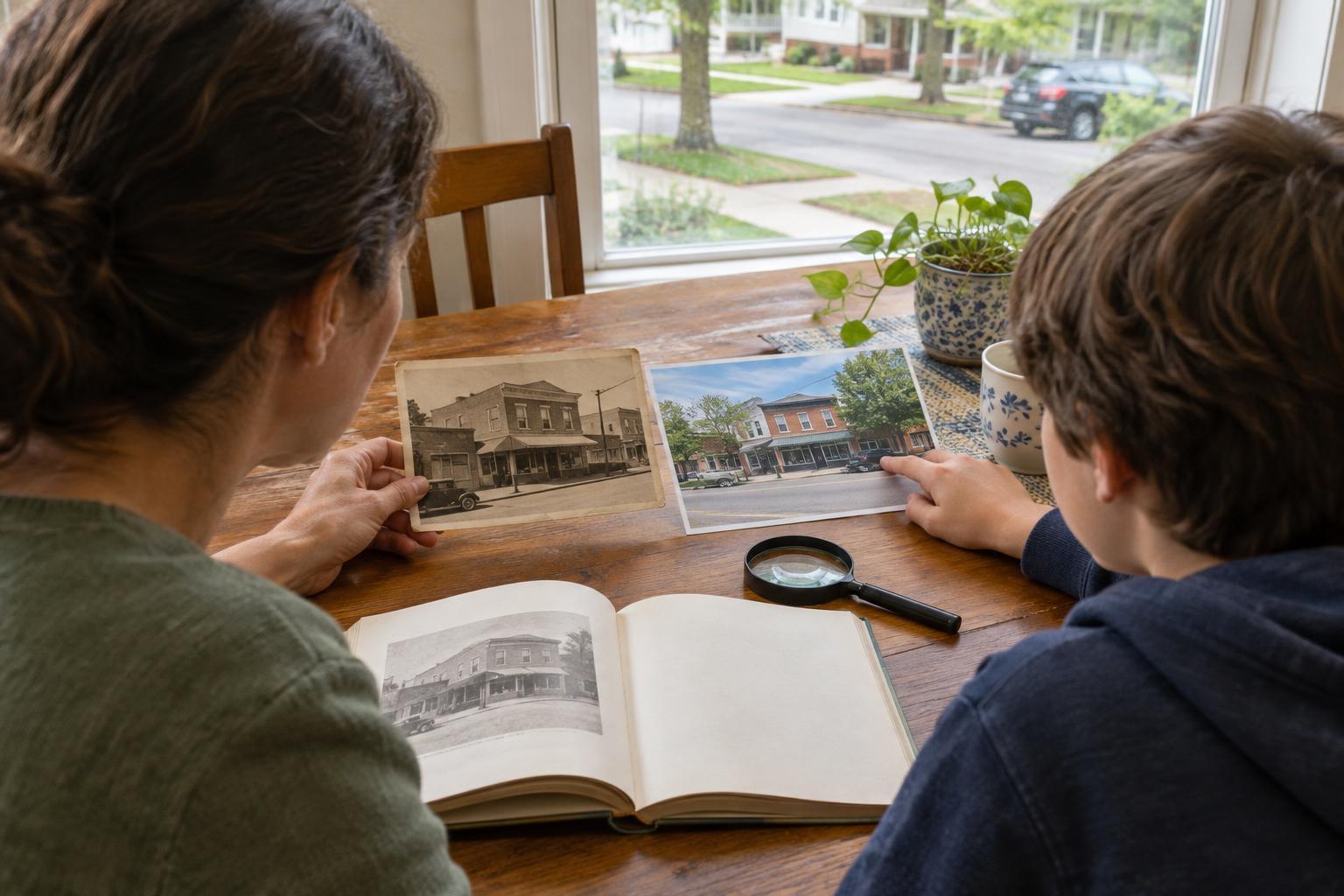
For a local-history activity, choose an image of a recognizable block, building, park, or gathering place. Look for features that might help you place it: the shape of a roof, the arrangement of windows, a hill in the distance, a street corner, or the words on a sign. Small details can prompt useful questions. Does a doorway still exist? Has the building changed its purpose? Is the photographer standing where a person could stand today?
Next, look beyond the most eye-catching subject. A portrait taken outside may also show fences, pavement, advertisements, or neighboring buildings. Clothing and vehicles can suggest a broad period, but styles may overlap, and older items can remain in use. Avoid assigning an exact date from a single clue. If it is safe and practical to visit the location, compare the old image with the present-day view from a public space. Notice what remains, what has changed, and what the photograph cannot show you about either time.
Check the story that came with it
A caption, handwritten note, or family memory offers context, but it deserves a closer look too. Who wrote the caption, and when? Was the note added by someone who witnessed the scene, or by someone identifying it later? If the answer is unknown, keep that uncertainty visible. A useful family practice is to make two columns: “What the image shows” and “What another source says.” An address written on the back belongs in the second column until you can connect it to visible features or other records.
You do not need to settle every question to learn something. If an image is labeled “Main Street,” for example, you might still ask which section of the street it shows. A shop name, a map, another photograph, or a conversation with someone familiar with the area may help narrow the possibilities. When clues disagree, record both rather than forcing a neat answer.
Notice people without inventing their lives
People bring photographs to life, and they also require care. An expression does not reliably tell you how someone felt, and a uniform or workplace setting does not reveal everything about a person’s job. Try questions such as, “What might this person have been doing just before the picture?” alongside, “What other explanations are possible?” This leaves room for imagination without presenting it as history.
Ask whose lives appear in the collection you are viewing and whose may be missing. A photograph of a grand building might include workers at its edge, while leaving out the people who used it day to day. That absence is worth noticing, but it does not tell you exactly what those people experienced. When sharing a family or community image, keep any identifying information and the wishes of people connected to it in mind.
Make an observation record you can revisit
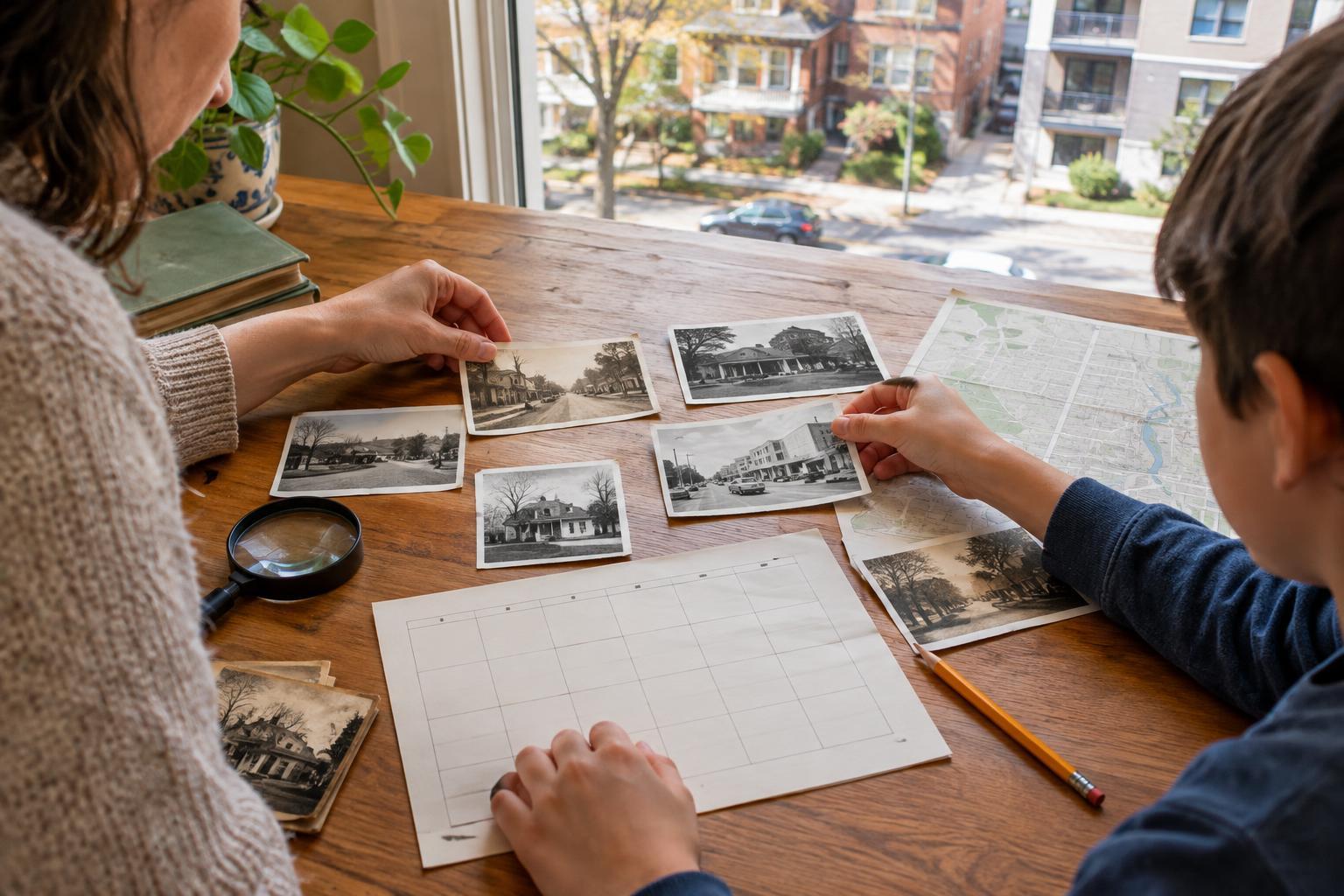
Give each family member a copy of the image or a sheet of paper divided into three spaces: “I notice,” “I wonder,” and “I could check.” A child might notice a striped awning, wonder what the shop sold, and suggest looking for a clearer sign in another picture. An adult might wonder whether the street name has changed. Both questions can guide a short library visit, a conversation, or a walk without turning the activity into a test.
Save the image’s caption or other identifying information with your notes so you can find it again. Mark conclusions as certain, likely, or still unknown, and update them if new clues appear. The goal is not to extract a perfect story from one photograph. It is to practice looking carefully, asking fair questions, and noticing that a familiar place has held many different everyday lives.