Start with a purpose, not a camera
A neighborhood photo walk gives children a reason to slow down and notice familiar places. Choose a small theme before leaving home: repeating shapes, signs of the seasons, interesting textures, or the ways people care for shared spaces. A theme helps keep the activity focused on discovery rather than on photographing whoever happens to pass by.
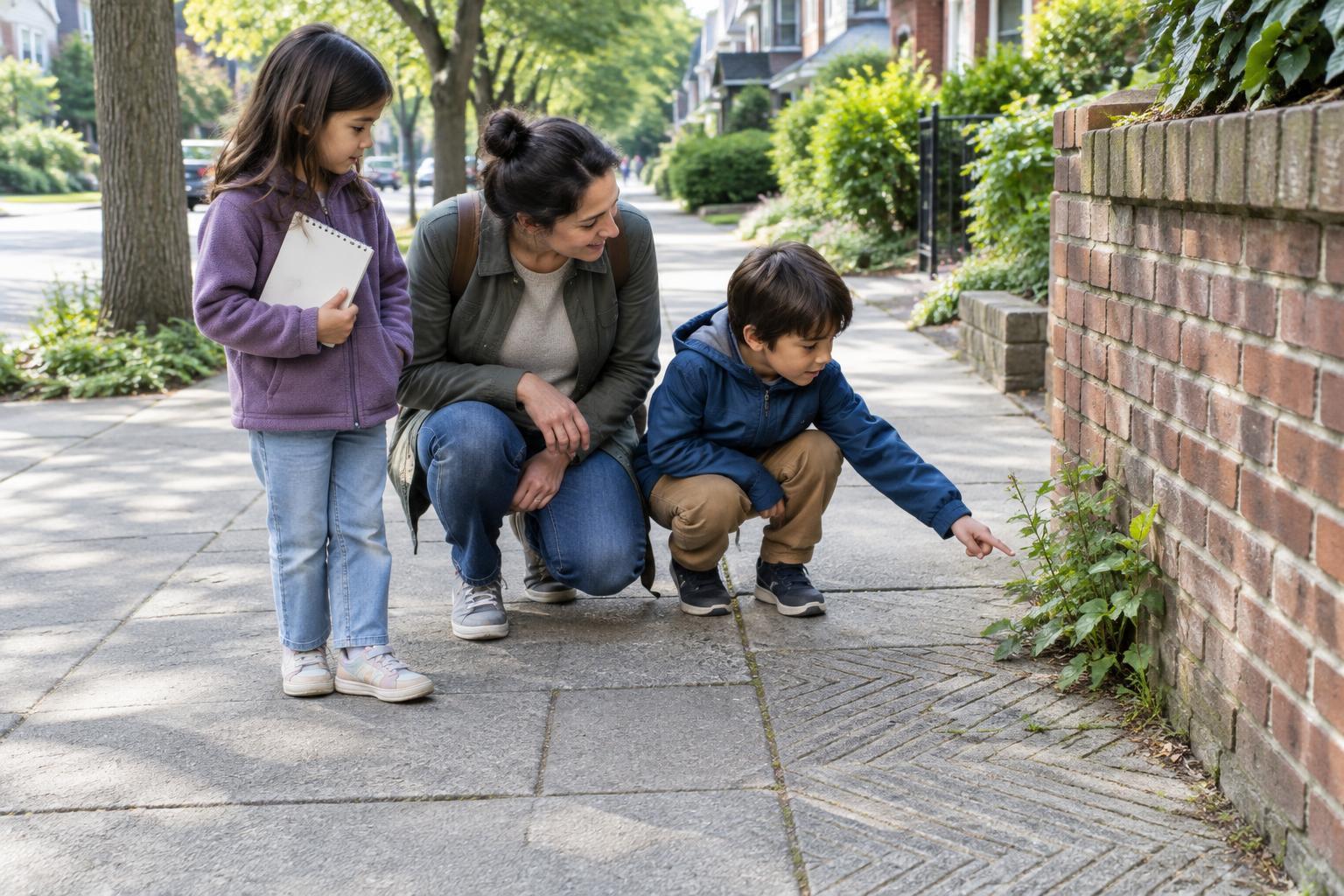
Invite each person to name one thing they hope to find. A child might look for circles in windows and bicycle wheels, while an adult watches for plants growing in unexpected places. There is no need to collect as many pictures as possible. Pausing to look, talk, and decide whether a photograph is appropriate is part of the activity.
Think about who or what is in the frame
A sidewalk or park may be shared space, but people using it may not want to become the subject of someone else’s picture. Before taking a photo, check the background as well as the main subject. If a person is recognizable and the image does not need them, wait for a clearer moment or change your angle. Be especially careful with children and with anyone who appears to be having a private or difficult moment.
Homes deserve similar care. A colorful front door, porch display, or garden may catch your eye, yet a close-up can reveal an address, a vehicle plate, or details about a household. Try photographing a wider streetscape or a small detail from an angle that leaves identifying information out. Stay on public paths unless you have been invited onto a property, and do not peer through windows, over fences, or into private yards.
Make asking permission feel natural
If a person is central to the picture, ask before taking it. Keep the request simple: explain what you are photographing and why, then give them room to say no. An enthusiastic yes is different from someone seeming unsure or feeling put on the spot. If they decline, thank them and move on. For children, ask a parent or caregiver as well as paying attention to whether the child seems comfortable.
Permission to take a picture is not automatically permission to post it. Before sharing an identifiable portrait, explain where it might appear and ask again. If you cannot ask, choose another subject or keep the image private. This is a useful lesson for young photographers: a good photograph is not worth making someone feel watched or exposed.
Treat public spaces as shared spaces
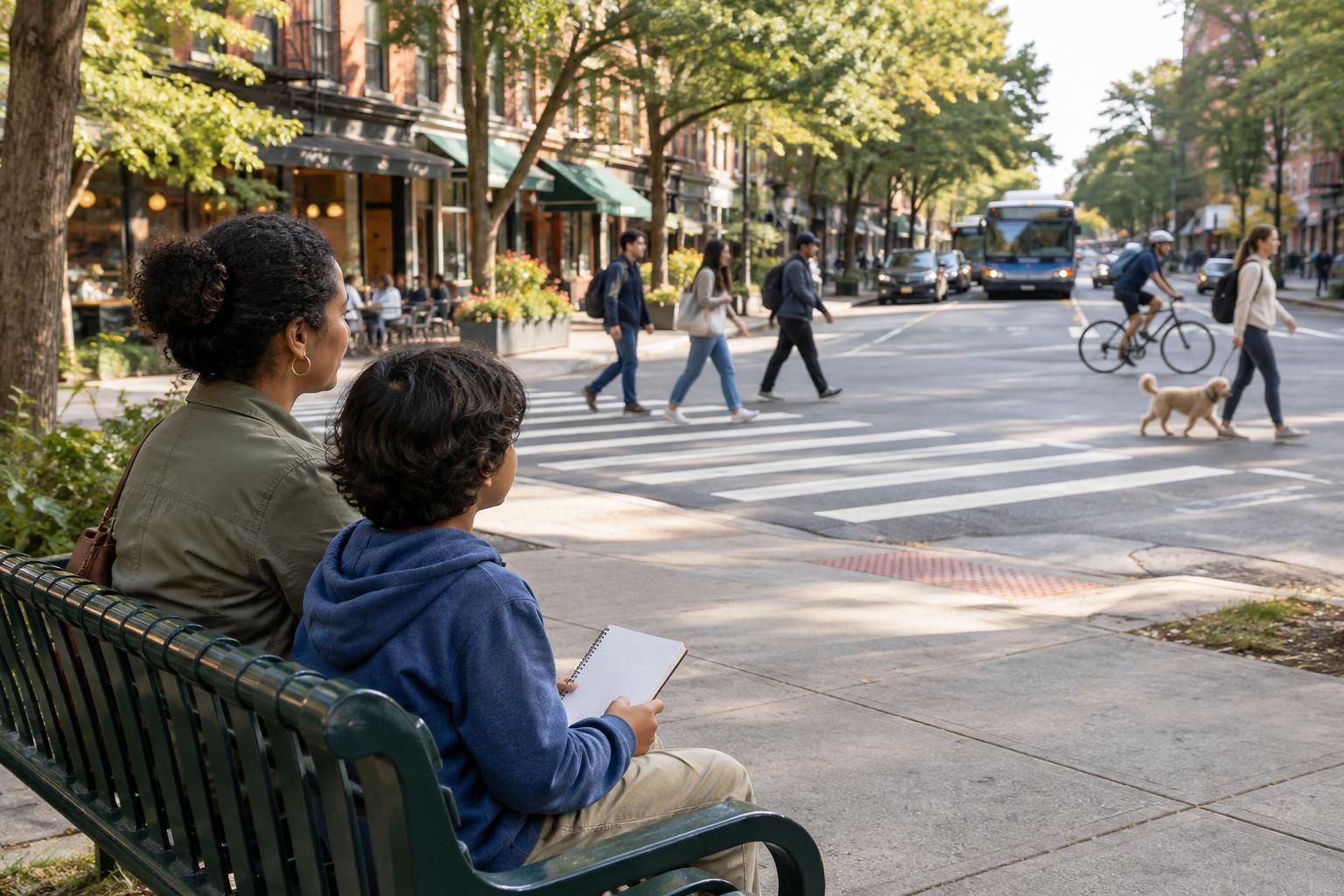
Photographing a mural, a library entrance, or a busy corner can lead to good questions about the neighborhood. Who uses this place? What has changed since your last visit? What details suggest how it was made or maintained? Observe without blocking a doorway, stepping into a bike lane, or interrupting someone at work. If staff at a venue ask you to put a camera away, respect the request.
Rules about photography can vary by location and activity, so do not assume every publicly accessible place has the same expectations. A shop, community event, transit area, or indoor public-facing space may have its own rules. For a relaxed family outing, you can avoid uncertainty by concentrating on outdoor details that do not require access, special equipment, or close views of strangers.
Review together before you share
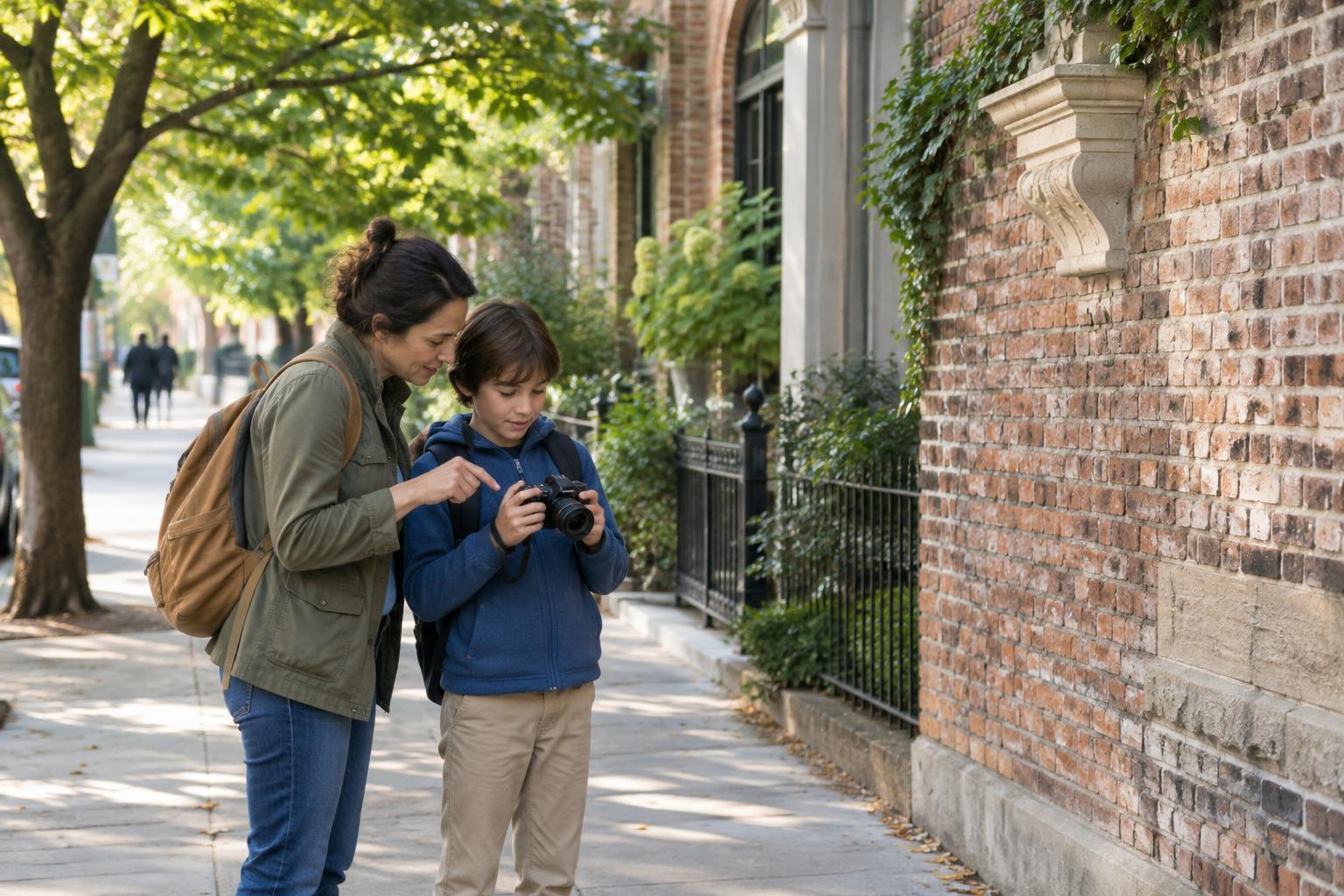
After the walk, look through the pictures as a family. Ask what each image helps you notice and whether anyone in it might prefer that it stay off the internet. Check for faces, addresses, name tags, license plates, and clues to a child’s routine. You can crop an image, choose a different one, or delete it. Children can practice making these decisions alongside adults rather than treating posting as an automatic final step.
Consider making a small collection for home instead of publishing every picture. Pair a few images with questions or observations: What pattern did we find in three places? Which corner would we like to revisit in another season? This turns the photo walk into an ongoing record of attention. The most valuable result may be learning to notice a neighborhood while remembering that it belongs to other people, too.