Start with a small invitation
A short stretch of free time can feel too brief to begin anything. The trick is to offer an invitation rather than a project with a finished result. Put a few familiar materials on the table and ask, “What could these become?” A paper bag might be a puppet, a tiny shop, or a shelter for an imaginary creature. Children can choose a direction without spending half the available time hearing instructions.
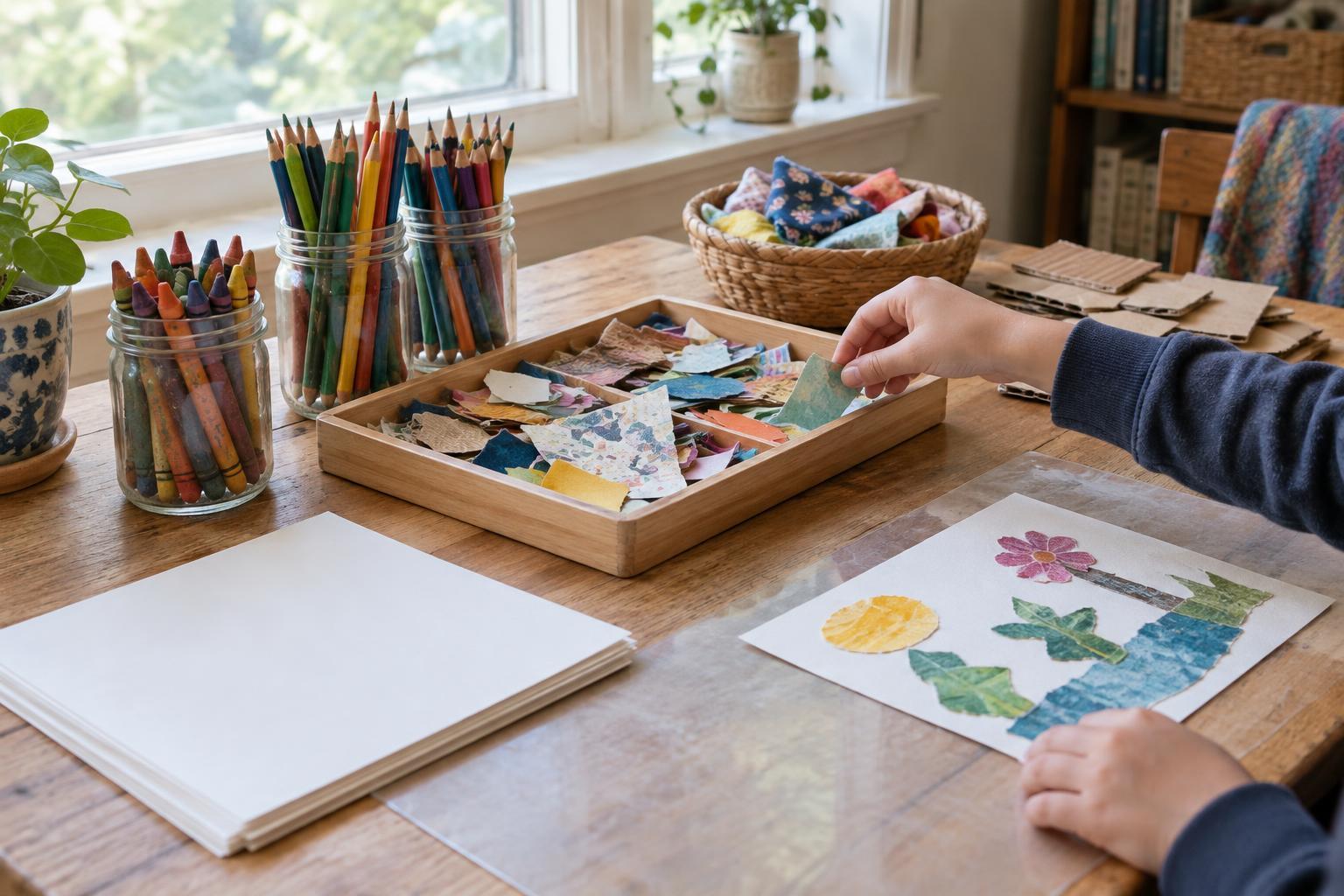
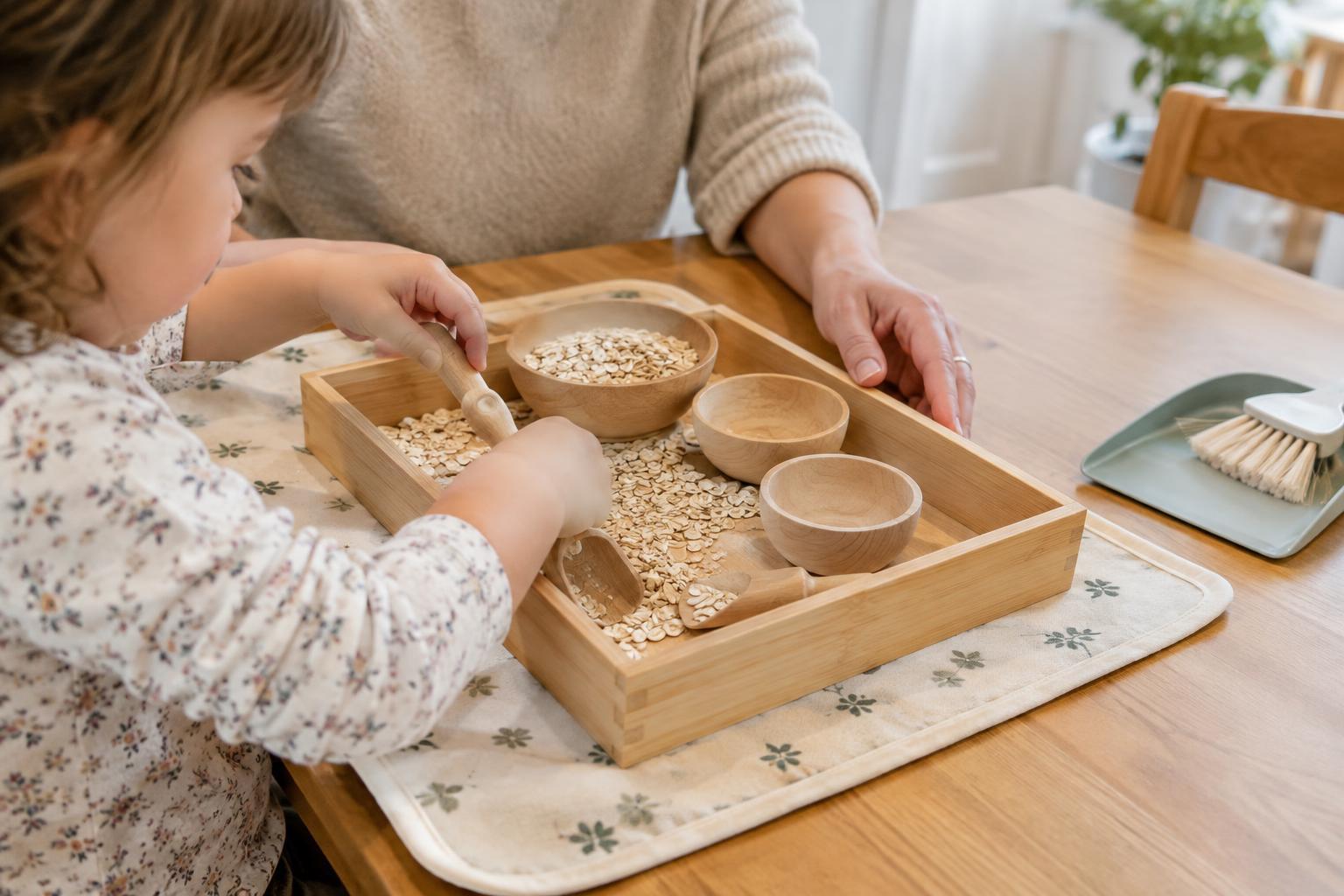
Keep the setup smaller than the time you have. For five minutes, offer paper and a pencil. For fifteen, add tape, scrap paper, or washable crayons. You do not need to fill every quiet moment with a planned activity: a prompt is useful when it opens a door, not when it turns play into another task to complete.
Use prompts that can grow or stop
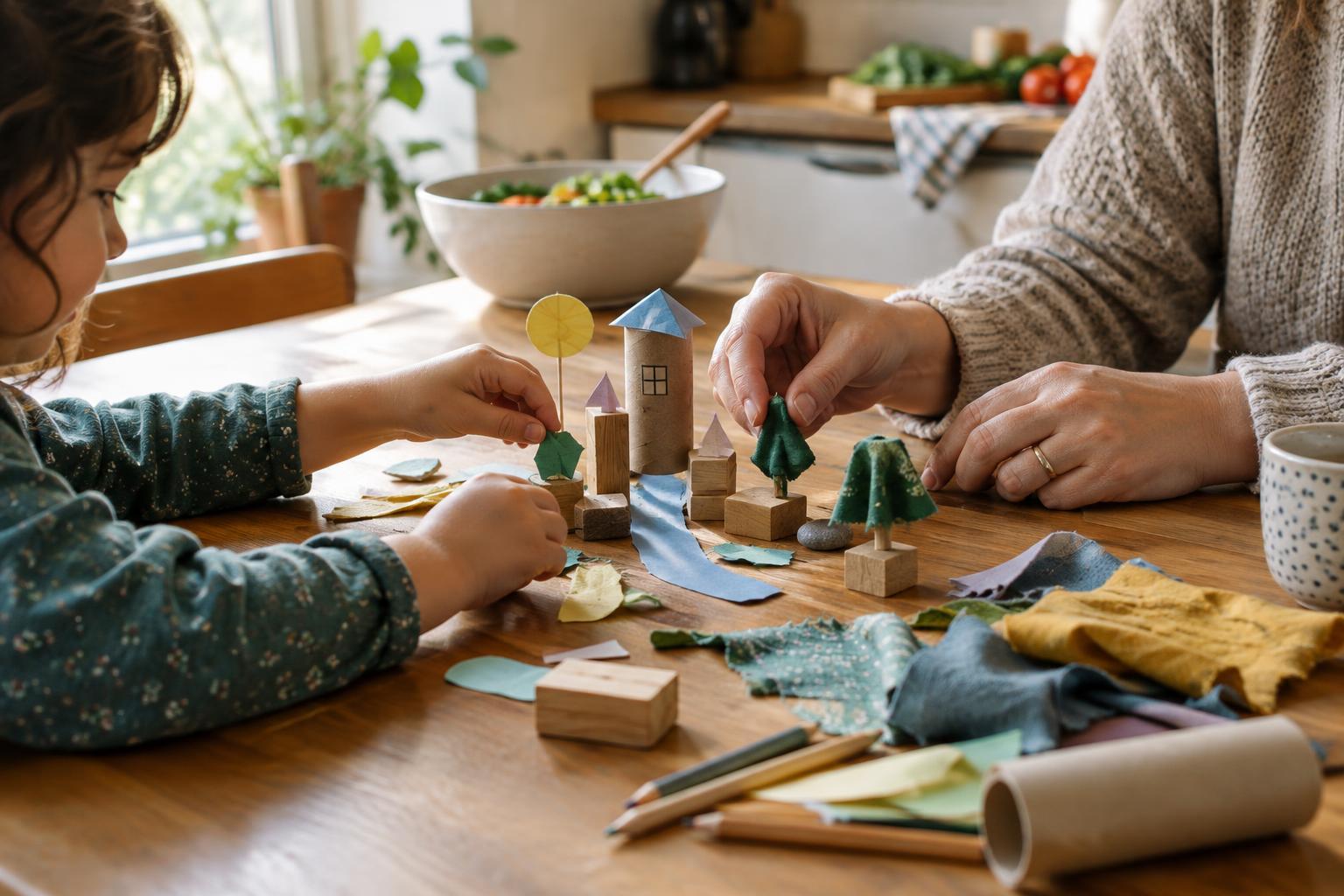
The best short-session prompts have no required ending. Try drawing an unusual doorway and imagining what lies behind it. Build a tiny home from cushions or blocks for a character the size of a thumb. Choose three objects in the room and invent a story that connects them. If time runs out, the child can leave the story there; if more time appears, the doorway or character can lead somewhere new.
For children who hesitate at a blank page, offer a gentle constraint: “Use only circles,” “Make something that moves,” or “Give this object a surprising job.” The aim is not to test originality. A child who repeats the same design several times may be exploring it more deeply. You can join by making your own version rather than correcting or improving theirs.
Let everyday objects do double duty
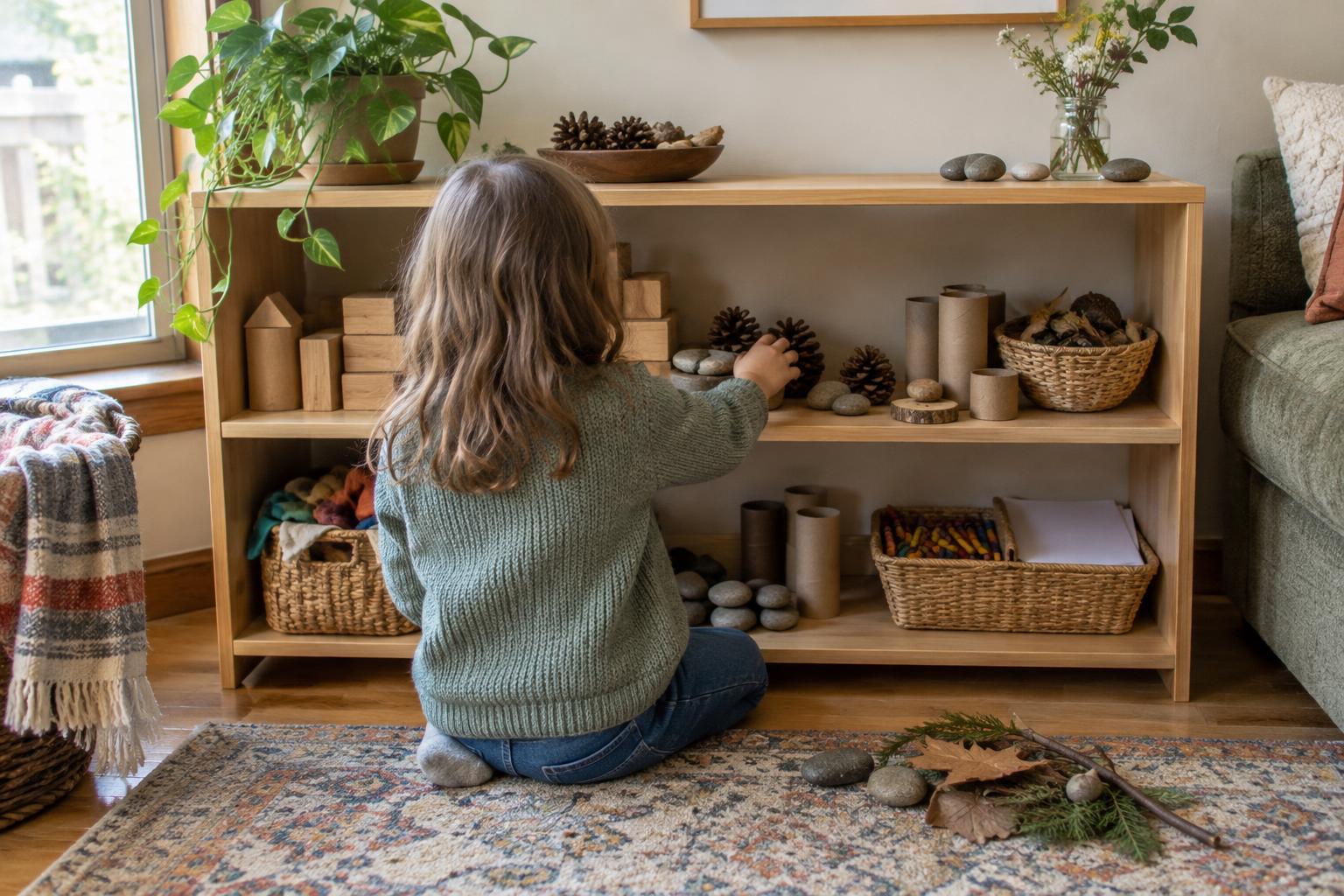
A dedicated craft cupboard is helpful but not necessary. Clean cardboard packaging can become a stage, a vehicle, or a map. A towel can be a river; a row of chairs can be a train. Before handing over an object, check that it is clean and suitable for the child’s age. Keep sharp tools, choking hazards, and anything breakable out of reach when they are not appropriate for the play.
Ordinary objects can also inspire creative challenges outside the house. On a walk, look for shapes that resemble letters, faces, or imaginary animals. Back at home, invite the child to draw one remembered shape and change it into something else. This turns a few minutes of observation into a fresh starting point without requiring you to collect or carry supplies.
Make room for different kinds of participation
Creative play does not always look like sitting still and making something. One child may want to act out a story, while another arranges objects silently. Try offering a choice between drawing a creature, building its home, or inventing its voice. If a child is tired after a busy day, even naming the creature and deciding what it eats can be enough.
Adults can support the play without directing every turn. Ask questions that leave decisions with the child: “What happens next?” or “How could we show that?” If they ask you to take part, follow their rules for a while. And if they lose interest quickly, that is fine. A brief, enjoyable attempt is more inviting than an activity stretched past its natural end.
Create an easy stopping point
Short pockets of time are easier to use when play can pause without feeling ruined. Give a gentle warning before a transition, then ask whether the child wants to save, photograph, or take apart what they made. A drawing can go into a folder; a small collection of reusable pieces can return to a tray. Not every creation needs to be kept. Sometimes the story mattered more than the object.
A simple closing question can make the next short session easier: “Would you like to continue this later, or try something new?” If they want to return, jot down their idea in a few words. If not, clear the space together. Screen-free creative play can fit a busy day because it does not have to become a major event. A few open-ended minutes offer plenty of room to imagine, experiment, and enjoy each other’s company.