Begin with a place, not a presumed story
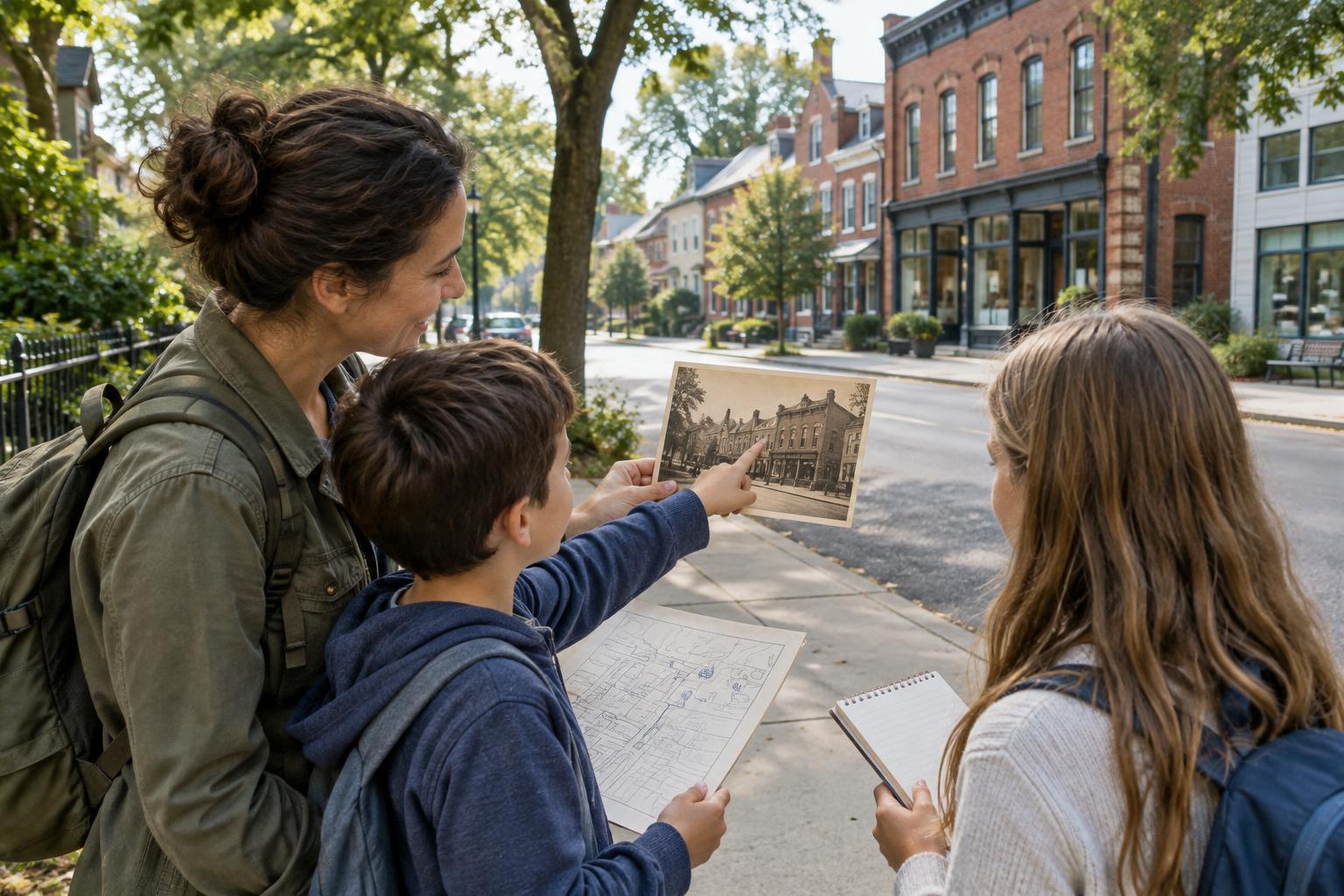
A familiar street can open a conversation about how a neighborhood has changed. A family might choose a former shopfront, a school building or a block near home and ask: Who used this place at different times? What kinds of work, gathering and everyday life happened here? Starting with a place gives children something concrete to investigate without asking them to guess where anyone came from based on a name, photograph or building.
Before looking for records, write down a few open questions. For example: When did this business appear in local listings? Did its name or address change? What else was nearby? An immigration connection may emerge, but it should not be the required answer. Local history includes people who moved across countries, people who moved across town and people who stayed while the neighborhood changed around them.
Gather clues from more than one kind of record
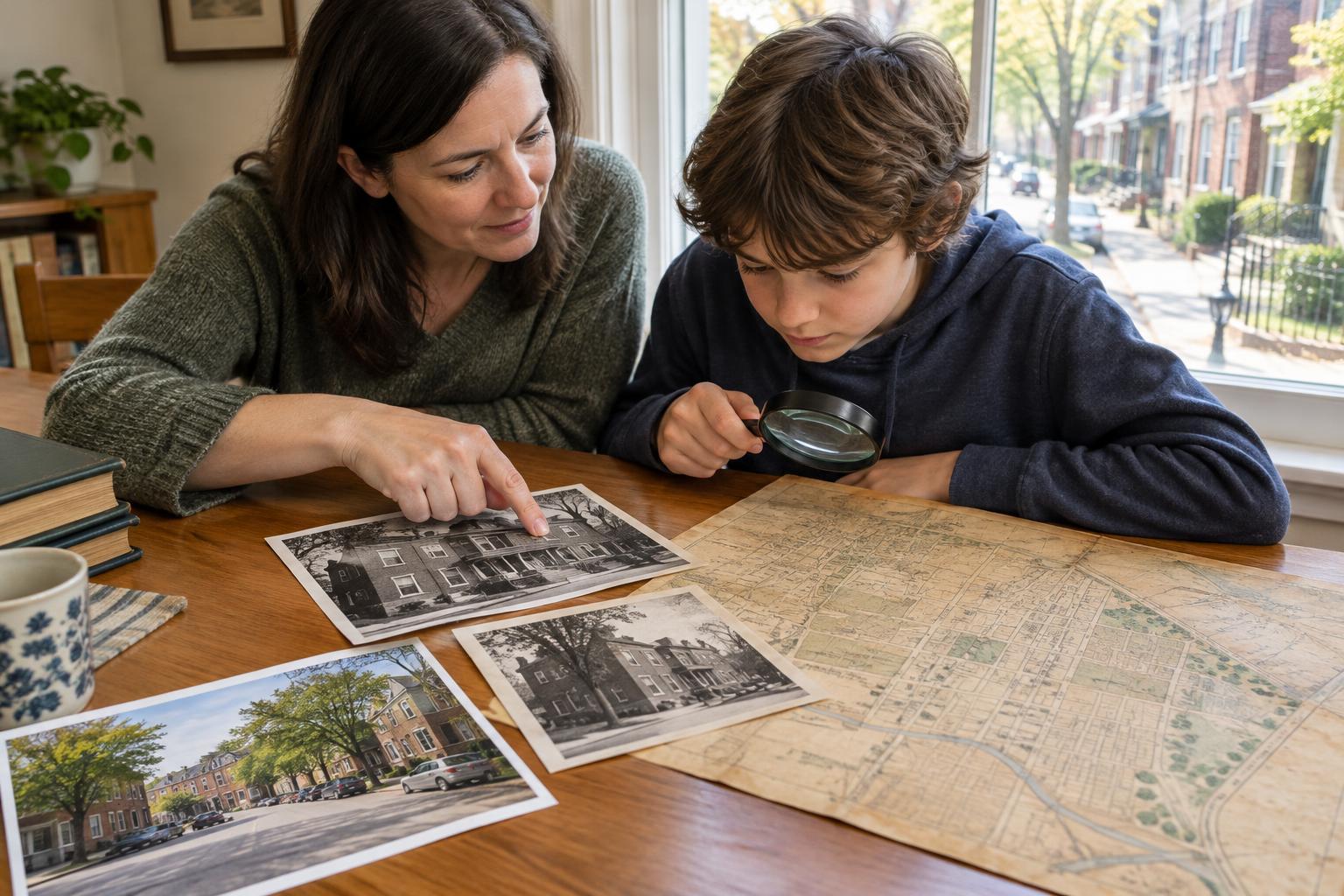
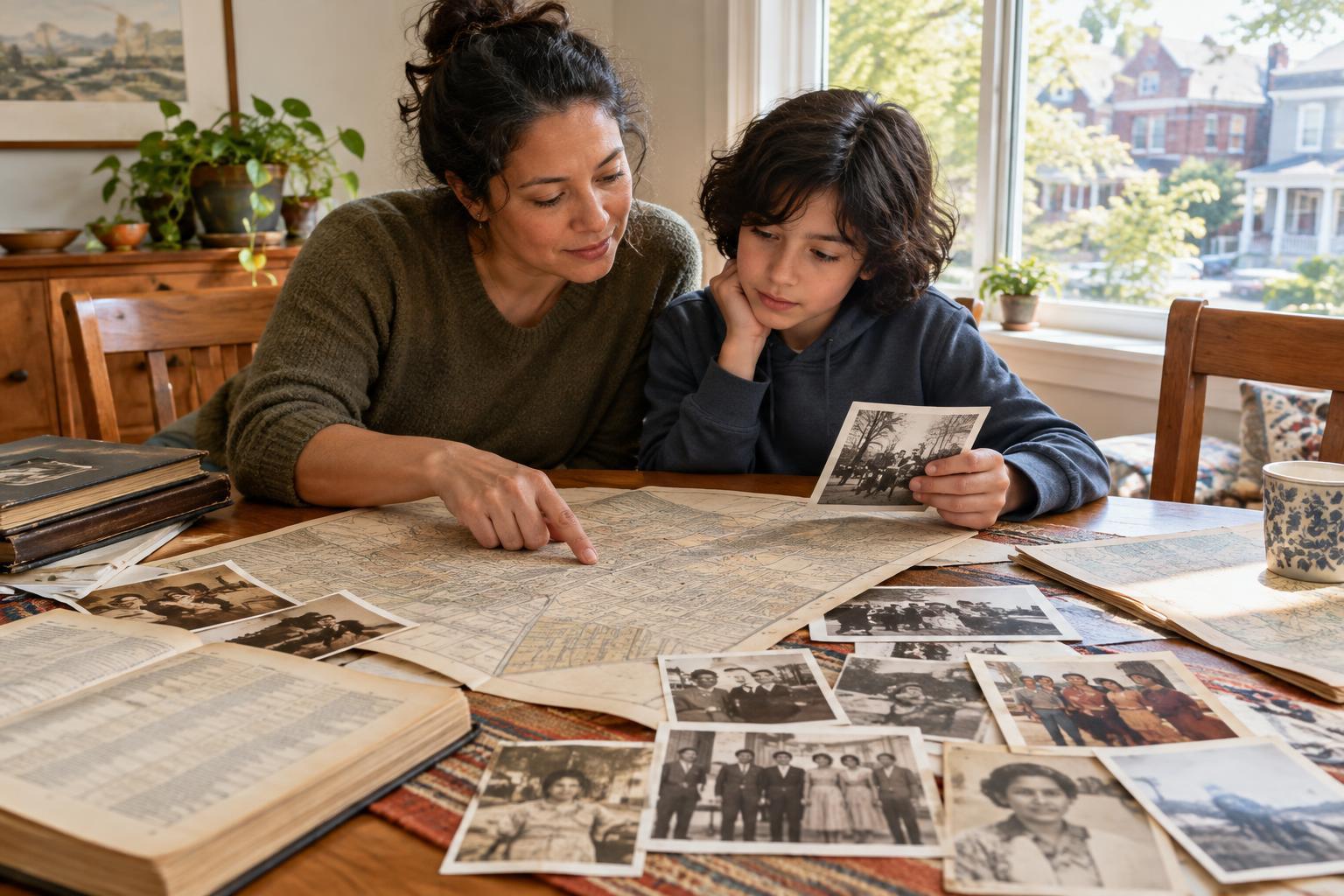
Local libraries, historical societies and public archives may hold old maps, newspapers, photographs, city directories or school publications. Families can begin with whichever materials are accessible and appropriate for children. A map might show when a street or building appeared; a directory might list an occupant or business; a photograph might reveal a sign or a gathering place. Each offers a different view, and none tells a whole life story on its own.
Make a simple evidence sheet with three columns: “What we can see,” “What we wonder” and “What we need to check.” If a directory lists a bakery at an address, the first column can record that fact as printed. The second might ask who worked there; the third might note that another directory or newspaper could provide context. Copy the record title, approximate date if given, and where you found it so the family can return to the original.
Separate a record from an interpretation
Records were created for particular purposes, often by someone other than the person being described. Names may be spelled differently across documents. An address may refer to a workplace rather than a home. A person missing from one list might have moved, been omitted or been recorded under a different name. When two records seem to disagree, treat the difference as a question to investigate, not an invitation to pick the more convenient version.
Practice careful language together. “The directory lists this name at this address” is stronger than “This family lived here for years” if you have seen only one entry. “This newspaper describes a community celebration” does not establish that every resident took part. Children can mark ideas as confirmed, possible or unknown. Leaving something unknown is a useful research result: it shows respect for the limits of the evidence.
Make room for voices and missing perspectives
Official records and newspaper coverage may give more space to property owners, public events or people with influence than to children, tenants and workers. Ask whose experiences a source makes visible and whose it does not. A business listing, for instance, may identify an owner without naming the employees or customers who helped make it a neighborhood meeting place. That gap is worth noticing, not filling with an invented story.
Personal accounts, when people have chosen to share them publicly, can add details that a directory cannot. Read them in their own context rather than treating one person's experience as typical of a whole community. Immigration can involve opportunity, separation, hardship, belonging or several of these at once. Families need not press anyone they know for a personal account; listening is most meaningful when sharing is voluntary.
Turn the investigation into a thoughtful family project
Create a small neighborhood timeline using only details the family can connect to a source. Add a question mark beside uncertain entries, and place records from the same period side by side. Younger children can compare visible details on maps or storefront photographs; older children can look for changes in names, addresses and descriptions. If you visit a site, observe it from public space and remember that a building's present use may have little to do with its past.
To finish, invite each person to share one thing they learned and one question they cannot yet answer. If the project includes people who may still be living, avoid publishing personal details simply because they appear in a record. A careful account of local history does not need a neat ending. It can show how much a few records reveal, how much they leave open and why real lives deserve more than a quick guess.