Start with a route they already know
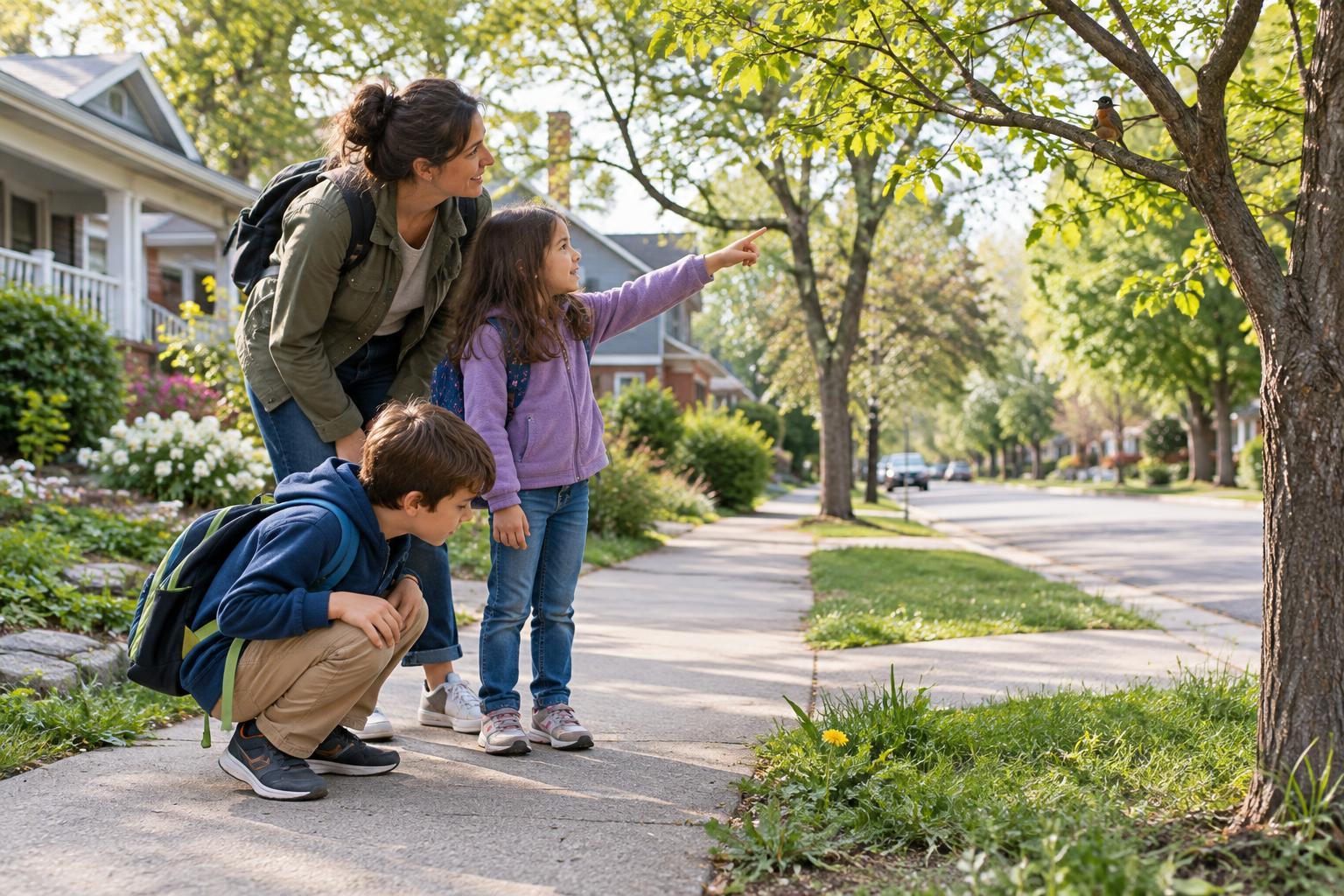
Children often recognize a destination before they can explain how to reach it. A walk to a park, library or bus stop is a good place to begin turning that familiarity into a sense of direction. On your next walk together, ask, “What tells you we’re getting close?” Their answer might be a bright doorway, a row of trees or a corner with a wide sidewalk. These are the beginnings of a mental map.
Choose one short, familiar route rather than trying to describe the whole neighborhood. Point out a few sights that are easy to spot from the sidewalk and likely to remain there: a building with a distinctive shape, a bridge or a public garden. Give children time to choose landmarks of their own. An adult may notice a street sign, while a child remembers the building with the blue steps. Both observations can be useful.
Turn landmarks into route clues
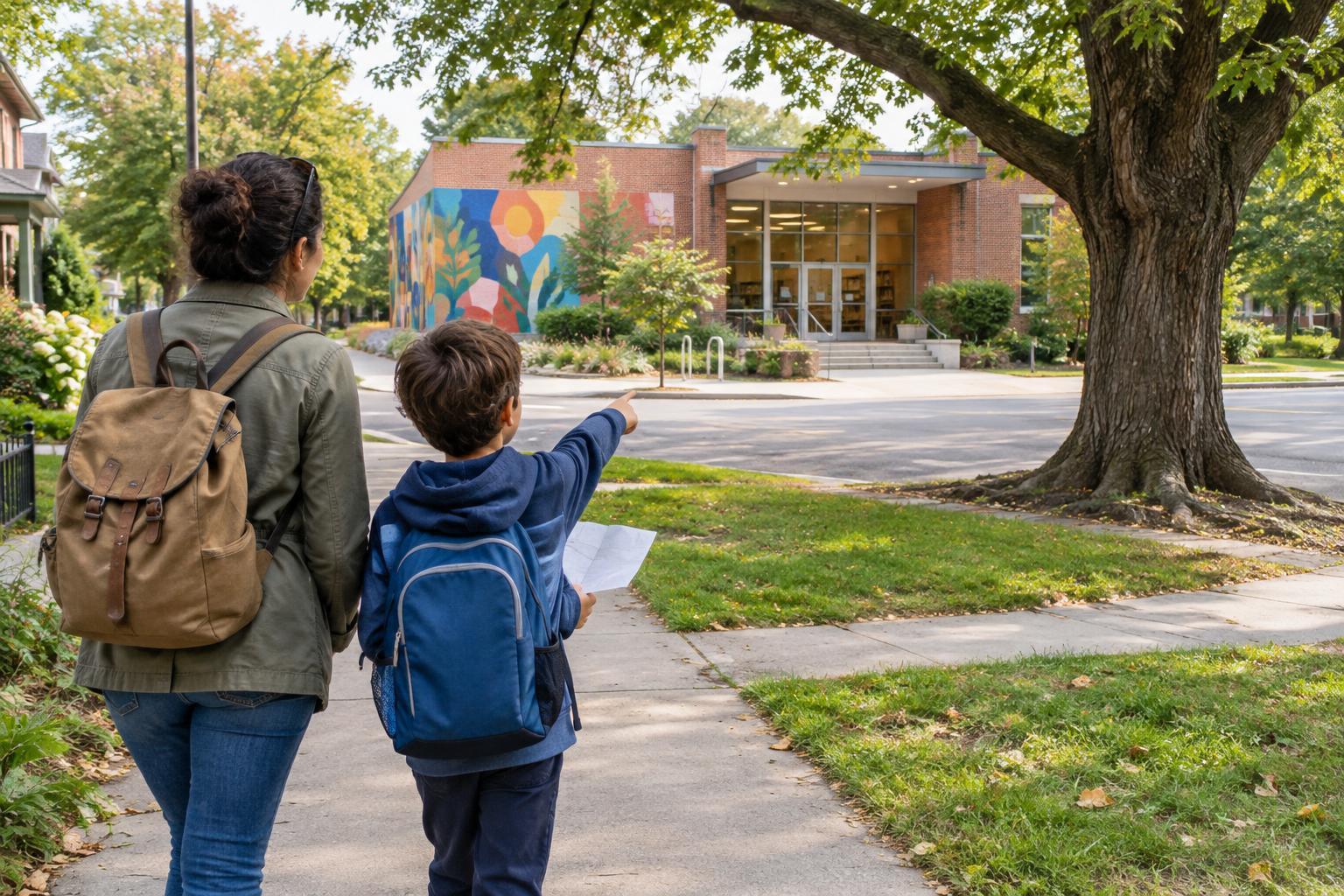
A landmark becomes especially helpful when a child can connect it to an action. Instead of saying only, “There’s the library,” try, “We pass the library, then turn at the next corner.” Ask your child to put the steps in their own words: “After the mural, what do we see?” or “Which corner comes before the playground?” Keep the clues short enough to remember, and check them together as you walk.
Talk about the direction of travel, too. A landmark may look different on the way home. Stop at a safe place, turn around and ask what has changed. Is the clock tower now behind you? Can you still see the park entrance? Comparing the outward and return journeys helps children understand that a route is more than a list of objects: it is a series of connected places.
Make a map from memory
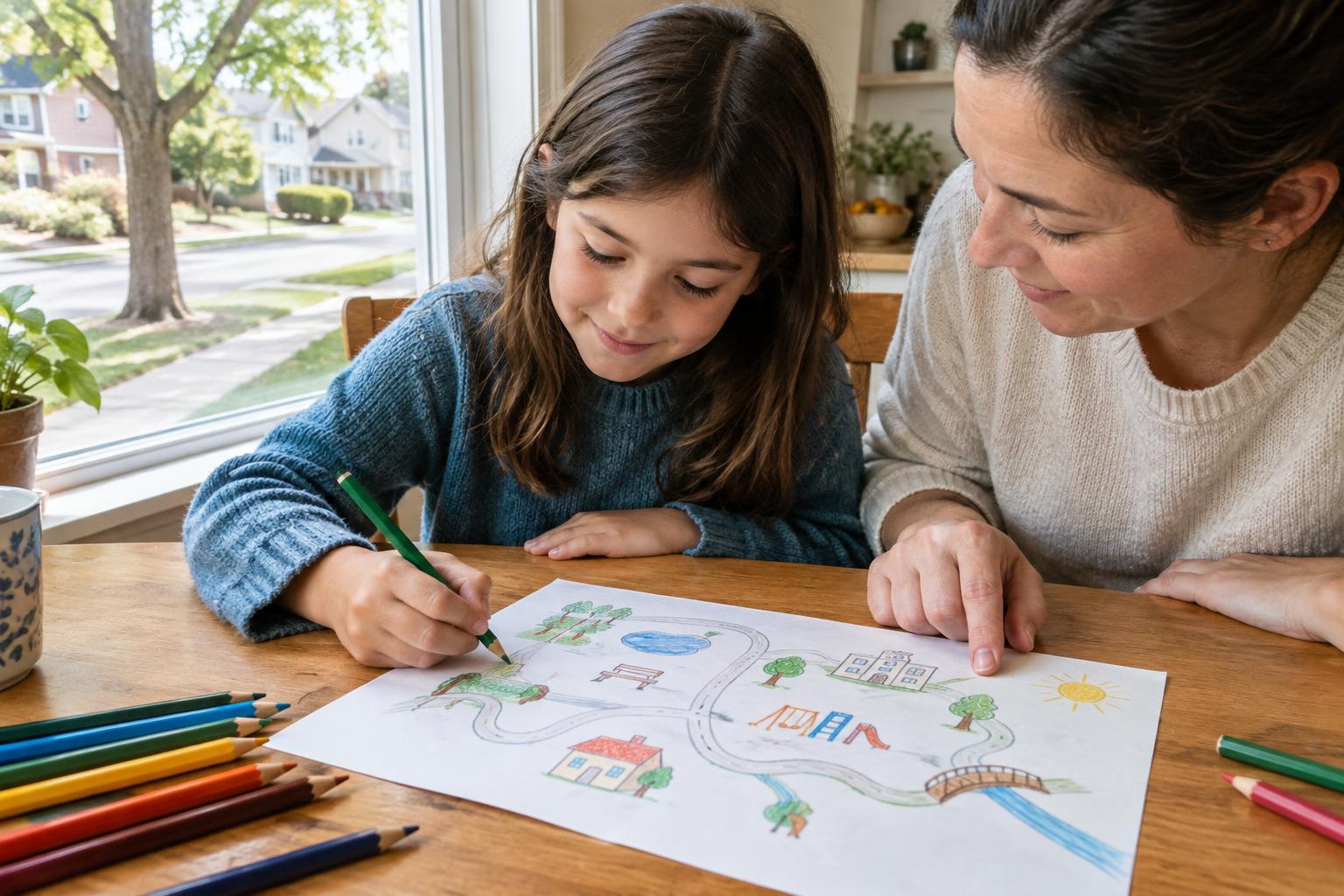
After a walk, invite your child to draw the route on a sheet of paper. It does not need to be to scale. A line for the sidewalk and pictures of three memorable sights are enough to start. Ask where they began, where they ended and which landmarks came between. If they leave something out, treat it as a question for the next walk rather than a mistake to correct.
On another day, bring the drawing along and compare it with what you see. You might add a crossing, move a landmark to the other side of the street or mark a quieter place to pause. Older children may enjoy adding street names or a simple compass arrow. Younger children can use colors or symbols, such as a leaf for the garden and a book for the library. The aim is to connect their drawing to real observations.
Play observation games along the way
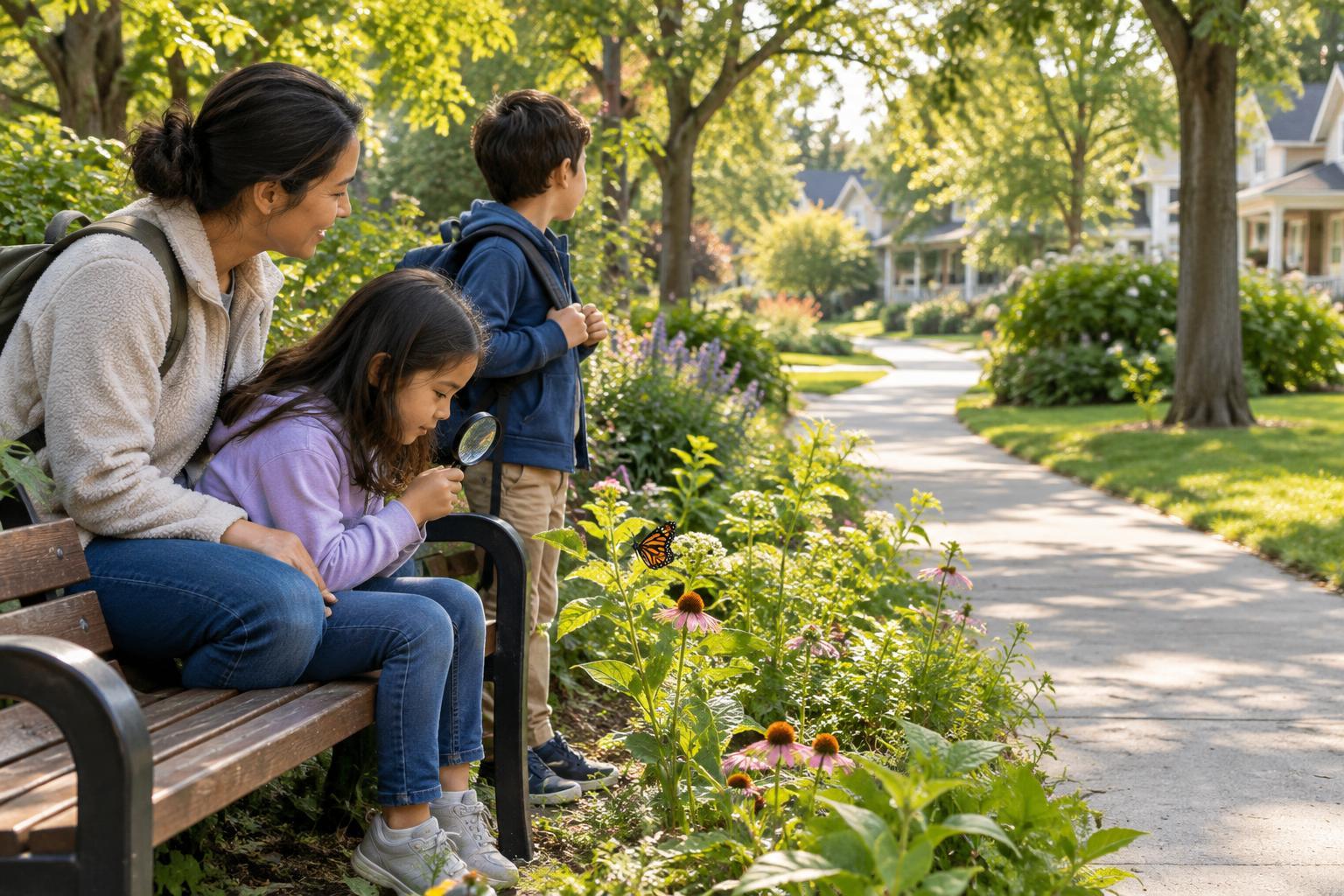
Small games make familiar streets worth a second look. Try a “landmark detective” round: one person describes a fixed feature without naming it, and the other finds it. You could also ask your child to pick two landmarks and describe what lies between them. These activities encourage careful looking without turning the walk into a test.
It is useful to notice what does not make a dependable clue. A parked delivery van, a seasonal decoration or a shop display may be gone next time. Compare these with more lasting features, while acknowledging that neighborhoods can change. If a favorite landmark disappears or becomes hard to see, look for a new clue together. That adjustment is part of learning to navigate, not a failure of memory.
Keep safety at the center
Knowing landmarks is not the same as being ready to travel alone. Practice routes while supervising children in ways appropriate to their age, abilities and surroundings. When discussing a route, identify safe places to stop and check where you are, and practice crossing streets together without letting a game distract from traffic. A child should know that it is fine to say they are unsure, even on a familiar walk.
You can also rehearse what to do if a landmark is missed: stop in a safe spot, stay with the adult or group, and work out the next step together rather than guessing. On a walk home, let your child lead the conversation—“What should we look for next?”—while you remain responsible for the route. Over time, those shared observations can help the neighborhood feel less like a collection of turns and more like a place they understand.