What counts as a loose part?
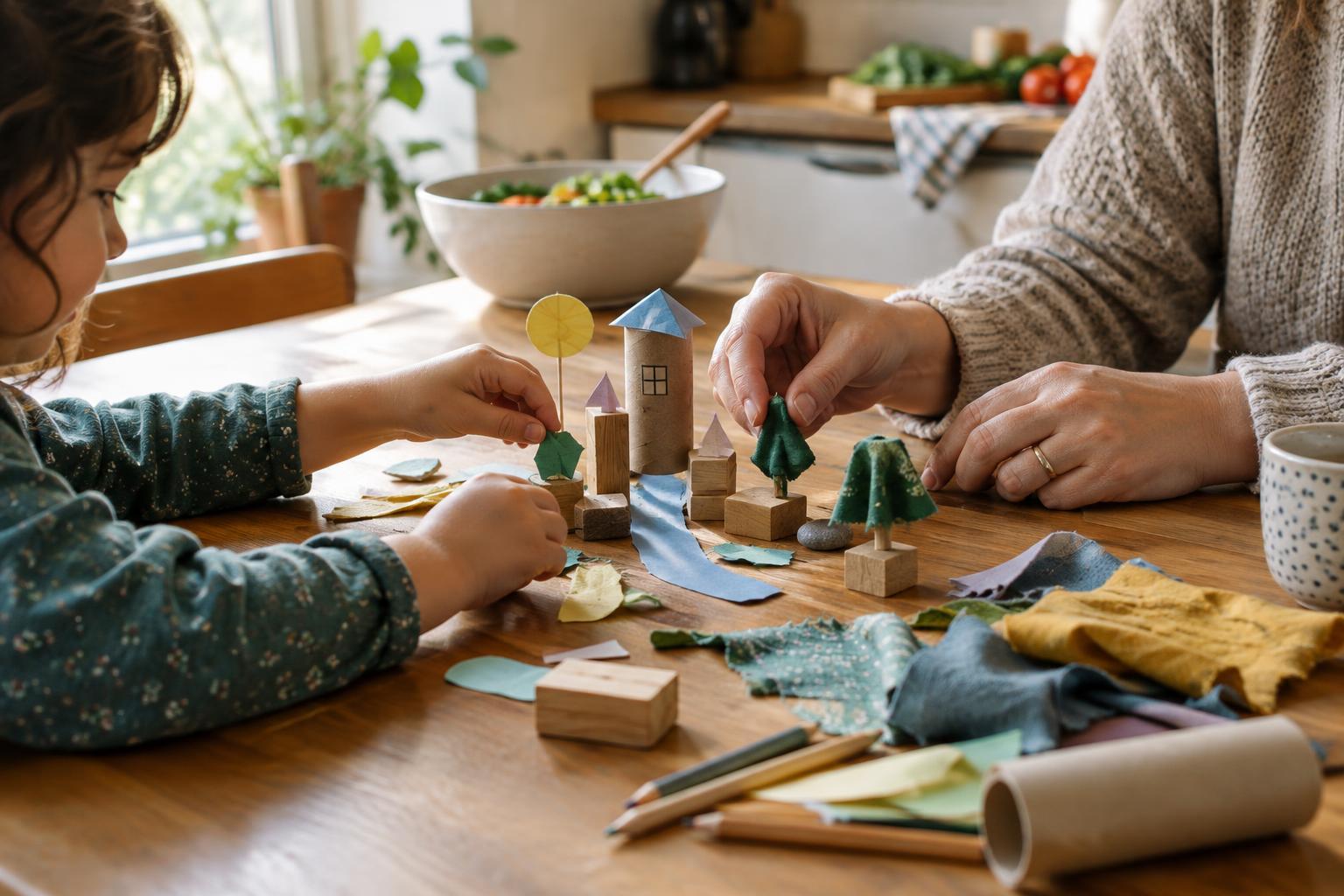
Loose parts are objects children can move, combine, separate, and give new meanings to as they play. A cardboard tube might become a telescope, a bridge support, or a tunnel for a toy car. Unlike a project with a prescribed result, loose-parts play leaves the purpose open. Children can build a scene, test an idea, tell a story, take everything apart, and begin again.
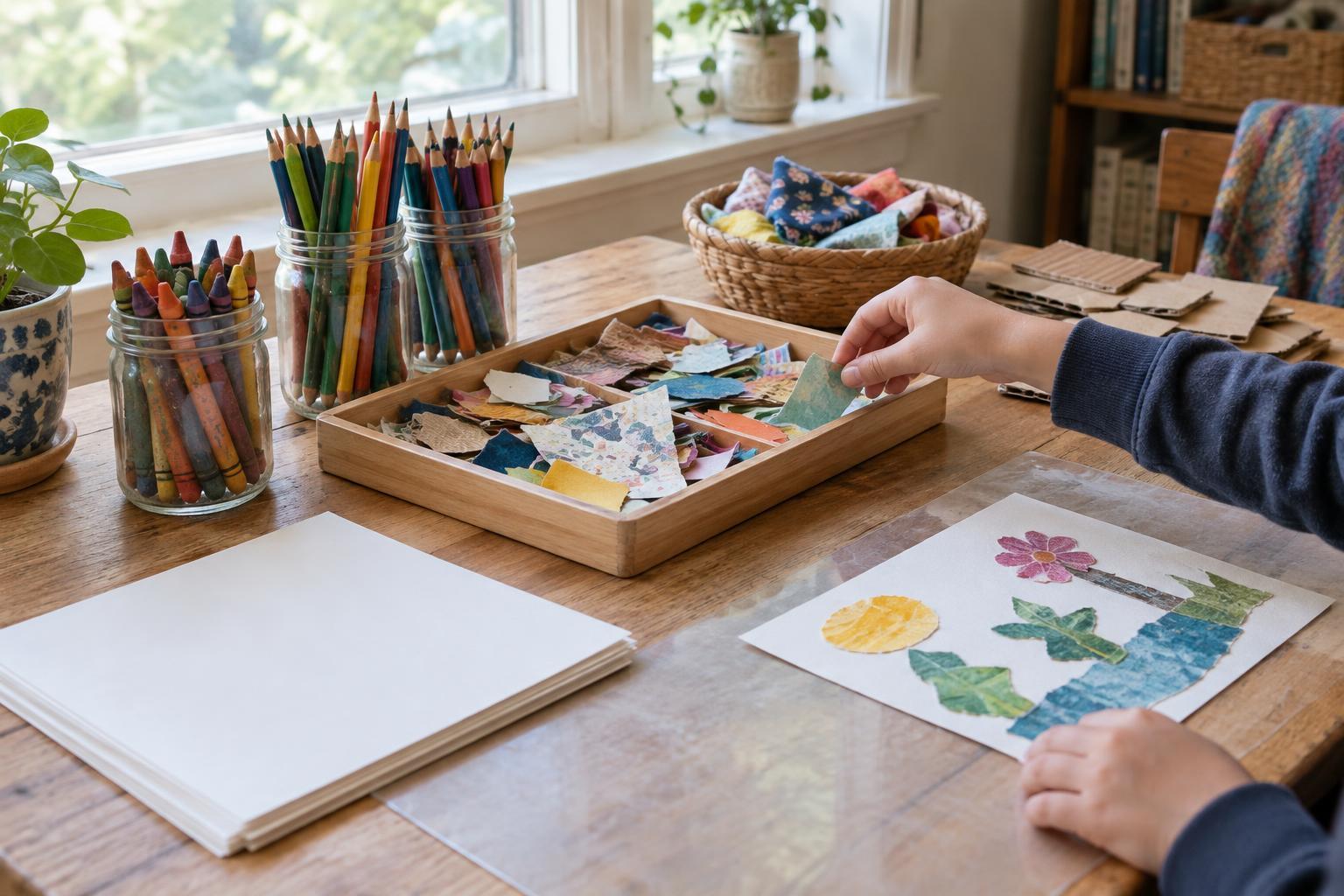
You do not need a large collection to get started. A few clean boxes, sturdy lids, fabric squares, and paper tubes offer plenty of possibilities. The best selection depends on the children using it, the space available, and how closely an adult can supervise. Start with a small set so the materials feel inviting rather than overwhelming.
Choose materials for the children and the space
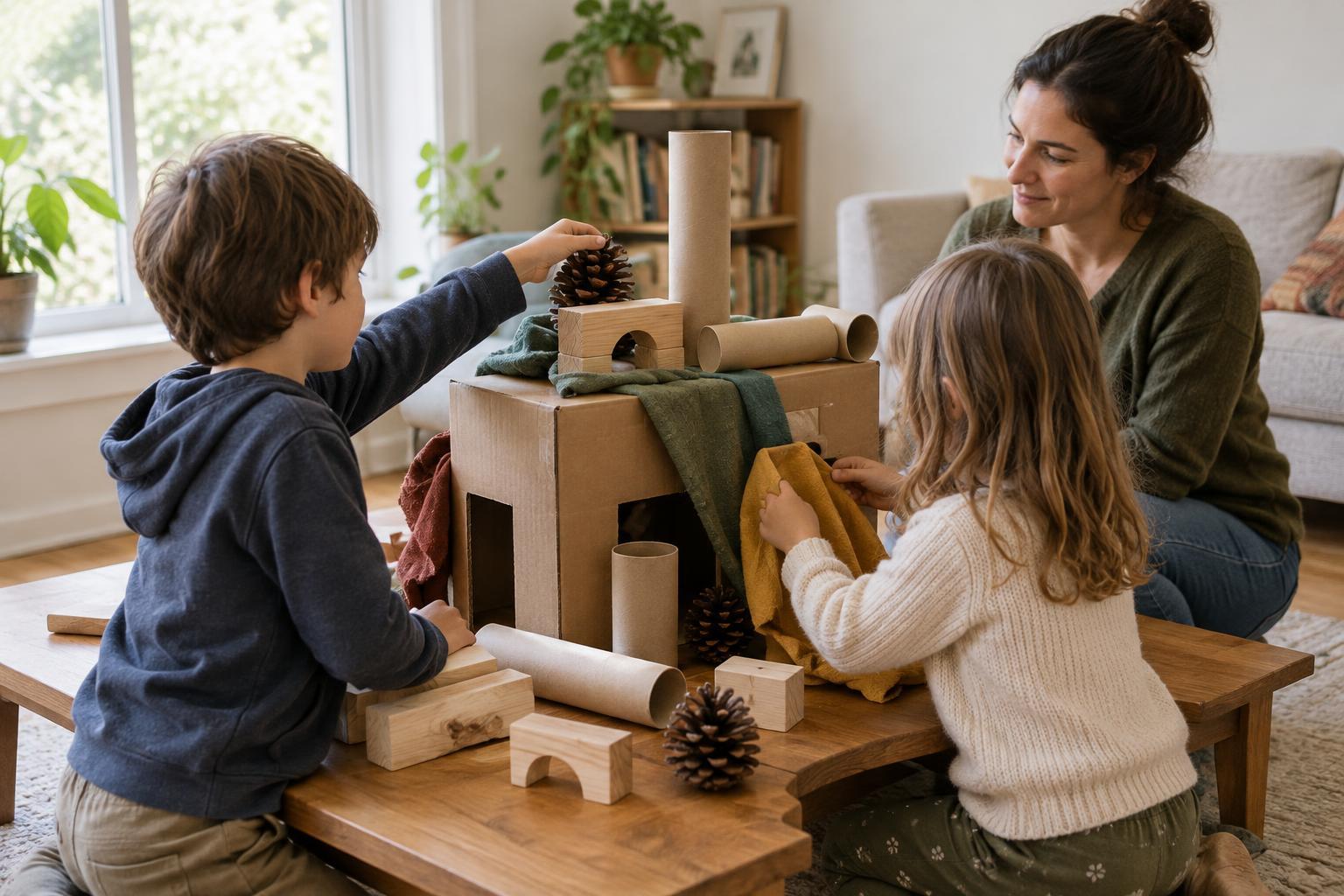
Look around your home for items that are easy to handle and can serve more than one purpose. Small boxes can be buildings or vehicles; fabric can be a river, a roof, or a costume piece. Cardboard circles, large wooden blocks, and reusable containers can add new shapes. Check each item before play for sharp edges, splinters, staples, peeling finishes, or parts that could break off.
Match materials to the youngest child who might reach them. Small objects can pose a choking risk, especially for children who still put things in their mouths. Keep button batteries, loose magnets, plastic bags, and breakable glass out of the play collection. Be cautious with long cords, ribbons, and stretchy loops, which can become tangled around a child. When an object’s safety is uncertain, choose a simpler substitute.
Set up an invitation, not an assignment
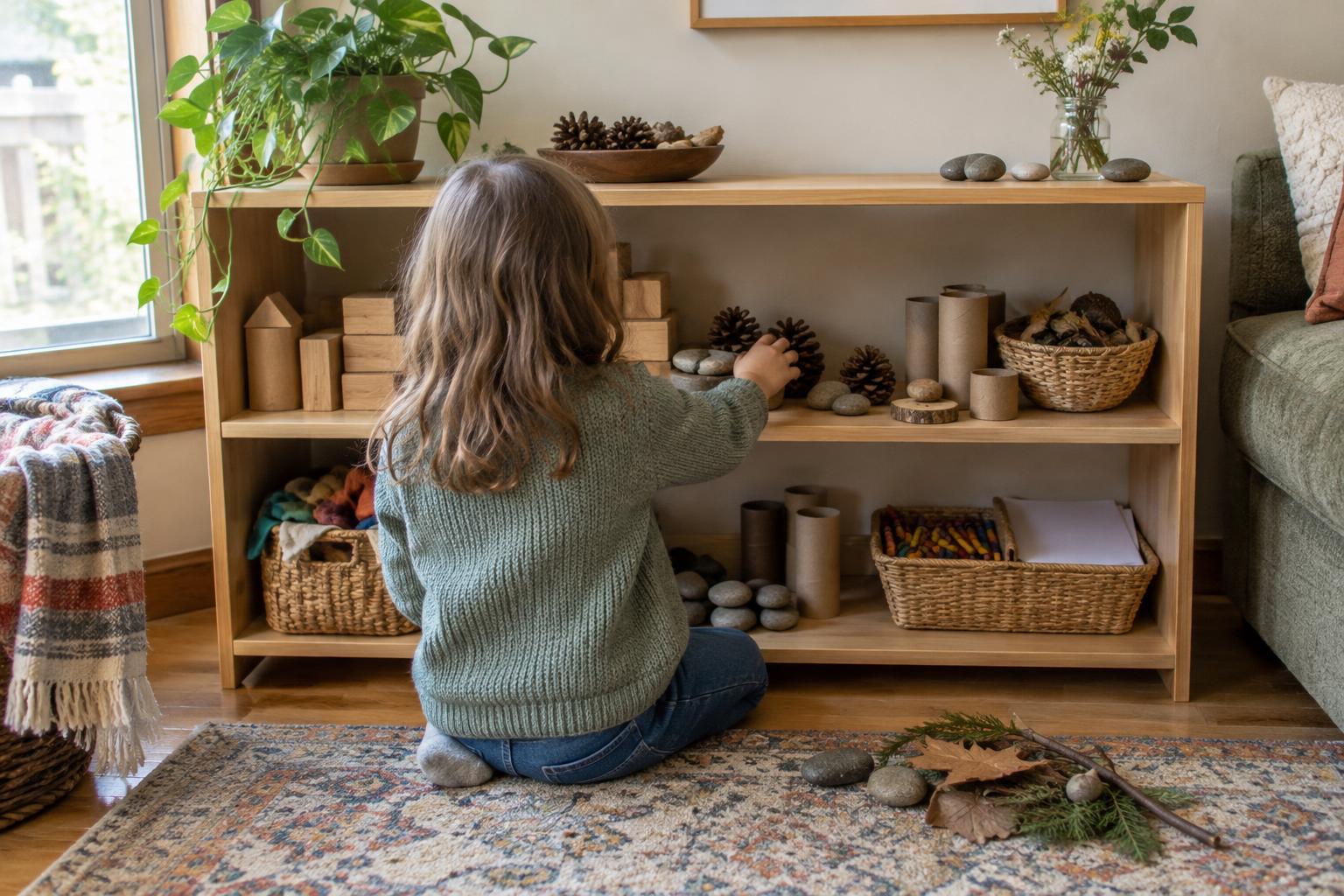
Place a modest selection of materials where children can see and reach them, such as on a low table, a mat, or in a few shallow containers. Leave enough clear floor space for building and moving around. You might group items by type, or put out a combination that suggests possibilities: boxes beside fabric and a few toy figures, for example. There is no need to make a finished example for children to copy.
A gentle opening question can help play begin: “What could we make with these?” or “Where might this road go?” Then give children time to decide. If a box becomes a bakery instead of the spaceship you imagined, follow their lead. An adult can join as a customer, builder, or listener without taking over the story. For children who prefer quieter play, offer a smaller surface and fewer materials.
Build safety into the routine
Stay nearby and supervise according to the children’s ages, abilities, and the materials in use. Choose a stable play area away from stairs, busy walkways, and things that could be knocked over. Set simple boundaries before play begins, such as keeping materials below shoulder height and asking an adult before attaching anything to furniture. If children want to build something tall or climb inside a structure, check its stability and make sure they have a clear way out.
Inspect the collection regularly. Cardboard that becomes crushed, damp, or sharp can be recycled; fabric that gets dirty can be washed. Store materials so younger children cannot access items meant for older siblings. It also helps to agree on a cleanup signal and give each type of object a home. Sorting pieces back into containers can become part of the play rather than an abrupt ending.
Keep the play flexible
You can refresh a familiar collection without buying anything new. Rotate a few objects in and out, move the setup from a table to the floor, or add a simple prompt such as “a place for a tiny visitor.” A neighborhood walk may inspire a pretend bus stop or corner shop, while a storybook may lead to a made-up landscape. The prompt is only a starting point; children can change it.
Notice what holds their attention. One child may spend time arranging colors, while another wants to build a route and tell a long story about it. Both are using the materials in worthwhile ways. By offering adaptable objects, a manageable space, and clear safety boundaries, you make room for imaginative play that can take a different shape each time.